
A bathroom leak rarely stays a bathroom leak. It moves into adjoining walls, ceiling slabs, corridor finishes, electrical points, and occupied spaces below. That is why selecting the right bathroom waterproofing contractor is not a routine finishing decision. It is a building protection decision that affects maintenance cost, tenant disruption, and long-term asset condition.
In commercial buildings, staff housing, hotels, hospitals, schools, and mixed-use properties, bathroom waterproofing failures usually start small. A cracked joint, an unsealed pipe penetration, poor floor fall, or weak membrane termination can go unnoticed until paint blisters, tiles debond, grout darkens, and complaints begin. By that stage, the issue is already beyond surface repair.
What a bathroom waterproofing contractor actually does
A qualified contractor does more than apply a coating under tile. The work starts with inspection, because bathroom leakage can come from several points at once. Floor-to-wall junctions, shower areas, door thresholds, drainage outlets, sanitary fixture penetrations, and concealed plumbing zones all need to be assessed as a system.
The contractor should review substrate condition, moisture presence, screed slope, cracks, joint movement, and existing waterproofing failure patterns. In occupied facilities, this matters even more because repeated patchwork often hides the original defect. If the diagnosis is wrong, the repair will fail again, even if the membrane product itself is good.
A serious contractor also understands sequence. Waterproofing is tied to plumbing, screed application, tiling, sealant work, and final testing. If one trade moves ahead before the membrane is cured, protected, and properly terminated, the risk goes up immediately. Good execution is not only about material selection. It is about controlling the entire waterproofing zone.
Why bathroom waterproofing failures happen
Most bathroom failures are execution failures, not product failures. The membrane is often blamed, but the weak point is usually the detail.
The first common problem is poor substrate preparation. Dust, laitance, hollow areas, residual moisture, and uneven surfaces reduce adhesion and create weak spots. The second is bad detailing around corners and penetrations. These are movement points, and if reinforcement is skipped or termination is rushed, leaks show up early. The third is drainage. A waterproofed floor with poor slope still holds standing water, which stresses joints and increases seepage risk over time.
There is also the issue of compatibility. Cementitious coatings, liquid-applied systems, sheet membranes, primers, tile adhesives, and sealants need to work together. Mixing products without checking compatibility is a common site mistake. In high-use bathrooms, the wrong system may perform for a short period and then deteriorate under thermal change, cleaning chemicals, or repeated wet-dry cycles.
How to evaluate a bathroom waterproofing contractor
The fastest way to judge a contractor is to ask how they inspect, how they detail, and how they test. If the answer focuses only on price per square foot, that is a warning sign.
A capable contractor will explain the failure source, not just the visible symptom. They should be able to identify whether the issue is coming from the shower zone, vertical risers, floor cracks, drainage outlet connections, or joint separation. They should also explain whether local repair is viable or whether full area treatment is the better long-term option.
Execution method matters just as much. Ask what surface preparation is required, how corners and penetrations are reinforced, what curing time is needed, how the membrane is protected before tiling, and how flood testing is carried out. These are basic control points. If they are vague, the workmanship will likely be vague too.
For commercial and institutional properties, response capability is another factor. Bathroom leakage can affect occupied rooms, operations, and MEP systems. A contractor should be able to inspect quickly, isolate the issue, plan phased work, and coordinate with facility teams to minimize downtime.
Bathroom waterproofing contractor systems and trade-offs
There is no single best waterproofing system for every bathroom. The right specification depends on substrate condition, access, tile finish requirements, movement risk, and whether the project is new build or repair.
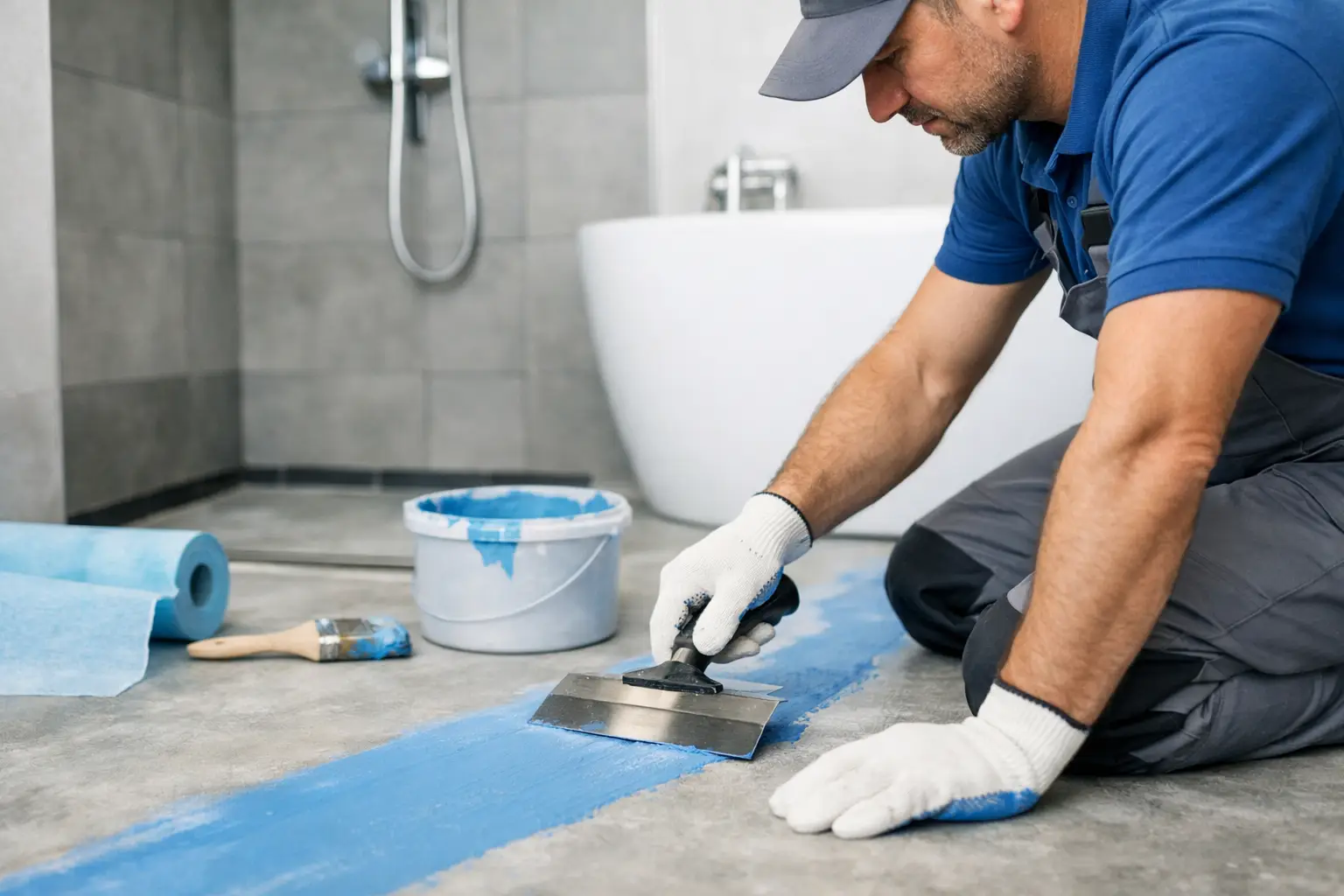
Cementitious waterproofing is common because it is practical under tile and suits many internal wet areas. It works well when the substrate is stable and detailing is done correctly. However, it is not forgiving of poor crack treatment or weak joint preparation.
Liquid-applied membranes can be effective for complex bathroom layouts because they conform around penetrations and corners. The trade-off is application control. Thickness, curing, and uniform coverage must be tightly managed on site. If coverage varies, performance varies.
Sheet membrane systems can provide consistent thickness and dependable waterproofing performance, especially in technically demanding environments. But they require skilled installation, careful seam treatment, and proper terminations. In refurbishment work, access limitations can also make sheet systems more difficult to install.
Sealants alone are not waterproofing systems. They are part of the detail package. Many bathroom failures happen because sealant is treated as the primary barrier instead of the final joint treatment over a properly waterproofed assembly.
The details that separate good work from repeat work
In bathroom waterproofing, details decide service life. Floor-to-wall junctions should be reinforced and continuous. Pipe penetrations should be sealed with proper collars or compatible detailing methods, not roughly cut around and covered later. Drain outlets should be integrated into the membrane system, not treated as an afterthought. Door thresholds must stop lateral migration of water into dry areas.
Crack treatment also needs proper attention. If active or hairline cracks are simply coated over, they can reflect through the membrane and reopen the leak path. Movement joints must be respected. Covering them without a suitable movement detail creates an early failure point.
On refurbishment projects, tile removal is not always avoidable. Some owners want a surface-level fix to reduce cost or avoid disruption, but that approach only works in limited cases. If the membrane has already failed below the tile bed, top-side sealing will usually buy time, not solve the problem. A reliable contractor should say that clearly.
Testing, documentation, and handover
Flood testing is one of the most important stages in bathroom waterproofing, yet it is sometimes skipped to save time. That is a mistake. Before tile installation or final handover, the waterproofed area should be tested long enough to confirm watertight performance at drains, corners, and thresholds.
Documentation matters too, especially for facility managers, consultants, and project teams. The contractor should be able to confirm the system used, application method, coverage area, repair scope, and any substrate limitations observed during the work. This is not paperwork for its own sake. It supports future maintenance planning and makes warranty discussions more straightforward.
For multi-unit properties or large facilities, consistency is critical. One bathroom repaired properly and ten repaired loosely creates uneven maintenance exposure. Standardized inspection and execution procedures reduce repeat callouts and help maintenance teams plan budgets with fewer surprises.
Why commercial clients need a different level of contractor
Residential bathroom work and commercial bathroom waterproofing are not the same risk category. In commercial settings, leakage affects more people, more assets, and more systems. A failed waterproofing job in a hotel, labor accommodation block, healthcare facility, or office building can trigger room closures, complaints, mold growth, and damage claims.
That is why commercial clients should look for contractors with field coordination capability, technical supervision, and a clear repair methodology. The contractor should be able to work around active operations, manage access restrictions, and maintain quality control across repeated wet areas. This is where a specialist execution team adds value beyond general finishing labor.
For owners and facility teams looking for that level of response, companies such as Promax Contracting typically approach waterproofing the same way they handle larger envelope and leakage problems - with inspection-first diagnosis, system-based repair, and execution that prioritizes durability over patchwork.
What to ask before you award the job
Before appointing a bathroom waterproofing contractor, ask a few direct questions. What is the identified source of leakage? Is the recommendation a localized repair or full treatment, and why? What waterproofing system is proposed, and is it compatible with the substrate and finish build-up? How will corners, penetrations, drains, and movement points be detailed? What testing will be done before handover?
A contractor who can answer these clearly is usually thinking beyond the immediate patch. That is what protects your asset.
Bathroom waterproofing is one of those scopes where cheap work becomes expensive very quickly. If the goal is fewer complaints, less hidden damage, and a longer service life for the wet area, the right contractor is the one who treats waterproofing as a technical system, not a tile accessory.
Talk to Promax
Need this on your roof? Call +971 56 727 4205 or request a free inspection. Promax provides EPDM metal-roof, concrete and industrial waterproofing across Dubai and the UAE with up to a 15-year warranty.