A forklift does not care whether your floor coating brochure looked impressive. It cares about bond strength, cure quality, impact resistance, and whether the slab was prepared properly before the first coat went down. That is why choosing the best industrial epoxy flooring is less about picking a brand name and more about matching the system to traffic, chemicals, moisture, cleaning routines, and downtime limits.
In industrial and commercial facilities, floor failure is rarely a cosmetic issue. It turns into dusting concrete, safety complaints, tire wear, joint damage, cleanup delays, and unplanned shutdowns. If the floor is inside a warehouse, factory, plant room, service bay, or food handling area, the wrong coating system can cost far more than the original installation.
What makes the best industrial epoxy flooring
The best industrial epoxy flooring is the one that fits the operating condition of the building, not the one with the highest gloss or the cheapest square-foot rate. A distribution warehouse has different demands than a chemical processing area. A maintenance workshop does not need the same system as a pharmaceutical facility or a commercial kitchen.
At a technical level, a good epoxy floor system should do four things well. It should bond aggressively to the prepared concrete, resist the actual traffic on site, tolerate the exposure it will face, and remain serviceable without constant patchwork. If one of those factors is ignored, the floor may still look good on handover day but fail early in use.
Surface preparation is usually the deciding factor. Even a premium resin system will not perform over weak laitance, contaminated concrete, trapped moisture, oil penetration, or poorly repaired cracks. In practice, the best flooring decisions begin with slab inspection, moisture testing, substrate repair, and a realistic review of how the area operates during the week.
Not every epoxy system is built for the same load
Many owners ask for epoxy flooring as if it were one product. It is not. Industrial epoxy is a category that includes different build thicknesses, resin formulations, and aggregate options.
A thin film roll-coat can work in light-duty utility areas, storage rooms, or back-of-house commercial spaces where the main requirement is dust control and easier cleaning. It is usually not enough for constant forklift turning, pallet dragging, steel wheel traffic, or areas where dropped tools and oil exposure are routine.
A high-build epoxy system gives more protection and a longer wear layer. This is often a better fit for warehouses, plant rooms, manufacturing support areas, and service corridors. It can also accommodate anti-slip texture, line marking, and zoned colors where operations require visual control.
For heavier service, self-leveling epoxy or epoxy mortar systems are often the better answer. These systems can handle more abuse, help correct minor surface irregularity, and provide stronger resistance against impact and abrasion. They cost more upfront, but in the right facility they are usually cheaper over the life of the floor.
That trade-off matters. If the area only sees pedestrian traffic and carts, a heavy-duty system may be unnecessary. If the area sees dynamic wheel loads, frequent washdowns, and chemical spills, a budget coating becomes false economy.
Where industrial epoxy performs well - and where it may not
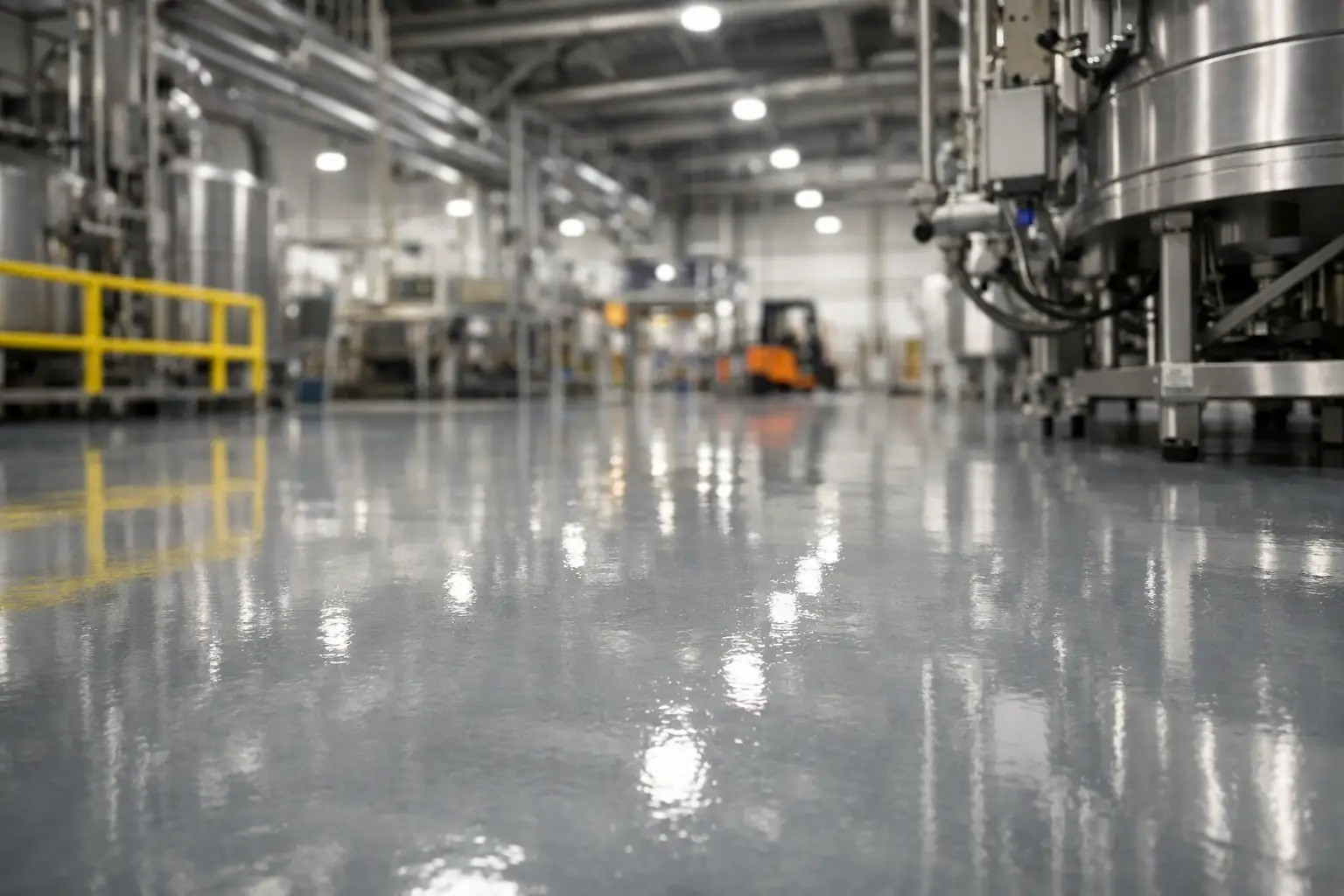
Epoxy is a strong option for warehouses, production zones, assembly spaces, equipment rooms, laboratories, loading support areas, and many commercial back-end operations. It creates a dense, easy-to-clean surface and can improve brightness, housekeeping, and traffic organization.
It is also useful where concrete dust is affecting stock, machinery, or indoor air quality. Sealing the slab reduces dusting and makes daily maintenance more predictable. For facilities trying to improve appearance for audits, clients, or inspections, a properly installed epoxy system also gives a more controlled and professional finish.
But there are limits. If the floor is exposed to sustained UV, epoxy can amber over time unless it is protected with a suitable topcoat. If the area has high thermal shock, such as hot washdown zones or places with rapid temperature swings, other resin systems may outperform standard epoxy. If there is persistent slab moisture vapor transmission, that condition must be addressed first or the coating may blister or debond.
This is where contractor judgment matters. The best industrial epoxy flooring recommendation should include where epoxy is appropriate and where another system may be more reliable.
How to evaluate the best industrial epoxy flooring for your site
The right specification starts with site conditions, not color charts. A proper assessment should look at concrete age and strength, moisture condition, contamination history, crack movement, joint condition, drainage, traffic pattern, and shutdown constraints.
Traffic type changes everything. Rubber-tire forklifts cause wear differently from steel-wheeled equipment. Static storage is different from constant turning at aisle ends. Battery charging areas, maintenance bays, and chemical dosing rooms each create specific exposure patterns that affect coating design.
Cleaning method matters too. Dry sweeping, machine scrubbing, degreasing, pressure washing, and chemical sanitizing all influence topcoat selection and slip resistance. A floor that is easy to clean in theory can become hazardous in practice if the finish is too smooth for a wet operating environment.
For many facilities, the best system includes more than one layer. Primer, body coat, aggregate broadcast where needed, and a protective topcoat all have a role. The thickness, texture, and cure schedule should be aligned with actual use, not generic assumptions.
Why floor prep usually decides success or failure
If there is one part of the job that should never be value-engineered, it is preparation. Mechanical grinding or shot blasting creates the surface profile needed for epoxy to lock onto the concrete. Oil-contaminated areas may need deeper treatment. Cracks and holes must be repaired with compatible materials. Weak sections of slab should be cut out and reinstated if necessary.
A coating applied over damp, dirty, or weak concrete may fail in sheets, especially under forklift braking and turning loads. That kind of failure is often blamed on the epoxy itself, but the root cause is usually substrate condition or rushed installation.
Moisture is another common problem. Facilities with older slabs, incomplete vapor barriers, or ground moisture migration need testing before work starts. In some cases, a moisture-tolerant primer or vapor mitigation system is required. Skipping this step is risky, particularly in ground-floor warehouses and industrial units.
Performance details that matter after handover
Slip resistance should be designed, not guessed. A glossy finish may look clean, but in wet or oily zones it can create safety exposure. Aggregate can be added to improve grip, but too much texture can make cleaning harder. The right balance depends on whether the space handles dry traffic, water, oil, or process residue.
Chemical resistance also needs honest review. Not all epoxies resist all chemicals equally, and exposure duration matters. Occasional splash exposure is different from repeated pooling or immersion. If acids, solvents, fuels, or aggressive cleaners are present, the system should be selected around those conditions.
Repairability is often overlooked. In active facilities, local damage can happen from impact, equipment movement, or later service works. A practical floor system should allow sectional repair without turning every defect into a full replacement discussion.
Downtime is another major decision point. Some epoxy systems cure fast enough for phased work, while others need longer windows. For live sites, staging, isolation, ventilation, and access planning can be as important as the resin itself. A good contractor plans around operations instead of forcing operations to absorb avoidable disruption.
Choosing the right contractor matters as much as the coating
The best industrial epoxy flooring can still fail under poor execution. Industrial clients should look for contractors who inspect first, ask technical questions, document substrate conditions, and explain system build-up clearly. If the proposal does not address preparation, thickness, repairs, curing time, and operating conditions, it is incomplete.
Good flooring work is coordinated work. That includes site inspection, moisture review, material selection, surface preparation, crack treatment, application control, and after-sales response if touch-ups or phased extensions are needed. For facilities already dealing with roof leaks, drainage issues, corrosion, or general building wear, it is often more efficient to work with a contractor that understands the wider maintenance picture. That execution mindset is where companies such as Promax Contracting add value.
Price still matters, but installed value matters more. A lower-cost floor that fails in eighteen months is not cheaper than a properly specified system that performs for years with routine maintenance.
The right floor should carry the load, tolerate the environment, and support daily operations without becoming another recurring defect. If you are selecting an epoxy system for an industrial site, start with the slab, the traffic, and the real operating risks - then choose the system that solves those conditions, not the one that simply looks best in the sample board.
Talk to Promax
Need this on your roof? Call +971 56 727 4205 or request a free inspection. Promax provides EPDM metal-roof, concrete and industrial waterproofing across Dubai and the UAE with up to a 15-year warranty.