A leaking factory roof rarely stays a roof problem for long. It becomes damaged stock, unsafe walkways, production delays, ceiling deterioration, electrical risk, and repeated maintenance callouts. That is why choosing the best industrial roof repair methods is less about quick patching and more about matching the repair system to the roof condition, operating environment, and expected service life.
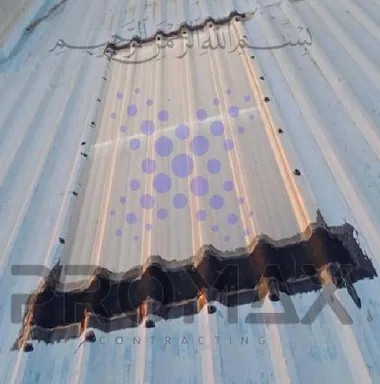
Industrial roofs fail for specific reasons. On metal roofs, the usual causes are corrosion, loose fasteners, failed laps, movement at joints, punctures around service penetrations, and drainage issues that keep water sitting too long. On concrete roofs, common failures include membrane breakdown, cracks, joint movement, UV exposure, and water entry through weak detailing. In Gulf-type climates and other high-heat industrial environments, thermal stress accelerates all of it.
What makes an industrial roof repair method effective
The best repair method is the one that deals with the failure mechanism, not just the visible stain or drip point. A roof may show leakage inside one bay while the actual water entry is coming from several meters away through sheet overlaps, parapet junctions, skylight perimeters, or pipe penetrations. If the inspection is weak, the repair usually fails early.
An effective repair approach starts with condition assessment. That means checking sheet thickness loss, coating failure, screw condition, joint separation, substrate stability, ponding patterns, insulation wetness, and structural supports such as purlins where required. It also means deciding whether the roof needs localized repair, system restoration, or partial replacement. There is no single answer for every warehouse or factory.
Best industrial roof repair methods for metal roofing
EPDM and liquid waterproofing over prepared metal surfaces
For aging metal roofs with multiple leak points, failed fastener lines, and widespread joint weakness, a waterproofing restoration system often performs better than repeated spot repairs. This is especially true when the roof sheets are still structurally serviceable but no longer watertight.
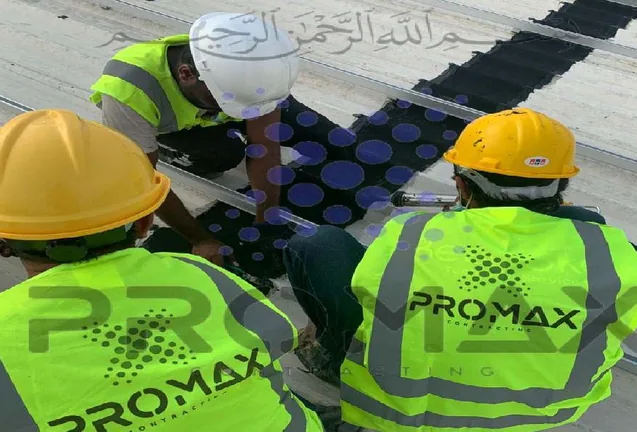
EPDM-based systems and compatible liquid-applied waterproofing solutions are widely used because they can create continuous coverage over laps, fasteners, and difficult detailing zones. The key word is prepared. A coating or membrane applied over rust, loose debris, failed screws, or unstable sheet sections is not a long-term repair. Surface cleaning, rust treatment, screw inspection, seam reinforcement, and detailing work must happen first.
This method is often one of the best industrial roof repair methods when the owner wants to extend roof life without a full roof replacement. It reduces leak pathways across a wide area and can improve resistance to standing water and heat exposure, depending on the system used. The trade-off is that it depends heavily on substrate preparation and installer discipline.
Fastener replacement and screw point treatment
Many industrial metal roofs leak because the fastener system has aged out before the roof sheets have. Washers harden, screws back out with thermal movement, and corrosion develops around fastening points. In these cases, replacing damaged fasteners and sealing vulnerable points can stop recurring leakage with far less disruption than a major overlay.
This approach works best when the roof sheets remain in fair condition and the failure is concentrated at mechanical fixing points. It is not enough when sheet laps are open, rust is widespread, or drainage is poor. Still, as part of a broader roof rehabilitation plan, screw replacement and treatment are essential details that improve overall system performance.
Lap joint resealing and flashing repair
Roof laps, ridge areas, end laps, gutters, skylight edges, and wall abutments are frequent weak points on industrial roofs. Movement, old sealant failure, poor original installation, and UV exposure gradually open these areas to water entry.
Resealing and rebuilding these details is often the difference between a temporary repair and a durable one. The best results come from removing failed materials, correcting geometry where needed, reinforcing joints, and using compatible waterproofing components designed for movement. Simple top-surface caulking over failed joints rarely lasts in industrial conditions.
Rust treatment and metal surface restoration
Corrosion is not only a cosmetic issue. Once rust develops around laps, screws, gutters, and lower roof zones, the roof starts losing thickness and integrity. Surface restoration typically includes mechanical cleaning, rust conversion or treatment, primer application, replacement of severely damaged sections, and protective coating or membrane installation.
This is one of the best methods when the roof has value left in it structurally but needs intervention before corrosion spreads into major sheet failure. If the metal is already perforated across large areas, restoration may no longer be economical, and partial replacement should be considered instead.
Best repair methods for concrete and flat industrial roofs
Crack treatment and joint sealing
Concrete roofs usually leak through movement cracks, construction joints, parapet junctions, and failed membrane terminations. Repairing these roofs requires identifying whether the crack is static or moving. Static cracks may be sealed or filled as part of a waterproofing system, while movement joints need flexible treatment that can handle expansion and contraction.
The mistake here is treating every crack the same way. A rigid patch over an active joint will fail quickly. Proper repair includes crack preparation, joint detailing, surface leveling where needed, and full waterproofing continuity across the repaired area.
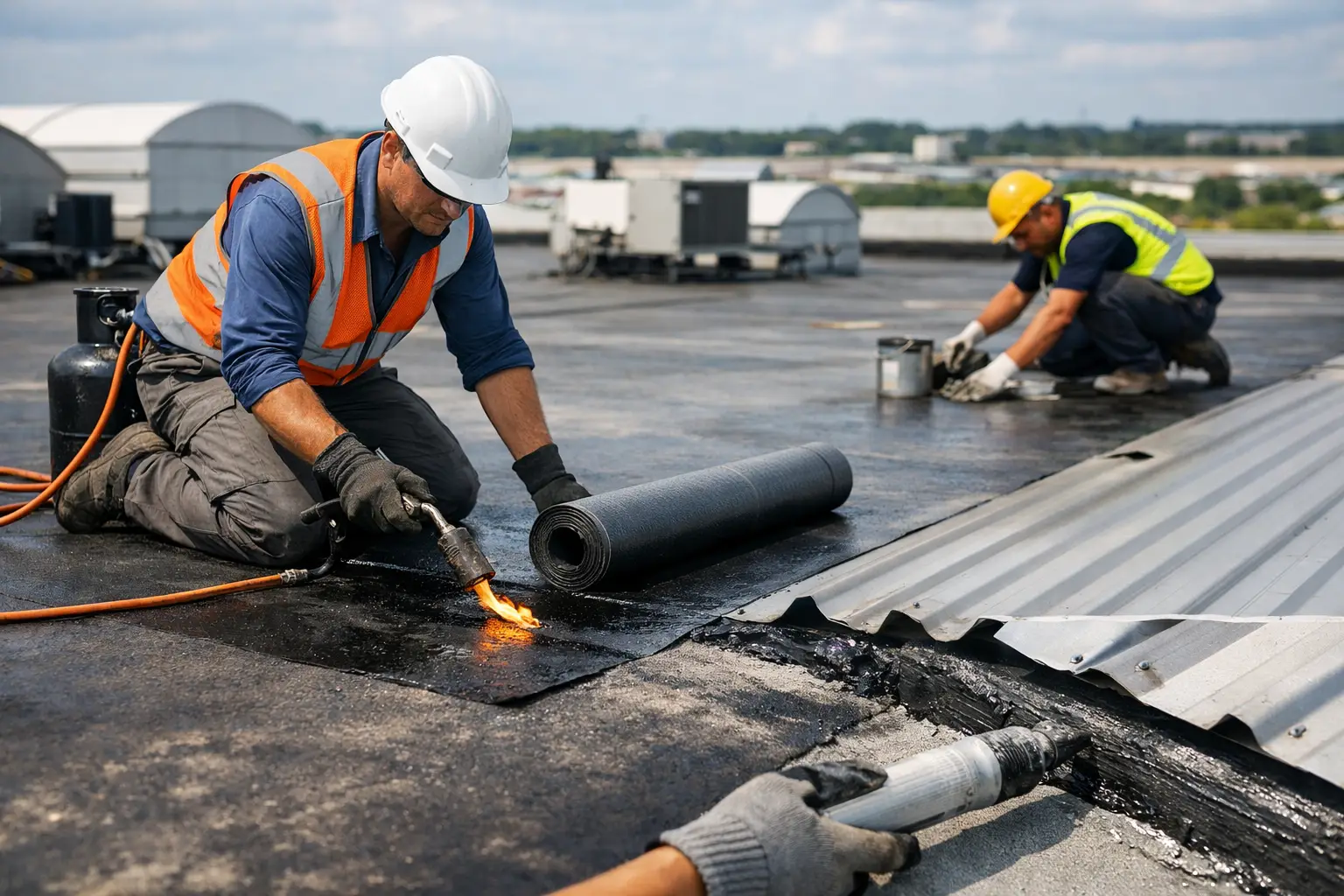
Membrane reinstatement and roof waterproofing overlay
When a concrete roof has multiple leaks or the old membrane has reached the end of its service life, isolated patching becomes inefficient. A full waterproofing overlay or membrane reinstatement is usually the better route. This can restore protection across the slab, upturns, parapets, and penetrations in one coordinated system.
For warehouses, service buildings, and industrial facilities, this method limits the cycle of repeated leak repair in different zones. The condition of the substrate still matters. Trapped moisture, loose screed, or failed detailing underneath must be addressed before installing a new system.
Drainage correction is part of roof repair
Many roof leaks are drainage failures disguised as waterproofing failures. Blocked or undersized gutters, damaged downpipes, bad slope formation, and ponding near outlets place continuous stress on the roof system. Even a good membrane will struggle if water is allowed to stand in the same areas after every rain event or washdown.
That is why drainage correction belongs in any serious industrial roof repair scope. Gutter replacement, outlet improvement, slope correction, and debris management often need to happen alongside membrane or sheet repairs. Ignoring drainage means the leak may return through the same route or simply migrate to the next weak point.
Roof penetrations, skylights, and edge details need separate attention
Industrial roofs rarely fail in open field areas alone. Pipe penetrations, equipment supports, cable entries, curb details, skylights, and perimeter flashings are usually the first points of breakdown because they combine movement, weather exposure, and installation complexity.
These areas require custom detailing, not generic patchwork. In many projects, fabrication support is necessary to rebuild flashing components or provide proper covers and terminations. This is where experienced industrial contractors separate themselves from basic maintenance crews. The repair is only as good as the detail work around interruptions in the roof plane.
When partial replacement is the smarter repair method
Facility teams often ask whether repair is always better than replacement. It is not. If roof sheets are severely perforated, purlins are weakened, insulation is saturated, or previous repairs have layered incompatible materials over one another, partial replacement may be the more cost-effective option.
The best industrial roof repair methods include knowing when not to force another coating or sealant onto a failing assembly. Replacing isolated roof bays, corroded gutters, damaged purlins, or unstable flashing sections can protect the rest of the roof and create a sound base for waterproofing restoration across adjacent areas.
How to choose the right method for your facility
The right repair strategy depends on five things: the roof type, the extent of deterioration, the source of water entry, the building's operating requirements, and the owner’s time horizon. A warehouse that needs five more years of service before redevelopment may justify a different solution than a logistics hub expected to run continuously for the next twenty years.
It also depends on access, safety, and shutdown tolerance. Some repairs can be phased with minimal disruption. Others require coordinated access planning, temporary weather protection, or fabrication in advance to shorten installation time. A contractor with inspection capability, engineering support, and in-house execution is usually better positioned to make that call accurately.
For many industrial assets, the most reliable outcome comes from a repair package rather than a single action. That may include localized sheet replacement, screw replacement, rust treatment, lap resealing, gutter works, and a full waterproofing application over the prepared roof. Promax Contracting typically approaches industrial roof rehabilitation this way because leak prevention, corrosion control, and service-life extension are connected problems.
If your roof is already showing repeat leakage, heat stress, rust spread, or drainage overflow, the right time to inspect is before the next failure reaches inventory, equipment, or production space. A good repair method should not just stop the current leak - it should reduce the chance of the next one.
Talk to Promax
Need this on your roof? Call +971 56 727 4205 or request a free inspection. Promax provides EPDM metal-roof, concrete and industrial waterproofing across Dubai and the UAE with up to a 15-year warranty.