A metal roof does not fail all at once. It starts at lap joints, screw heads, cut edges, gutters, pipe supports, and welded points where moisture sits longer than it should. That is why choosing the best rust protection coatings is not a product-only decision. It is a system decision based on surface condition, exposure, service life targets, and how well the coating can be applied in the field.
For facility managers and industrial property owners, the real question is not which coating sounds strongest on a data sheet. It is which coating will perform on your actual substrate, under your weather conditions, with the right surface preparation and application controls. In coastal, humid, and high-heat environments, that difference is significant.
What makes the best rust protection coatings actually work
Corrosion protection starts before the first coat is applied. If the steel has active rust, salt contamination, failed old paint, or moisture trapped under previous repairs, even a premium system can break down early. The best-performing coatings succeed because three things align: proper preparation, compatible primers and topcoats, and correct dry film thickness.
This is where many failures begin. A client may ask for a quick repaint, but if the substrate needs mechanical cleaning, profiling, patch welding, fastener treatment, or purlin replacement, coating alone will not solve the problem. Rust is often a symptom of a larger building envelope issue, especially on aging roofs, steel structures, tanks, and external service platforms.
Best rust protection coatings by application
There is no single coating that fits every industrial job. The best rust protection coatings depend on whether you are protecting structural steel, metal roofing, machinery supports, railings, tanks, or marine-adjacent assets.
Epoxy coatings for heavy-duty corrosion control
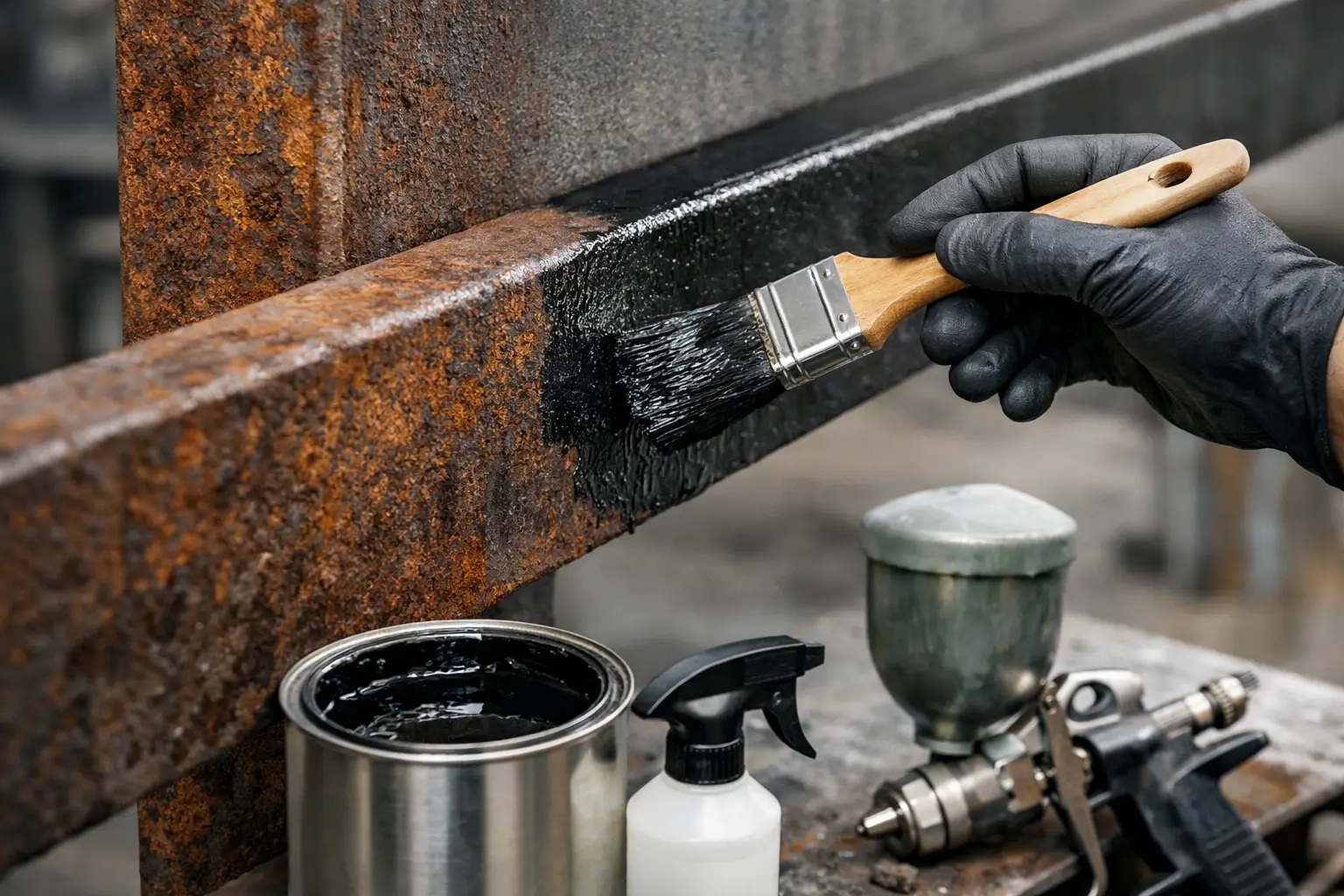
Epoxy systems are one of the most reliable choices for industrial corrosion protection. They provide strong adhesion, chemical resistance, and a dense barrier against moisture and oxygen. On warehouses, steel columns, pipe racks, equipment supports, and exposed structural members, epoxy primers are often the backbone of a long-life system.
The trade-off is UV stability. Standard epoxies can chalk and fade under continuous sun exposure, so they usually perform best when overcoated with a UV-resistant finish. If appearance matters, or if the steel is fully exposed outdoors, epoxy alone is usually not enough.
Zinc-rich primers for active steel protection
When the goal is higher-grade protection for blasted steel, zinc-rich primers are a serious option. These coatings offer sacrificial protection, meaning the zinc helps protect steel even if the film is scratched. In aggressive industrial and marine environments, that can be a major advantage.
But zinc-rich systems are not forgiving. Surface preparation needs to be precise, and application has to be controlled. On maintenance projects with limited access, partial rust retention, or inconsistent substrate condition, zinc may not be the most practical choice. It performs best when the project allows proper blasting and coating specification discipline.
Polyurethane topcoats for weather and UV resistance
Polyurethane is commonly used as the finish coat over epoxy primers. It adds color retention, gloss stability, and better resistance to sunlight and weathering. On exposed steelwork, roof accessories, handrails, louvers, and external supports, polyurethane helps maintain both protection and appearance.
It is not usually the first line of rust control by itself. Its value is in completing the system. If the primer underneath is weak or the surface prep is poor, a polyurethane topcoat cannot compensate for that.
Acrylic and elastomeric coatings for metal roofs
On metal roofing, the corrosion issue is often tied to water ingress, thermal movement, and fastener failure. In those cases, roof coatings can do more than protect against rust. Acrylic and elastomeric systems can add reflectivity, bridge minor movement, and improve weather resistance across large roof areas.
That said, they are not universal rust solutions. If the roof has deep corrosion, perforation, loose sheets, failed laps, or deteriorated screws, restoration work must come first. A coating system on a compromised roof deck will only delay the real repair.
Alkyd coatings for low-demand maintenance work
Alkyd primers and enamels still appear on lower-budget maintenance jobs because they are familiar and relatively easy to apply. For indoor steel or low-exposure areas, they may be acceptable.
For industrial exteriors, high humidity zones, coastal properties, and roofs under thermal stress, they are rarely the best long-term answer. Lower upfront cost often becomes repeat maintenance cost.
Surface preparation matters more than brand names
Many coating failures are blamed on the product when the real problem is inadequate preparation. Rust scale, oil, dirt, old flaking paint, and chlorides all interfere with adhesion. If the substrate is not cleaned to the right standard, the coating film cannot form a reliable bond.
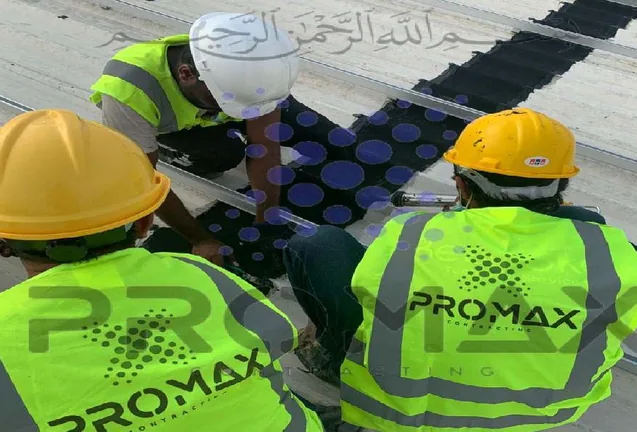
On practical site work, preparation may include power-tool cleaning, abrasive blasting, degreasing, weld seam treatment, edge grinding, and localized metal replacement. Fasteners, cut edges, and overlaps need special attention because that is where corrosion often returns first. For roof projects, ponding areas and drainage defects also have to be corrected before coating starts.
This is why site inspection is not a formality. It determines whether the asset is suitable for direct overcoating, requires spot repair, or needs a more extensive rehabilitation scope.
How to choose the right system for your facility
If you manage a warehouse, factory, logistics hub, or utility building, coating selection should be tied to operating conditions. Start with exposure. A dry indoor mezzanine frame does not need the same specification as an exterior steel canopy near salt-laden air.
Then look at asset criticality. If corrosion affects a non-structural fence, the tolerance for maintenance cycles may be higher. If it affects roof sheets, purlins, support steel, access ladders, or production-facing infrastructure, the cost of failure is much higher. In those cases, it makes sense to invest in a system with better preparation, higher film build, and stronger inspection control.
Downtime also matters. Some systems cure faster, some tolerate marginal weather better, and some require tighter environmental controls during application. The best choice on paper is not always the best choice during live operations.
Common mistakes when specifying rust protection
One common mistake is coating over active corrosion without addressing the cause. If the area is constantly exposed to trapped water, failed waterproofing, roof leakage, condensation, or dissimilar metal contact, rust will return.
Another is mixing incompatible materials. Primer, intermediate coat, topcoat, and sealants have to work together. On repair projects, the new system also has to be compatible with the existing substrate and any remaining old coating.
A third issue is underestimating edge and detail treatment. Large flat areas are usually easy to coat. Corners, bolts, penetrations, seams, brackets, and roof fixings are where workmanship is tested. If these details are skipped or rushed, the coating system loses years of expected service life.
Where rust protection coatings fit into a broader repair scope
On many industrial sites, corrosion is not isolated. It appears alongside roof leakage, failed gutters, cracked waterproofing, damaged skylight curbs, or loose sheet fixings. That is why coating work often needs to be coordinated with metal repair, waterproofing, and fabrication.
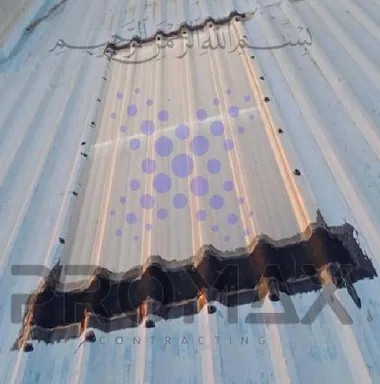
For example, on a corroded metal roof, the correct scope may include sheet replacement in damaged sections, screw treatment, lap sealing, gutter repair, waterproofing upgrades, and then a coating system. Treating only the visible rust but ignoring water entry points is not a durable solution.
This is the practical advantage of working with a contractor that understands the full envelope, not just paint application. Promax Contracting typically approaches corrosion this way - as a building performance issue, not just a coating package.
So what are the best rust protection coatings?
For most industrial and commercial steel, the answer is a properly prepared epoxy-based system, often paired with a polyurethane topcoat for outdoor exposure. For higher-spec environments and blasted steel, zinc-rich primers may offer stronger long-term performance. For metal roofs, the best solution may combine rust treatment with waterproofing-compatible roof coatings, but only after repairs and detail corrections are complete.
If there is one rule that holds across every project, it is this: the best rust protection coatings are the ones matched to the real condition of the asset and applied with discipline. A cheaper system installed over poor prep usually fails early. A well-specified system with proper inspection usually pays for itself in service life, reduced disruptions, and fewer emergency repairs.
If you are dealing with corrosion on roofs, structural steel, tanks, or exposed metal assets, the smartest next step is not to compare product labels. It is to inspect the failure points, define the exposure level, and build a coating scope that solves the cause as well as the symptom.
Talk to Promax
Need this on your roof? Call +971 56 727 4205 or request a free inspection. Promax provides EPDM metal-roof, concrete and industrial waterproofing across Dubai and the UAE with up to a 15-year warranty.