A warehouse roof usually starts failing long before it looks critical from the ground. Heat buildup, standing water, open laps, rust bleed, cracked fastener points, and aging sheets all develop quietly until stock gets damaged, operations get interrupted, and repair costs jump. That is why choosing the best warehouse roof coatings is not a cosmetic decision. It is a building protection decision tied directly to waterproofing performance, thermal control, corrosion resistance, and service life.
For facility managers and industrial property owners, the right coating depends less on marketing claims and more on roof condition, substrate type, drainage behavior, and exposure. A coating that performs well on a lightly weathered metal roof may fail early on a roof with ponding water, movement at joints, or active corrosion. The correct approach starts with inspection, defect diagnosis, and system selection based on actual site conditions.
What makes the best warehouse roof coatings
The best-performing systems do three jobs at the same time. They stop water entry, protect the roof surface from UV and weathering, and reduce the rate of deterioration around seams, screws, penetrations, and drainage details. On large warehouse roofs, those details matter more than the open field area because leaks usually start at transitions, not at the center of the sheet.
A good coating system also needs to match the roof it is being applied to. Metal roofs, concrete decks, aging membranes, and patched mixed surfaces do not behave the same way. Movement, adhesion, and preparation requirements change from one substrate to another. If the roof has rusted fasteners, punctured sheets, failed gutters, or damaged insulation, coating alone is not the fix. Those issues need to be repaired before any waterproofing layer is installed.
This is where many projects go wrong. Buyers compare coating brands when they should first be comparing repair scope, surface preparation standards, reinforcement requirements, and film thickness. The coating is only one part of the system. Execution quality decides whether it lasts.
Best warehouse roof coatings by roof condition
Acrylic roof coatings
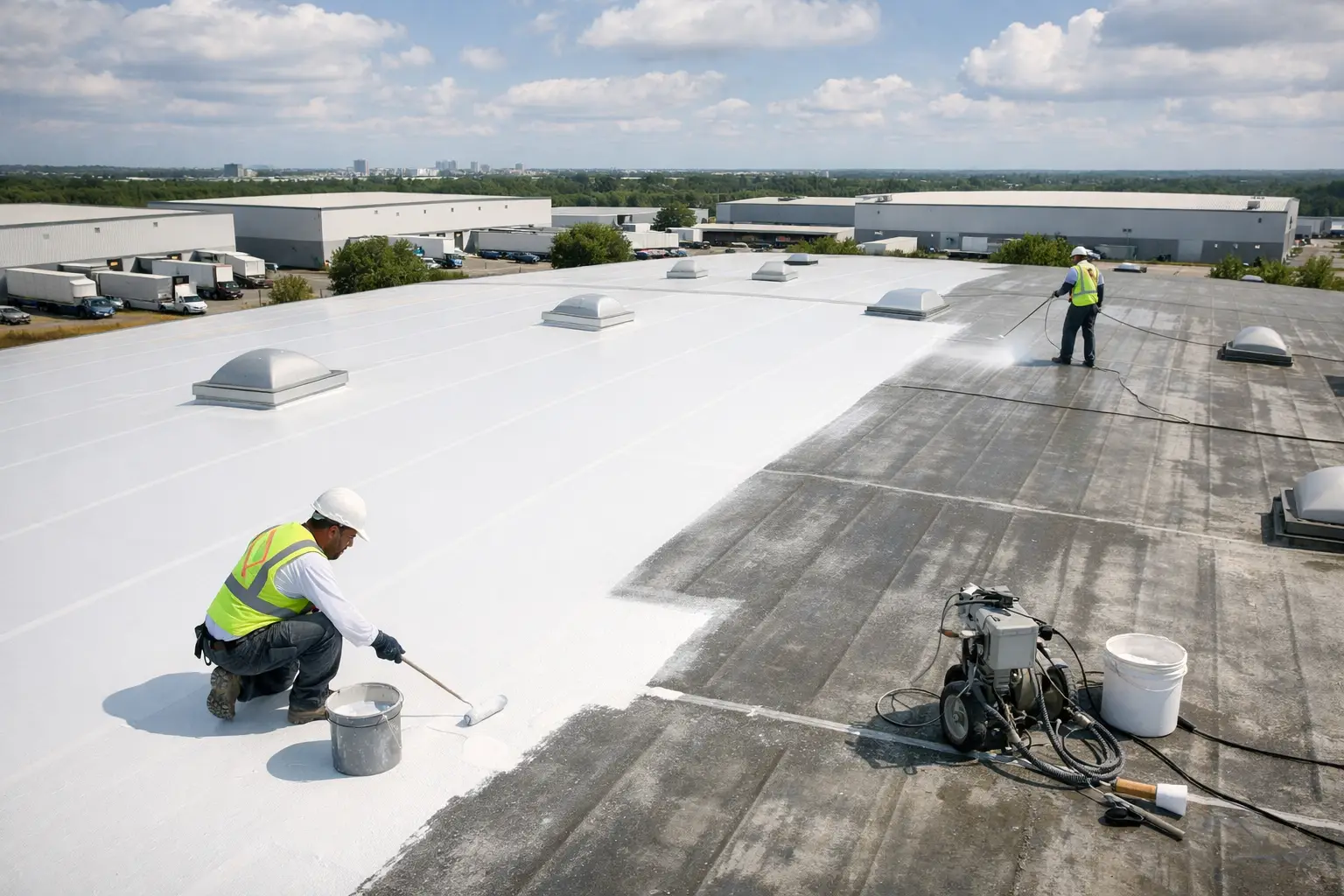
Acrylic coatings are often used where solar reflectivity and heat reduction are priorities. They can be a practical option on warehouse roofs with decent drainage and limited standing water. On large metal roofs exposed to strong sun, a reflective acrylic system can lower surface temperature and reduce thermal stress on the roof assembly.
The trade-off is water resistance under prolonged ponding. If a roof has low spots, blocked outlets, or poor slope, acrylic may not be the best long-term choice unless drainage is corrected first. In dry conditions with proper preparation, it can be cost-effective. In wet areas or on roofs with chronic ponding, performance usually drops.
Silicone roof coatings
Silicone is widely chosen for roofs that hold water. It performs better than acrylic in ponding conditions and provides strong resistance to UV exposure. For warehouses with repeated leak history around flat sections, parapet transitions, and difficult drainage zones, silicone is often one of the stronger options.
Its limitation is not usually weathering. It is maintenance and recoating compatibility. Silicone surfaces can attract dirt over time, and future repairs or overlays may require more specific preparation. It also needs careful application control because uneven film build can affect performance. When the drainage issue cannot be fully eliminated, silicone becomes more attractive.
Polyurethane coatings
Polyurethane systems are valued for toughness, impact resistance, and strong adhesion. They are often considered where the roof sees more abuse, foot traffic, or mechanical exposure. On warehouse buildings with maintenance access, equipment zones, and service activity near penetrations, polyurethane can provide a more durable surface than softer alternatives.
There are usually two sides to this choice. Polyurethane can perform very well, but it is more sensitive to application conditions and often comes at a higher cost than basic acrylic systems. It is better suited for facilities that need a harder-wearing protective layer and are willing to pay for a more demanding installation process.
EPDM-based liquid waterproofing systems
For technically demanding rehabilitation work, EPDM-based systems are a strong option, especially where waterproofing reliability is more important than simple reflectivity. These systems are used on roofs with complex penetrations, joint movement, and recurring leak points that need a flexible, durable membrane-like barrier rather than a thin surface treatment.
This is particularly relevant for warehouses and industrial sheds where pipe penetrations, skylight perimeters, gutter interfaces, and sheet overlaps are common failure areas. An EPDM-based coating or liquid-applied membrane system can bridge difficult details more effectively when reinforced and installed correctly. It is not the cheapest route, but it is often the right one for roofs with active waterproofing problems.
Best warehouse roof coatings for metal roofs
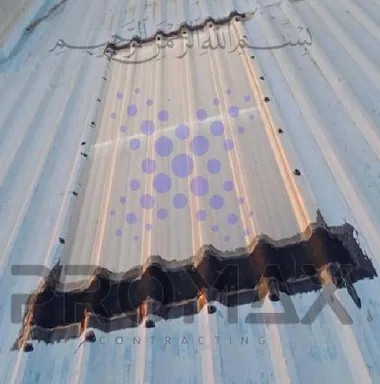
Metal warehouse roofs present a specific set of issues: oxidation, loose fasteners, failed sealing washers, open laps, and thermal movement. In these cases, the best warehouse roof coatings are usually the ones backed by rust treatment, screw point sealing, joint reinforcement, and localized sheet repair before the main coating is applied.
If the roof is structurally sound and drainage is acceptable, acrylic or silicone may both be viable depending on ponding behavior. If the roof has more movement and higher risk at laps and penetrations, an elastomeric system with reinforced details becomes more dependable. Where corrosion is already active, no coating should go down until rust is treated and compromised sections are replaced or restored.
That is why coating selection on metal cannot be separated from preparation scope. Surface cleaning, abrasion, primer compatibility, and treatment of all fastener lines determine adhesion and long-term performance. A cheap coating over untreated rust is just a delayed failure.
Why inspection matters more than product claims
The coating market is full of broad promises: waterproof, reflective, long-life, high-build, industrial-grade. Those terms mean very little without a site-based assessment. Two warehouses with the same roof area can need completely different systems because one has hidden corrosion under laps while the other simply has UV wear and minor sealant failure.
A proper inspection should review substrate type, existing coating condition, moisture risk, drainage pattern, penetration details, edge conditions, and structural movement. It should also identify whether the project is a restoration job or a temporary extension of service life before replacement. That difference matters. Some roofs are good candidates for full rehabilitation. Others need selective repair now and replacement planning later.
Experienced contractors do not start by naming a product. They start by identifying failure points, required repairs, and expected performance period. That is the standard decision-makers should expect from any serious roof coating proposal.
Cost, lifespan, and the real trade-off
The cheapest coating system is rarely the lowest-cost solution over time. If a low-price application skips seam treatment, rust conversion, reinforcement, or correct dry film thickness, the building owner pays again through recurring leaks, emergency patching, damaged inventory, and operational disruption.
At the same time, the most expensive coating is not automatically the best. A premium system installed on a roof with unresolved substrate issues can still fail early. The real value comes from matching system type to roof condition and making sure the installation includes the repair work needed underneath it.
For most warehouse owners, the right question is not, "What is the best coating on the market?" It is, "What is the best coating system for this roof, in this condition, with this drainage profile, and for this service-life target?" That is a more technical question, but it leads to fewer surprises.
How to choose a contractor for warehouse roof coatings
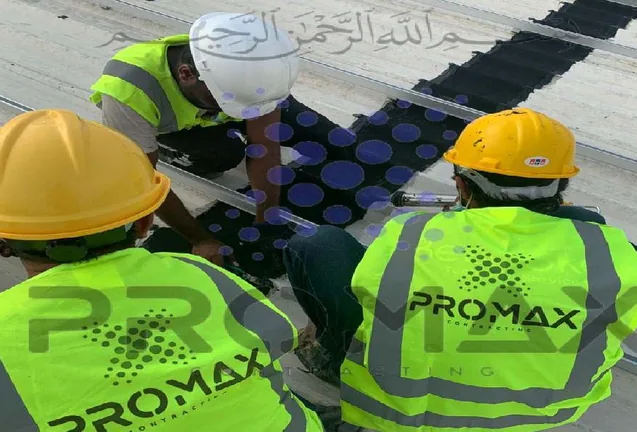
Execution quality is the difference between a coating project and a roof rehabilitation project. A capable contractor should be able to inspect the roof, document defects, recommend repair scope, specify coating type, and explain why one system fits better than another. They should also be able to handle related works such as gutter correction, penetration sealing, sheet replacement, rust treatment, and detail waterproofing without splitting responsibility across multiple vendors.
For industrial properties, responsiveness matters as much as specification. Roof leaks do not wait for procurement cycles. Contractors with field teams, fabrication support, and after-sales capability are better positioned to deliver reliable results on active facilities. This is where companies such as Promax Contracting stand out - not by offering one coating for every roof, but by treating roof protection as a system that includes inspection, repairs, waterproofing, and follow-up support.
If your warehouse roof is already showing leaks, corrosion, or heat stress, the next step is not guessing which coating sounds strongest on paper. It is getting the roof inspected properly, fixing what is failing, and choosing a system that fits the building you actually have.
Talk to Promax
Need this on your roof? Call +971 56 727 4205 or request a free inspection. Promax provides EPDM metal-roof, concrete and industrial waterproofing across Dubai and the UAE with up to a 15-year warranty.