A roof leak over an active warehouse is rarely just a roof problem. Water can reach stored inventory, electrical routes, insulation, ceiling systems, and structural steel long before the visible stain becomes serious enough to trigger action. Choosing the right roof waterproofing contractor is therefore a maintenance decision with direct consequences for operations, safety, and asset life.
For commercial and industrial facilities, the lowest quotation is not always the lowest-cost solution. A short-term patch may stop a visible leak while leaving failed laps, corroded fasteners, blocked drainage, or damaged penetrations untreated. The right contractor identifies the complete failure path, recommends a suitable system, and executes the work without creating new weak points.
Start With a Proper Roof Inspection
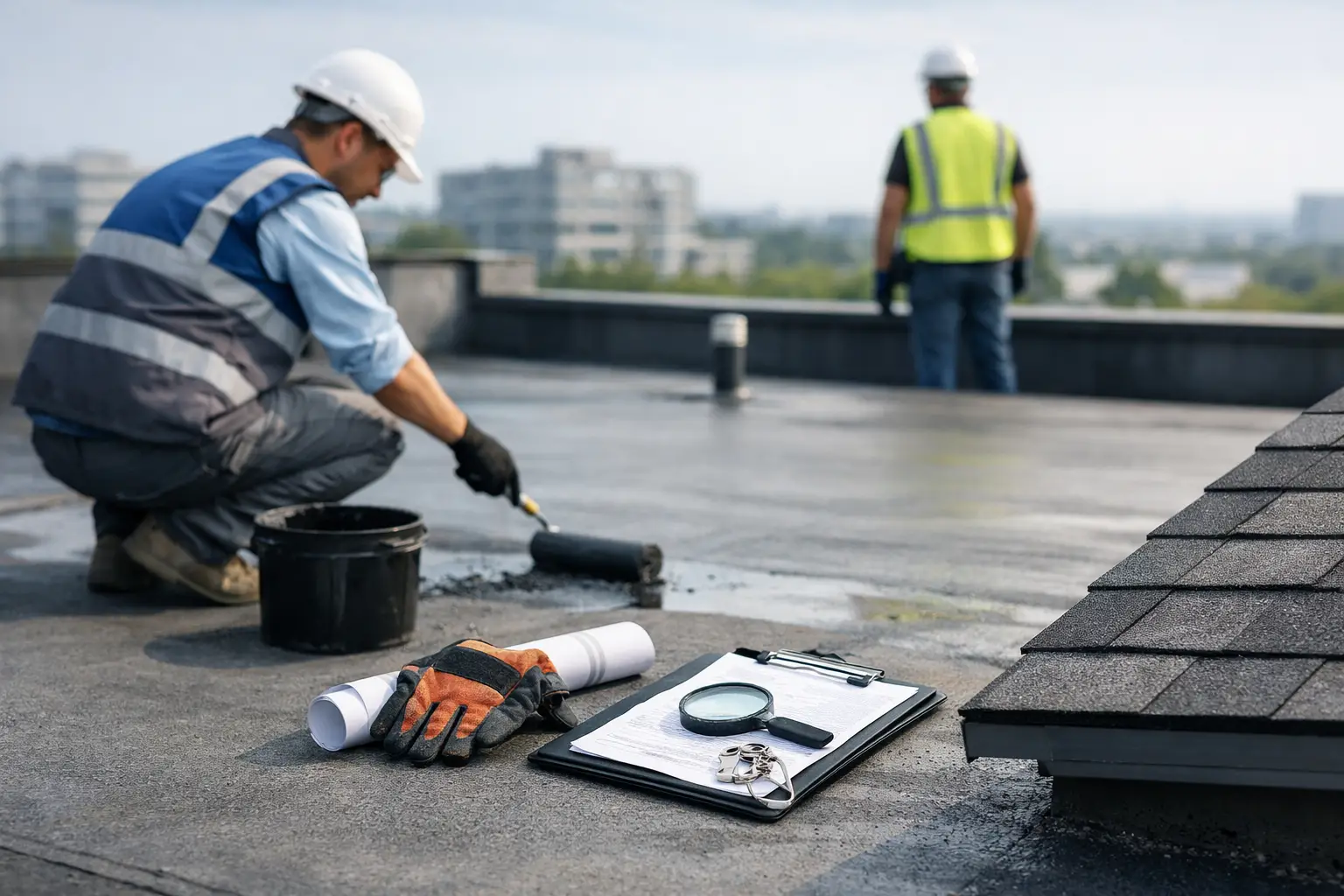
A contractor should not recommend a membrane, coating, or repair method before assessing the roof condition on site. Roof failures often have more than one cause. A leak reported near the center of a building may originate at a skylight curb, pipe penetration, gutter joint, roof lap, or damaged screw line several meters away.
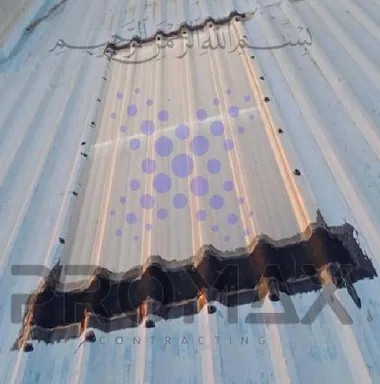
A proper inspection reviews the roof covering, substrate condition, drainage falls, gutters, flashing, expansion joints, penetrations, skylights, fasteners, corrosion, and areas exposed to standing water. On metal roofs, the inspection should also assess sheet overlap conditions, screw washer failure, rust around fixing points, and the condition of purlins or supporting steel where deterioration is suspected.
For large sheds, factories, storage facilities, and warehouses, access planning matters as much as diagnosis. The contractor should understand how work crews, materials, and safety systems will be managed without unnecessarily interrupting loading, production, or tenant activity. If internal operations are sensitive, this should shape the repair sequence from the beginning.
What a Roof Waterproofing Contractor Should Diagnose
Waterproofing is not a single product applied across every roof. The system must match the roof type, movement, exposure, and source of failure. An experienced roof waterproofing contractor separates cosmetic surface aging from active defects that allow water into the building.
On a metal roof, heat movement can stress overlaps and sealant lines. UV exposure can harden old sealants, while repeated expansion and contraction may open joints around flashing and penetrations. Corrosion creates a different problem: waterproofing applied over untreated rust may temporarily cover the issue but will not stop steel deterioration underneath.
Concrete roofs bring their own requirements. Cracks, failed construction joints, ponding water, weak screed, and damaged upstands all need to be considered before treatment begins. A membrane system may be appropriate for broad roof coverage, but localized crack treatment, joint detailing, and drainage correction can be equally critical.
The contractor should be able to explain the likely cause in clear terms. Statements such as “apply coating everywhere” or “seal the leak point only” are not enough when the roof has widespread wear. A practical recommendation defines what is failing, why it is failing, and which parts of the roof require repair, replacement, or protective coverage.
Look Beyond the Main Roof Surface
Many leaks occur at details, not open roof areas. This is where workmanship has the greatest effect on waterproofing performance. Membranes and protective systems must be properly terminated, sealed, and integrated around changes in level and roof equipment.
Pay close attention to skylights, ventilation bases, pipe penetrations, roof drains, parapet walls, gutters, and flashing. These areas experience movement, water concentration, and difficult geometry. A contractor that treats them as minor add-ons can leave the building exposed even after completing a large roof application.
Gutters also deserve a separate review. A waterproof roof cannot perform as intended if gutters overflow, joints are leaking, outlets are undersized, or water is trapped against roof edges. In some cases, gutter replacement, fabrication of new sections, or correction of drainage routes is a necessary part of the waterproofing scope rather than an optional extra.
Ask About the Proposed System, Not Just the Product Name
A product name alone does not describe a waterproofing solution. The contractor should specify surface preparation, primer requirements, reinforcement at joints, treatment of fasteners, membrane thickness or coverage, detailing at penetrations, and the method used to protect vulnerable edges.
EPDM-based waterproofing systems can provide reliable coverage where flexibility, weather resistance, and durable joint treatment are needed. However, suitability depends on the roof substrate, existing condition, geometry, and expected exposure. The key question is whether the contractor has designed the full assembly for the building, not simply whether a recognized material has been included in the quotation.
For metal roof rehabilitation, a complete scope may include rust treatment, replacement of damaged sheets where needed, screw treatment, sealing of laps, flashing repairs, and membrane coverage. For concrete roofs, preparation may involve repairing cracks and weak areas before membrane installation. Skipping preparation to reduce the initial price usually transfers the cost into future repairs.
Evaluate Execution Capability Before Awarding the Work
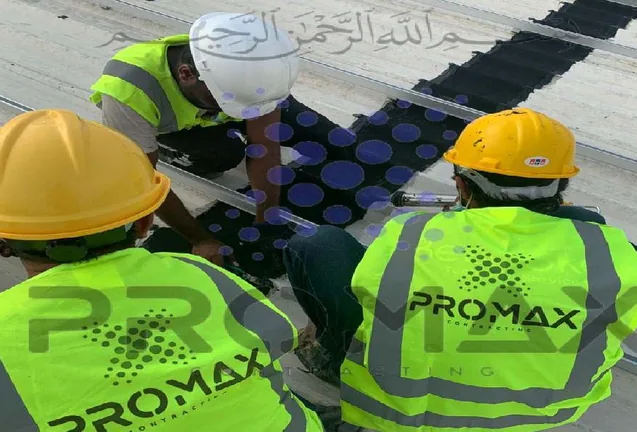
Commercial roof waterproofing is field execution work. The contractor’s site team, supervision, safety procedures, material handling, and quality checks determine whether the designed system performs as expected.
Ask how the work will be phased, particularly if the building must remain operational. A capable contractor can identify high-risk zones, prioritize active leak locations, and organize work in sections to reduce exposure during the project. Weather planning is also essential. Roof areas should not be opened, prepared, or coated without a realistic plan for rain, humidity, surface moisture, and curing conditions.
For technically demanding projects, fabrication capability is valuable. Custom flashings, gutter sections, edge trims, covers, and support components often need to be produced to suit the existing building rather than forced into standard sizes. This can improve fit, reduce weak transitions, and shorten delays caused by waiting for third-party components.
Before proceeding, request clarity on these four items:
- The inspected roof areas and documented defects
- The preparation and repair work included before waterproofing
- The detailed treatment of joints, penetrations, gutters, and edges
- The quality control process and after-sales response procedure
These points make it easier to compare quotations on scope rather than price alone. Two proposals may appear similar until one includes full preparation, detail work, and follow-up support while the other covers only surface application.
Consider Response Time and Long-Term Support
A contractor’s role does not end on installation day. Roofs remain exposed to heat, wind, dust, rain, maintenance traffic, and movement from building services. Facility teams need a contractor that can respond when a new issue appears, investigate it properly, and distinguish between a localized maintenance item and a wider system concern.
This is particularly relevant for properties in Dubai, Abu Dhabi, Sharjah, and other UAE locations where high surface temperatures and harsh exposure place constant stress on roof assemblies. Preventive inspections can identify failing sealant, blocked outlets, loose flashing, and early corrosion before they develop into internal leaks and operational disruption.
Promax Contracting approaches roof rehabilitation as a complete site solution, combining inspection, waterproofing application, repair detailing, fabrication support, and responsive maintenance. That integrated approach is useful when leakage is connected to more than one building element and the facility cannot afford repeated trial-and-error repairs.
Make the Decision on Scope and Risk
A roof waterproofing project should be selected according to the building’s risk profile. A small isolated leak on an otherwise sound roof may only require targeted repair. A roof with recurring leaks, deteriorated fasteners, widespread corrosion, failed gutters, or multiple patched areas usually requires a broader rehabilitation plan.
The decision also depends on what sits below the roof. Facilities storing valuable goods, operating sensitive equipment, or serving tenants have less tolerance for temporary repairs. In those cases, spending more on inspection, preparation, and a properly detailed system can prevent costly interruptions later.
The best contractor is the one that sees the roof as part of the building envelope, not as a surface to cover quickly. Demand a clear diagnosis, a defined scope, competent site execution, and support after handover. A dry roof is the outcome, but protecting the operation beneath it is the real objective.
Talk to Promax
Need this on your roof? Call +971 56 727 4205 or request a free inspection. Promax provides EPDM metal-roof, concrete and industrial waterproofing across Dubai and the UAE with up to a 15-year warranty.