A leak in a warehouse roof rarely stays a roof problem for long. It moves into stock damage, electrical risk, insulation failure, corrosion, shutdown pressure, and repeated patchwork that costs more every season. That is why selecting among waterproofing companies in abudhabi is not just a maintenance decision - it is an operational one.
For commercial and industrial properties, the right contractor is the one that can inspect accurately, isolate the source of failure, recommend a system that fits the structure, and execute without creating more disruption than the leak itself. On paper, many contractors offer waterproofing. In practice, the gap between basic application and reliable long-term performance is wide.
What separates strong waterproofing companies in AbuDhabi
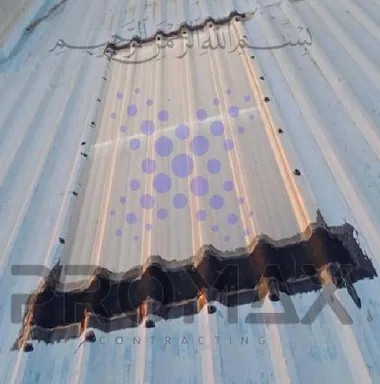
The first difference is diagnosis. Water ingress does not always appear where it starts. A ceiling stain may come from failed roof laps, cracked parapet joints, skylight perimeters, blocked drainage lines, corroded metal sheet fixings, pipe penetrations, or deteriorated sealant around service openings. A contractor that only looks at the visible wet area will usually recommend a surface treatment and move on. That approach often leads to repeat failures.
A better contractor starts with site inspection, condition mapping, moisture path review, and system compatibility. On industrial roofs in particular, age, thermal movement, screw loosening, rust formation, standing water, and previous repair layers all matter. The goal is not to sell membrane by the square foot. The goal is to stop failure at the source and protect the entire roof assembly.
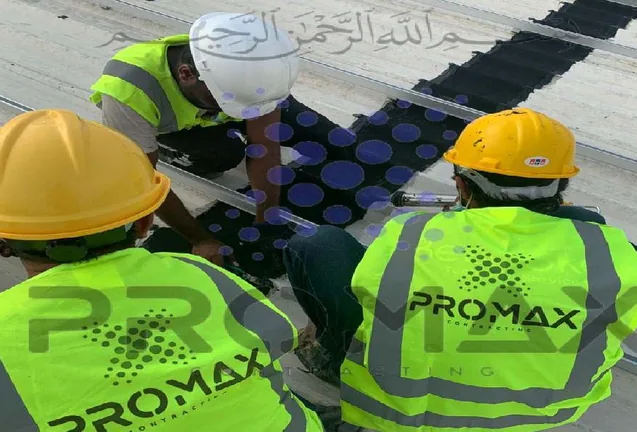
The second difference is execution capacity. Waterproofing works on factories, logistics buildings, and large sheds are rarely isolated tasks. Once inspection begins, the scope may include gutter replacement, rust treatment, fastening correction, purlin repair, sealant replacement, insulation checks, sheet overlap treatment, or fabrication of custom flashings. Companies that only apply coating can struggle when the job requires repair, fabrication, and system integration at the same time.
Why cheap waterproofing usually becomes expensive
Price matters, but scope matters more. A low quote often excludes the work that actually controls long-term performance. Surface cleaning may be minimal. Joint treatment may be limited. Fasteners may not be replaced or sealed correctly. Drainage slope issues may be ignored. Warranty language may cover material but not application defects or water entry caused by adjacent untreated areas.
This is where buyers get caught. Two proposals can use similar words - membrane, sealant, coating, roof treatment - while representing very different levels of work. One may include substrate preparation, crack repair, detailing around penetrations, edge treatment, testing, and after-sales response. The other may be little more than a thin application over an unstable surface.
For facilities exposed to Gulf heat, dust, expansion stress, and sudden rain events, shortcuts show up quickly. Membranes lose adhesion over poorly prepared substrates. Coatings split where movement joints were not addressed. Water ponds where drainage corrections were skipped. A contractor should be able to explain not just what will be applied, but why that system suits the roof type, the traffic conditions, and the failure pattern already present.
What to ask before hiring a contractor
The most useful conversation starts with the roof itself. Is it concrete, metal, sandwich panel, or mixed construction? Has it been coated before? Are leaks seasonal or ongoing? Are there rooftop units, skylights, solar supports, ducts, or multiple penetrations? Is corrosion already active? These answers shape the method.
Then ask direct technical questions. What is the identified source of ingress? What surface preparation is included? How are laps, joints, and penetrations treated? Will the contractor handle damaged gutters, flashing fabrication, screw treatment, and rust removal if found during execution? How will they manage access and safety while the building remains in use? If the team cannot answer clearly, that is a warning sign.
Response time also matters more than many procurement teams expect. Water entry can accelerate quickly once insulation is saturated or metal corrosion begins around fixings and laps. A contractor with inspection capability, mobile teams, and after-sales responsiveness is better positioned than one that takes days to assess and longer to return for correction.
Systems matter, but suitability matters more
There is no single best waterproofing system for every building. That is where many comparisons go wrong. A concrete roof terrace, a metal warehouse roof, and a service deck with multiple penetrations do not fail in the same way and should not be treated the same way.
For concrete roofs, crack bridging, substrate condition, moisture content, and UV exposure all affect product choice. For metal roofs, thermal movement, sheet laps, screw points, gutter interfaces, and corrosion control are usually the critical issues. For industrial facilities with heavy service loads, detailing around equipment bases, cable routes, and access pathways becomes just as important as the field membrane itself.
EPDM-based systems are often a strong fit for demanding roof environments because they offer durable waterproofing performance and good movement tolerance when installed correctly. But even a strong system can fail in poor hands. Installation discipline, edge detailing, overlap treatment, and substrate preparation are what turn a material into a functioning waterproofing assembly.
Signs a company can handle industrial waterproofing
Industrial and commercial buyers should look beyond marketing claims and focus on execution signals. A capable contractor usually talks in terms of inspection findings, substrate condition, repair sequence, membrane compatibility, detailing, fabrication support, access planning, and maintenance follow-up. That language reflects field experience.
It also helps when the contractor can integrate related works under one scope. Many leaks are tied to failures in gutters, skylight edges, roof penetrations, metal flashing, or corroded sheet sections rather than the primary roof field alone. If one contractor diagnoses the issue, another fabricates parts, and a third applies waterproofing, coordination gaps can delay the fix and dilute accountability.
This is why many facility teams prefer specialized contractors that can inspect, recommend, fabricate, install, and return for maintenance under one system of responsibility. Promax Contracting operates in that model, which is especially useful when the leak is part of a larger roof rehabilitation problem rather than a simple isolated crack.
Red flags when comparing waterproofing companies in AbuDhabi
One red flag is a quotation prepared without a real site visit. Waterproofing is too condition-dependent for guesswork. Another is a proposal that describes only product names without repair methodology. Material alone does not solve movement, corrosion, failed drainage, or weak detailing.
Be cautious with contractors who avoid discussing preparation. On most failed roofs, surface readiness is one of the main reasons previous repairs did not hold. Dirt, loose coating, rust scale, moisture entrapment, and failed sealant must be treated before any membrane or coating goes down.
Another warning sign is narrow scope language around warranty and rectification. Commercial properties need contractors who stand behind execution, respond fast, and understand that a leak recurrence is not an admin issue - it is an operational fault that may affect tenants, stock, machinery, and compliance.
The best choice depends on the building, not the brochure
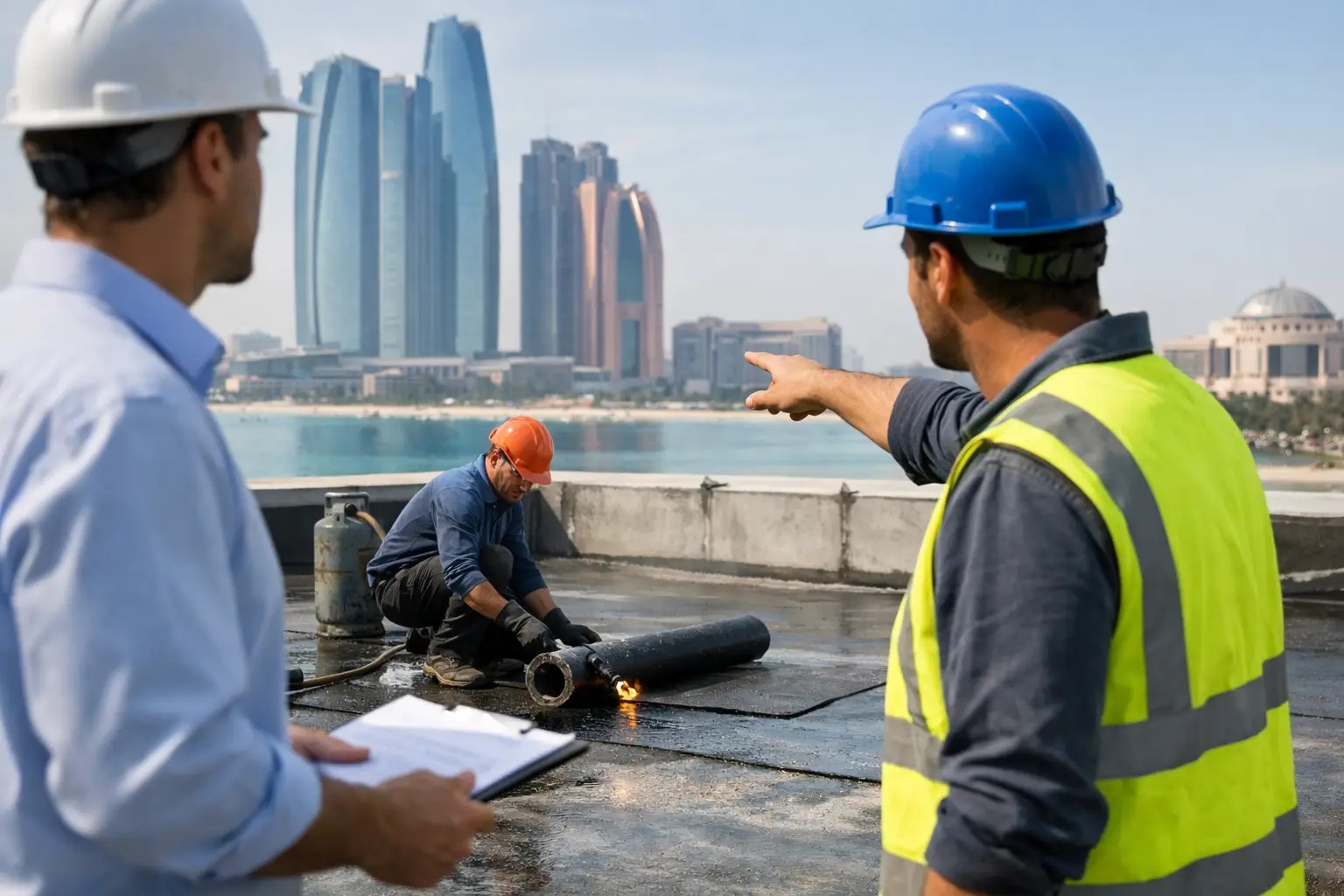
A warehouse with recurring sheet roof leaks needs a different contractor profile than a residential balcony or a small office washroom. Large roofs demand planning, manpower, safety control, access equipment, and familiarity with active industrial environments. In many cases, waterproofing must be coordinated with corrosion treatment, metal replacement, gutter rehabilitation, and protective coating works.
That is why the strongest contractor is not always the one with the broadest advertising reach. It is the one with the clearest understanding of failure points, the right repair scope, and the ability to execute fast without compromising detail. For procurement managers and facility teams, that means reading proposals closely, asking technical questions early, and treating waterproofing as an asset protection measure rather than a short-term expense.
If you are comparing contractors, ask for a site-based recommendation, not a standard package. The right waterproofing company should make the problem more defined, not more confusing. When the diagnosis is clear and the scope is built around actual site conditions, you are far more likely to get a repair that holds through heat, rain, movement, and time.
The best waterproofing work is usually the kind nobody notices after it is done - because operations continue, interiors stay dry, and the same leak does not come back next quarter.
Talk to Promax
Need this on your roof? Call +971 56 727 4205 or request a free inspection. Promax provides EPDM metal-roof, concrete and industrial waterproofing across Dubai and the UAE with up to a 15-year warranty.