When a warehouse gutter fails, the problem rarely stays at the roofline. Water starts tracking down wall panels, staining facades, flooding loading zones, and finding every weak point around joints, fasteners, and penetrations. By the time the overflow is visible at ground level, the drainage problem has usually been building for months.
That is why choosing the right commercial gutter replacement contractor is less about buying new metal and more about protecting the building envelope. For industrial and commercial facilities, gutter replacement is a drainage correction project, a waterproofing project, and in many cases a corrosion-control project at the same time.
What a commercial gutter replacement contractor should actually solve
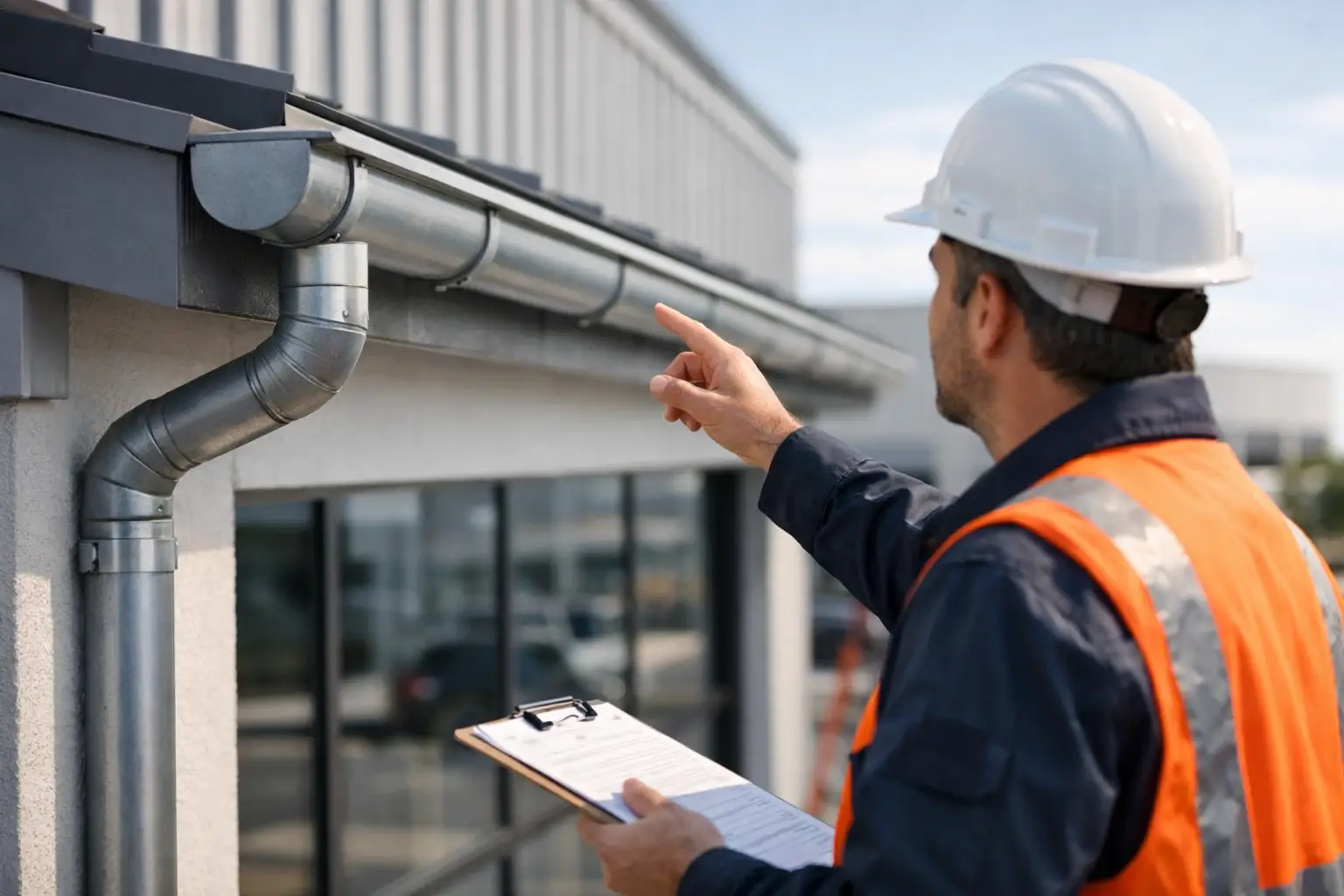
A proper contractor does not begin with a price per linear foot. The first step should be inspection. On large buildings, gutter failure is often connected to roof slope issues, standing water, downspout undersizing, loose brackets, rusted outlets, failed sealant, expansion movement, or discharge points that were never designed for the actual rainfall load.
If the contractor only measures the old gutter and proposes a like-for-like replacement, that is a warning sign. Commercial drainage systems need to be assessed as a working system. The gutter may be failing because the outlet spacing is wrong. It may also be failing because adjacent roof sheets, edge flashings, or support steel have deteriorated. Replacing only the visible component can leave the root problem untouched.
This is especially true on warehouses, factories, storage facilities, and distribution buildings where long roof spans collect high volumes of runoff. One blocked or undersized section can create overflow that affects insulation, electrical routes, cladding, and internal stock areas. In these settings, a contractor should be thinking beyond replacement and toward water management performance.
Why commercial gutter replacement is different from small-building work
Commercial gutters operate under different demands than residential systems. The roof catchment area is larger, rainwater volume is higher, access is more complex, and safety planning matters more. Materials also face harsher exposure from heat, UV, chemical atmosphere, and long-term corrosion.
A qualified commercial gutter replacement contractor should be comfortable working around operating facilities, maintenance schedules, access restrictions, and safety permit requirements. In many industrial environments, replacement work cannot interrupt loading operations, production lines, or tenant access. That affects sequencing, manpower, lifting methods, and fabrication planning.
Material selection also depends on the building use. Galvanized steel may suit some projects, while aluminum, stainless steel, or coated fabricated sections may make more sense where corrosion risk is high. There is no one-size-fits-all answer. A low-cost material can become the expensive choice if the site is exposed to salt, industrial emissions, or standing water conditions.
How to evaluate a commercial gutter replacement contractor
The best contractors are usually the ones who inspect like investigators, not salespeople. They should be able to explain why the existing system failed, what capacity the new system needs, how they will handle support details, and what adjacent repairs are necessary for long-term performance.
Look closely at how they assess the roof edge. Are they checking fascia condition, bracket fixing points, end caps, outlet welding or sealing, and connection to downpipes? Are they asking about overflow history and internal leakage patterns? A serious contractor will want to see where the water goes after it leaves the gutter, not just where it enters.
Fabrication capability is another major factor. Large commercial buildings often need custom sections, non-standard dimensions, sump boxes, expansion provisions, and site-specific outlet arrangements. A contractor with fabrication support can usually deliver a better fit and faster turnaround than one relying only on generic stock profiles.
You should also ask how the work will be staged. On active commercial sites, access planning is as important as installation quality. If the contractor cannot clearly explain equipment, manpower, temporary water control, and safety procedures, the project may become disruptive or delayed once work starts.
Questions worth asking before you award the job
A few direct questions can quickly separate qualified contractors from general installers. Ask what caused the current gutter failure and what evidence supports that conclusion. Ask whether the replacement includes correction of slopes, outlets, brackets, downspout connections, and sealant interfaces. Ask what material and thickness they recommend for your site conditions and why.
You should also ask how they treat adjoining roof and wall details. In commercial buildings, gutters do not fail in isolation. Edge flashings, roof sheets, parapet terminations, support members, and waterproofing transitions all affect service life. If those items are visibly compromised, they should be addressed in the scope or at least documented during inspection.
Another good question is what happens after installation. Commercial clients benefit from contractors who provide punch-list closeout, testing where required, warranty clarity, and after-sales response. Drainage systems need periodic cleaning and inspection, so long-term support matters.
Signs the scope should include more than gutter replacement
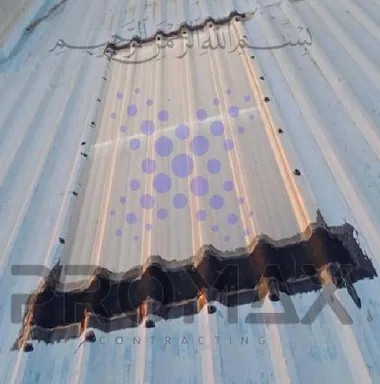
Sometimes replacement is enough. Sometimes it is not even close. If there is widespread rust at roof edges, recurring leaks below gutter lines, sagging supports, or damage around skylights and penetrations, the drainage issue may be part of a larger roof rehabilitation need.
This is where specialist contractors have an advantage. A team experienced in waterproofing, metal repair, sealing works, and edge-detail restoration can address the connected failures in one program instead of splitting responsibility across multiple vendors. That matters because water rarely respects trade boundaries. It moves from gutter to flashing, from flashing to panel joint, and from panel joint to interior damage.
For many facilities, the smartest decision is to combine gutter replacement with targeted waterproofing and corrosion treatment. That can include joint resealing, screw treatment, roof edge repairs, EPDM-based detailing at vulnerable transitions, or replacement of damaged support components. The upfront cost is higher than a basic swap-out, but the long-term maintenance burden is often lower.
What good execution looks like on site
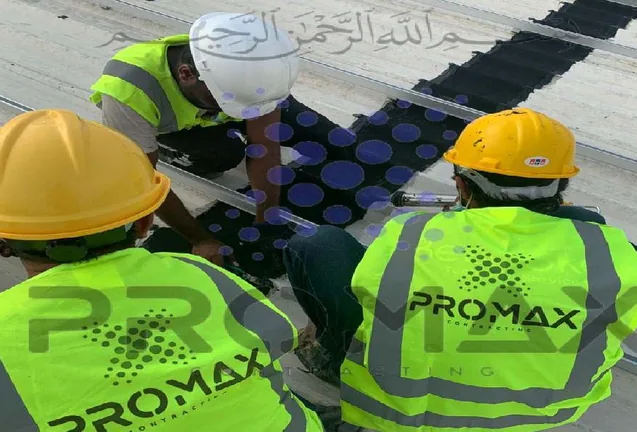
Good commercial gutter work is organized before the first section comes down. Measurements are verified, fabricated pieces are prepared correctly, access equipment is coordinated, and water-sensitive areas below are protected. The crew should remove damaged sections without creating new roof-edge defects, and new installation should maintain proper alignment, fall, support spacing, and outlet integrity.
Just as important, the contractor should leave the system ready to perform. That means clean discharge paths, tested joints where applicable, properly fixed downspout connections, and no loose debris left in channels or outlets. On larger facilities, documenting completed areas with photos and inspection notes is a practical sign of professionalism.
Poor execution usually shows up fast. Misaligned sections pond water. Weak joints start leaking under the first heavy rain. Inadequate supports allow movement and sagging. If the contractor rushes installation but ignores the surrounding roof condition, the client may still see leaks and assume the new gutter has failed when the real issue is an untreated adjacent detail.
Choosing for long-term value, not the lowest quote
Price always matters, especially on large linear quantities. But the cheapest bid often leaves out the exact items that determine whether the system lasts. Thin-gauge material, limited brackets, rushed sealing, no allowance for outlet upgrades, and no attention to surrounding corrosion can all make a low number look attractive at tender stage and expensive six months later.
The better comparison is total repair value. Does the contractor understand industrial drainage loads? Can they fabricate to suit the building? Can they identify linked waterproofing failures before they become change orders? Can they execute safely on an active site and respond quickly if conditions change during the job?
For facility managers and building owners, that level of capability reduces repeat callouts, internal water damage, and patchwork maintenance spending. It also helps extend the life of adjacent roof and facade components.
A contractor like Promax Contracting is typically chosen for this kind of work because the requirement is not just replacement. It is inspection, diagnosis, fabrication, installation, and follow-through delivered by teams used to solving roof-edge and waterproofing problems in demanding commercial environments.
If your gutters are overflowing, corroding, or pulling away from the building, treat it as an early warning from the structure, not a minor metalwork issue. The right contractor will fix the drainage path and help protect everything below it.
Talk to Promax
Need this on your roof? Call +971 56 727 4205 or request a free inspection. Promax provides EPDM metal-roof, concrete and industrial waterproofing across Dubai and the UAE with up to a 15-year warranty.