A concrete roof rarely fails all at once. It starts with hairline cracking around joints, damp patches under slabs, blistering coatings, blocked drains, or recurring leaks after every heavy rain. That is why concrete roof treatment systems should never be approached as a single coating job. On industrial and commercial buildings, the right system starts with diagnosis, then moves into repair, waterproofing, detailing, and protection based on actual site conditions.
For facility managers and property teams, the real issue is not just water entry. It is downtime, damaged stock, ceiling deterioration, corrosion around embedded steel, mold risk, and repeat spending on temporary patchwork. A treatment system that lasts must deal with the roof as a working assembly, not just the visible top surface.
What concrete roof treatment systems actually include
In practical terms, concrete roof treatment systems are layered solutions designed to restore waterproofing performance and protect the slab against further deterioration. The exact build-up depends on roof age, traffic exposure, drainage layout, structural movement, and whether previous membranes or coatings are still bonded.
A proper system usually includes surface preparation, crack and joint treatment, slope correction where required, waterproof membrane or coating application, flashing and upstand detailing, pipe penetration sealing, drain treatment, and a protective top layer if the roof is exposed to foot traffic or UV stress. On some buildings, thermal performance also matters, especially where top slabs are exposed to direct heat for most of the year.
This is where many projects go wrong. The market often treats concrete roofs as if one product can solve every failure mode. It cannot. A crack caused by structural movement, a leak caused by poor drain termination, and moisture trapped under an old coating all require different corrective work.
Why concrete roofs fail before their expected service life
Concrete is strong, but it is not waterproof by itself. It absorbs moisture, expands and contracts with temperature changes, and develops cracks over time. In hot climates, thermal cycling puts extra pressure on the slab and on any coating applied above it. If water enters through small defects and remains trapped, the damage accelerates.
Poor drainage is one of the most common failure points. Ponding water adds stress to coatings and membranes, increases the chance of seepage through microcracks, and exposes weak details around drain bowls and outlets. In many warehouse and factory buildings, leak complaints that appear to be slab failure are actually detail failure at parapet joints, service penetrations, or gutter interfaces.
Previous repairs are another factor. Many roofs carry layers of incompatible materials from earlier maintenance campaigns. A new coating applied over loose or chalking surfaces may look acceptable for a short time, then peel, blister, or crack. Without substrate testing and adhesion checks, repair work becomes cosmetic instead of corrective.
How to select the right concrete roof treatment system
The starting point is inspection. Not a quick visual pass from the access ladder, but a full review of cracks, delamination, moisture paths, drain conditions, movement joints, parapet walls, service penetrations, and existing membrane integrity. If internal leak locations are mapped against roof defects, the treatment scope becomes much more accurate.
After inspection, the next step is to separate cosmetic defects from active failure points. Fine surface crazing may need monitoring and protective treatment, while moving cracks, hollow sections, and exposed reinforcement require repair before waterproofing starts. Applying a membrane over unstable concrete only transfers the problem upward.
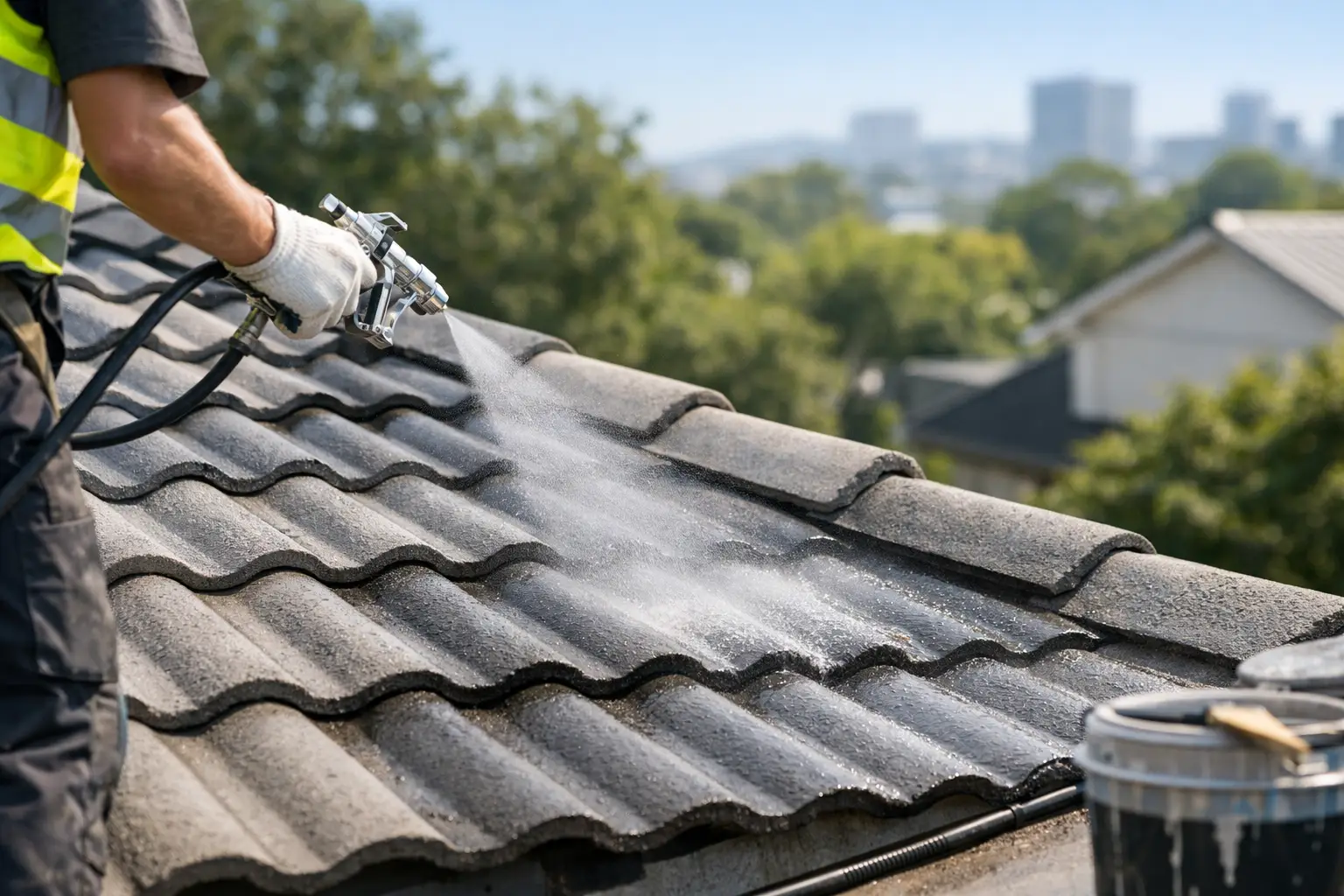
Material selection depends on use conditions. Liquid-applied systems can work well on roofs with multiple penetrations and irregular geometry because they allow continuous coverage around details. Sheet-based systems may be preferred where controlled thickness, high puncture resistance, and consistent coverage are priorities. Cementitious treatments can support certain repair scopes, but they are not a universal answer for exposed roofs under severe weather and UV conditions.
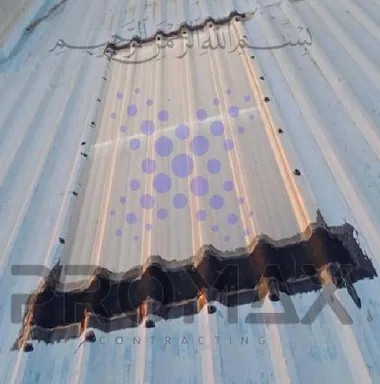
For many industrial applications, an EPDM-based or elastomeric waterproofing approach is preferred where flexibility, weather resistance, and long-term movement accommodation are required. But even then, performance depends on the detailing work. Most leaks do not happen in the field area. They happen at terminations, corners, upstands, joints, and penetrations.
The critical stages of application
Surface preparation is where durability begins. Dust, laitance, loose material, previous failed coatings, oil contamination, and damp pockets must be removed or treated before any new system is installed. If the substrate is not sound, adhesion will be inconsistent. That leads to premature failure, especially under standing water and heat exposure.
Crack treatment comes next. Static cracks may be routed and sealed with compatible materials, while dynamic cracks often need flexible joint systems that can absorb movement. If reinforcement corrosion is visible, the repair has to address the steel condition and concrete restoration, not just the top crack line.
Slope correction is sometimes necessary but often ignored because it adds scope. On roofs with chronic ponding, waterproofing alone will not be enough. If water remains on the roof after rainfall or washdown cycles, the system will always be under pressure. Reprofiling selected areas and restoring proper discharge to drains can dramatically improve long-term performance.
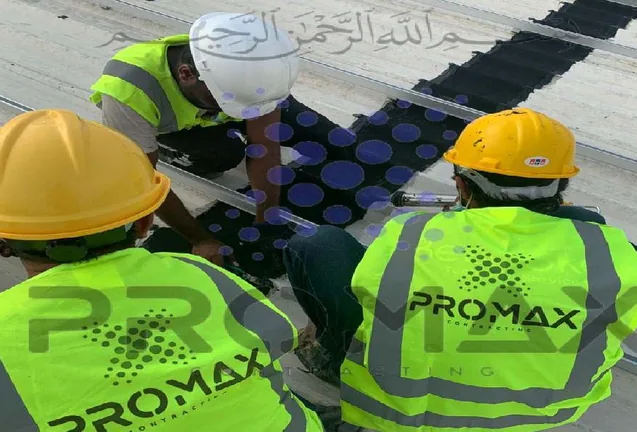
Membrane installation or coating application must be controlled for thickness, continuity, curing, overlap integrity, and weather conditions. This is not the place for rushed work. Weak detailing around parapets, skylights, equipment curbs, and pipe penetrations will compromise an otherwise good system.
A final protective layer may also be required. Some roofs need walkable finishes for maintenance traffic. Others need reflective coatings to reduce heat gain. In heavy-use industrial settings, the treatment system should match actual roof access patterns rather than assuming the surface will remain untouched.
Where building owners should be careful
The cheapest proposal often excludes the items that matter most. Surface preparation gets reduced, crack repair is minimized, drains are left untouched, and detailing is treated as an extra. The result is a lower upfront number and a higher chance of repeat leakage.
There is also a trade-off between speed and reliability. Emergency leak response is sometimes necessary, especially over active operations, but temporary sealing should not be mistaken for a complete treatment system. A proper rehabilitation scope may need staged work, dry substrate conditions, and coordination around plant activity.
Warranty discussions should be practical, not just promotional. A long warranty on paper means very little if the contractor does not have inspection capability, trained crews, detail control, and after-sales response. On large facilities, access issues and ongoing roof modifications can also affect long-term performance, so maintenance planning matters.
Concrete roof treatment systems for industrial facilities
Industrial roofs place different demands on waterproofing than small residential slabs. Warehouses, factories, storage buildings, and service facilities often include extensive MEP penetrations, large surface areas, heat build-up, vibration, and maintenance traffic. The treatment system has to perform under all of those conditions.
That is why engineering support and field execution matter as much as material selection. A contractor should be able to assess whether the roof needs localized repair, full membrane replacement, joint rehabilitation, insulation upgrades, or integrated treatment around gutters and metal interfaces. On mixed-roof buildings, concrete areas may also need to tie into metal roof waterproofing or parapet flashings without creating new failure points.
Promax Contracting typically approaches these projects as building-envelope problems rather than isolated coating jobs. That mindset matters because leak paths often move across adjoining elements, especially where concrete roofs connect with skylights, wall upstands, drains, and fabricated accessories.
What good long-term performance looks like
A successful treatment system does more than stop the immediate leak. It stabilizes vulnerable details, reduces recurring maintenance calls, improves resistance to UV and ponding, and gives the facility team a roof they can actually manage. Inspection records, repair mapping, and after-installation follow-up are part of that result.
The best systems also remain serviceable. If future penetrations or equipment changes are likely, the chosen build-up should allow controlled modification without destroying adjacent waterproofing. That is a practical issue on active commercial sites, and it should be discussed before work starts.
If your concrete roof is already showing leakage, coating failure, or drainage-related damage, the right move is not another patch over the same weak area. It is a technical inspection, a defined repair scope, and a treatment system matched to the roof's actual condition. That is how you protect the slab, the operation below it, and the maintenance budget above it.
Talk to Promax
Need this on your roof? Call +971 56 727 4205 or request a free inspection. Promax provides EPDM metal-roof, concrete and industrial waterproofing across Dubai and the UAE with up to a 15-year warranty.