
A leaking pipe penetration rarely fails all at once. It starts with a split at a corner, a loose edge at a curb, or movement around a fastener line that keeps getting baked by heat and stressed by expansion. That is where an epdm flashing system review matters - not as a product pitch, but as a practical check on whether the system can handle real roof movement, ponding risk, maintenance traffic, and long exposure.
For commercial roofs, industrial sheds, service buildings, and warehouse envelopes, flashing performance is usually the difference between a waterproof roof and a recurring maintenance problem. Large field membranes may still be intact while details around penetrations, skylights, ducts, parapet joints, and equipment curbs begin to fail first. EPDM flashing systems are often selected because they are flexible, workable on irregular details, and capable of forming a durable seal when the substrate preparation and installation sequence are correct. The catch is simple: the material can perform well, but the detail quality still controls the outcome.
EPDM flashing system review: where it performs best
EPDM flashing earns its place on roofs with a high number of terminations and penetrations. Pipe clusters, fan bases, cable tray supports, skylight upstands, access hatch curbs, and gutter transitions all create geometry that rigid materials struggle to seal over time. EPDM handles those conditions well because it can stretch, wrap, and absorb moderate building movement without becoming brittle.
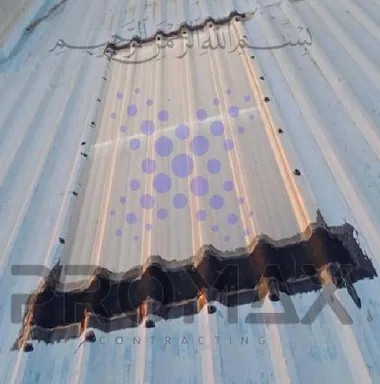
This matters even more on metal and mixed-substrate roofs where thermal movement is constant. Steel decks, curb frames, concrete upstands, and prefabricated supports do not expand at the same rate. A flashing system that cannot tolerate differential movement will start pulling at laps and corners. EPDM is not immune to bad detailing, but it generally offers better tolerance than many hard-set alternatives.
It also performs well when the repair area is localized. If a roof does not need full replacement, EPDM flashing can be used to rehabilitate weak points around existing details. That makes it useful for maintenance programs where the goal is to stop active leakage, extend service life, and avoid shutting down operations for a large roof overhaul.
What this system gets right in the field
The strongest advantage is elasticity. On roofs exposed to heat cycling, vibration, and light structural movement, flexibility is not a nice feature - it is a requirement. A properly installed EPDM flashing piece can maintain contact around awkward geometry better than many liquid repairs that depend heavily on film thickness consistency.
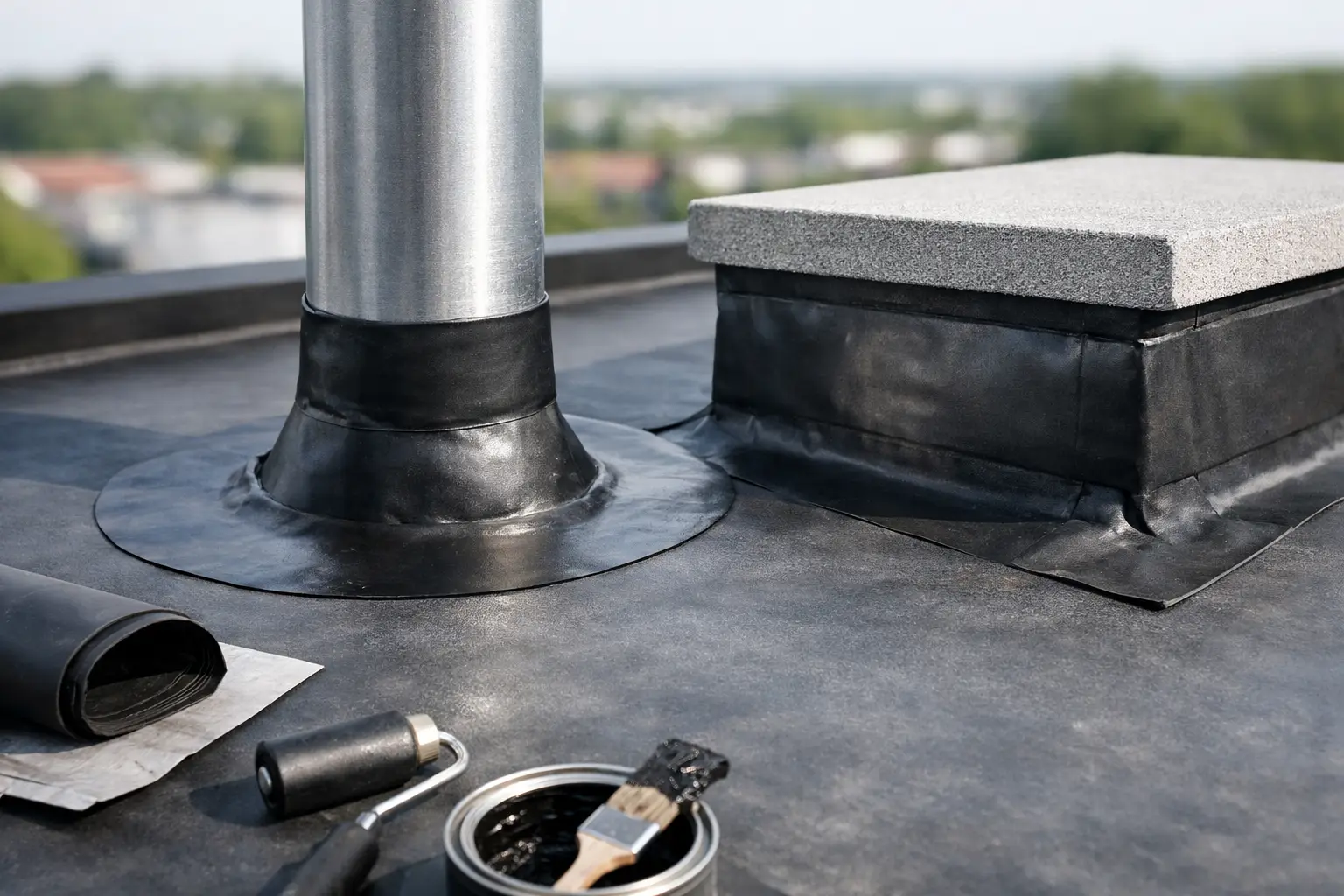
The second advantage is detail adaptability. Preformed corners, pipe boots, cover strips, uncured flashing accessories, and compatible primers allow installers to build around difficult roof details with more control. That helps on sites where penetrations were added after the original roofing package and the roof now has multiple service points competing for space.
The third advantage is repairability. If damage is isolated and the surrounding membrane is still serviceable, EPDM flashing repairs can often be executed without dismantling large roof sections. For facility teams managing active warehouses or factories, that reduction in disruption is a major operational benefit.
Where EPDM flashing systems can disappoint
Most failures are not material failures in the strict sense. They come from installation shortcuts, poor surface prep, or using the wrong accessory at the wrong detail. Dust, oxidation, moisture trapped under the patch area, loose fasteners, and contaminated substrates can all reduce bond quality. The flashing may look complete on handover and still fail early.
Corners are another weak point when installers force flat material into three-dimensional shapes without proper relief planning or preformed components. The result is stress concentration. Over time, that stress shows up as fishmouths, edge lift, or micro-openings that admit water during wind-driven rain.
Chemical exposure is also a factor. Roofs serving industrial processes may carry grease, exhaust residue, or cleaning chemical drift. Not every roof detail sees the same environmental load, and EPDM should be evaluated against actual site conditions rather than treated as a universal answer.
Ponding is the final caution. EPDM can tolerate difficult moisture conditions better than some systems, but flashing should never be used as an excuse to ignore drainage design. If water sits at penetrations or curbs because falls are poor, the detail remains under continuous stress. The flashing may hold for a period, but the assembly is still operating in a failure-prone condition.
EPDM flashing system review for penetrations and curbs
Pipe penetrations are where EPDM usually shows clear value. Round penetrations, especially in clusters, are difficult to waterproof with rigid sheet modifications or low-quality mastics. EPDM boots and field-fabricated flashing can create a cleaner transition and are generally easier to inspect visually after installation.
Equipment curbs are more variable. If the curb is stable, properly fixed, and high enough above the water plane, EPDM flashing is a strong option. If the curb is undersized, rusted, poorly welded, or sitting in a depressed section of roof, the flashing system can only do so much. In those cases, substrate correction and metal rehabilitation should happen first. Good waterproofing installed over a bad base is still a bad roof detail.
At parapet upturns and wall interfaces, the review is mixed and depends heavily on termination quality. EPDM can form a reliable upstand, but edge security matters. If the top edge is not properly terminated, protected, and sealed, wind and heat will eventually expose the weak point. The membrane itself is not the problem. The detail assembly is.
What to inspect before approving the system
A proper review should start with the roof condition, not the product brochure. Check whether the substrate is sound, dry, and compatible. Inspect for corrosion, delaminated coatings, loose screws, cracked sealant lines, failed joints, and areas where movement is visible. If these conditions are present, the flashing scope may need to expand beyond patching.
Look closely at drainage paths. Water marks around penetrations, sediment deposits, and repeated staining indicate standing water or runoff concentration. Those signs help identify whether flashing failure is the root problem or just one symptom of a larger roof issue.
Then review the installation method. Was primer applied correctly? Were seams rolled properly? Were terminations mechanically secured where required? Were preformed accessories used on complex corners? Was the area protected from dust and moisture during application? These questions are more useful than asking whether EPDM is a good material in general.
Installation quality decides the outcome
This is the part many buyers underestimate. Two EPDM flashing jobs can use similar materials and produce completely different service lives because the crews handled preparation, detailing, and sequencing differently. Industrial roofs reward discipline. Surface cleaning, rust treatment, screw correction, edge fastening, and substrate stabilization are not side tasks. They are part of the waterproofing system.
That is why contractor capability matters as much as the membrane selection. A team that understands roof behavior, fabricates metal corrections where needed, and inspects adjacent defects will usually deliver a better result than a team that only patches the visible leak point. In practical terms, the best flashing repair is often part waterproofing and part roof rehabilitation.
Is EPDM the right choice for every flashing detail?
No, and that is the honest review. If the roof has severe corrosion, structural deflection, failed insulation below, or chronic ponding caused by bad falls, EPDM flashing alone is not a complete solution. If the exposure includes aggressive chemicals or extreme mechanical abuse, another system or a hybrid detail may be more suitable.
But for many commercial and industrial roofs, especially where the core issue is failure at penetrations, joints, curbs, or interface details, EPDM is a reliable and cost-effective option when installed with the right prep and accessory package. It works best when the contractor treats the roof detail as an engineered condition rather than a quick sealant exercise.
Promax Contracting typically sees the same pattern on failing roofs: the leak appears at one point, but the cause sits in a combination of movement, corrosion, weak drainage, and poor past repairs. In that context, EPDM flashing performs well because it can be integrated into a broader corrective scope instead of acting as a temporary bandage.
If you are reviewing this system for a facility, the right question is not whether EPDM is good or bad. The right question is whether the roof detail has been inspected properly, the substrate has been corrected properly, and the flashing has been designed for the movement and exposure that roof actually sees. Start there, and the material choice becomes much clearer.
Talk to Promax
Need this on your roof? Call +971 56 727 4205 or request a free inspection. Promax provides EPDM metal-roof, concrete and industrial waterproofing across Dubai and the UAE with up to a 15-year warranty.