A roof leak over inventory racks or production lines is not a product problem. It is an operations problem. That is why an EPDM roof waterproofing review matters most when you are responsible for uptime, asset protection, and repair budgets across warehouses, plants, and commercial facilities.
EPDM has earned a strong position in low-slope roofing because it solves a specific set of building envelope failures well. It is flexible, weather-resistant, and practical for large roof areas where joints, penetrations, movement, and standing water create recurring risk. But like any system, good performance depends on the roof condition, the installation method, and the quality of detailing at the weak points.
EPDM roof waterproofing review - where it performs well
EPDM is a synthetic rubber membrane used to waterproof roofs exposed to heat, rain, UV, and structural movement. On industrial and commercial buildings, that combination is common. Large spans move. Metal and concrete substrates expand and contract. Rooftop equipment creates penetrations. Old fasteners loosen. Drainage can be inconsistent. These are exactly the conditions where EPDM often outperforms more rigid systems.
Its main advantage is elasticity. A properly installed membrane can absorb movement without cracking in the way that brittle coatings or poorly bonded sheet systems sometimes do. For buildings with regular thermal cycling, this matters. In hot climates, roof surfaces can see severe daily temperature swings, and movement stress is not theoretical. It shows up at lap joints, around curbs, and at transition details.
EPDM also handles exposure well. UV resistance is one of its strongest traits, which is a practical benefit on roofs with limited shading and high solar load. For facility teams trying to extend service life rather than replace whole roof sections every few years, that long-term stability is a serious point in its favor.
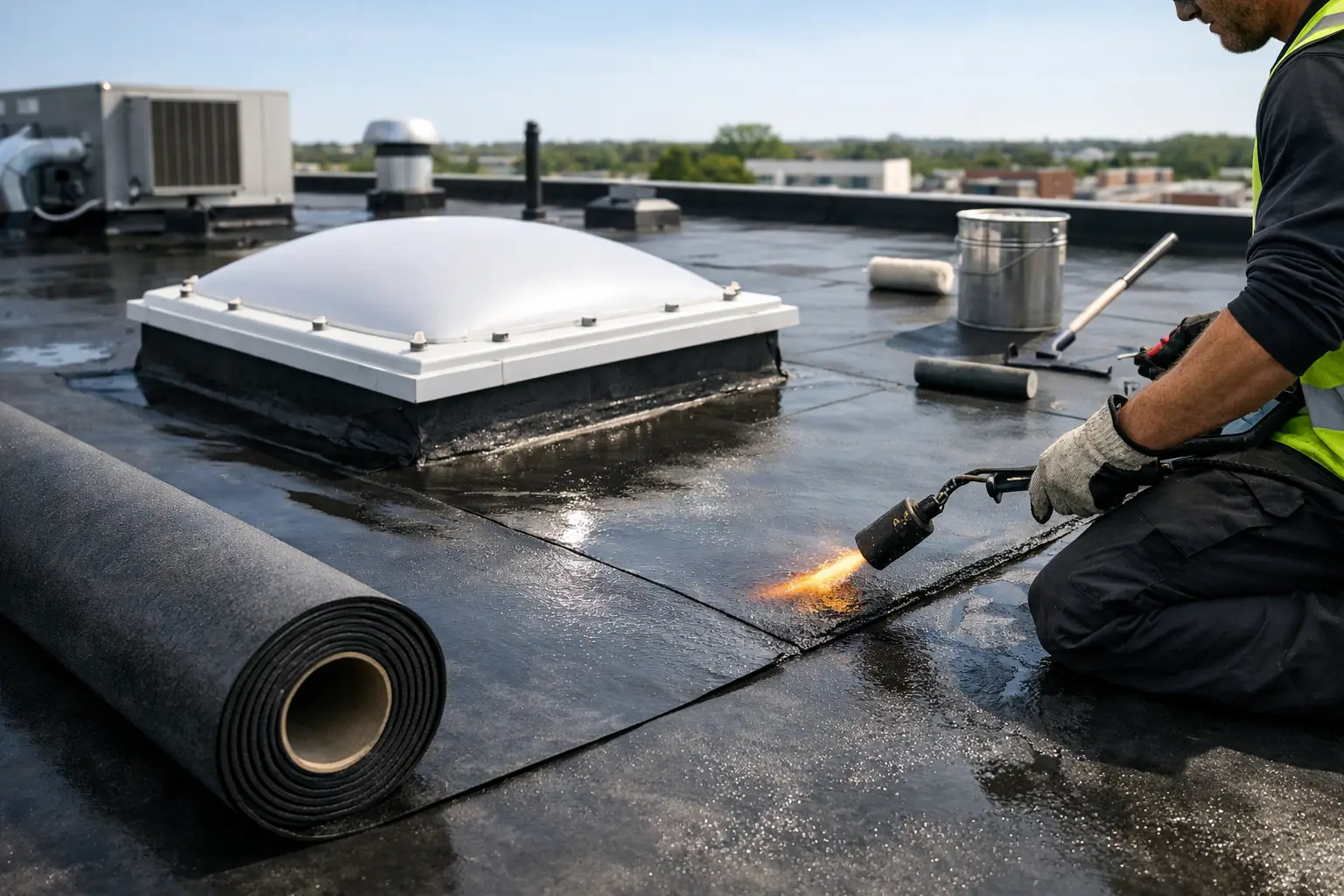
Another reason EPDM works well on facilities is speed and adaptability. It can be applied over large roof areas with fewer seams than many small-format systems. That reduces the number of failure points, especially on simple roof layouts. On rehabilitation projects, it can often be integrated into a broader scope that includes flashing replacement, gutter treatment, skylight sealing, pipe penetration waterproofing, and local substrate repairs.
What this system does better than basic coatings
Many roof leaks start with an attempt to fix a system mismatch. A thin liquid coating may stop a visible crack, but it may not solve movement at a joint, corrosion around fixings, failed flashings, or recurring ponding. EPDM is not just a surface cover. It is a membrane system, and that difference shows in demanding environments.
Compared with basic acrylic or bitumen patching approaches, EPDM usually offers better elongation, better tolerance for substrate movement, and more predictable waterproofing when the detailing is done correctly. That makes it suitable for aging roofs where the problem is not one leak point but an accumulation of stress areas across a large area.
This does not mean coatings have no place. They can be useful in maintenance programs, reflective upgrades, or localized protection works. But if the roof has ongoing joint failure, multiple penetrations, or chronic leakage paths, a membrane approach is often the more durable answer.
The trade-offs facility teams should know
A fair EPDM roof waterproofing review should be clear about the limits. EPDM is not a cure for every roof. If the deck is unstable, insulation is saturated, corrosion has reduced section strength, or drainage design is poor, the membrane alone will not correct those underlying failures.
Installation quality is the biggest variable. A strong membrane can still fail early if surface preparation is weak, terminations are incomplete, seams are contaminated, or penetrations are treated as minor details. On industrial roofs, those details are rarely minor. Pipe supports, cable trays, HVAC curbs, parapet transitions, and old patch areas often determine whether a roof stays watertight.
Puncture risk is another factor. EPDM is durable, but roofs with heavy maintenance traffic, dropped tools, sharp metal edges, or unmanaged service access need protection planning. Walk pads, controlled access routes, and disciplined rooftop work practices make a difference.
Appearance can also influence decision-making. EPDM is usually chosen for function, not aesthetics. For a warehouse, utility building, or plant roof, that is usually fine. For highly visible architectural applications, owners may compare it against systems with a different finish profile.
Where EPDM makes the most sense
EPDM tends to be a strong fit for warehouses, logistics buildings, factories, workshops, storage units, utility blocks, and institutional facilities with large low-slope roofs. It is particularly effective where you need a practical waterproofing system that can bridge minor movement and provide reliable weather resistance over broad areas.
It is also well suited to rehabilitation works where a full roof replacement is too disruptive or too costly in the short term. In those cases, the right contractor will inspect the substrate, identify wet areas, address damaged sections, and then build the EPDM scope around the actual failure points rather than selling a generic membrane package.
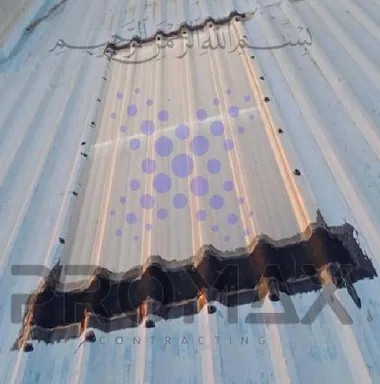
Metal roof refurbishment is another common case, although the method depends on profile, fixing condition, corrosion level, and existing detailing. The membrane may form part of a larger treatment strategy that includes rust treatment, screw replacement, joint reinforcement, gutter repairs, and flashing fabrication.
What decides long-term performance
Material quality matters, but field execution matters more. The best EPDM project is built on inspection, preparation, and detailing discipline.
The first checkpoint is diagnosis. Before any membrane is installed, the contractor should identify whether the real source of water ingress is the roof field, perimeter flashing, penetration detail, failed guttering, skylight upstands, or hidden condensation behavior. Too many waterproofing failures come from solving the visible symptom instead of the actual water path.
The second checkpoint is substrate readiness. Loose sections, trapped moisture, delaminated surfaces, unstable old repairs, and corrosion at attachment points should be addressed before the membrane goes down. A neat installation over a poor base does not create a durable roof.
The third checkpoint is detailing. Seams, terminations, corners, drain surrounds, and vertical transitions need careful treatment. This is where experienced installers separate themselves from general patch crews. On large facilities, most callbacks happen at edges and penetrations, not in the middle of the open roof area.
The fourth checkpoint is after-sales support. Roofs are exposed systems. If later modifications are made for MEP works, signage, solar supports, or access equipment, the membrane details may need protection or reinstatement. Responsive maintenance support protects the original investment.
Cost - what buyers are really paying for
EPDM is rarely the cheapest line item at the quotation stage, and it should not be judged that way. The real cost question is whether the system reduces repeat leakage, emergency repairs, disruption, damage to stock or equipment, and premature replacement cycles.
Pricing depends on roof size, access, substrate condition, number of penetrations, edge complexity, insulation requirements, drainage correction, and whether associated works are needed. A clean open roof is one number. A live industrial roof with corrosion, failed gutters, old mechanical supports, and multiple leak paths is another.
For procurement teams, the better comparison is not membrane versus membrane on square-foot rate alone. It is total repair strategy versus operational risk. A lower bid that skips preparation, uses weak detailing, or leaves adjacent failure points untouched often becomes the expensive option later.
A practical EPDM roof waterproofing review for specifiers
If you are specifying or approving roof waterproofing for a commercial or industrial property, EPDM deserves serious consideration where movement, UV exposure, and recurring leaks are part of the problem. It is a reliable system when the scope includes proper inspection, repair of substrate defects, and disciplined treatment of flashings and penetrations.
It may be less suitable where the roof has major structural issues, severe ponding with no drainage correction, or operational conditions that create constant puncture exposure without access control. In those cases, the membrane can still be part of the answer, but only as one component of a wider roof rehabilitation plan.
For facility managers and engineers, the best decision usually comes from a site-led review rather than a brochure-led comparison. Measure the actual failure pattern. Check the joints, parapets, drains, screws, skylights, and service penetrations. Ask how the contractor will prepare the substrate, terminate the membrane, and support future maintenance work. That is where system value becomes clear.
For demanding roof environments, EPDM remains one of the more dependable waterproofing options available. Not because it is perfect, but because when it is inspected properly, detailed correctly, and installed by a team that understands industrial roof behavior, it keeps doing the job long after quick fixes have failed. If your roof problem is affecting operations, the right next step is not another patch. It is a technical inspection that matches the waterproofing system to the actual risk on site.
Talk to Promax
Need this on your roof? Call +971 56 727 4205 or request a free inspection. Promax provides EPDM metal-roof, concrete and industrial waterproofing across Dubai and the UAE with up to a 15-year warranty.