A roof leak over a warehouse aisle is rarely just a roof issue. It turns into damaged stock, slippery floors, interrupted loading, stained insulation, corrosion around fasteners, and repeated patchwork that keeps coming back. On industrial and commercial buildings, the real question is not how to stop one leak today. It is how to stop the pattern.
That is where an epdm roof waterproofing system earns its place. For large roof areas, exposed service penetrations, aging sheet roofs, and buildings operating under heat, dust, and standing water risk, EPDM is a practical waterproofing solution with a clear job - create a continuous weatherproof barrier that can tolerate movement, temperature swings, and long-term exposure better than many short-life repair methods.
What an EPDM roof waterproofing system actually does
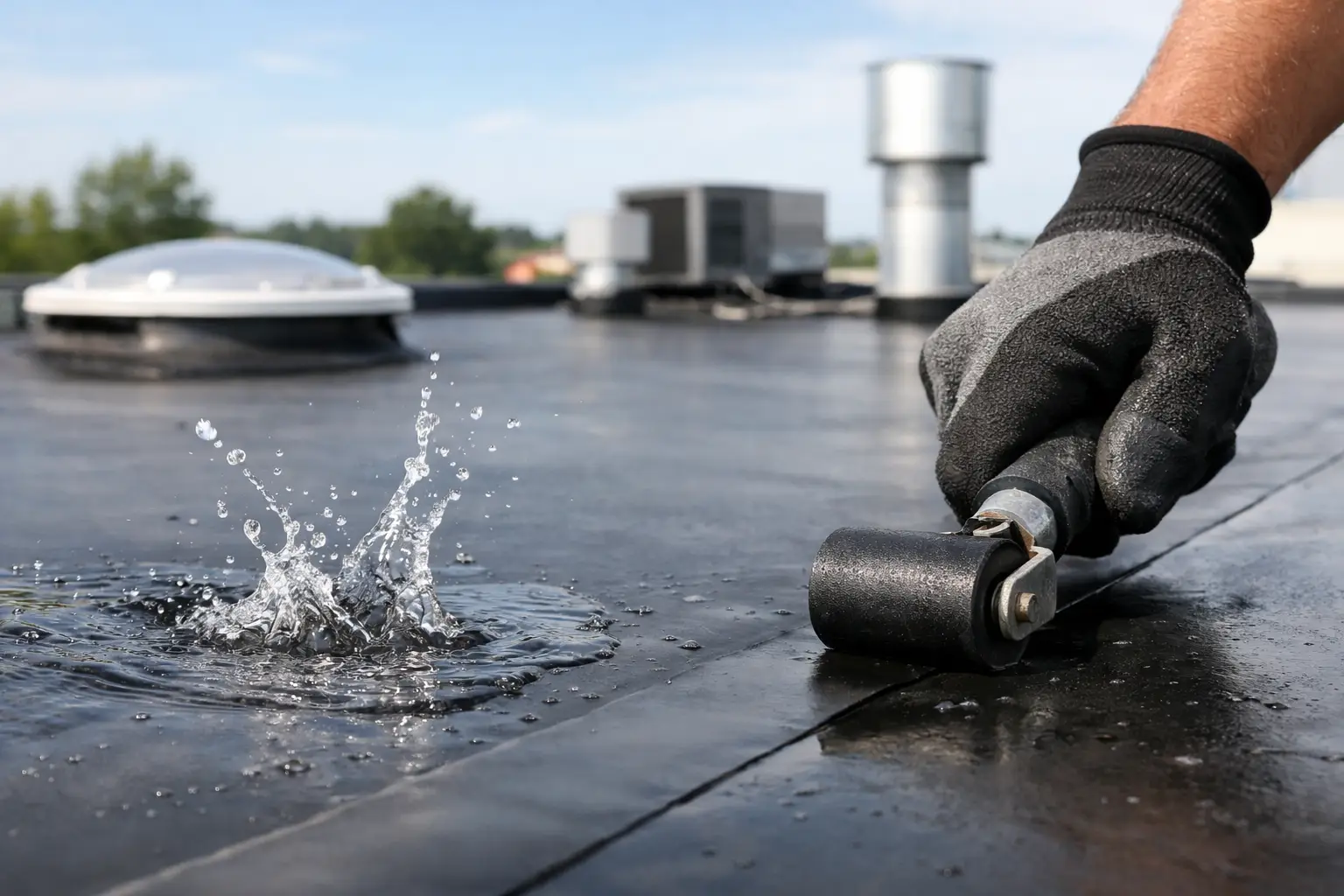
An EPDM roof waterproofing system is built around synthetic rubber membrane protection designed to block water ingress across vulnerable roof surfaces and details. In commercial use, it is not just about laying a membrane over a flat area. The system typically includes surface preparation, treatment of fasteners and joints, sealing around penetrations, edge terminations, drainage consideration, and membrane installation with compatible adhesives or fixing methods.
That system approach matters. Most recurring roof failures do not start in the middle of the field area. They start at laps, flashing points, curbs, skylight perimeters, gutter transitions, pipe penetrations, cracked substrate zones, and rusted metal overlaps. If those areas are not treated correctly, even a good membrane will underperform.
EPDM is valued because it remains flexible over time. On buildings that expand under daytime heat and contract at night, that flexibility helps the waterproofing layer absorb movement without becoming brittle. For facility managers, that usually means fewer emergency callouts and a more predictable maintenance cycle.
Why EPDM works well on commercial and industrial roofs
Industrial roofing is different from residential roofing. The roof is often crowded with ducts, cable trays, exhaust points, access supports, solar mounts, skylights, and patch-repaired sections from older interventions. Many buildings also have mixed substrates, where concrete, metal, insulation boards, and fabricated flashings all meet in one roof zone.
EPDM performs well in this environment because it can be detailed around irregular roof geometry without relying on a rigid finish. It is also suitable for rehabilitation work where complete roof replacement is not always practical. If the substrate is sound and the failure mechanism is properly identified, an EPDM-based system can restore waterproofing performance without major operational disruption.
Another advantage is weather resistance. UV exposure, heat load, and thermal cycling are hard on many roof coatings and low-grade patching materials. EPDM is commonly selected where long-term outdoor exposure is expected. That does not mean every EPDM installation is equal. Thickness, sheet quality, detailing method, substrate condition, and installer experience all affect service life.
Where leaks usually start before EPDM is installed
Before specifying an EPDM roof waterproofing system, the roof should be inspected as a failure system, not just as a surface. On commercial sites, leaks often present far from the true entry point. Water can travel beneath sheets, insulation, or deck profiles before it appears inside.
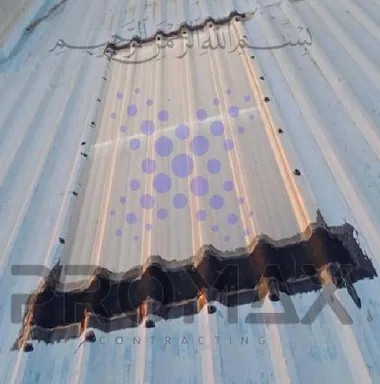
The common problem areas are familiar - end laps on metal sheets, loose fasteners, failed sealant lines, corroded valleys, blocked gutters, parapet joints, old bitumen repairs, and movement cracks near roof-mounted equipment. Pipe penetrations are another frequent source, especially where several trades have modified the roof over time.
This is why a proper site inspection matters more than a quick quotation. If the drainage slope is poor, if rust has reduced metal integrity, or if existing sheets are lifting under wind action, membrane application alone may not solve the problem. In some cases, local fabrication, fastener replacement, rust treatment, or substrate repairs must come first.
EPDM is not just a membrane - detailing decides performance
A large share of waterproofing failures comes from weak detailing rather than weak material. The field membrane may still be intact while the roof leaks at terminations and transitions. That is why experienced contractors spend as much effort on edges, upturns, curb details, and penetration sealing as they do on the main roof area.
On metal roofs, screw treatment and overlap sealing are especially important before membrane application. On concrete roofs, surface condition, cracks, moisture content, and compatibility with primers or adhesives need close attention. If a roof has old coatings, they may need removal or testing before a new system is installed.
The right EPDM installation also depends on the building use. A warehouse with low foot traffic is different from a service roof with regular maintenance access. A factory with grease discharge or process exhaust requires different planning than a clean storage facility. Even nearby equipment vibration can affect detailing decisions over time.
When EPDM is the right choice - and when it is not
EPDM is a strong option for many roofs, but not every roof problem should be treated with the same system. If the deck has structural failure, widespread delamination, severe waterlogged insulation, or advanced corrosion through metal sections, waterproofing alone is not enough. The roof may need sectional replacement before any membrane system is applied.
It also depends on geometry. EPDM is highly effective on broad roof areas, flashings, and many standard detailing conditions, but some highly complex roofs may require a hybrid repair strategy. A contractor may combine EPDM with metal fabrication works, drainage correction, gutter replacement, protective coatings, or localized reconstruction to achieve a durable result.
For decision-makers, this is the real trade-off. A cheaper patch repair may reduce visible leaking for a short period, but repeated reactive work can become more expensive than a properly engineered waterproofing intervention. On the other hand, full replacement is not always necessary if the roof substrate can still be rehabilitated. The right answer sits between those two extremes and should be based on inspection findings, not guesswork.
What to expect during EPDM roof waterproofing work
On an active commercial site, execution planning matters almost as much as material selection. Access routes, safety controls, production schedules, roof loading, weather windows, and work sequencing all affect the quality of installation. A professional contractor should assess these conditions before mobilization.
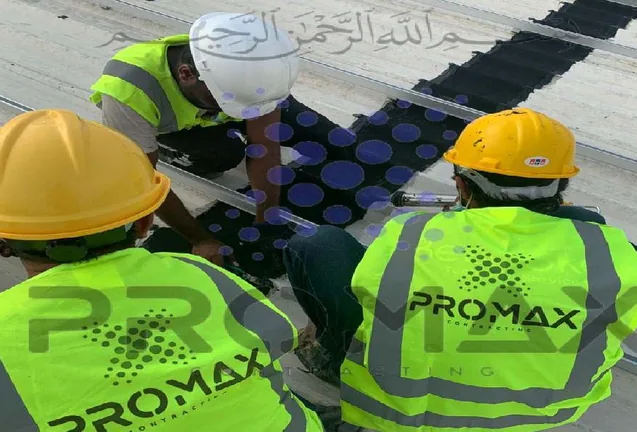
The process usually starts with inspection, moisture or damage identification, and surface preparation. Existing weak materials are removed, defects are treated, and critical details are prepared. After that, the membrane system is installed in line with the roof layout and termination requirements. Joints, upstands, penetrations, and drainage interfaces are completed carefully, then the work is checked before handover.
This is also where after-sales support becomes important. Even a well-installed roof benefits from periodic inspection, especially after storms, new service penetrations, or rooftop modifications by other trades. Long-term performance depends on keeping the waterproofing system intact, not punctured and forgotten.
Choosing a contractor for an EPDM roof waterproofing system
For industrial and commercial buildings, product selection should never be separated from execution capability. The contractor must be able to inspect the roof properly, identify root causes, prepare the substrate, handle detailing, and respond quickly if the building has active leakage. If fabrication support is needed for flashings, gutters, or metal replacement, that should be part of the same delivery plan.
This is where a specialist contractor adds value. A team that works daily on roof rehabilitation, leak tracing, membrane detailing, penetration sealing, and metal roof treatment will usually make better decisions than a general vendor applying a standard fix. Promax Contracting approaches these projects from that field reality - inspect first, repair the weak points, install the right system, and support the roof after completion.
An EPDM roof waterproofing system is not a cosmetic upgrade. It is an operational protection measure for buildings where leaks, heat exposure, and roof failure can interrupt business and raise maintenance costs quickly. If your facility is already showing signs of recurring ingress, staining, corrosion, or repeated sealant failure, the best time to act is before the next heavy rain tests every weak point at once.
Talk to Promax
Need this on your roof? Call +971 56 727 4205 or request a free inspection. Promax provides EPDM metal-roof, concrete and industrial waterproofing across Dubai and the UAE with up to a 15-year warranty.