A factory roof rarely fails all at once. It starts at laps, exposed fasteners, gutters, curb flashings, penetrations, and low spots where water sits longer than it should. Then the coating breaks down, oxidation spreads, screws loosen, insulation gets wet, and a minor maintenance issue turns into active leakage, production risk, and structural deterioration.
That is why factory roof corrosion treatment has to be approached as a repair system, not a paint job. If the roof is already showing rust staining, sheet thinning, failed sealant, or recurring leaks, the correct response is a technical inspection followed by targeted treatment of every vulnerable detail. Anything less usually pushes the problem forward a few months and leaves the owner paying twice.
What factory roof corrosion treatment actually involves
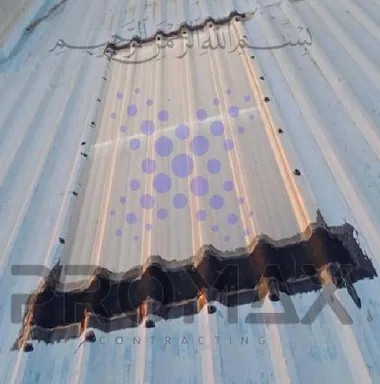
On industrial buildings, corrosion treatment is not limited to surface cleaning and recoating. The work normally starts with identifying the source of moisture exposure and the extent of metal loss. In many factories, corrosion is driven by a combination of standing water, failed waterproofing details, roof movement, thermal expansion, condensation, chemical exposure, and neglected drainage.
A proper treatment scope often includes rust removal, replacement of badly deteriorated sheets or purlins, screw treatment, joint resealing, waterproofing at overlaps and penetrations, gutter rehabilitation, and application of protective coating systems suited to the roof condition. If skylights, pipe penetrations, curbs, ridge areas, or parapet junctions are contributing to water entry, those details also need to be corrected during the same intervention.
This matters because corrosion is rarely isolated. A rusted roof panel may be the visible symptom, while the actual failure path runs through open fastener holes, membrane breakdown, failed flashing, or blocked rainwater outlets.
Why factory roofs corrode faster than expected
Industrial roofs operate under harsher conditions than many owners account for. Heat cycling causes constant movement in metal sheets and fasteners. In coastal and Gulf environments, salt in the air accelerates oxidation. Dust accumulation traps moisture at laps and drainage lines. On some facilities, process vapors or chemical exhaust create localized corrosion zones that standard coatings do not handle well.
Poor drainage makes the problem worse. Once water ponds around roof penetrations or gutter lines, protective finishes break down much faster. The same applies where previous repairs were done with incompatible sealants or low-grade coatings. Those materials crack, peel, or lose adhesion under UV exposure, and corrosion continues underneath.
The key point is simple - if the cause is not corrected, the roof keeps deteriorating under the new coating.
When treatment is enough and when replacement is the better decision
Not every corroded roof needs full replacement. If the sheets still have adequate structural integrity and corrosion is mainly surface-level or moderate at localized areas, treatment can restore performance and add years of service life. This is often the most cost-effective route for factories that need fast work with minimal disruption.
But there are limits. If inspection shows extensive sheet perforation, widespread purlin weakening, severe fastener pull-out, or long-term water saturation beneath the roof assembly, partial replacement or sectional rehabilitation may be the smarter choice. Treating heavily compromised metal only covers the symptom. It does not restore lost strength.
This is where engineering judgment matters. A contractor should be able to tell the difference between a recoverable roof and a roof that needs selective replacement before waterproofing and coating begin.
The right sequence for factory roof corrosion treatment
The sequence of work has a direct impact on performance. A rushed coating application over active rust or wet substrates is one of the most common reasons industrial roof repairs fail early.
1. Inspection and condition mapping
The first step is a detailed roof survey. This should identify corrosion grade, leak points, failed joints, damaged gutters, weak fasteners, loose flashings, and any signs of structural distress. Moisture entry from skylights, duct penetrations, wall abutments, and service supports should be checked at the same time.
For larger facilities, mapping the roof by zone is useful because corrosion severity often varies depending on drainage pattern, exposure, and plant operations below.
2. Surface preparation
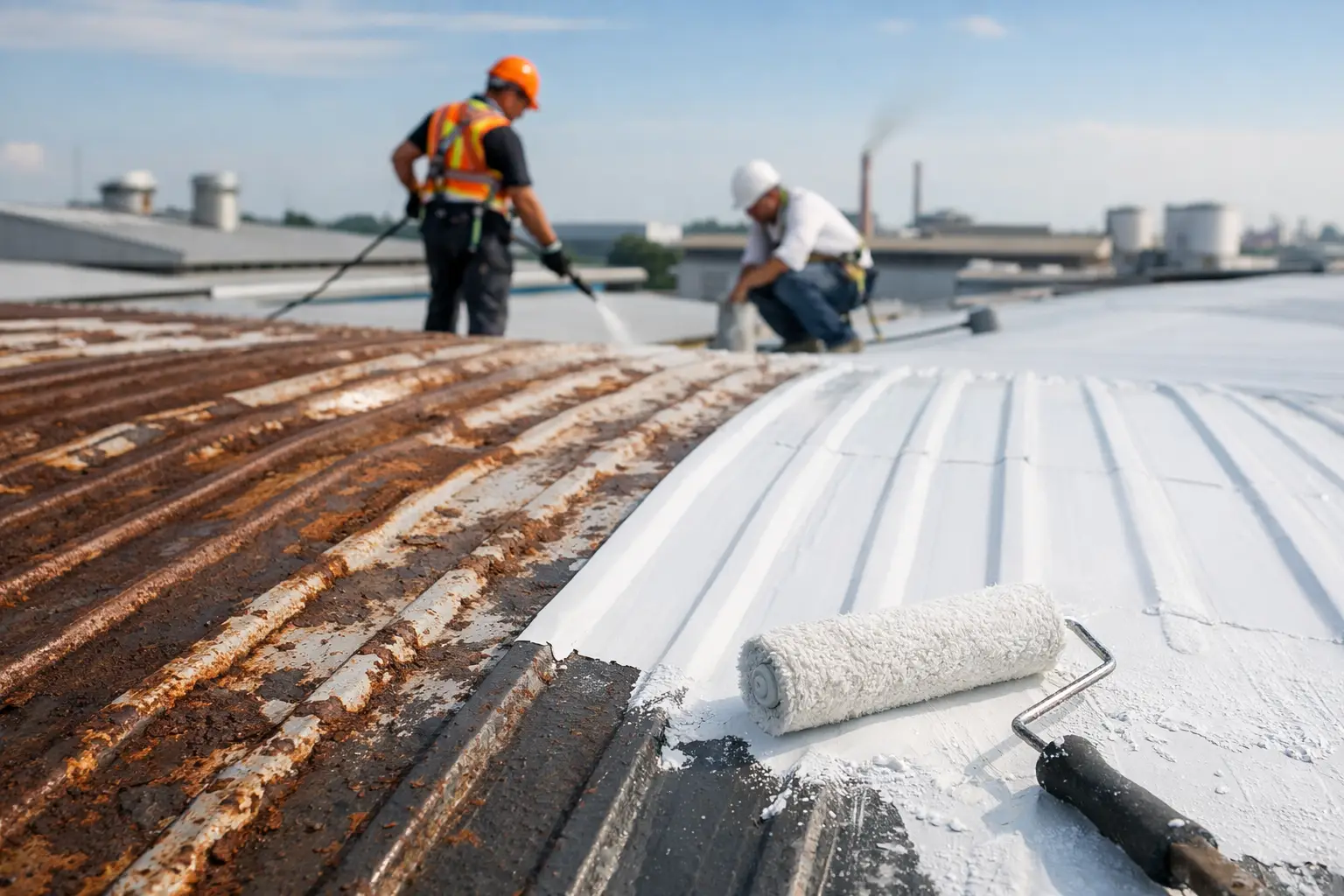
No treatment system performs without proper preparation. Rusted metal has to be mechanically cleaned to remove loose corrosion, flaking coating, dirt, oil, and contaminants. Depending on condition, this may involve wire brushing, grinding, power tool cleaning, or abrasive preparation for selected areas.
The objective is not cosmetic appearance. It is to create a clean, stable surface that can accept primers, sealants, and coatings with proper adhesion.
3. Metal repair and replacement
Any sheet sections that are perforated or too thin to hold must be replaced. Corroded fasteners should be changed, and enlarged screw holes may require treatment with oversize fasteners or localized sheet repair. If purlins or support members have started corroding, that has to be addressed before the roof skin is closed back up.
This is also the stage for gutter repair, downpipe correction, and replacement of badly failed flashings.
4. Sealing of joints and penetrations
A large percentage of industrial roof leaks come from laps, end joints, penetrations, and transition details. These areas should be sealed using compatible waterproofing systems rather than generic mastics. On metal roofs, durable elastomeric and EPDM-based detailing systems often perform better because they can accommodate movement.
If the roof has recurring leakage around curbs, vent pipes, skylights, or ridge details, those areas need reinforced treatment, not just spot patching.
5. Priming and protective coating
Once repairs are complete and surfaces are dry, the roof can receive a corrosion-resistant primer and a top coating selected for the environment. The right system depends on the substrate condition, UV exposure, expected foot traffic, and whether the facility also needs heat reflectivity or waterproofing performance.
There is no universal coating for every factory. Some roofs need a system focused on corrosion inhibition. Others need a combined waterproofing and reflective solution. On older roofs with many details and movement points, reinforced membrane-style treatments may be more dependable than standard paint-type coatings.
Where many corrosion treatment jobs fail
Most failures trace back to shortcuts. The contractor cleans only what is visible, leaves active rust in laps, coats over damp areas, ignores drainage defects, or treats penetrations as a secondary issue. The roof may look improved for a short period, but moisture remains trapped and the corrosion resumes below the surface.
Another common issue is using one product across the entire roof without regard for detail conditions. Factory roofs are mixed-condition systems. Gutters, screws, seams, curbs, and field sheets often require different treatment methods within the same project.
That is why execution matters as much as material selection. A technically sound specification still fails if surface preparation, application thickness, and detail treatment are not controlled properly on site.
How to choose the right contractor for factory roof corrosion treatment
For industrial buildings, the contractor should be able to inspect, diagnose, fabricate, repair, waterproof, and coat under one scope. That reduces coordination gaps and makes it easier to resolve issues like failed drainage, damaged flashing, and corroded support steel during the same project window.
Ask how they handle substrate preparation, fastener treatment, overlap waterproofing, gutter repair, and penetrations. Ask whether they can replace localized metal sections and purlins if the inspection finds hidden deterioration. Ask what happens after installation if leakage reappears at a treated zone.
A capable contractor will speak in terms of roof condition, system compatibility, access planning, safety, and service life - not just liters of coating and price per square foot. For complex industrial roofs, that difference is significant.
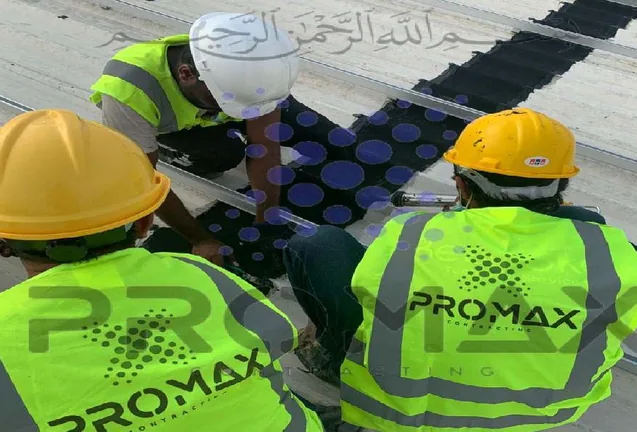
Promax Contracting approaches these projects the same way they should be handled in the field - with inspection-led scoping, repair of root-cause defects, proper surface preparation, and complete waterproofing and corrosion control at critical roof details.
The long-term value of early treatment
The best time to treat factory roof corrosion is before sheet loss becomes structural damage. Early intervention usually costs far less than emergency leak response, stock damage, shutdown risk, or partial roof replacement after prolonged water entry.
If your roof already shows rust, recurring leaks, or coating breakdown, waiting rarely improves the economics. The practical move is to inspect the roof properly, separate cosmetic issues from actual failure points, and apply a treatment scope that protects both the metal and the operation under it.
A factory roof does not need a temporary fix that looks good from the access ladder. It needs a treatment system that holds through heat, rain, movement, and daily industrial use.
Talk to Promax
Need this on your roof? Call +971 56 727 4205 or request a free inspection. Promax provides EPDM metal-roof, concrete and industrial waterproofing across Dubai and the UAE with up to a 15-year warranty.