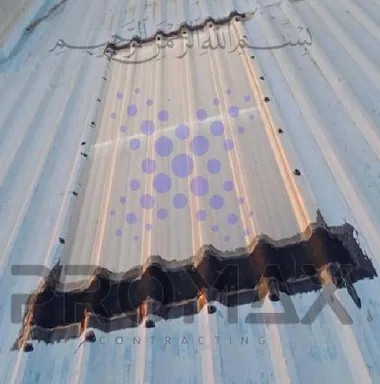


A factory roof rarely fails all at once. More often, it starts with a blocked drain, a loose fastener line, rust around a lap joint, or water tracking in around a pipe penetration. By the time stains appear inside production space, the repair scope is usually larger, more disruptive, and more expensive. That is why a factory roof maintenance planning checklist matters - not as paperwork, but as an operating control for asset protection.
For facility managers and plant teams, the roof is part of production reliability. If water ingress reaches electrical runs, stock areas, machinery zones, insulation, or structural steel, the issue moves beyond roofing and becomes an operations problem. A usable checklist should help teams inspect the right points, schedule the right actions, and escalate defects before they turn into emergency callouts.
What a factory roof maintenance planning checklist should actually do
A good checklist is not a generic form copied from an office template. It should reflect the roof type, the age of the building, current leakage history, drainage layout, access constraints, and exposure conditions. A metal roof in a high-heat industrial environment needs different attention than a concrete roof with repeated ponding near service penetrations.
The main purpose is to create a maintenance sequence. First, identify known risk zones. Second, inspect them at planned intervals. Third, record condition changes with enough detail to make repair decisions quickly. Fourth, separate minor corrective work from capital replacement planning. Without that structure, teams often keep reacting to the same defect in different seasons.
Start with roof asset information
Before inspection planning, confirm what roof system you are maintaining. This sounds basic, but many facilities have patchwork histories: original sheets, added insulation, localized membrane repairs, replaced gutters, and multiple contractor interventions over the years. If records are incomplete, the first maintenance cycle should include a condition mapping exercise.
Document the roof area, slope direction, drainage points, expansion joints, skylights, louvers, pipe penetrations, parapet details, access ladders, and previous leak locations. Note whether the roof is metal, concrete, or hybrid construction. Record any visible corrosion, failed sealant, missing fasteners, ponding areas, cracked upstands, or signs of movement at joints. This baseline turns future inspections into comparison rather than guesswork.
Inspection frequency depends on risk, not habit
Many sites inspect roofs only after a complaint. That is too late for factories with sensitive equipment, stored materials, or process areas below. In most cases, planned inspections should happen at least twice a year, with additional checks after heavy rain, strong wind events, or nearby works that may affect roof sheets, flashing, or drainage paths.
It also depends on the roof condition. A newer roof with proper slope and recent waterproofing may only need routine condition reviews. An older roof with corrosion, frequent foot traffic, and repeated patch repairs needs tighter follow-up. If there is an active leak history, monthly visual checks on known weak points can prevent a minor issue from spreading across bays.
The core inspection items in the checklist
Any factory roof maintenance planning checklist should cover the same critical building envelope points every time. The detail level can change by site, but the inspection logic should stay consistent.
Drainage and ponding
Start with gutters, downpipes, internal drains, sumps, and discharge points. Check for sediment, bird waste, packaging debris, and plant growth. Standing water after rainfall usually points to blocked drainage, insufficient slope, local deflection, or poor outlet capacity.
Ponding is never just a housekeeping issue. Over time, it accelerates coating breakdown, promotes corrosion, stresses laps and joints, and increases the chance of leakage through small openings that were previously harmless.
Roof sheets, membranes, and surface condition
Inspect roof sheets for corrosion, perforation, impact damage, loose overlaps, failed stitching, and missing fasteners. On treated or waterproofed roofs, look for blistering, peeling, cracking, or separation at terminations. Surface wear around traffic paths often tells you where protection measures are missing.
This is where experience matters. A small rust spot may only need cleaning and treatment, or it may indicate deeper section loss around fasteners and sheet laps. The checklist should require photographic records so deterioration can be tracked instead of described vaguely.
Joints, flashing, and penetrations
Most persistent leaks do not come through the middle of the roof area. They come through details: wall flashing, expansion joints, pipe penetrations, cable entries, AC curbs, skylight perimeters, ridge caps, and parapet junctions. These are high-movement, high-stress locations where sealants fail first.
Check for cracked sealant, lifted flashing, open laps, punctures, loose counterflashing, and signs of previous temporary repair. If multiple services have been added over time, these areas often contain improvised detailing that needs full correction rather than another patch.
Structural and support elements
The roof maintenance checklist should not stop at the weathering layer. Inspect purlins, support brackets, fixing rails, and any visible steel affected by leakage or condensation. Water ingress can migrate along members and create corrosion away from the original entry point.
If there are signs of sagging, unusual deflection, or widespread rust at supports, the issue should be escalated for engineering review. Maintenance teams should not treat structural warning signs as routine waterproofing defects.
Access and safety systems
A roof that cannot be accessed safely does not get maintained properly. Review ladders, walkways, hatch access, lifeline systems, and edge protection points. Check whether maintenance staff and contractors can reach inspection zones without damaging the roof or creating fall risk.
If safe access is poor, the checklist should trigger corrective action. Skipped inspections often start with access problems, not budget decisions.
Turn findings into action categories
Inspection without action coding becomes a storage folder of old reports. Each observation should be classified into one of three response types: routine maintenance, urgent repair, or replacement planning.
Routine maintenance covers drain cleaning, minor fastener replacement, localized sealant renewal, small rust treatment works, and preventive waterproofing touch-ups. Urgent repair applies where active leakage, open joints, severe corrosion, detached elements, or safety concerns are present. Replacement planning is for roofs or sections where defects are too widespread for patching to remain cost-effective.
This distinction matters because many facilities overpay for repetitive emergency works when the roof has already crossed into rehabilitation territory. A disciplined checklist helps procurement and technical teams justify the right scope at the right time.
Use a checklist that supports budgeting
A practical roof plan should connect condition data to maintenance budgeting. If the checklist only says poor, fair, or good, it is not useful enough. Add measurable information: affected area, defect type, likely cause, access requirement, temporary risk level, and recommended repair method.
That allows teams to separate immediate callout works from scheduled shutdown works. It also helps when comparing quotes. If the defect record is detailed, contractors can price defined repairs instead of adding contingency for unknown conditions.
For large facilities, divide the roof into zones and assign condition ratings by bay or section. That approach is more accurate than treating the roof as one asset, especially when only certain elevations or drainage lines are deteriorating.
Why temporary repairs often keep failing
Factories commonly carry leak history from repeated short-term fixes. Sealant is added over failed sealant. Small sheet patches are applied over corroded substrate. Drains are cleaned without correcting the slope that causes recurring ponding. The checklist should force the team to record root cause, not just visible symptom.
That does not mean every issue requires a full roof replacement. It means the repair method has to match the defect mechanism. If movement is causing joint failure, use a system designed for movement. If corrosion is active under laps and fasteners, surface sealing alone will not solve it. If penetrations were poorly detailed, the repair should include proper flashing and waterproofing integration, not just mastic around the edge.
This is where a contractor with inspection capability, fabrication support, and waterproofing execution depth brings value. Promax Contracting, for example, typically approaches roof defects as system failures, not isolated complaints, which is the right mindset for industrial buildings where recurrence is costly.
Build the checklist into operations, not just maintenance
The strongest maintenance plans are shared across departments. Production teams should know how to report new leaks accurately. Safety teams should be involved where roof access controls are weak. Procurement should understand which defects are recurring because of delayed intervention. Engineering should review patterns that suggest structural movement, heat stress, or envelope design problems.
When roof maintenance sits in a silo, the same failures return. When it becomes part of site operations, decisions get faster and the repair quality improves.
A factory roof maintenance planning checklist works only if someone owns it
Assign responsibility clearly. One person should control inspection scheduling, document storage, defect tracking, and contractor follow-up. Without ownership, photos remain in phones, work orders stay open, and minor defects wait until the next rain event proves they were not minor.
The best checklist is the one your team can actually use on site - specific to the roof, strict on defect recording, and realistic about response times. If your facility has started seeing repeat leaks, rust spread, gutter overflow, or failed penetrations, that is usually the signal to stop patching reactively and start managing the roof as a critical asset.
Talk to Promax
Need this on your roof? Call +971 56 727 4205 or request a free inspection. Promax provides EPDM metal-roof, concrete and industrial waterproofing across Dubai and the UAE with up to a 15-year warranty.