A factory roof usually gives you warnings before it gives you a shutdown. You see recurring leaks around fasteners, rust staining at sheet laps, heat buildup under the deck, sagging gutters, wet insulation, and patched areas that keep failing after every storm. A proper factory roof rehabilitation guide starts there - not with product selection, but with a clear understanding of what is failing, why it is failing, and how urgently it is affecting operations.
In industrial facilities, roof problems are rarely isolated. Water ingress at one penetration can travel across purlins, soak insulation, drip onto equipment, damage stock, and accelerate corrosion in places that are not visible from the roof surface. That is why rehabilitation should be treated as an asset preservation project, not a cosmetic repair package. The right scope extends service life, reduces repeat maintenance, and protects production continuity.
What factory roof rehabilitation actually means
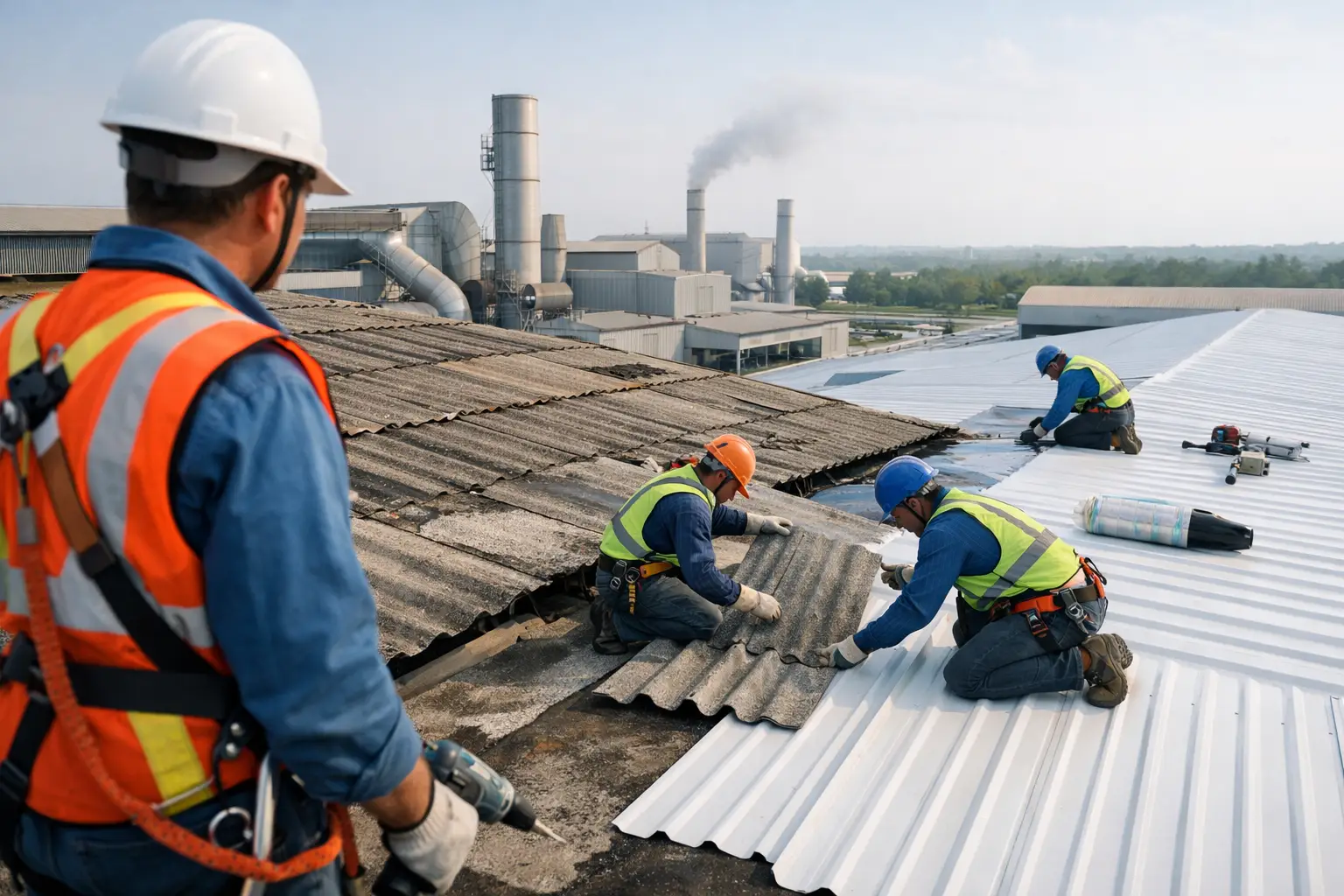
Roof rehabilitation is not the same as emergency patching, and it is not always the same as full replacement. In many factories, the most cost-effective route is to restore the existing roof system by addressing leakage paths, replacing damaged components, treating corrosion, improving drainage, upgrading waterproofing, and correcting safety access issues at the same time.
That scope can include metal roof waterproofing, concrete roof treatment, gutter and downpipe replacement, skylight waterproofing, pipe penetration sealing, purlin replacement, rust treatment, screw replacement, insulation upgrades, and protective coating systems. The correct mix depends on the roof type, age, operating conditions, and the extent of hidden deterioration below the outer skin.
A good rehabilitation plan is built around field inspection and engineering judgment. If the deck is structurally sound and the water paths are traceable, restoration can deliver strong value. If corrosion has compromised supports, fastener pull-out is widespread, or ponding has already damaged multiple layers, partial or full replacement may be the safer call.
Factory roof rehabilitation guide - start with diagnosis, not assumptions
The most expensive mistake in roof work is treating symptoms as root causes. A leak over a production line may not come from the nearest visible hole. It may originate at a failed ridge detail, an open side lap, a cracked pipe flashing, a blocked gutter, or condensation caused by thermal imbalance.
A disciplined inspection should cover the full roof envelope. That means roof sheets or slabs, fasteners, laps, penetrations, curbs, parapets, flashings, skylights, gutters, downpipes, rainwater outlets, insulation condition, and the supporting steel where accessible. Internal signs matter too. Ceiling staining, damp wall junctions, corrosion on underside members, and mold near service penetrations often tell you more than a quick top-side walk.
This is also the stage to review loading, access, and operational constraints. Some factories can tolerate sectional work during normal hours. Others need phased execution around production, storage sensitivity, hygiene controls, or hot-work restrictions. Rehabilitation planning fails when site operations are treated as an afterthought.
Common failure points in industrial roofs
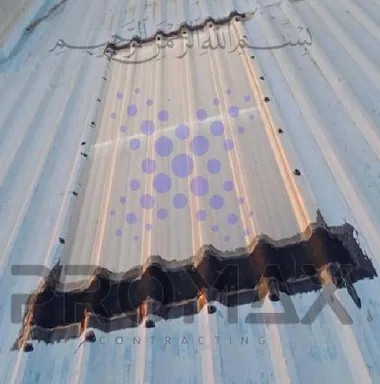
In factory environments, failure usually develops in predictable areas. Metal roofs often deteriorate first at exposed fasteners, end laps, side laps, curving details, ridge caps, and roof penetrations. UV exposure, thermal movement, and trapped moisture gradually break down washers, coatings, and sealant lines. Once that cycle starts, patch repairs tend to multiply.
Concrete roofs show a different pattern. Cracks around upstands, membrane fatigue, poor terminations, blocked drainage outlets, and surface degradation from standing water are common. In hot climates, repeated expansion and contraction can open weak points at joints and perimeter transitions.
Gutters deserve special attention. A roof may be sound while the drainage system is not. Overflowing gutters, corroded channels, inadequate falls, and poorly aligned outlets push water back under sheets or into wall junctions. Many leak complaints are drainage failures first and roof failures second.
Choosing the right rehabilitation method
There is no single repair method that suits every factory. The correct approach depends on substrate condition, service life goals, budget, and how much disruption the site can accept.
For aging metal roofs with localized corrosion and recurring leakage, restoration often includes rust treatment, screw replacement, resealing of laps and penetrations, selective sheet replacement, and installation of a waterproofing layer over prepared surfaces. EPDM-based systems are often selected where flexibility, weather resistance, and long-term sealing performance are priorities, especially around movement-prone details.
For concrete roofs, the scope may involve crack treatment, surface preparation, slope correction in localized areas, membrane reinstatement, flashing upgrades, and protection of vulnerable service penetrations. If the roof is exposed to frequent maintenance traffic, the detailing should reflect that reality. A membrane is only as reliable as the way terminations, corners, and traffic zones are handled.
Some roofs need hybrid rehabilitation. A factory may have metal sheet areas, concrete service blocks, box gutters, translucent skylights, and multiple MEP penetrations all on one structure. Treating each element separately through different vendors can create interface failures. A coordinated package usually produces better performance and faster execution.
Budget decisions: repair, restore, or replace?
Facility teams are often pushed into a false choice between cheap patching and total replacement. In practice, there are three levels of intervention.
Basic repair makes sense when defects are isolated and the surrounding roof is still in serviceable condition. Rehabilitation is the better option when failures are recurring but the main substrate and structure remain recoverable. Replacement becomes necessary when structural integrity, safety, or moisture saturation has gone too far for restoration to hold value.
The trade-off is time horizon. Low-cost repairs reduce immediate spending but often raise annual maintenance costs and operational risk. Full replacement gives the longest reset but can be capital-heavy and disruptive. Rehabilitation sits in the middle when it is correctly designed - substantial life extension, lower interruption, and better cost control than repeated reactive work.
Execution matters more than brochure claims
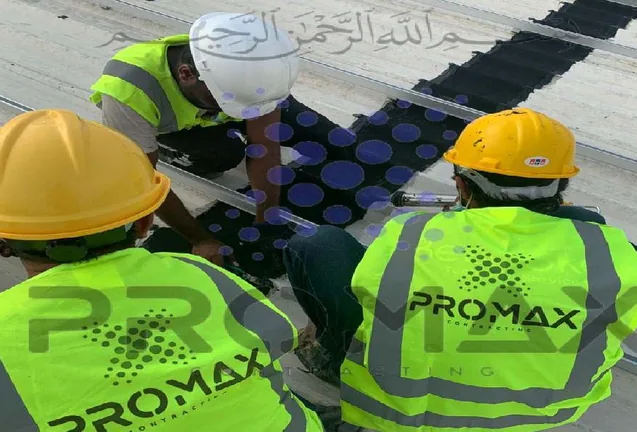
Factory roof systems fail at details. That is why contractor capability matters as much as material selection. Surface preparation, substrate testing, fabrication accuracy, weather planning, edge termination, and sequencing around active operations all affect the outcome.
Before work starts, the scope should define how wet areas will be opened, how corroded steel will be assessed, which fasteners are to be replaced, how penetrations will be sealed, how drainage performance will be corrected, and what quality checks will be recorded. If those decisions are left to improvisation on site, the result is usually inconsistent.
This is where an execution-driven contractor adds value. Teams with inspection capability, fabrication support, waterproofing specialization, and after-sales response can deal with real roof conditions as they appear rather than stopping the project every time an unexpected detail is uncovered. For many industrial clients, that responsiveness is the difference between a controlled rehab and an open-ended maintenance problem.
Safety and access should be part of the roof scope
A factory roof that cannot be safely accessed will become a factory roof that is poorly maintained. Rehabilitation projects should assess walkways, lifeline systems, ladders, access hatches, and protected routes to service equipment. This is not secondary work. Unsafe access leads to delayed inspections, rushed repairs, and higher liability exposure.
If rooftop equipment is serviced regularly, protective traffic paths and access controls should be designed into the rehabilitation plan. The extra cost is usually small compared with the damage caused by uncontrolled foot traffic on vulnerable waterproofing areas.
How to evaluate a contractor for factory roof rehabilitation
The right contractor should ask technical questions before offering a price. They should want to inspect the roof, identify leakage paths, review drainage, check substrate condition, and understand operational restrictions. If the proposal arrives without serious diagnosis, it is probably based on assumptions.
Look for scope clarity. You want to see what is being repaired, what is being replaced, what preparation is included, what waterproofing system is recommended, how details will be handled, and what post-completion support is available. Broad promises are easy. Durable roof performance comes from defined scope and field discipline.
For industrial facilities, it also helps to work with a contractor that can cover related items under one package. Roof leaks often connect with gutter failure, metal deterioration, penetration defects, coating breakdown, and access issues. A company such as Promax Contracting is built around that integrated model, which can simplify coordination on live industrial sites.
Factory roof rehabilitation guide - what good planning looks like
Good planning means inspecting early, budgeting before failure becomes critical, and treating the roof as part of operational risk management. It means solving drainage with the same seriousness as membrane work, checking structural steel where corrosion is present, and specifying details that match real site movement and heat exposure.
Most of all, it means refusing short-term fixes that only move the problem to the next rainy period. A factory roof does not need marketing language. It needs sound inspection, correct detailing, durable waterproofing, skilled installation, and a team that answers when the next issue appears. If you approach rehabilitation that way, the roof stops being a recurring expense and starts performing like the protective system it was always supposed to be.
Talk to Promax
Need this on your roof? Call +971 56 727 4205 or request a free inspection. Promax provides EPDM metal-roof, concrete and industrial waterproofing across Dubai and the UAE with up to a 15-year warranty.