A warehouse roof rarely fails all at once. It starts with a recurring leak over inventory, rust around fixings, standing water near gutters, heat gain that pushes cooling costs up, or sheets that begin to move under wind load. A proper guide to warehouse roof rehabilitation starts there - with symptoms on site, operating risk, and the real condition of the roof system rather than assumptions.
For facility managers and industrial property owners, the main question is not whether the roof looks old. The real question is whether the existing system can be restored into a reliable, watertight, serviceable asset or whether deterioration has gone too far. That decision affects budget, downtime, safety planning, insurance exposure, and the long-term performance of the building envelope.
What warehouse roof rehabilitation actually means
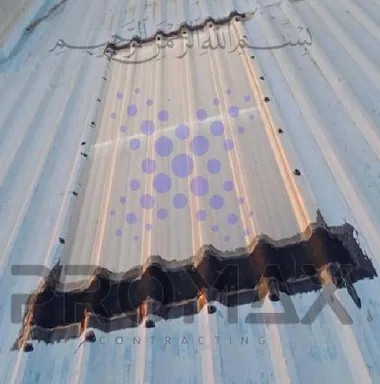
Warehouse roof rehabilitation is not the same as patchwork repair, and it is not always full replacement. Rehabilitation sits in the middle. The goal is to extend roof life by correcting failures in waterproofing, drainage, fasteners, laps, penetrations, insulation condition, corrosion zones, and supporting components while preserving salvageable sections of the existing roof.
On industrial and commercial facilities, this often includes rust treatment, screw replacement, sheet overlap sealing, gutter rehabilitation, skylight waterproofing, pipe penetration sealing, purlin checks, insulation review, and installation of a new waterproofing layer over a prepared substrate. In many cases, the most cost-effective route is to restore performance without removing the entire roof assembly.
That said, not every roof qualifies. If structural members are compromised, corrosion is advanced across large areas, or repeated poor repairs have trapped moisture through the system, rehabilitation may only delay a bigger failure. Good planning depends on proper inspection, not optimistic pricing.
Guide to warehouse roof rehabilitation: start with inspection
The inspection phase determines everything that follows. A contractor should assess more than visible leaks. Water often enters at one point and travels before it appears inside, which is why leak tracing on large-span buildings requires experience.
A useful roof inspection looks at roof sheets, laps, fixings, sealant condition, previous repair zones, gutters, downpipes, flashings, ridge details, expansion joints, skylights, penetrations, and any signs of deck or purlin movement. Interior signs matter too. Staining, mold, wet insulation, ceiling damage, and corrosion on steel members can reveal how long the problem has been active.
Drainage performance deserves special attention. Many warehouse roofs suffer less from membrane failure than from blocked, undersized, or poorly sloped drainage lines. Standing water accelerates corrosion, weakens joints, and increases the load on already stressed areas. A roof that stays wet longer will age faster, even if the waterproofing material is technically still in place.
In hot, high-UV environments such as the Gulf, thermal cycling adds another layer of stress. Metal expands and contracts daily. That movement loosens screws, opens laps, fatigues sealants, and creates recurring leak points around penetrations. A rehabilitation plan has to address movement, not just cover it.
Common failure points on industrial roofs
Most warehouse roof failures follow a pattern. Exposed fasteners lose grip or their washers deteriorate. Side laps and end laps open under movement. Corrosion develops at cut edges, around screws, near gutters, and where ponding persists. Flashings fail at parapets and service penetrations. Skylight perimeters crack or separate. Gutters overflow because of blockage, poor support, or rust perforation.
Another common issue is incompatible previous repair work. One area may be sealed with mastic, another with tape, and another with a coating applied over dirt, rust, or moisture. That creates a roof with no consistent system and no predictable performance. Rehabilitation works best when these temporary layers are identified, removed where necessary, and replaced with a coordinated waterproofing approach.
Deciding between repair, rehabilitation, and replacement
This is where technical judgment matters. If leaks are isolated and the roof is otherwise stable, targeted repair may be enough. If failures are widespread but the substrate and structure are still serviceable, rehabilitation usually makes more financial sense than replacement. If the roof has severe corrosion, substrate instability, or repeated water entrapment beneath large sections, replacement may be unavoidable.
Budget alone should not drive the decision. The cheapest short-term option often leads to repeated access costs, product loss, tenant complaints, and maintenance interruptions. On the other hand, full replacement can be unnecessary if the roof can be restored with proper preparation, detailing, and waterproofing.
A good contractor should be able to define the remaining service life under each option. That includes what can be retained, what must be removed, what risks remain, and what maintenance will still be needed after the work is complete.
The right sequence for warehouse roof rehabilitation
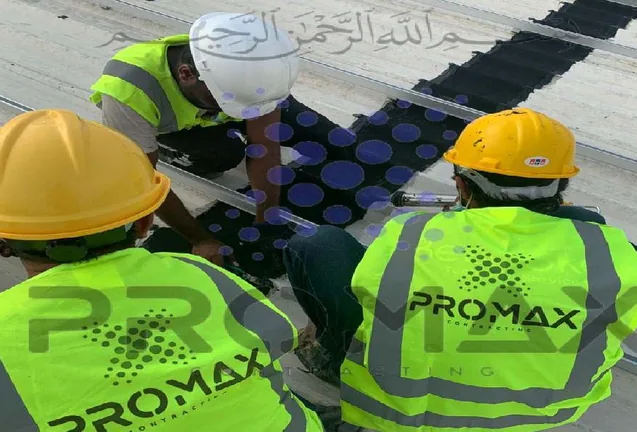
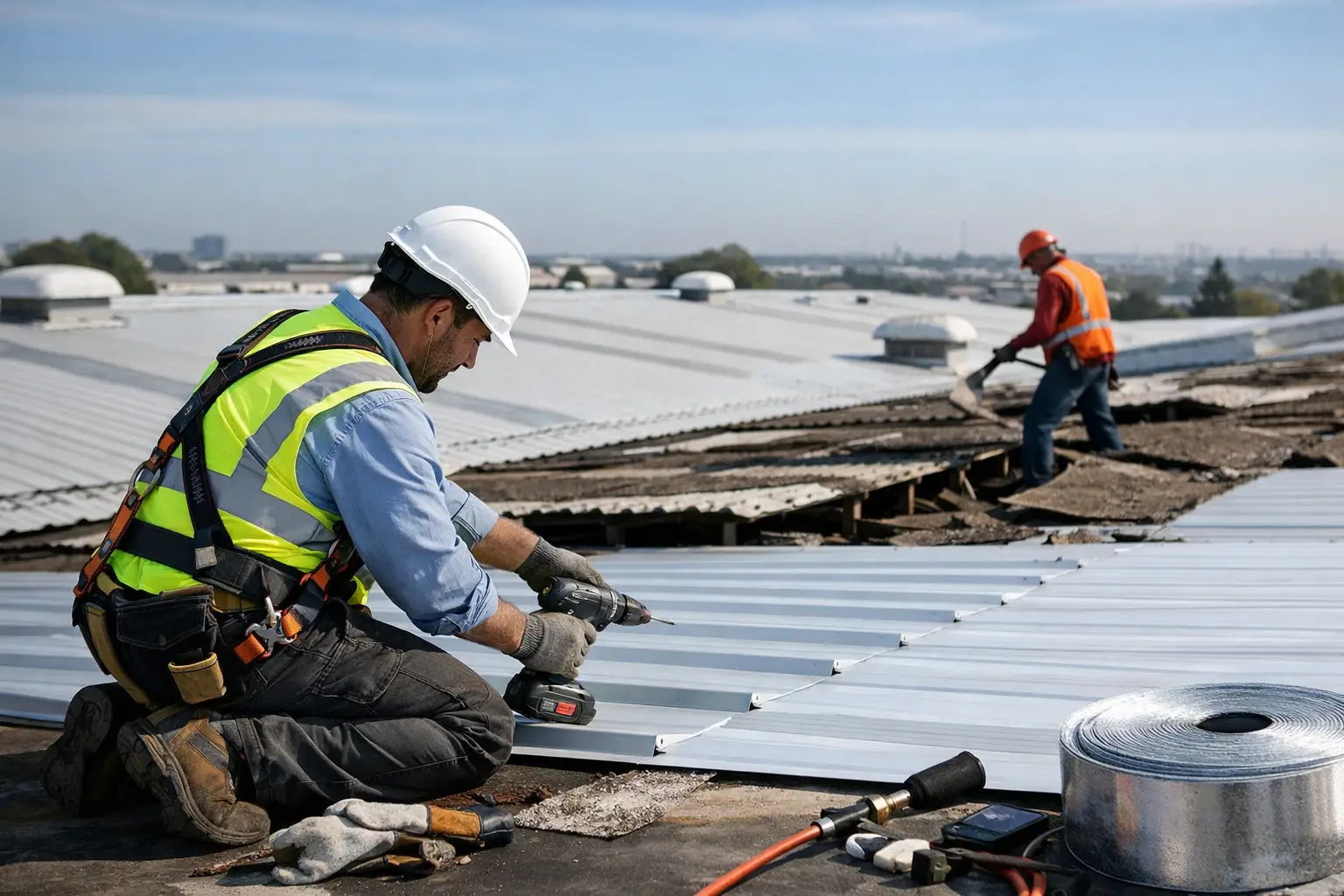
The best rehabilitation projects follow a disciplined order. First comes access planning and safety control. Then the roof is cleaned so defects are visible and surfaces are ready for treatment. After that, damaged components are repaired or replaced before any waterproofing layer is installed.
This stage often includes screw replacement, reinforcement of loose sheets, rust treatment, gutter repair, sealing of joints and penetrations, flashing correction, and replacement of failed accessories. If purlins or support members show distress, they need engineering review before the waterproofing scope moves forward.
Only after substrate preparation is complete should the main waterproofing system be applied. This is where many projects go wrong. Owners are sold a coating or membrane as if product choice alone solves the issue. It does not. A premium waterproofing layer installed over unstable fasteners, active corrosion, or untreated joints will still fail.
Choosing a waterproofing system
System selection depends on roof type, movement, exposure, condition, and budget. For many warehouse rehabilitation projects, EPDM-based waterproofing systems are a strong option because they handle movement well and offer reliable weather resistance when installed over a properly prepared surface. They are especially useful where sheet joints, penetrations, and thermal expansion create repeated leak paths.
Liquid-applied systems can also work well on roofs with complex geometry, provided the substrate is dry, prepared, and suitable for adhesion. In some cases, a hybrid solution is the right answer, combining local sheet repairs, metal treatment, and a waterproofing layer across the main field of the roof.
No system should be selected in isolation. The contractor should evaluate drainage, fixing condition, insulation behavior, service penetrations, and edge detailing alongside the membrane or coating itself. Performance comes from the full assembly.
Cost control without cutting the wrong corners
Owners usually ask the same question: how do we reduce cost without ending up back on the roof in six months? The answer is to cut unnecessary demolition, not necessary preparation. Rehabilitation can save substantial cost compared with replacement because it preserves usable roof components and reduces disruption. But those savings disappear if the scope ignores underlying defects.
The most effective way to control cost is to prioritize according to risk. Stop active ingress first. Stabilize corroded and loose areas second. Correct drainage problems third. Then install the waterproofing system over a prepared and consistent base. This sequence protects operations while keeping the scope grounded in actual roof condition.
It also helps to plan around warehouse activity. Material staging, work zoning, and after-hours access can reduce operational interference. On active facilities, execution planning matters almost as much as technical design.
Guide to warehouse roof rehabilitation for long-term performance
A rehabilitated roof still needs maintenance. That does not mean the work failed. It means industrial roofs are exposed assets with moving parts, drainage systems, and service penetrations that need periodic review.
Post-rehabilitation maintenance should include scheduled inspection of gutters, joints, fasteners, flashings, and high-risk penetrations. Small issues found early are inexpensive to correct. The same defects left unattended can reopen leak paths and damage stock, equipment, insulation, and interior finishes.
This is where responsive after-sales support matters. A contractor that understands the original scope can diagnose changes faster, monitor known stress points, and keep the roof performing within its intended service life. That continuity is valuable on large warehouse properties where one failure can affect operations quickly.
Promax Contracting approaches these projects as building protection work, not surface-level patching. That means inspection-led scope definition, fabrication support where required, waterproofing matched to roof condition, and execution that accounts for both urgency and durability.
If your warehouse roof has started showing repeat leaks, rust spread, drainage failure, or heat-related movement, the smartest next step is not another temporary patch. It is a site-based assessment that tells you what can be saved, what must be corrected, and what system will hold up under real operating conditions.
Talk to Promax
Need this on your roof? Call +971 56 727 4205 or request a free inspection. Promax provides EPDM metal-roof, concrete and industrial waterproofing across Dubai and the UAE with up to a 15-year warranty.