By 2 p.m., the roof surface on a warehouse or factory can be taking the full force of the sun while HVAC systems work overtime below it. That is where heat resistant roof solutions stop being a nice upgrade and start becoming an operational decision. On industrial and commercial buildings, the right roof system can reduce heat gain, slow membrane breakdown, protect stored goods, and cut the cycle of recurring repairs.
For facility teams, the real issue is not just temperature. Heat exposure accelerates expansion and contraction, dries out aging materials, weakens joints, and exposes every weakness around gutters, skylights, fasteners, and penetrations. A roof that looks acceptable during a basic visual check can still be under stress every day. That is why roof heat management needs to be treated as part of building protection, not just surface coating.
What heat resistant roof solutions actually solve
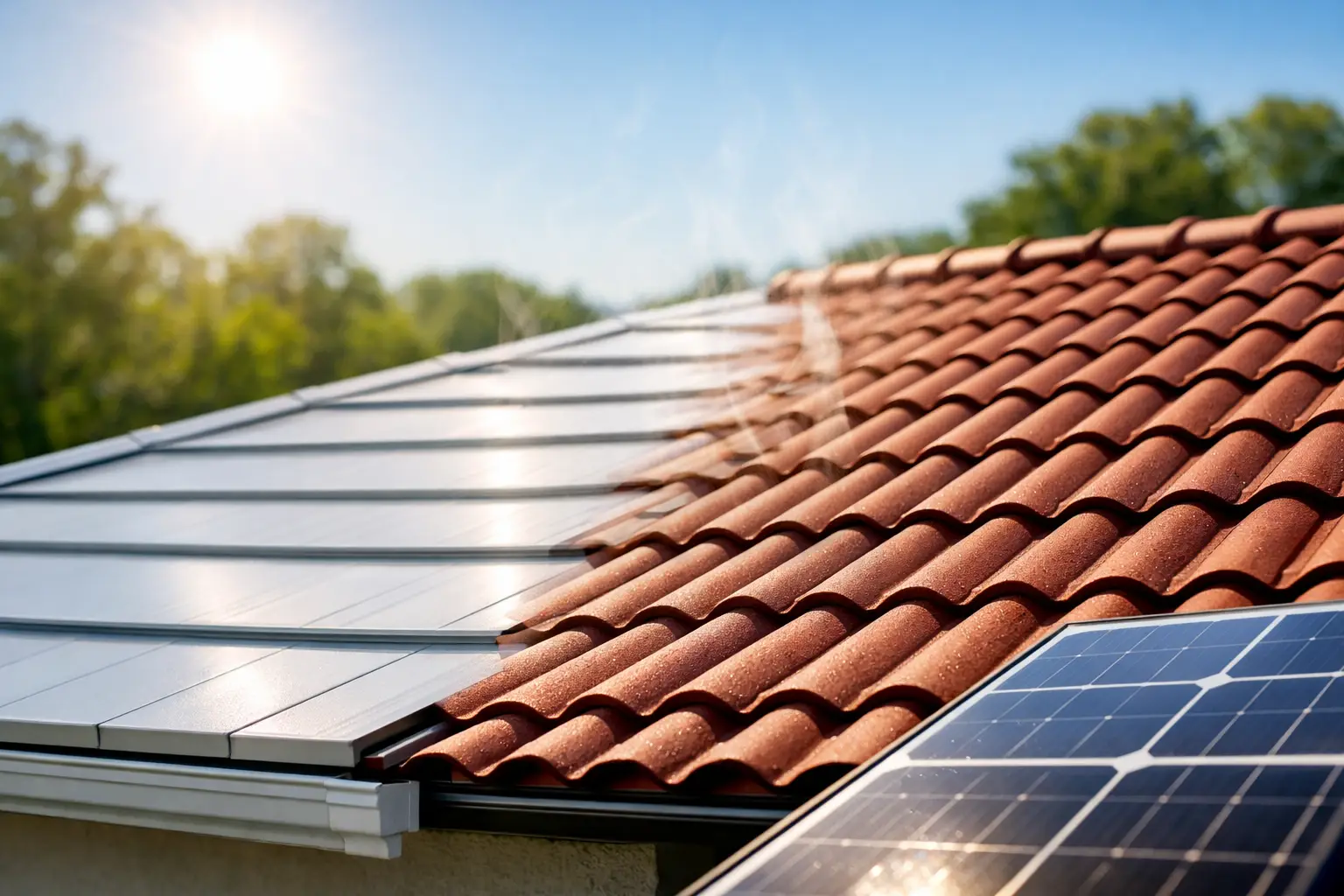
In practical terms, heat resistant roof solutions are meant to reflect solar radiation, reduce thermal transfer into the building, and keep the roof assembly stable under repeated high-temperature cycles. On a large-span industrial roof, that matters because heat does more than raise indoor temperatures. It shortens service life.
Metal roofs expand and contract constantly. Concrete roofs absorb heat and can hold it well into the evening. Older waterproofing layers become brittle. Sealants at laps and details lose flexibility. When that movement combines with dust, standing water, and poor drainage, the result is usually not one isolated defect. It is a pattern of cracks, leaks, corrosion, and insulation underperformance.
A proper solution needs to address the whole roof condition. If the substrate is deteriorated, if rust is active, or if drainage is failing, a reflective finish alone will not fix the problem. The coating or membrane has to be part of a system that matches the roof type, operating conditions, and service demands.
The main types of heat resistant roof solutions
The most effective approach depends on whether the building has a metal roof, concrete roof, or an aging waterproofed surface that needs rehabilitation rather than full replacement.
Reflective roof coatings
Reflective coatings are widely used because they can improve solar reflectance without a major structural intervention. On metal roofs, elastomeric and specialized reflective coating systems help reduce surface temperature and protect against UV exposure. They can also help extend the life of existing roof sheets when the metal remains structurally sound.
That said, coating success depends heavily on preparation. If fasteners are loose, lap joints are open, or rust treatment has been skipped, the coating may fail early around the weakest points. Surface cleaning, corrosion treatment, screw inspection, and detail sealing are not optional steps. They are what separate a short-term cosmetic job from a durable roof treatment.
Heat-reflective waterproofing membranes
On roofs where water ingress and heat exposure are both active concerns, membrane-based systems are often a better fit. EPDM and similar high-performance waterproofing materials offer weather resistance, flexibility, and long-term protection across wide temperature swings. For commercial and industrial roofs with multiple penetrations and detailing challenges, membrane systems can provide better continuity than basic surface coatings.
This is especially relevant where roof leaks are already present. A reflective membrane can support heat control, but its bigger value is protecting the building envelope while accommodating movement. The quality of detailing around skylights, drains, parapets, and pipe penetrations is what determines whether the system performs under real site conditions.
Insulation upgrades beneath the roof system
Some buildings have a roof surface problem. Others have a thermal assembly problem. If the roof lacks adequate insulation, even a reflective top layer may deliver only partial improvement. In those cases, the better answer may include insulation enhancement along with waterproofing or re-roofing works.
This is often where decision-makers need realistic expectations. If a facility has high internal heat loads from equipment, poor wall insulation, and frequent door opening, the roof alone will not solve cooling demand. But it can still reduce heat transfer significantly and improve system stability. The right contractor should explain that difference clearly.
Choosing heat resistant roof solutions by roof type
Not all roofs fail the same way under heat, so the specification should follow the substrate.
Metal roofs
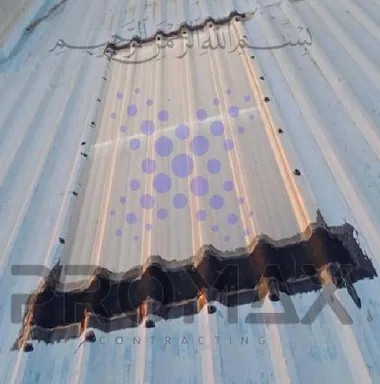
Metal roofs are common on warehouses, workshops, and logistics buildings because they are fast to install and cost-effective across large areas. Their weak point is movement. Under heavy sun exposure, metal expands, contracts, and stresses fasteners and joints daily. Over time, that movement opens paths for leaks and accelerates corrosion where protective finishes have worn down.
For these roofs, heat resistant roof solutions usually work best when they combine rust treatment, screw treatment, joint sealing, and a reflective protective coating or membrane overlay. If sections are badly corroded, purlin weakness or sheet damage may need to be addressed first. Applying a new surface system over unstable metal only delays the problem.
Concrete roofs
Concrete roofs store heat and often show cracking, ponding, and membrane fatigue as they age. In these cases, the roof needs both thermal control and waterproofing reliability. Reflective waterproof coatings can help, but if the slab has active cracks, failed joints, or chronic standing water, more substantial treatment is usually required.
A well-executed solution may include crack treatment, surface preparation, slope correction in critical areas, and a membrane or coating system designed for solar exposure and long-term adhesion. On institutional or mixed-use commercial buildings, this type of layered repair often delivers better lifecycle value than repeated patching.
What makes a roof system last in high heat
Material selection matters, but execution matters more. Many roofs fail not because the topcoat was the wrong color or brand, but because the details were handled poorly. Heat exposes every shortcut.
Good performance starts with inspection. The roof should be checked for substrate condition, moisture entry, rust spread, fastener integrity, drainage performance, flashing failure, and movement-related defects. Thermal problems and waterproofing problems often overlap, so the inspection needs to be technical, not just visual.
Preparation comes next. That includes cleaning, treatment of corroded sections, replacement of damaged components, sealing of penetrations, and correction of vulnerable details. Only after the roof is stabilized does the heat-resistant system have a fair chance of lasting.
Application standards also matter. Film thickness, curing conditions, overlap treatment, adhesion checks, and edge termination all affect long-term results. On industrial sites, this is where experienced field teams make a measurable difference. A roof system is only as good as its detailing at the points where stress concentrates.
When replacement is smarter than rehabilitation
There are roofs where rehabilitation is cost-effective, and there are roofs where too many failure points have already accumulated. If widespread corrosion, saturated insulation, structural weakness, or repeated patch history is present, a partial treatment may create a false sense of security.
This is where a contractor should be direct. A lower upfront price can become more expensive if the roof continues leaking, damaging stock, disrupting operations, or requiring emergency callouts. For facilities with sensitive inventory, electrical equipment, production lines, or tenant obligations, reliability usually matters more than a short-term saving.
That does not always mean full replacement. Sometimes targeted sheet replacement, waterproofing rehabilitation, and reflective treatment can extend service life significantly. The key is knowing which assets are still recoverable and which are already beyond efficient repair.
What facility managers should ask before approving a system
Before selecting any heat control treatment, ask what condition the existing roof is in, what preparation is included, how penetrations and drainage points will be treated, and what after-sales support is available if defects appear. Those answers tell you more than a product label does.
It also helps to ask how the system will perform under local exposure conditions. High solar load, dust accumulation, occasional standing water, rooftop traffic, and service penetrations all affect durability. A specification that looks strong on paper can fail quickly if it was not built around the actual roof use.
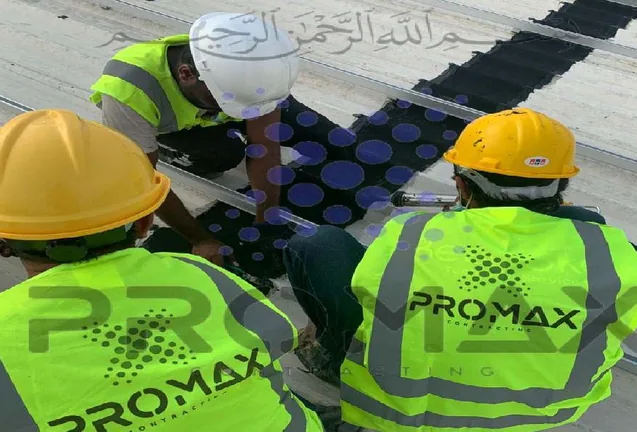
For industrial facilities, one-vendor execution is often an advantage. When inspection, repair scope, fabrication support, waterproofing, protective treatment, and follow-up service are handled under one team, accountability is clearer and site coordination is faster. That is one reason many clients prefer a contractor like Promax Contracting for technically demanding roof rehabilitation works.
The best roof decision is rarely the cheapest or the most aggressive. It is the one that matches the building, the heat load, the roof condition, and the risk of failure. When heat resistant roof solutions are engineered properly and executed with attention to substrate repair, waterproofing details, and long-term maintenance, they do more than lower roof temperature. They give the building more working life, and they give the operations team fewer surprises when the next hot season arrives.
Talk to Promax
Need this on your roof? Call +971 56 727 4205 or request a free inspection. Promax provides EPDM metal-roof, concrete and industrial waterproofing across Dubai and the UAE with up to a 15-year warranty.