A warehouse roof rarely fails all at once. More often, it starts with a loose fastener, a clogged gutter, minor membrane separation, or early corrosion around penetrations. That is why facility teams keep asking the same practical question: how often should warehouse roofs be inspected? For most warehouses, the right baseline is twice a year, with additional inspections after major weather events, roof work, or any sign of leakage inside the building.
That answer is simple, but the real schedule depends on the roof system, the age of the building, local weather exposure, drainage performance, and the operational risk inside the facility. A dry goods warehouse with a newer roof and limited rooftop traffic does not carry the same inspection profile as an older industrial shed with multiple penetrations, standing water, and active HVAC servicing.
How often should warehouse roofs be inspected in practice?
As a working standard, warehouse roofs should be professionally inspected every six months. In most cases, one inspection should be scheduled before the rainy season or cooler months, and one after the most demanding weather period. This timing helps maintenance teams catch developing defects before they turn into active interior damage.
For many commercial and industrial buildings, semiannual inspections are enough to control risk. But that does not mean every roof can be left alone for six months without attention. If a roof has a leak history, corrosion, frequent service access, aging waterproofing, damaged skylight perimeters, or poor drainage, the interval should tighten. Quarterly checks are often justified on higher-risk buildings.
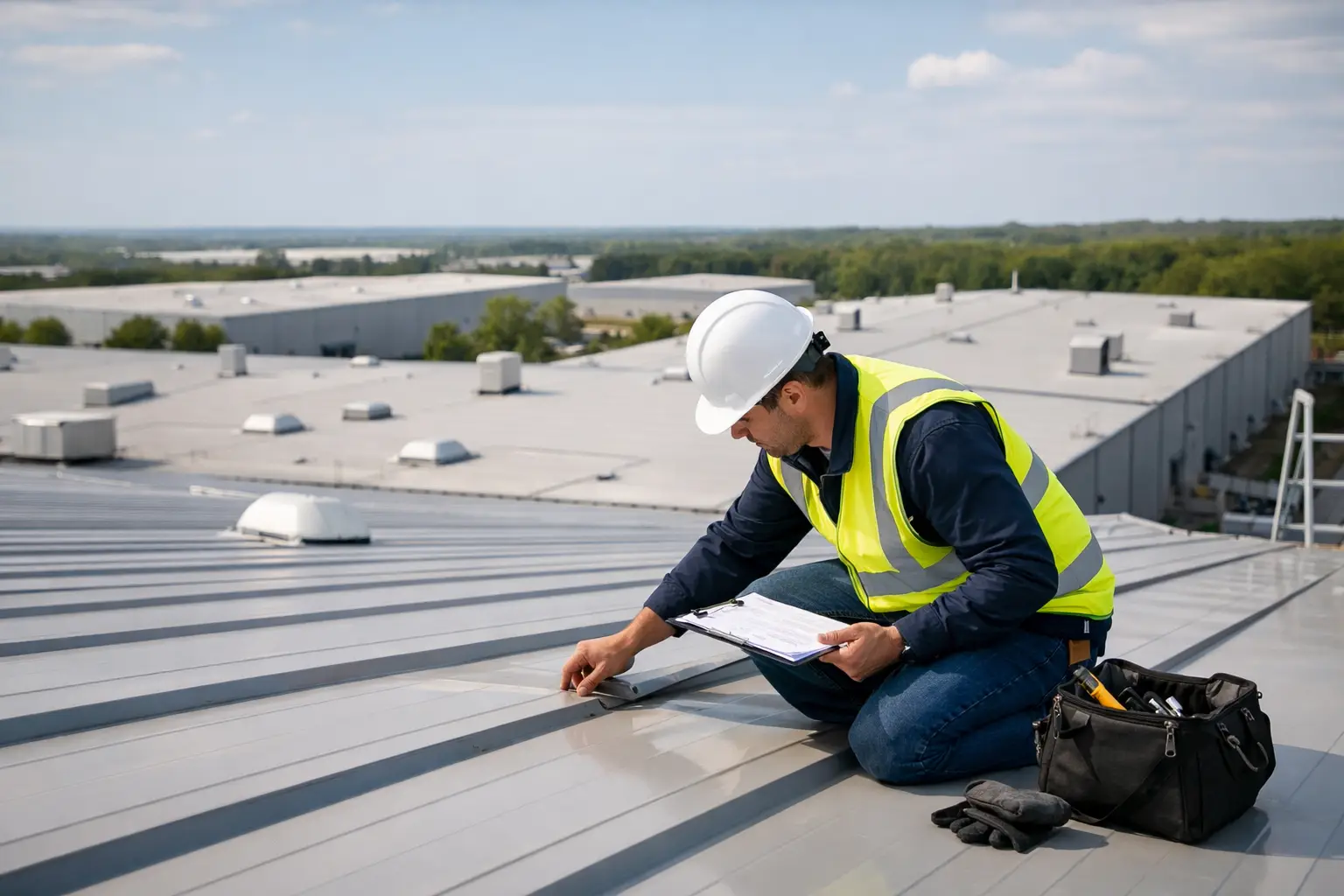
There is also a difference between routine observation and a formal inspection. A site team can visually monitor problem areas more frequently, especially after rain. A formal roof inspection is more methodical. It should document membrane condition, seams, fasteners, laps, flashings, gutters, downpipes, curb details, penetrations, rusted sheets, sealant failure, and any evidence of structural movement or water entry.
What changes the inspection frequency?
The condition of the roof matters more than a generic calendar rule. A newer roof installed correctly with proper drainage and limited rooftop equipment can usually stay on a standard twice-yearly cycle. An older roof close to the end of its service life should not.
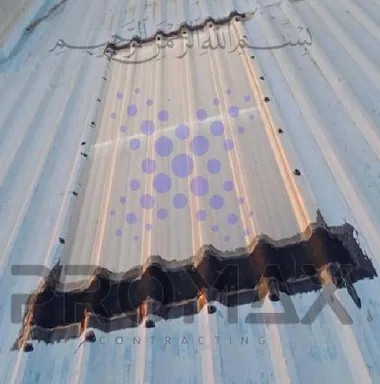
Roof type also changes the risk. Metal warehouse roofs need close attention around overlaps, screw points, end laps, ridge details, purlin support areas, and corrosion zones. Concrete roof decks with waterproofing systems present a different pattern of failure, often around cracks, joints, pipe penetrations, and parapet interfaces. If the building has skylights, valley gutters, internal drains, or multiple service penetrations, inspection frequency should increase because those are common water entry points.
Climate exposure is another major factor. In hot, high-UV environments, roof materials expand and contract aggressively. Sealants harden, exposed fasteners loosen, protective coatings degrade, and minor defects open faster than many owners expect. Wind-driven rain adds another layer of risk, especially on large-span warehouse roofs where water can travel far from the entry point before showing inside.
Operational sensitivity matters too. If the warehouse stores paper goods, packaged food, electronics, pharmaceuticals, archived materials, or machinery sensitive to moisture, the cost of one missed defect can be far greater than the cost of more frequent inspections. In those facilities, a conservative schedule makes financial sense.
When inspections should happen sooner
A six-month schedule is a baseline, not a shield. Some triggers call for immediate inspection regardless of the calendar.
Any active leak should prompt a roof inspection as soon as possible. Waiting for repeated water entry usually means more saturated insulation, more corrosion, more interior damage, and a more difficult repair path. The same applies if staff notice water staining, drips near columns or racking, mold odor, peeling interior coatings, or unexplained humidity around the ceiling line.
Storm events are another clear trigger. After heavy rain, strong wind, hail, or flying debris impact, a warehouse roof should be checked for lifted sheets, punctures, displaced flashing, blocked drainage, and damaged edge details. Even when no leak is visible indoors, weather damage can start a failure cycle that only appears weeks later.
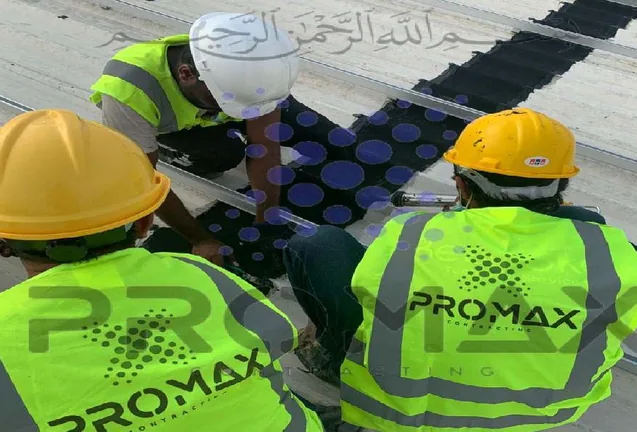
Any rooftop works should also be followed by an inspection. Mechanical servicing, cable routing, signage installation, solar work, and access by multiple subcontractors often leave behind accidental punctures, loosened fasteners, damaged sealant, or crushed insulation paths. A roof can be compromised by unrelated trades very quickly.
If there is ponding water that remains more than 48 hours after rain, that is not a condition to leave until the next routine visit. Standing water accelerates membrane wear, exposes low points, stresses joints, and usually signals blocked drains or slope failure that needs correction.
What a proper warehouse roof inspection should cover
A useful inspection is not just a walk across the roof with a phone camera. It should be systematic and tied to action.
The external review should assess the overall roof field, drainage lines, gutters, downpipes, expansion joints, parapet edges, skylight perimeters, penetrations, access points, sheet laps, screws, sealant lines, flashing terminations, corrosion, coating condition, and signs of physical damage. On metal roofs, inspectors should look closely for loose fasteners, washer failure, rust bleed, sheet movement, and opening laps. On waterproofed roofs, seam integrity, blistering, punctures, surface wear, and edge termination failure are critical checkpoints.
The internal review matters just as much. Ceiling stains, insulation wetting, rusted steel, drip marks, wall-head dampness, and mold growth often reveal problems that are not obvious from the roof surface alone. In warehouses, leak paths can travel along structural members and show up well away from the actual defect, so both sides of the roof system should be read together.
Documentation is what turns inspection into maintenance control. Photos, marked drawings, defect locations, severity notes, and repair recommendations help owners separate cosmetic issues from urgent failures. Without records, the same defect gets rediscovered every season while the damage grows.
Why delaying inspections gets expensive
Roof defects are usually cheaper to correct at the early stage. A failed sealant line or isolated penetration detail is manageable. Once water gets into insulation, corrodes steel, damages stored goods, or affects operations, the repair scope changes.
The cost is not only in materials. Delayed action can mean emergency callouts, disrupted loading schedules, damaged inventory, safety risks from slipping or electrical exposure, and pressure to execute reactive work during active rain. That is where maintenance budgets lose control.
There is also a false economy in relying only on visible leaks. By the time water is entering occupied space, the roof problem has often existed for some time. Scheduled inspections are about finding defects before the building starts paying for them internally.
A practical inspection schedule for most facilities
For most warehouse operators, a workable approach is straightforward. Schedule professional roof inspections twice a year. Add event-based inspections after severe weather, after rooftop contractor access, and immediately after any reported leak. If the roof is older, previously repaired multiple times, or exposed to repeated drainage issues, shift to quarterly review until performance stabilizes.
This is also where contractor capability matters. An inspection should not stop at identifying problems. The value comes from accurate diagnosis, practical repair sequencing, and fast execution when defects are found. On industrial buildings, that often includes waterproofing treatment, gutter correction, penetration sealing, rust treatment, sheet replacement, and access improvements so future maintenance can be done safely.
Promax Contracting typically sees the same pattern on large warehouse and factory roofs: owners wait until leakage becomes operational, then discover the root issue has been developing across joints, gutters, fasteners, or membrane details for months. A disciplined inspection cycle prevents that backlog from building.
FAQ: how often should warehouse roofs be inspected?
Is once a year enough?
Sometimes, but usually not for active warehouse environments. Annual inspection may be acceptable for a newer, low-risk roof with no known defects and limited weather exposure. For most commercial and industrial warehouses, twice a year is the safer standard.
Should inspections be done after every rain?
Not necessarily a full formal inspection after every rainfall. But after heavy rain, site teams should check for interior signs of leakage and obvious drainage problems. If anything unusual appears, a roof inspection should follow.
Who should perform the inspection?
Basic visual checks can be done by trained facility staff from safe access points. Formal inspections should be handled by qualified roofing or waterproofing specialists who understand failure points, repair methods, and safety requirements.
What if the roof looks fine from the ground?
Ground-level appearance is not enough. Many roof failures start at penetrations, laps, hidden drainage points, and localized corrosion areas that cannot be assessed properly without direct inspection.
The best inspection schedule is the one that matches the building’s risk, not the one that simply sounds economical. If a warehouse roof protects critical stock, equipment, and daily operations, six months is a sensible default, and faster action after warning signs is just good maintenance discipline.
Talk to Promax
Need this on your roof? Call +971 56 727 4205 or request a free inspection. Promax provides EPDM metal-roof, concrete and industrial waterproofing across Dubai and the UAE with up to a 15-year warranty.