A roof leak in Dubai rarely stays a small maintenance issue for long. On warehouses, factories, schools, and commercial buildings, water entry usually comes with hidden corrosion, insulation damage, failed joints, drainage problems, and repeated repair costs. That is why selecting the right waterproofing contractors in Dubai is less about finding the lowest quote and more about finding a team that can diagnose the failure properly, specify the right system, and execute without disrupting operations.
For facility managers and property owners, the risk is straightforward. A poor waterproofing job may look acceptable on handover day, then fail again after the next rain event, washdown cycle, or period of heat expansion. The contractor you appoint needs to understand roofs as working systems - not just surfaces that need coating.
What separates good waterproofing contractors in Dubai
The market is crowded, but not every contractor is built for technical waterproofing work. Some suppliers mainly sell products. Some teams are set up for residential patch jobs. Others can handle industrial-scale leak rectification, membrane installation, sheet metal repairs, drainage correction, and structural detailing under one scope. That difference matters.
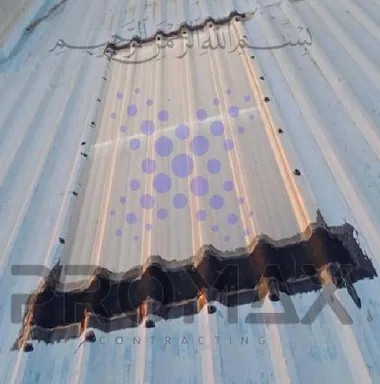
A capable contractor starts with inspection, not assumptions. Roof leakage may come from lap joint failure, parapet cracks, skylight perimeters, box gutters, pipe penetrations, mechanical supports, or degraded fasteners on metal roofing. If the contractor is recommending a system before checking the actual failure points, that is usually a warning sign.
Strong contractors also think beyond the visible leak. On large facilities, water ingress is often tied to corrosion, poor slope, punctured membranes, thermal movement, and neglected maintenance. Treating only the wet area without addressing the source is how clients end up paying for the same repair twice.
The inspection stage tells you a lot
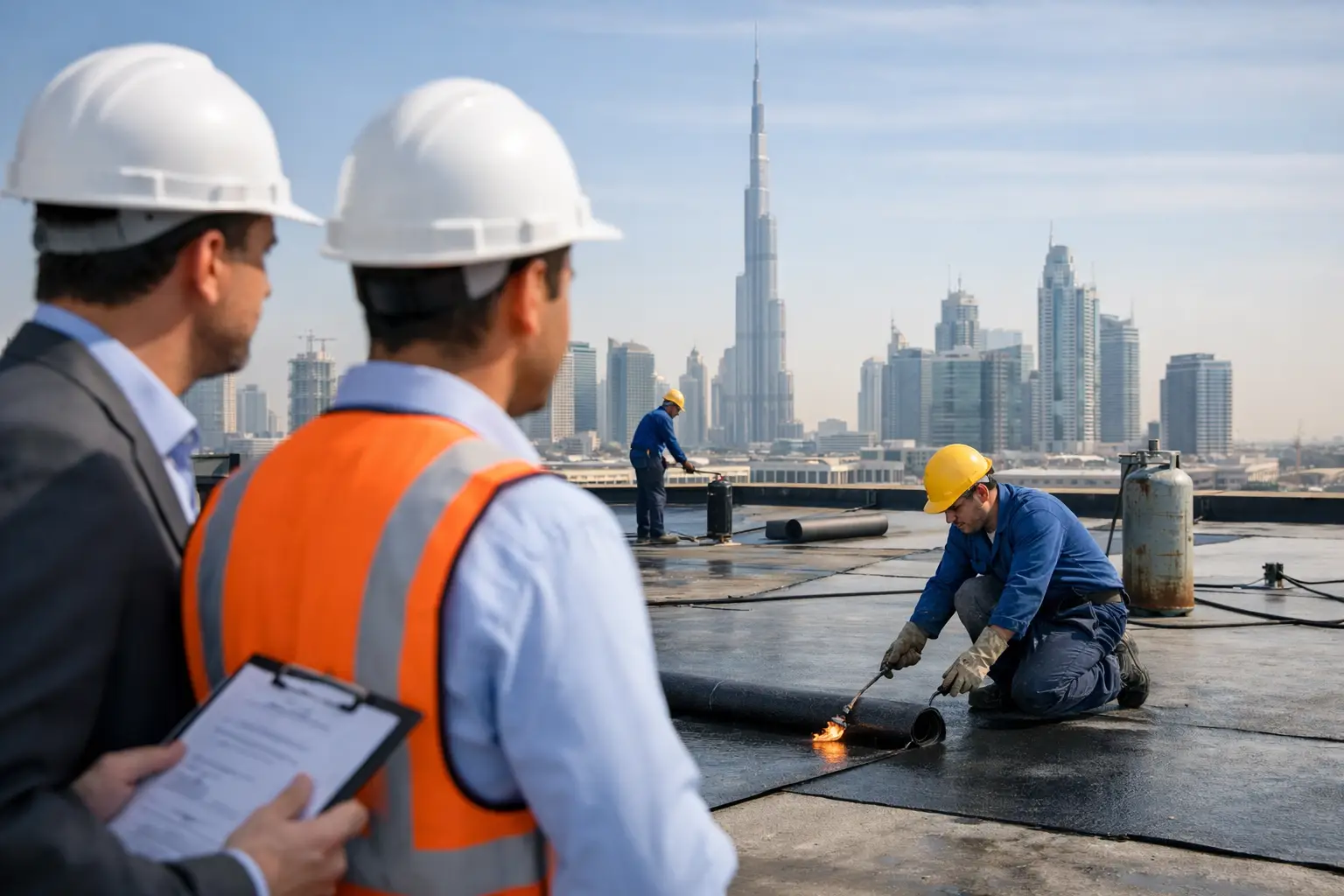
Before discussing price, assess how the contractor approaches the site. A proper inspection should cover the roof condition, substrate type, drainage layout, existing waterproofing layers, access constraints, and operational sensitivity of the facility. On industrial buildings, they should also be reviewing movement joints, sheet overlap conditions, rusted sections, flashing details, screw points, and any evidence of ponding.
This stage is where experienced teams stand out. They can usually tell whether the right answer is localized sealing, partial rehabilitation, membrane overlay, concrete treatment, gutter replacement, flashing fabrication, or a broader roof restoration package. In many cases, the correct solution is a combination of works rather than one product.
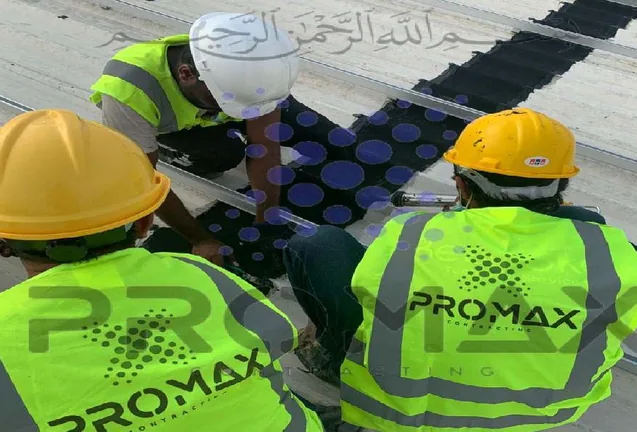
If you manage an active warehouse or plant, ask how the inspection findings will be translated into an execution plan. The contractor should be able to explain work sequencing, access setup, safety controls, material selection, and how they will minimize disruption to stock, machinery, or operations below.
System selection is not one-size-fits-all
Waterproofing in Dubai is heavily affected by heat, UV exposure, movement, and aging substrates. That is why system selection should match the roof type and service conditions.
For concrete roofs, the contractor may recommend membrane systems, crack treatment, surface preparation, screed correction, and protective coatings depending on the extent of deterioration. For metal roofs, the conversation shifts toward fastener treatment, rust removal, joint sealing, overlap reinforcement, gutter interface repairs, and membrane systems compatible with metal expansion and contraction.
EPDM-based systems are often a strong option for demanding roof applications because they perform well under weather exposure and movement when installed correctly. But even a good system will fail if the surface preparation is poor or the detailing around penetrations, curbs, and edges is weak. Materials matter, but workmanship and detailing matter just as much.
That is why procurement should not compare quotes as if all waterproofing scopes are equal. One contractor may be pricing only coating application, while another is including substrate repair, detailing treatment, and edge termination. The cheaper number can become the more expensive mistake.
What commercial and industrial clients should ask
For large-scale facilities, the contractor needs to do more than stop immediate leakage. They should be able to protect the asset over time. That means asking practical questions during evaluation.
Can they handle roof waterproofing together with related repairs such as gutter replacement, skylight waterproofing, pipe penetration sealing, rust treatment, and sheet metal fabrication? Can they mobilize safely on operating sites? Do they have crews experienced in industrial environments? Can they provide after-sales support if a defect appears after handover?
It also helps to ask whether they fabricate components in-house or rely entirely on outside vendors. On rehabilitation works, custom flashings, trims, covers, and replacement sections are often needed quickly. Contractors with fabrication capability usually have better control over time, fit, and coordination.
Documentation matters too. A serious contractor should be comfortable presenting method statements, material data, safety planning, and a clear scope of work. That is not paperwork for its own sake. It is evidence that the contractor is organized enough to execute technically sensitive work.
Red flags that lead to repeat failures
Most repeat waterproofing failures come from predictable issues. The first is surface-level diagnosis. If the team is only treating symptoms, leaks usually return. The second is poor preparation. Dirty, wet, unstable, or corroded substrates will compromise adhesion and system performance.
Another common problem is weak detailing. Large open roof areas may be treated correctly, but the actual failure shows up at terminations, corners, drains, penetrations, and joints. This is especially common on mixed-material roofs where concrete, steel, insulation, and prefabricated elements meet.
Shortcuts in drainage correction are another concern. No membrane performs well under chronic ponding if slope defects and blocked outlets are ignored. Finally, be cautious of contractors who do not discuss maintenance. Even durable systems benefit from periodic inspection, particularly on industrial roofs exposed to dust, movement, heavy rain events, and mechanical service traffic.
Why response time matters in Dubai
In commercial property maintenance, speed is not just a convenience. Delayed response can mean damaged inventory, interrupted operations, stained interiors, corrosion spread, and higher reinstatement costs. This is why responsiveness should be part of contractor selection, not an afterthought.
The best waterproofing contractors in Dubai are usually the ones that can inspect fast, define the issue clearly, and move from proposal to execution without confusion. For urgent buildings, that responsiveness has real value. It reduces downtime and helps maintenance teams contain risk before the problem spreads across a larger roof area.
Fast response should still come with discipline. A contractor should be quick, but not careless. The right balance is immediate site attention followed by a technically sound recommendation.
One contractor versus multiple vendors
There is a practical advantage in using a contractor who can cover waterproofing along with connected building envelope repairs. Leaks on industrial sites often overlap with roofing defects, gutter failures, metal corrosion, damaged flashings, and access limitations. When different vendors handle each element separately, coordination gaps usually show up in the final result.
A one-stop contractor can inspect the full problem, fabricate required components, execute waterproofing, repair associated roof defects, and remain accountable for the finished system. That model is often more efficient for facility teams managing large or aging assets.
This is one reason companies such as Promax Contracting are often evaluated for industrial and commercial waterproofing scopes. The value is not just in applying a membrane. It is in combining inspection, engineering support, fabrication, field execution, and after-sales response under one delivery structure.
The best choice depends on the building
There is no universal best contractor for every project. A villa balcony leak, a hospital roof, a logistics warehouse, and a factory shed all require different levels of diagnosis, access planning, safety control, and material selection. The right appointment depends on building type, urgency, budget, and how much failure risk the property can tolerate.
For high-exposure commercial and industrial sites, it usually makes sense to prioritize technical capability over the lowest initial price. Roof waterproofing is not cosmetic work. It protects stock, equipment, operations, and the building structure itself.
If you are evaluating contractors, start with the basics: site inspection quality, clarity of diagnosis, suitability of the proposed system, execution capability, and commitment after handover. A contractor that gets those five areas right is far more likely to deliver a repair that lasts.
The useful question is not who can apply waterproofing fastest. It is who can identify the real failure, fix the full problem, and stand behind the work when the roof is tested under actual service conditions.
Talk to Promax
Need this on your roof? Call +971 56 727 4205 or request a free inspection. Promax provides EPDM metal-roof, concrete and industrial waterproofing across Dubai and the UAE with up to a 15-year warranty.