
A coated concrete surface can look clean while taking daily damage from forklift tires, pallet movement, chemical drips, abrasive dust, and standing water. By the time peeling, dull traffic lanes, or exposed concrete become obvious, the repair scope is usually larger than it needed to be. Knowing how to maintain epoxy flooring helps facility teams protect the original installation, reduce shutdowns, and plan repairs before operations are affected.
Maintenance is not about making the surface look glossy at all times. It is about controlling the conditions that cause coating failure: grit under wheels, aggressive cleaning chemicals, moisture entering damaged edges, impact at loading areas, and unauthorized repairs that create weak spots.
Start With the Actual Service Conditions
Every maintenance plan should match the building's operations. A light-duty office corridor, a food preparation area, an automotive workshop, and a distribution warehouse may use similar coating systems, but they do not fail for the same reasons.
A warehouse with forklift traffic needs close attention to wheel paths, turning zones, rack legs, dock entrances, and battery charging areas. Facilities handling oils, acids, solvents, or cleaning agents need to verify chemical compatibility rather than assuming any coated surface will resist every spill. Wet-process areas need drainage discipline because standing water can work into joints, cracks, and damaged perimeter sections.
Before setting a cleaning schedule, document the coating type, installation date, expected traffic load, slip-resistance profile, and any known chemical exposure. Keep the installer’s product data and maintenance guidance with the facility records. This information matters when selecting cleaners, planning repairs, or investigating a localized failure.
Daily Cleaning Prevents Abrasion Damage
Fine sand, metal filings, packaging debris, and tracked-in dust act like abrasive paper under tires and foot traffic. In high-use facilities, dry soil removal is the first line of protection.
Sweep or dust mop frequently enough to stop grit from building up in traffic lanes. In large areas, a properly adjusted mechanical sweeper can improve consistency, provided its brushes are not overly aggressive. Do not allow debris to collect at door thresholds, drains, expansion joints, or beneath storage racks, where moisture and contaminants are harder to detect.
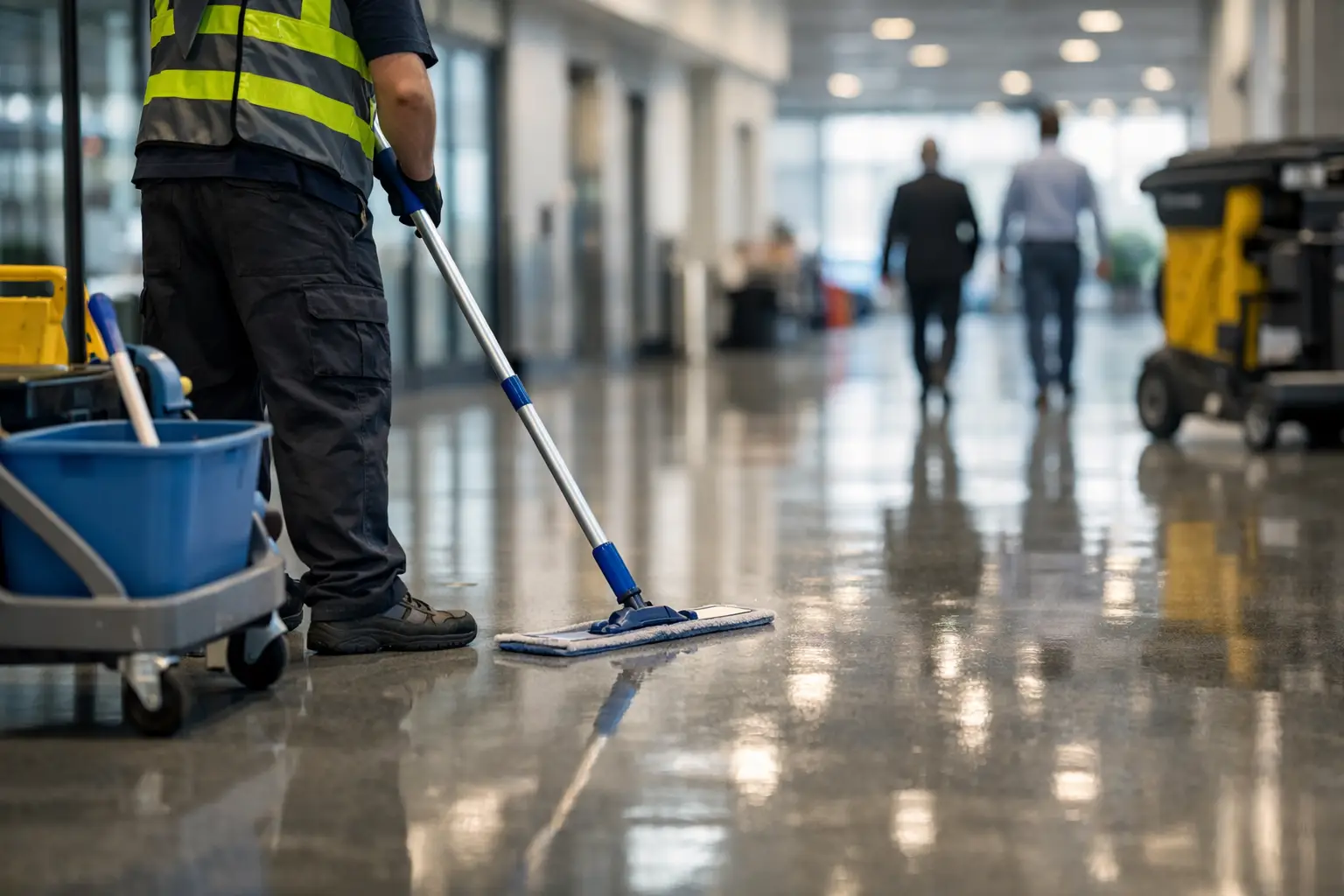
For wet cleaning, use a neutral-pH cleaner diluted according to the manufacturer’s instructions. Auto scrubbers are effective for broad warehouse areas, but the pad selection, down pressure, and water recovery must be appropriate for the coating. Excessively abrasive pads can wear the finish, reduce clarity, and remove texture from slip-resistant surfaces.
Avoid using strong acids, caustic degreasers, bleach at uncontrolled concentrations, or solvent-based cleaners unless the coating manufacturer has specifically approved them. A cleaner that works well on bare concrete or tile can soften, stain, or dull a resin coating. If a new cleaning chemical is being introduced, test it in a small, inconspicuous area before approving site-wide use.
How to Maintain Epoxy Flooring After Spills
Spill response should be immediate, especially around chemicals, oils, hydraulic fluid, battery acid, and food-processing residues. The longer a substance remains on the surface, the greater the chance of staining, loss of gloss, odor retention, or chemical attack at scratches and joints.
Train cleaning staff and operators to isolate the area, use the correct absorbent material, remove the waste safely, and wash the surface with a compatible cleaner. Do not scrub unknown chemicals into the coating or push contaminated liquid toward drains without confirming the disposal procedure.
Water spills also require attention. Water may not damage a sound coating by itself, but repeated ponding can reveal inadequate drainage, failed sealant, or coating damage near joints and wall edges. If the same area remains wet after cleaning or rain exposure, treat it as a maintenance issue rather than a housekeeping issue.
Inspect High-Risk Areas Every Month
A short monthly inspection is more useful than waiting for an annual condition survey. The goal is to identify localized damage while repair materials can still bond to a stable surface.
Focus on forklift routes, loading docks, production lines, doorways, washdown zones, storage areas with frequent pallet drops, and locations exposed to direct sunlight or heat. Look for scratches that have reached the concrete, chipped edges, cracking, blistering, peeling, tire marks, discoloration, and worn anti-slip texture.
Pay particular attention to joints and transitions. The coating should not bridge moving expansion joints without a proper joint detail. When sealant fails, moisture and debris can enter below the coating edge. This often leads to progressive delamination if it is left unattended.
Record damage with photographs, location references, and dates. A simple inspection log helps maintenance teams distinguish isolated impact damage from a repeating operational problem. If wear consistently appears near a turn radius or loading point, the right solution may be traffic management, impact protection, or a heavier-duty repair system - not repeated patching alone.
Control Forklift, Pallet, and Impact Damage
Most coating failures in active facilities are operational rather than material-related. Steel pallet corners, dragging loads, hard plastic wheels, and sharp turning under load can damage even a well-installed system.
Use protective measures where traffic concentrates. Wheel guards, dock plates, rack leg protectors, designated turning lanes, and proper pallet handling reduce direct impact. Keep forklift wheels clean and in good condition, since embedded debris and damaged tires increase abrasion. Avoid dragging equipment, metal frames, or pallets across the surface.
Rubber tire marks are common in busy buildings. They are often caused by heat and friction, especially at turns and braking points. Start with a compatible neutral cleaner and a non-abrasive pad. If marks return quickly, review forklift movement patterns and tire compounds before escalating to stronger chemicals.
Repair Small Defects Before They Spread
Small chips and scratches are easier to repair than broad areas of delamination. However, successful repairs depend on preparation. Applying a touch-up material over contamination, loose edges, damp concrete, or unprepared glossy coating will usually result in another failure.
A proper localized repair normally involves removing loose material, cleaning contaminants, mechanically preparing the surrounding surface, checking the concrete for moisture-related issues, and applying a compatible repair system at the required thickness. Color and gloss may differ slightly, particularly on older installations exposed to sunlight, cleaning products, and traffic. That trade-off is generally acceptable when the priority is restoring protection and preventing moisture entry.
Blistering, widespread peeling, or recurring failures require a more detailed assessment. Possible causes include moisture vapor from the slab, poor substrate preparation, coating applied outside the required temperature range, chemical exposure, or structural cracking. Recoating without identifying the cause can waste time and material.
Manage Moisture, Heat, and Building Envelope Issues
Coated surfaces perform best when the surrounding building conditions are controlled. Water entering through leaking roofs, failed wall joints, damaged gutters, pipe penetrations, or poor drainage can migrate into concrete and affect adhesion. A surface repair alone will not solve a moisture source originating elsewhere in the building envelope.
In hot facilities or areas receiving direct sun, thermal movement can place extra stress on joints, transitions, and weak coating edges. Keep expansion joints functional, seal penetrations correctly, and investigate cracks that widen over time. Where water ingress or slab moisture is suspected, a site inspection should assess the full path of water rather than treating only the visible surface damage.
Set a Maintenance Schedule That Operations Can Follow
A plan only works if it can be carried out during normal operations. For most commercial and warehouse sites, daily debris removal and spill response should be assigned to housekeeping or shift teams. Weekly wet cleaning can be adjusted based on dust load and contamination. Monthly inspections should be handled by a supervisor or maintenance lead, with a more detailed professional condition review scheduled when traffic is heavy or damage trends are increasing.
Keep cleaning products, dilution ratios, repair records, and inspection reports in one maintenance file. This improves accountability and gives contractors clear information if a repair, recoat, or technical assessment is needed.
The best maintenance decision is often made early: remove grit before it grinds into traffic lanes, clean spills before they stain, and repair a damaged edge before water reaches the concrete. That disciplined approach keeps the facility safer, cleaner, and easier to operate without turning routine wear into a major repair project.
Talk to Promax
Need this on your roof? Call +971 56 727 4205 or request a free inspection. Promax provides EPDM metal-roof, concrete and industrial waterproofing across Dubai and the UAE with up to a 15-year warranty.