
A roof valley leak rarely stays a small problem for long. On commercial and industrial buildings, the valley is one of the highest-risk drainage lines on the roof, collecting fast-moving water, debris, and thermal movement in one narrow section. If you are searching for how to repair leaking roof valley conditions, the right answer starts with diagnosis, not sealant.
In many cases, the visible drip inside the building is only the last symptom. The actual failure may be higher up the valley line, under damaged metal flashing, at a membrane lap, around fasteners, or where debris has forced water sideways under the roofing system. That is why a proper repair approach has to deal with both waterproofing failure and the reason the valley failed in the first place.
Why roof valleys leak so often
A valley handles concentrated runoff from two roof slopes. That means higher water volume, more wear, and more exposure to standing debris than most other roof sections. On metal roofs, valley leakage often starts when laps open, screws loosen, sealant dries out, or corrosion thins the metal at joints. On tiled or shingle systems, cracked coverings, failed underlayment, and poor flashing alignment are common causes.
Drainage pressure matters. During heavy rain, water in a valley moves faster than water on the wider roof field. If the valley profile is too shallow, blocked, or poorly detailed, water can back up under overlaps and enter the substrate. On older industrial roofs, repeated movement from heat expansion and contraction can also split seams or pull connections apart.
Start with inspection before repair
If the goal is a durable fix, inspection has to come first. A leak at the valley can be caused by direct damage in the valley itself, but it can also be triggered by failed adjacent sheets, loose ridge details, displaced tiles, blocked gutters, or poor discharge at the eave.
Begin by checking the full valley line from the upper point to the outlet. Look for rust, punctures, lifted laps, missing fasteners, cracked sealant, sagging sections, and any sign of trapped dirt. Interior leak marks help, but they do not always pinpoint the breach. Water can travel under the roof covering before showing up inside.
A professional inspection usually includes controlled water testing, moisture tracing, and checking the substrate below the valley if access is available. This matters on warehouses and production facilities where concealed moisture can spread insulation damage, rust purlins, and stain interior finishes before the source is obvious.
How to repair leaking roof valley the right way
The correct repair depends on the roof type, the age of the system, and the extent of deterioration. There is no single repair method that works for every valley. A small split in a membrane valley can sometimes be repaired locally. A corroded metal valley with failed laps usually needs section replacement, not another layer of mastic.
Clean the valley and restore drainage
The first step is basic but essential. Remove dirt, leaves, nesting material, and any loose failed coating or sealant. A blocked valley can create artificial leakage by forcing water to pond or flow backward. Cleaning also exposes cracks, pinholes, open seams, and rust spots that were hidden under debris.
This stage often reveals whether the leak is a maintenance issue, a waterproofing issue, or both. If the valley is structurally sound and only blocked, cleaning and minor corrective work may solve the problem. If the metal is perforated or the membrane is brittle, cleaning alone only confirms the need for deeper repair.
Remove failed patchwork
Many leaking valleys have already been treated with temporary products. Thick roof cement, random tape patches, and surface-applied silicone over dirty or wet substrates usually fail again under standing water and heat cycling. Before a proper repair can be installed, failed patch layers need to be cut back and removed.
This step is important because a new membrane or flashing system will only perform if it is bonded to a stable, prepared surface. Covering loose patchwork traps defects underneath and reduces adhesion.
Repair or replace damaged valley metal or flashing
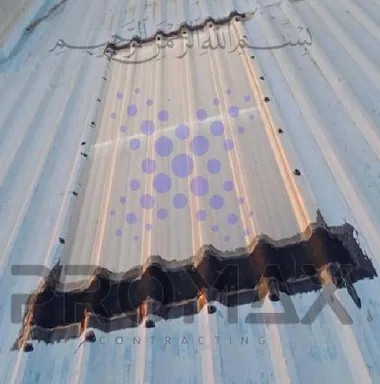
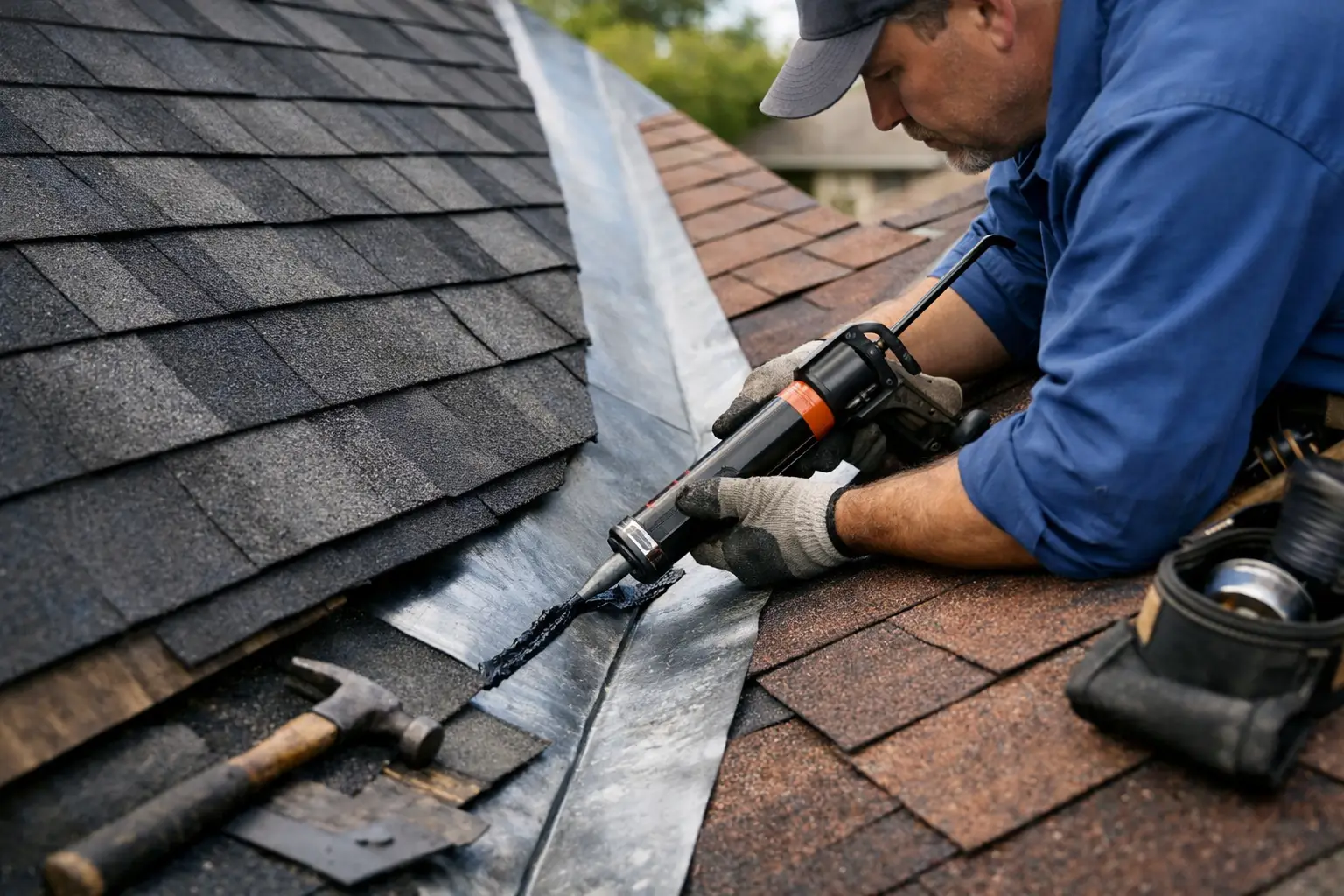
On metal roofing systems, valley leaks are often tied to rusted flashing, open end laps, or poorly fabricated transitions. If the metal is still sound, isolated cracks or joint failures can sometimes be repaired with compatible waterproofing tape, reinforced seam treatment, and protective coating.
If corrosion has advanced, replacement is the better option. Thin or perforated valley metal cannot be made reliable with surface sealant alone. The damaged section should be removed, new fabricated valley flashing installed with correct overlap, and all joints sealed using a system designed for roof movement and water exposure.
On industrial roofs, this often means using formed metal sections, mechanical fixing where required, and an EPDM-based waterproofing layer or reinforced membrane treatment over critical laps and transitions.
Replace failed underlayment or membrane
If the valley covering is removed and the underlayment below is torn, cracked, or waterlogged, it also has to be replaced. This is a common issue on aging sloped roofs where the top layer looks acceptable from a distance, but the waterproofing below has already failed.
A membrane repair should extend beyond the visible leak point. Localized small patches can work for isolated punctures, but valleys are high-flow areas. In many cases, the better repair is to strip back to sound material and install a wider reinforced membrane section that covers the full vulnerable zone.
Reset roof coverings correctly
Tiles, shingles, or metal sheets adjacent to the valley must be reinstalled with correct spacing and alignment. Poor placement can push water sideways or create catch points for debris. Fasteners should never be driven in a way that compromises the valley drainage line.
This is where workmanship matters more than product labels. Even a good membrane will fail early if adjacent roof coverings are reinstalled without respecting water flow, expansion movement, and overlap direction.
When sealant is enough and when it is not
This is where many repairs go wrong. Sealant has a role, but it is not a repair strategy by itself for every leak. If the leak is caused by a small open lap on otherwise sound metal, a compatible sealant used with proper surface preparation may be acceptable as part of the repair. If the valley is rusted, deformed, or structurally loose, sealant is only a temporary hold.
The trade-off is speed versus service life. Quick sealant work may stop active leakage for the short term, which can be necessary during operations, but it should not be confused with a permanent correction. On commercial buildings, repeat leakage usually costs more than doing the valley assembly properly the first time.
Signs the valley needs replacement, not repair
Some valleys are beyond localized treatment. If the leak keeps returning after patching, the metal shows widespread corrosion, the substrate below is soft, or multiple joints along the valley have failed, replacement is typically more cost-effective than repeated reactive work.
Another warning sign is staining or moisture spread along a long section of ceiling below the valley. That often indicates water travel under the roof system, not a single pinhole. In that condition, opening the area and rebuilding the detail is usually the only reliable path.
For industrial and warehouse roofs, replacement may also be the right choice where there is poor original detailing, undersized drainage design, or repeated thermal movement at long valley runs.
Preventing the next roof valley leak
A repaired valley will not stay dry if the surrounding roof is neglected. Scheduled inspection is the real protection. Valleys should be checked for debris buildup, coating failure, rust at overlaps, failed fasteners, and discharge problems before peak rain periods.
Buildings in high-heat and dust-heavy environments need closer attention because thermal stress and dirt accumulation accelerate failure. In the Gulf region, for example, wide roof spans, intense UV, and dust loading can shorten the life of exposed sealants and unprotected metal details. That makes preventive maintenance more valuable than emergency patching.
For many facilities, the best long-term approach is a system repair rather than a spot fix. That may include valley reflashing, membrane reinforcement, gutter correction, fastener treatment, and protective coating across connected roof sections. Promax Contracting typically approaches these problems through inspection-led repair because valley leakage is rarely isolated from the rest of the drainage path.
What facility teams should do first
If water is actively entering the building, protect stock, equipment, and electrical areas immediately, then document the leak location and weather conditions. After that, arrange a roof inspection before authorizing random patching. The goal is not just to stop water today. It is to stop the same failure from reopening in the next storm.
A leaking valley is a repairable problem, but only when the cause is identified and the repair matches the roof system. Good valley work is not about using more sealant. It is about restoring drainage, replacing failed components, and installing waterproofing details that can hold under real service conditions.
Talk to Promax
Need this on your roof? Call +971 56 727 4205 or request a free inspection. Promax provides EPDM metal-roof, concrete and industrial waterproofing across Dubai and the UAE with up to a 15-year warranty.