A metal roof rarely fails all at once. It starts at exposed fasteners, cut edges, ponding zones, gutter lines, old lap joints, and roof penetrations where water sits longer than it should. If you are looking for how to stop roof corrosion, the answer is not a single coating or quick patch. Corrosion control on industrial and commercial roofs depends on early diagnosis, correct surface preparation, drainage correction, and a repair system that matches the roof condition.
For warehouses, factories, sheds, and service buildings, corrosion is not only a roofing problem. Once rust advances, it can affect insulation, purlins, ceiling systems, stock, electrical runs, and operations below. That is why the right approach is technical, not cosmetic.
How to Stop Roof Corrosion at the Source
The first step is identifying why the roof is corroding. In most industrial environments, roof corrosion develops from a combination of moisture exposure, failed protective coating, trapped dirt, chemical contaminants, and poor drainage. In coastal and high-heat regions, salt exposure and thermal movement accelerate the process.
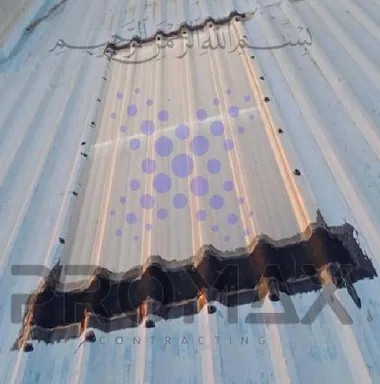
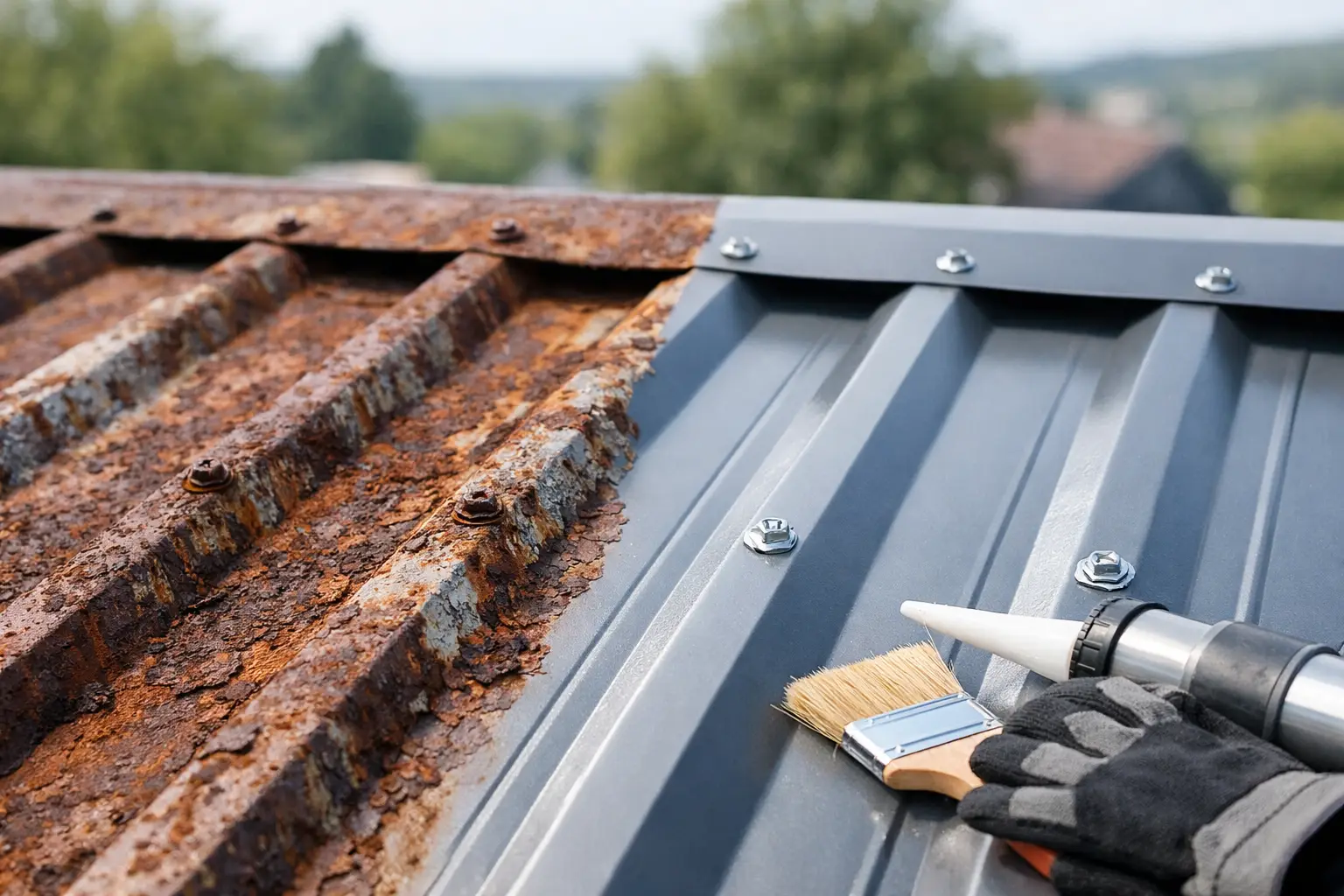
Not every rusted roof needs replacement, but not every rusted roof can be saved with paint either. The condition of the metal matters. Light surface oxidation on sheets and accessories can often be treated and sealed. Deep section loss around fasteners, laps, gutters, or structural members may require localized replacement or fabrication works before any coating or membrane system is applied.
A proper site inspection should check sheet thickness loss, failed screws, loose overlaps, cracked sealants, gutter backflow, water ponding, skylight junctions, pipe penetrations, and underside corrosion. If the roof has active leaks, those entry points must be resolved at the same time. Corrosion and water ingress usually travel together.
Start with Inspection, Not Product Selection
One common mistake is choosing a coating before understanding the roof assembly. Galvanized sheets, pre-painted metal panels, aluminum components, old bitumen tie-ins, and patched sections all behave differently. A repair specification should be based on substrate condition, exposure, and remaining service life target.
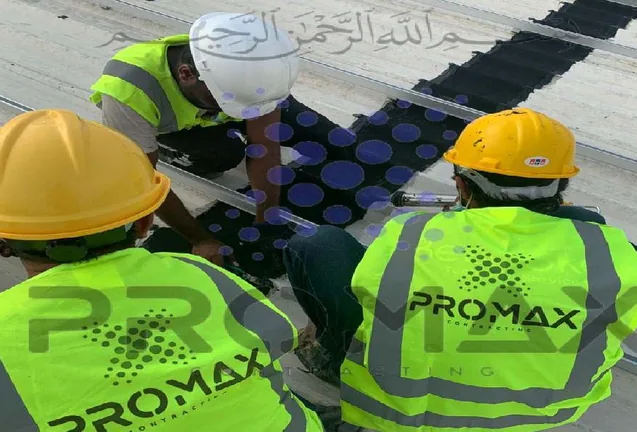
For large facilities, inspection should also review access safety, production sensitivity, and whether work can be phased without disrupting operations. A warehouse roof over active inventory needs a different execution plan than a vacant shed. The repair system may be similar, but sequencing, containment, and response time matter.
If corrosion is concentrated around gutters and downpipes, the issue may be hydraulic rather than material. If it appears around penetrations and roof screws, failed seals and thermal cycling may be the trigger. If the underside of the sheet is rusting, condensation and ventilation should be reviewed. Stopping corrosion means addressing the mechanism, not only the visible stain.
High-risk areas that fail first
In commercial and industrial roofs, the first red flags are usually exposed fasteners, end laps, side laps, valley gutters, box gutters, roof curbs, ridge details, and unsupported patches from previous repairs. Areas around AC stands, pipe supports, solar penetrations, and dissimilar metal contact points also need close attention.
These details corrode faster because protective coatings break down under movement, standing water, and repeated maintenance traffic. Once the coating is damaged, corrosion can spread beneath overlaps and around fixing points where it is harder to see.
Surface Preparation Decides the Repair Life
If the goal is to stop roof corrosion for more than one season, surface preparation cannot be skipped. This is where many low-cost jobs fail. Applying a new coating over loose rust, chalking paint, grease, or trapped moisture only hides the problem for a short time.
The roof surface should be cleaned thoroughly to remove dirt, salts, biological growth, and loose material. Corroded sections then need mechanical preparation suitable for the substrate condition. In some areas, that may mean wire brushing and power-tool cleaning. In heavier corrosion zones, more aggressive preparation may be needed to remove unstable scale and expose sound metal.
After cleaning, all weak points should be reviewed again. This is the right stage to replace failed screws, treat cut edges, reseal laps, and remove defective patchwork. If a contractor jumps straight from washing to painting, the roof may look better temporarily, but the corrosion process usually continues underneath.
Use the Right Repair Method for the Roof Condition
There is no single answer for every roof. The right system depends on whether the corrosion is surface-level, localized, or already affecting the integrity of sheets and accessories.
For early-stage corrosion, rust treatment followed by a compatible primer and protective topcoat can extend roof life effectively. The coating system must suit the roof material and site exposure. Industrial buildings with chemical fumes, marine air, or high UV load need more than a generic metal paint.
For roofs with recurring leaks at joints, penetrations, and detail areas, a reinforced waterproofing approach is often the better solution. Treating corrosion while sealing the roof assembly gives better long-term control than addressing rust and leakage separately. This is especially true on aging sheet roofs where movement at laps and fasteners has already opened the system.
Where corrosion has caused perforation, severe thinning, or failure at gutters and flashings, localized metal replacement is usually required. New fabricated components, properly detailed and protected, perform better than repeated sealant-based patching. The trade-off is higher initial cost, but it prevents the cycle of frequent emergency repairs.
Coatings, membranes, and replacement - when each makes sense
Coatings are suitable when the roof remains structurally sound and corrosion is mostly superficial. Membrane-based waterproofing systems are useful when the roof has multiple leak-prone details, movement points, and a need for continuous coverage over joints. Replacement is the practical choice when metal loss is advanced or when previous repairs have left the roof inconsistent and unreliable.
In many facilities, the best answer is a hybrid scope. That may include rust treatment, screw replacement, gutter rehabilitation, localized sheet replacement, and waterproofing reinforcement at high-risk details. This kind of package usually performs better than relying on one product category to solve every defect.
Drainage Control Is Corrosion Control
A roof that holds water will keep corroding. Ponding around gutters, blocked outlets, undersized downpipes, and sagging sheet profiles all shorten roof life. Even a good coating system struggles if water remains in contact with metal for long periods.
Drainage correction may involve cleaning and regrading gutters, replacing damaged gutter sections, opening blocked discharge points, correcting low spots, or redesigning sections where overflow is common. On industrial roofs, debris accumulation from dust, packaging particles, and plant contamination is a frequent contributor.
This is one of the reasons roof corrosion returns after surface treatment. The roof looks sealed, but the water path was never fixed. If you want the repair to last, water must leave the roof quickly and completely.
Fasteners, Penetrations, and Accessories Need Equal Attention
A roof is only as reliable as its weakest detail. Fasteners with failed washers, loose fixings, corroded clips, and poorly sealed penetrations are often the actual starting points of both leakage and rust spread.
During restoration, fasteners should be checked for corrosion, pull-out, and washer failure. Penetrations should be rebuilt or resealed with a detail system designed for movement and weather exposure. Skylight edges, vent bases, service pipe entries, and equipment supports should never be treated as minor items. On industrial roofs, these details often account for a large share of repeat callouts.
If corrosion has spread to purlins or support steel below the sheeting, that becomes a structural maintenance issue, not just a roofing issue. In those cases, roof rehabilitation should be coordinated with steel treatment or replacement so the full system is stabilized.
Maintenance Is What Keeps Corrosion from Returning
Once the roof is restored, the next priority is preventing the same failure pattern. That means scheduled inspection, cleaning, and minor corrective work before defects expand. For large facilities, waiting for visible leaks is expensive. By the time water shows inside, corrosion may already be advanced at multiple points.
A practical maintenance program should include periodic cleaning of gutters and valleys, inspection of coating wear, review of fasteners and penetrations, and checks after major storms or service works on the roof. Buildings in coastal, dusty, or chemical-exposure environments need more frequent review than standard commercial properties.
This is where a responsive contractor matters. Fast action on a minor rust zone, open joint, or failing gutter bracket can prevent a much larger shutdown repair later. Promax Contracting typically sees the biggest savings where clients shift from reactive patching to inspection-led roof maintenance with proper repair detailing.
The useful question is not whether rust can be painted over. It is whether the roof can be returned to a stable condition and kept there. If the inspection is thorough, the preparation is done properly, and the repair scope addresses drainage, fasteners, joints, and metal loss together, corrosion can be controlled and roof life can be extended significantly. The right time to act is when the damage is visible but still manageable, not after the next leak reaches your operations below.
Talk to Promax
Need this on your roof? Call +971 56 727 4205 or request a free inspection. Promax provides EPDM metal-roof, concrete and industrial waterproofing across Dubai and the UAE with up to a 15-year warranty.