A coating can make a weathered industrial roof look serviceable within days, but appearance is not performance. A proper industrial roof coating review must establish whether the existing roof can accept a coating system, where water is entering, and whether details such as fasteners, laps, gutters, curbs, and penetrations will be treated correctly. For warehouses, factories, storage facilities, and operating sheds, the wrong decision can simply trap a leak below a new surface.
What an Industrial Roof Coating Review Should Measure
The purpose of a roof coating review is not to identify the cheapest material per square foot. It is to select a repair system that matches the substrate condition, roof geometry, exposure level, and remaining service life of the building.
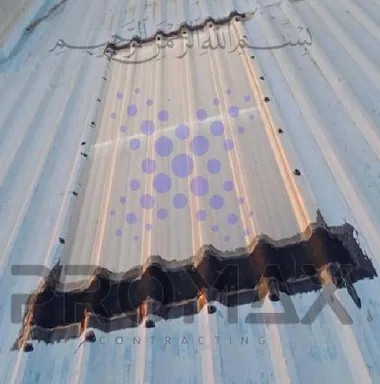
On a metal roof, corrosion at screw points, loose sheets, failed sealant, open side laps, and damaged flashing often cause more leakage than the roof panels themselves. On concrete roofs, cracked screeds, ponding water, failed joints, and deteriorated upstands are usually the critical issues. A coating can be effective on either substrate, but only after the underlying defects are repaired.
For facility teams, the review should answer four direct questions: Is the roof structurally sound enough to retain? Can the surface be cleaned and prepared to the required standard? Will the proposed system address every water entry point, not only the open field area? And can the contractor install it without disrupting operations below?
A coating is generally a strong option when the existing roof has localized deterioration but remains stable, dry, and economically worth preserving. It is a poor substitute for replacement where sheets are extensively corroded, insulation is saturated, deck movement is severe, or drainage design is fundamentally inadequate.
The Conditions That Decide Coating Performance
Surface preparation is the first test
Most premature coating failures begin before the first coat is applied. Dust, oil, oxidation, loose previous coatings, and moisture reduce adhesion. This is especially common on older metal roofs exposed to heat, airborne contaminants, and long periods without maintenance.
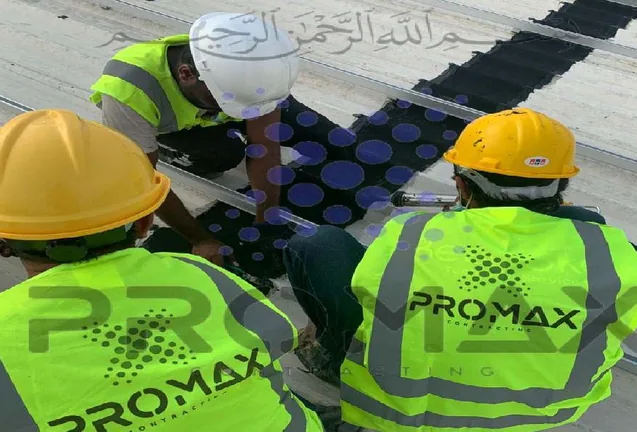
The review should define the preparation method, not leave it as a general promise. Depending on the roof condition, work may require pressure washing, mechanical abrasion, rust removal, replacement of failed fasteners, primer application, and localized metal repairs. Areas around screws, overlaps, drains, skylights, and pipes need focused preparation because these are the locations where movement and water exposure are concentrated.
For concrete, the contractor must check for hollow or weak areas, active cracks, laitance, and moisture within the slab. Coating over an unstable or damp substrate may create blistering, debonding, and recurring leakage. Any assessment that skips moisture and substrate condition is incomplete.
Detailing carries more risk than open roof area
A large roof may have thousands of square feet of open surface, but failures typically start at transitions. Roof penetrations, expansion joints, parapet walls, gutters, roof-mounted equipment, skylights, and sheet laps all require a compatible detail treatment.
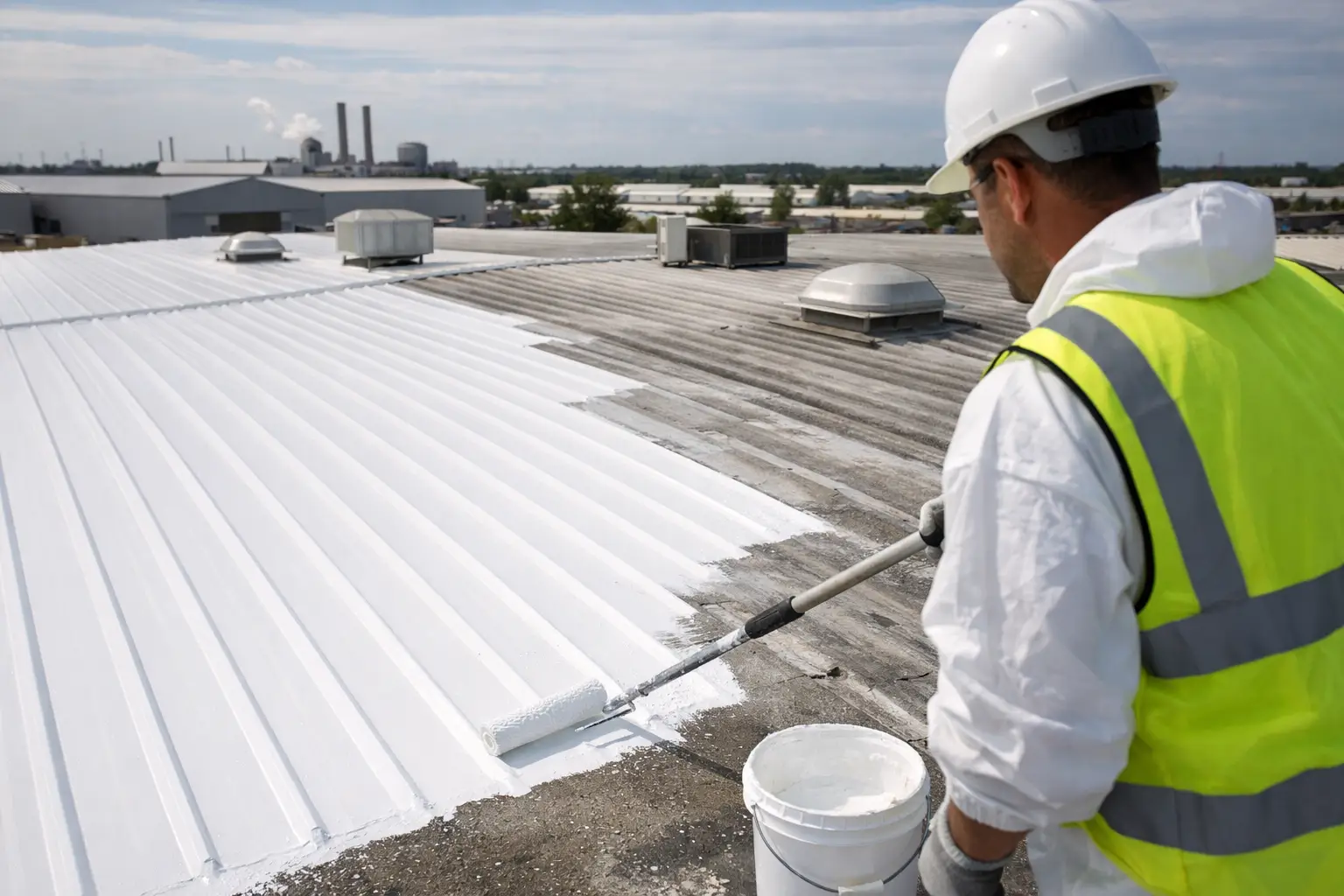
A good industrial roof coating system is therefore a system, not a single liquid product. It may include primer, reinforcement fabric, joint sealant, screw treatment, membrane strips, and top coats with specified thickness. The exact combination depends on the roof type and exposure. Applying one uniform coat across every condition may be fast, but it rarely gives the same service life as properly reinforced detailing.
This matters in high-heat and high-UV environments such as the UAE, where repeated expansion and contraction can open unreinforced joints. Facilities near coastal areas must also account for salt exposure, which accelerates corrosion on metal roof components.
Drainage cannot be ignored
Coatings are not a correction for standing water caused by blocked outlets, undersized gutters, incorrect falls, or sagging roof sheets. Some systems tolerate intermittent ponding better than others, but no coating should be expected to overcome poor drainage indefinitely.
During the inspection, the contractor should identify low spots, blocked drainage paths, damaged gutters, and points where water backs up behind roof equipment. If water repeatedly remains on the roof after rainfall or washdown, drainage repair may need to be included before coating work begins. This can involve gutter replacement, downpipe correction, localized slope improvements, or repairs to drainage outlets.
Comparing Common Coating Approaches
There is no single best roof coating for every industrial facility. Material selection depends on roof substrate, existing membrane condition, solar exposure, maintenance access, and the amount of joint movement expected.
Acrylic coatings can be a cost-effective choice for suitable roofs where strong reflectivity and UV resistance are priorities. They generally require appropriate weather conditions during application and are less suitable for locations that experience continuous ponding.
Silicone systems are often considered where ponding resistance is a major concern. They can perform well under harsh sunlight and prolonged water exposure, but surface cleanliness and future recoating compatibility need careful planning. A silicone coating applied over a contaminated surface will not solve an adhesion problem.
Polyurethane coatings are valued for toughness and abrasion resistance, particularly around maintenance routes and equipment zones. They can be useful where the roof receives more physical traffic, though their application and topcoat requirements must be matched to the project specification.
EPDM-based waterproofing remains a practical option for certain roof rehabilitation scopes, particularly where a membrane solution is better suited than a liquid coating alone. It can provide dependable coverage when installed with correct seam treatment, terminations, and penetration detailing. The key point is selection by condition, not by product preference.
Questions to Ask Before Approving the Work
An industrial roof coating review should result in a defined scope, not a vague statement that the roof will be waterproofed. Facility managers should expect the contractor to state the substrate findings, repair quantities, treatment of details, material build-up, and quality checks.
Ask how corrosion will be removed and whether severely damaged sheets, purlins, flashings, or gutters require replacement. Confirm how every screw line, overlap, penetration, and roof edge will be sealed. Request the specified coverage rate or dry film thickness rather than accepting a general reference to multiple coats.
Also ask how the contractor will protect internal operations. Roof work above stock, machinery, and production areas requires planning for access, material handling, weather exposure, and temporary protection. A contractor with fabrication and repair capability can often resolve related issues, such as damaged flashings or custom metal closures, without waiting on multiple vendors.
Finally, clarify the inspection and after-sales process. Leakage can be difficult to trace because water travels beneath roof sheets or membranes before becoming visible inside. A responsive contractor should inspect the reported area, review adjacent details, and diagnose the source instead of applying sealant only where the drip appears.
When Coating Is Not the Right Answer
A coating should not be sold as a cure-all. If the roof deck has major structural deterioration, the metal sheet has widespread perforation, insulation is waterlogged, or the roof has reached the end of its practical life, replacement may be the more responsible investment.
The same applies when repeated leaks are caused by failed design details rather than surface aging. For example, inadequate gutter capacity, incorrectly terminated sheets, or poorly installed skylights may require corrective construction before any coating is considered. Spending on a surface treatment while leaving the root cause in place creates avoidable repeat costs.
A clear review may recommend a phased approach: immediate leak control, replacement of failed components, targeted waterproofing, then full roof coating once the substrate is ready. This is often more manageable for active facilities than an all-at-once project, provided each phase is properly integrated.
A Coating Project Is Only as Good as Its Inspection
The value of an industrial roof coating is created in diagnosis, preparation, detailing, and site execution. Material quality matters, but it cannot compensate for untreated rust, open laps, failed fasteners, trapped moisture, or poor drainage.
For industrial property owners, the practical goal is simple: stop water ingress, protect the roof structure, reduce heat exposure where appropriate, and extend service life without creating a maintenance problem that returns next season. Promax Contracting approaches that goal through site inspection, repair-led scope development, and waterproofing systems selected for the actual condition of the roof. Before approving a coating, require the evidence behind the recommendation and make sure the details receive the same attention as the visible roof surface.
Talk to Promax
Need this on your roof? Call +971 56 727 4205 or request a free inspection. Promax provides EPDM metal-roof, concrete and industrial waterproofing across Dubai and the UAE with up to a 15-year warranty.