A roof leak over active stock, machinery, or production lines is rarely just a roofing issue. It becomes an operations issue, a safety issue, and often a cost escalation that could have been avoided with a disciplined industrial roof inspection checklist. For warehouses, factories, and large commercial buildings, inspection is not a paperwork exercise. It is the first control point for protecting the building envelope and extending asset life.
Industrial roofs fail in predictable ways, but they do not always fail all at once. A small split around a pipe penetration, early rust at fasteners, ponding water near blocked outlets, or loosened flashing at skylights can sit unnoticed until the next storm or heat cycle pushes the roof system past its limit. That is why inspections need to be systematic, documented, and tied to action.
What an industrial roof inspection checklist should actually cover
A useful industrial roof inspection checklist goes beyond noting obvious leaks. It should identify conditions that lead to leakage, corrosion, insulation damage, structural stress, and premature system failure. On large facilities, that means reviewing the full roof assembly, not just the visible surface.
Start with roof type. A metal roof, concrete roof, built-up system, single-ply membrane, or coated roof each presents different failure patterns. Metal roofs tend to show trouble at laps, screws, end joints, gutters, and rust-prone details. Concrete roofs often reveal cracks, failed waterproofing layers, and drainage defects. Membrane systems need close attention at seams, terminations, and penetrations. The checklist should match the actual roof build-up and any previous repair history.
Access and safety matter just as much as condition reporting. If the roof cannot be reached safely, it cannot be inspected properly or maintained on schedule. Guardrails, ladders, walkways, anchor points, and designated access routes should be part of the inspection scope, especially on active industrial sites where maintenance teams and contractors may need repeated access.
Surface condition and waterproofing integrity
The first inspection layer is the roof surface itself. Inspectors should look for punctures, blisters, open seams, membrane shrinkage, delamination, UV degradation, exposed substrate, soft spots, and standing water. On coated systems, check for thinning, peeling, chalking, or breaks in coverage. Any exposed section can become a water entry point under thermal movement or driving rain.
In Gulf-type climates and similarly harsh environments, heat stress accelerates material fatigue. Expansion and contraction cycles can open laps, pull at fasteners, and weaken sealant lines. That means areas that looked acceptable six months ago may now be vulnerable. A checklist should therefore record both visible defects and early warning signs, including brittle sealants, localized discoloration, and minor splits around stress points.
It also helps to distinguish cosmetic wear from functional failure. Not every stain or surface mark requires immediate replacement, but anything that compromises waterproofing should be prioritized. The difference matters for budgeting. Overreacting increases maintenance cost, while underreacting usually leads to water ingress, insulation saturation, and wider repair scope later.
Drainage, gutters, and water flow paths
Drainage defects are among the most common causes of industrial roof deterioration. A proper checklist should review internal outlets, scuppers, gutters, downpipes, overflow provisions, and the general slope of the roof. If water is not leaving the roof quickly, the system is under stress even if no leak has yet appeared inside.
Ponding water deserves serious attention. On a membrane or concrete roof, standing water can accelerate coating breakdown, increase dirt accumulation, and expose weak details around penetrations and joints. On a metal roof, poor drainage often contributes to corrosion in low points, laps, and gutter lines. What matters is not just whether water is present during inspection, but why it remains there. The cause may be blockage, sagging, settlement, poor falls, or failed drainage design.
Gutters need more than a quick visual check. Look for rust, open joints, failed supports, loose brackets, debris build-up, backflow marks, and leakage at connections. In industrial buildings, overflowing gutters often send water into wall systems, loading bays, and perimeter slabs, creating secondary damage that gets blamed on other trades.
Penetrations, flashings, joints, and roof details
Most roof leaks start at details, not in open field areas. An industrial roof inspection checklist should pay close attention to skylights, vent pipes, ducts, HVAC curbs, cable entries, access hatches, parapet walls, edge flashings, expansion joints, and mounting brackets for services or solar systems.
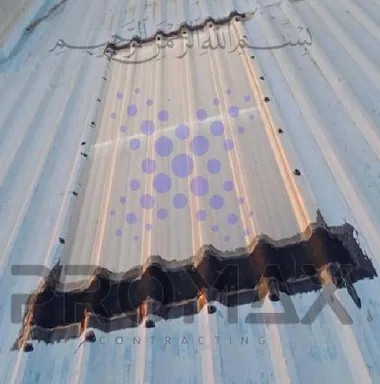
Every penetration interrupts the waterproofing layer. The issue is usually not the pipe or equipment itself but the condition of the seal around it. Inspect for cracking mastics, split boots, loose counterflashings, lifted membrane corners, missing closures, and movement-related gaps. Metal roofs also require close review of stitching screws, washer condition, overlap sealing, and side-lap integrity.
Skylights need a balanced assessment. They are common leak points, but replacing them without checking curb waterproofing, surrounding sheet condition, and drainage can miss the real problem. The same applies to expansion joints. If the joint system has hardened, torn, or separated from adjacent materials, movement will eventually open a direct water path.
Corrosion, fasteners, and structural warning signs
On industrial roofs, corrosion is not only a surface issue. It can indicate coating failure, trapped moisture, galvanic reaction, or prolonged water retention. A checklist should record rust severity, location, spread pattern, and whether the corrosion is limited to surface treatment or has already reduced section thickness.
Fasteners need detailed inspection because failure tends to start small. Look for back-out screws, missing fasteners, failed washers, enlarged holes, overdriven heads, and localized movement around fixing points. On exposed-fastener metal roofs, one weak zone can allow repeated water entry and progressive sheet movement.
Structural warning signs should never be ignored during a roof inspection, even if the original purpose was leak detection. Deflection, sagging purlins, cracked concrete, loose support members, and signs of repeated overloading require escalation. The roof may still be serviceable, but any rehabilitation plan has to address structural support, not just waterproofing. This is where engineering review becomes necessary rather than optional.
Interior evidence that confirms roof failure patterns
A roof inspection should include the underside of the roof where possible. Interior signs often reveal the actual water path better than the top surface does. Check ceilings, purlins, trusses, wall junctions, insulation, electrical runs, and equipment zones for staining, mold, corrosion, dripping, or previous patching.
It is common for water to enter at one point and appear several meters away. That is why a checklist should connect exterior defects with interior evidence instead of treating them as separate observations. If insulation is wet, thermal performance is already compromised. If steel members show corrosion beneath a leak path, the cost of delay rises quickly.
Facilities with temperature-sensitive stock or critical equipment should also note the operational risk attached to each defect. A minor roof breach over a low-use storage zone is not the same as active ingress above production, electrical panels, or finished goods. Inspection findings should therefore support repair prioritization, not just defect logging.
How often to inspect and what to document
For most industrial buildings, roof inspections should be scheduled at least twice a year, with additional checks after major rain, wind events, contractor traffic, or rooftop equipment works. Frequency may need to increase on older roofs, coastal sites, high-heat environments, or buildings with known drainage and corrosion issues.
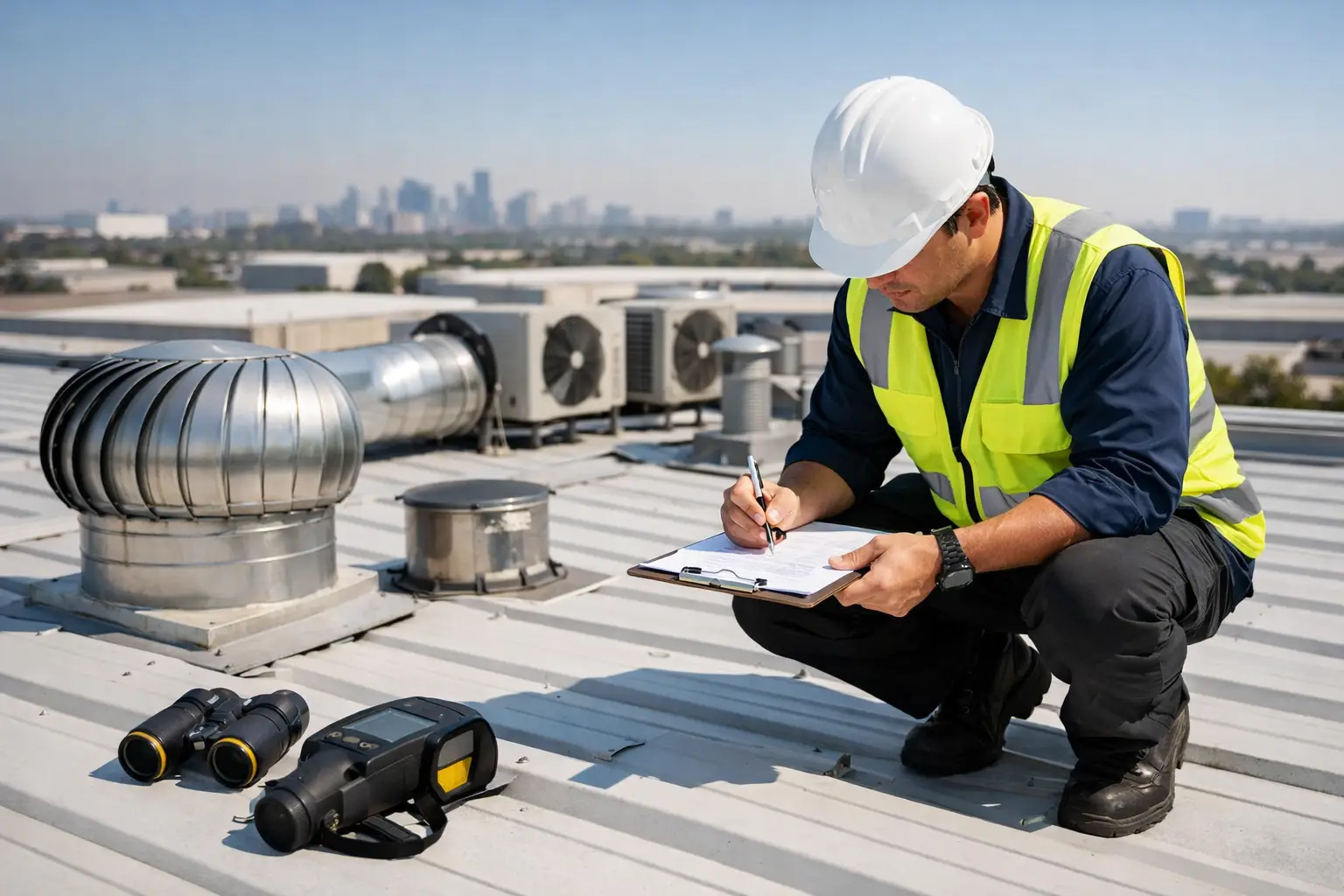
Documentation should be disciplined. That means date-stamped photos, marked roof plans, defect location references, condition notes, moisture observations, and recommended actions sorted by urgency. A checklist is only useful if it leads to decisions. Good records also help procurement teams compare recurring repair cost against full rehabilitation when the roof approaches the end of its practical service life.
There is also a difference between inspection for maintenance and inspection for project planning. A maintenance inspection can identify immediate repairs and preventive works. A pre-tender or rehabilitation inspection should go further, often including core findings, substrate assessment, fastener pull-out concerns, coating compatibility, drainage redesign, and detail rework requirements. It depends on whether the goal is short-term control or long-term roof recovery.
When a checklist is not enough
A checklist is essential, but it has limits. If the roof has chronic leaks, widespread corrosion, repeated patch failures, ponding across large areas, or signs of structural movement, the next step should be a technical site assessment by a contractor that understands industrial roof systems in service conditions, not just generic repairs. In those cases, execution quality matters as much as diagnosis.
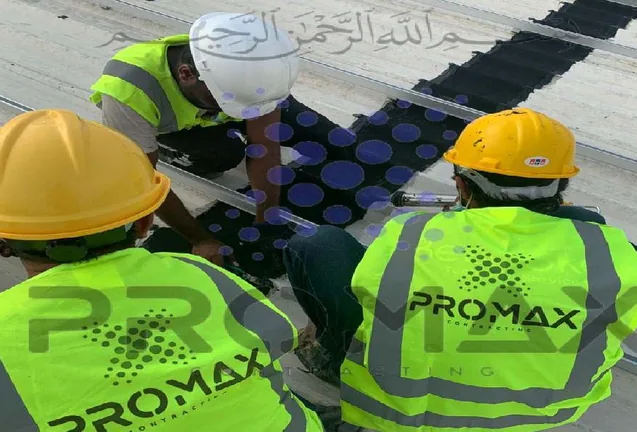
Promax Contracting approaches these roofs the way they need to be handled - by inspecting details, identifying failure mechanisms, and matching the repair method to the roof type, operating environment, and remaining service life. That may mean EPDM-based waterproofing, metal roof screw treatment, gutter replacement, skylight sealing, purlin repair, localized fabrication, or a full rehabilitation scope.
The main point is simple. An industrial roof should not be inspected only after complaints start. The better time to inspect is when the roof is still giving you the chance to act early, control cost, and repair the right areas before disruption spreads through the building.
Talk to Promax
Need this on your roof? Call +971 56 727 4205 or request a free inspection. Promax provides EPDM metal-roof, concrete and industrial waterproofing across Dubai and the UAE with up to a 15-year warranty.