A roof leak over a warehouse aisle or production line is rarely just a roof problem. It turns into damaged stock, unsafe floors, corrosion around structural members, electrical risk, and unplanned shutdowns. That is why industrial roof waterproofing methods need to be selected as a building protection system, not as a quick patch over visible leakage.
On industrial and commercial facilities, the right method depends on roof type, existing deterioration, drainage performance, heat exposure, movement at joints, and how much service interruption the site can tolerate. A metal shed with fastener failure needs a different approach than a concrete roof with ponding water, surface cracks, and multiple service penetrations. The best results come from inspection first, then system selection, then clean execution at every weak point.
How industrial roof waterproofing methods should be evaluated
Many failures happen because owners compare materials before they compare conditions. On site, the first questions are practical. Is the roof metal or concrete? Is water entering through laps, screw points, cracked slab areas, parapet joints, gutters, skylight perimeters, or pipe penetrations? Is the roof still structurally sound enough for restoration, or has corrosion and substrate failure already gone too far?
For most facilities, the decision comes down to five performance issues. The system must resist standing water or shed it effectively. It must handle thermal movement. It must bond or mechanically secure properly to the existing surface. It must protect vulnerable details, not just open field areas. And it must be maintainable after installation.
A cheaper coating over an unstable roof can fail faster than a more complete rehabilitation system with higher initial cost. On the other hand, a full tear-off is not always necessary. In many industrial buildings, restoration is the better financial decision if the substrate can be repaired and prepared correctly.
Common industrial roof waterproofing methods for metal roofs
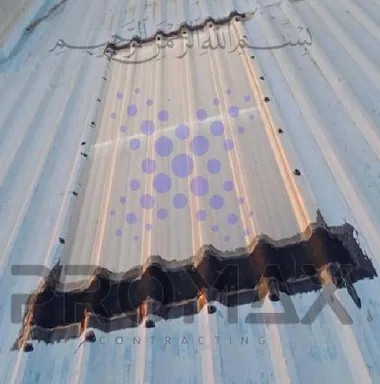
Metal roofing is one of the most common industrial roof assemblies, especially on warehouses, factories, logistics units, and workshops. The main water entry points are usually exposed fasteners, side laps, end laps, roof penetrations, rusted sheets, damaged flashings, and blocked gutters that force backflow.
EPDM membrane systems
EPDM-based waterproofing is widely used where long-term flexibility matters. On industrial roofs, it performs well because it can accommodate thermal expansion and contraction better than many rigid treatments. This is critical on large-span metal roofs exposed to strong sunlight and repeated temperature cycling.
A properly installed EPDM system is not just a roll of membrane placed over the surface. The detailing determines the result. Seams, upstands, corner areas, pipe penetrations, drain transitions, and terminations all need disciplined treatment. If those details are weak, the membrane itself will not save the roof.
EPDM is often a strong choice for rehabilitation works where the objective is to extend service life without major operational disruption. It also suits facilities that want a system with predictable maintenance requirements rather than constant emergency patching.
Liquid-applied waterproof coatings
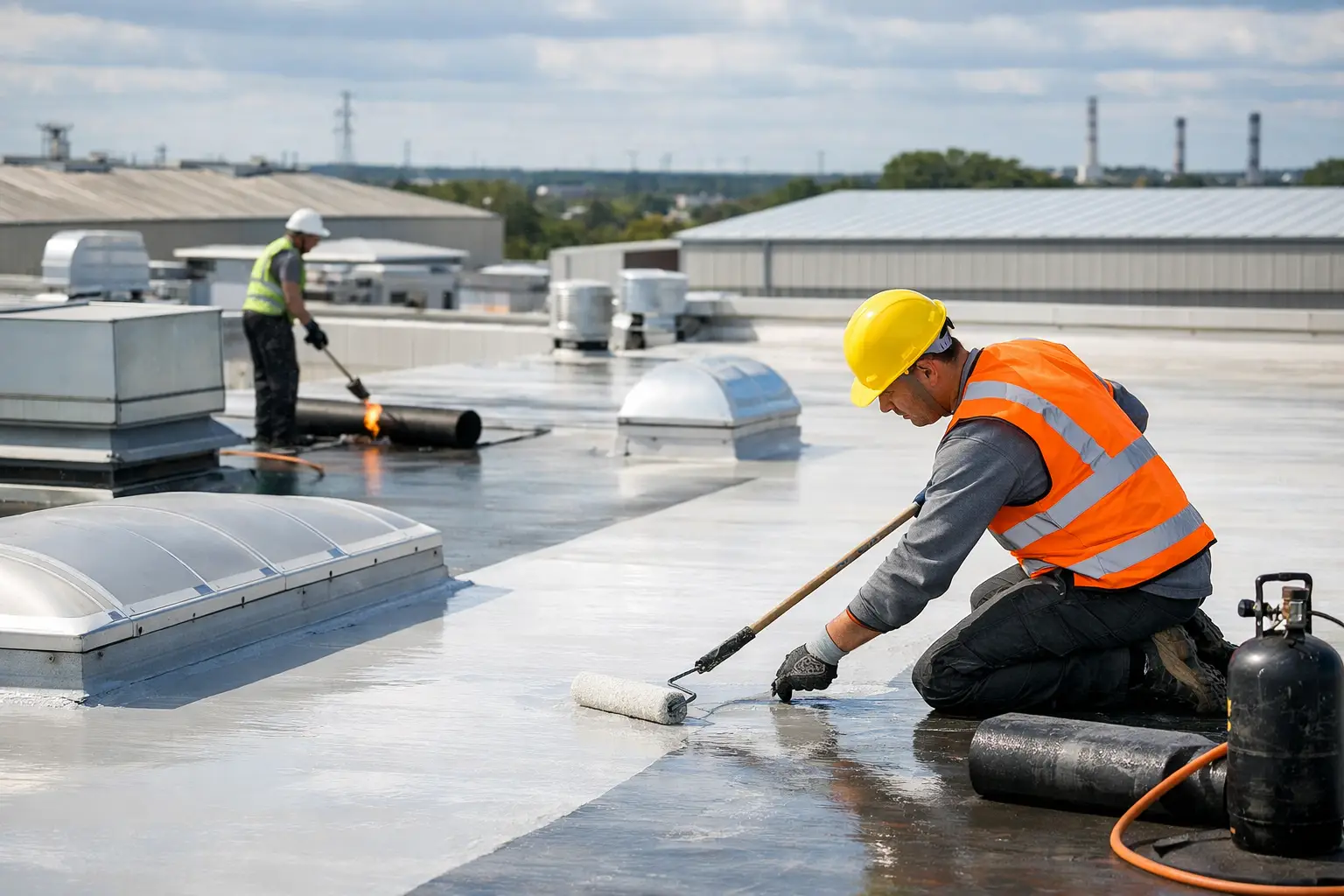
Liquid-applied systems are often used when the roof has a complicated layout with many penetrations, irregular geometry, or difficult access points. They can create a continuous waterproof layer without as many mechanical joints as sheet systems. For some metal roofs, that is a practical advantage.
The trade-off is surface preparation. These coatings are only as good as the substrate beneath them. Rust treatment, cleaning, screw tightening or replacement, lap sealing, and local sheet repair usually need to happen first. If the contractor skips preparation, the coating may look complete on handover but fail early around fasteners, corrosion pockets, or contaminated areas.
Liquid systems can be effective for maintenance-driven restoration programs, especially where owners need fast application and controlled downtime. They are less forgiving on neglected roofs with heavy deterioration.
Fastener, lap, and penetration treatment
On many metal buildings, leakage is not caused by total roof failure. It starts at small but repeated weak points. Exposed screws lose grip, washers degrade, laps open under movement, and pipe penetrations crack under UV and heat.
That is why a targeted treatment package can be part of the waterproofing method itself. Screw replacement, seam sealing, flashing correction, skylight perimeter treatment, and gutter interface repair often make the difference between a short-term patch job and a durable system. In practice, industrial roof waterproofing methods work best when field coverage and detail treatment are executed together.
Industrial roof waterproofing methods for concrete roofs
Concrete roofs fail differently. The issues are usually cracking, membrane breakdown, surface porosity, poor slope, ponding water, and weak detailing at parapets and service entries. Concrete also hides moisture migration. Water may enter at one point and appear much farther away inside the building.
Membrane-based concrete roof treatment
For concrete roof slabs, membrane systems remain one of the most dependable options when the surface can be prepared and repaired properly. These systems create a continuous barrier across the slab while bridging minor surface irregularities and protecting against water ingress from direct exposure.
However, the slab condition matters. Active cracks, hollow screed areas, poor adhesion from previous failed layers, and drainage defects need correction before waterproofing starts. Applying a new membrane over unresolved ponding or delaminated substrate only transfers the problem to the next maintenance cycle.
Where roofs carry heavy service traffic or support equipment, membrane selection should also account for protection layers and maintenance access routes. Waterproofing without considering traffic damage is a common mistake on plant buildings.
Cementitious and coating systems
Some concrete roof areas can be treated with cementitious or liquid-applied systems, especially for localized rehabilitation or secondary protection. These methods can be practical on service zones, vertical surfaces, and complex detailing areas.
Still, they are not universal answers. If the roof has structural movement, widespread cracking, or severe ponding, a coating-only approach may not deliver the service life the owner expects. This is one of those cases where material cost looks attractive at first, but lifecycle cost tells a different story.
Drainage is part of waterproofing, not a separate issue
A technically sound membrane will still struggle on a roof with blocked outlets, undersized gutters, negative slope, or backflow at rainwater discharge points. In industrial facilities, drainage failure is often the hidden reason why repeated repairs do not hold.
Gutter replacement, outlet correction, downpipe alignment, and ponding control should be evaluated with the waterproofing scope. This is especially true on large roofs where even minor slope issues can create standing water over wide areas. Once water starts sitting around fasteners, laps, or concrete cracks, deterioration accelerates.
For that reason, site inspection should trace the water path, not just the visible leak point. A contractor with fabrication capability has an advantage here because custom gutters, flashings, edge trims, and penetration details can be produced to suit the roof instead of forcing a generic fix.
Why detailing decides the lifespan
Most industrial leaks do not come through the middle of a perfect roof surface. They come through transitions. Skylight curbs, expansion joints, AC stands, parapet terminations, cable trays, roof hatches, and pipe penetrations are the first places to inspect and the last places to rush.
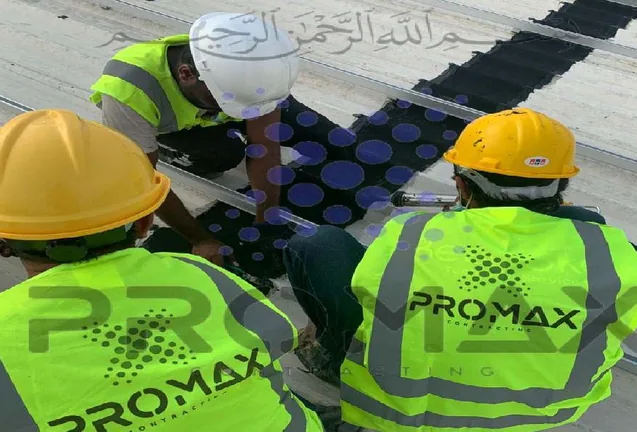
This is where many projects are won or lost. A waterproofing system may perform well in laboratory data, but field durability depends on workmanship, substrate preparation, fastening discipline, and termination quality. That is why experienced industrial contractors put so much emphasis on inspection reports, mock-up details, and supervised installation teams.
Promax Contracting approaches these projects the same way the site sees them - as urgent building protection work that requires inspection, engineering judgment, fabrication support, proper installation, and responsive after-sales follow-up.
Choosing the right method for your facility
There is no single best answer for every roof. For metal roofs with movement, exposed fastener leakage, and aging laps, EPDM systems or engineered restoration packages often make sense. For complicated surfaces with many details, liquid-applied systems can be practical if preparation is done properly. For concrete roofs, membrane-based treatment is often the safer long-term route when cracks, ponding, and failed previous layers have been addressed first.
The wrong approach is usually easy to recognize. It ignores drainage, leaves corrosion untreated, covers weak penetrations without rebuilding them, or focuses on the cheapest material instead of the actual failure mechanism. The right approach starts with condition assessment and ends with a system that can be maintained without constant emergency callouts.
If your roof is already affecting operations, the question is not whether waterproofing is needed. The real question is which industrial roof waterproofing methods will solve the source of leakage, protect the structure, and hold up under the way your facility actually performs. Start there, and the repair budget works harder for much longer.
Talk to Promax
Need this on your roof? Call +971 56 727 4205 or request a free inspection. Promax provides EPDM metal-roof, concrete and industrial waterproofing across Dubai and the UAE with up to a 15-year warranty.