A leaking metal roof over an active warehouse is never just a roof problem. It affects stock, equipment, insulation, electrical points, and daily operations. That is why the question of metal roof coating versus sheet replacement needs a technical answer, not a generic one. The right choice depends on corrosion depth, sheet thickness, fixing condition, leakage pattern, drainage behavior, and how much remaining life the roof structure still has.
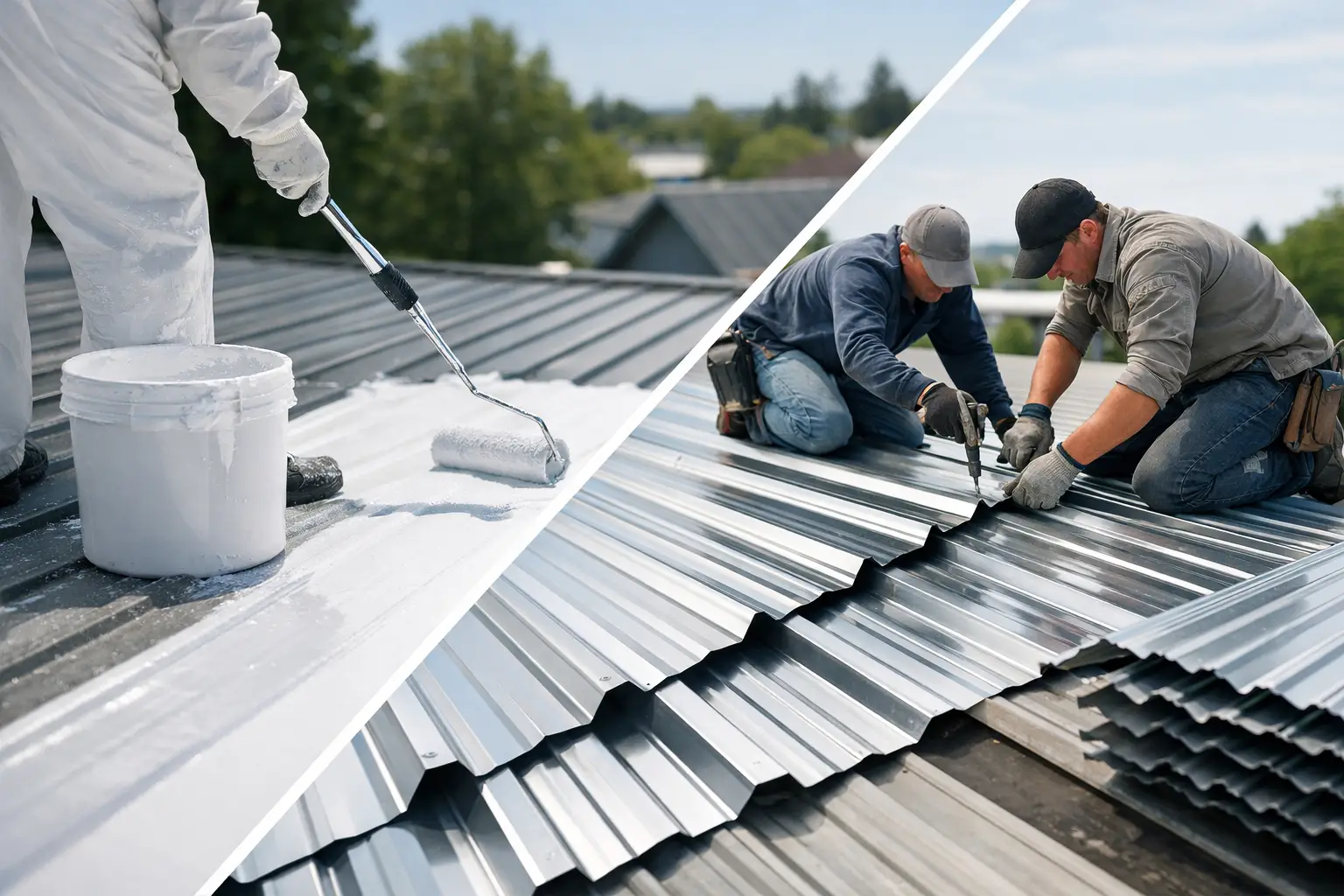
In industrial and commercial buildings, both options can be valid. A coating system can extend service life and improve waterproofing when the roof is still fundamentally sound. Sheet replacement becomes necessary when deterioration has gone past the point where surface treatment can perform reliably. The mistake is treating every rusted roof as a coating job, or every leaking roof as a full replacement case.
Metal roof coating versus sheet replacement: what changes the decision
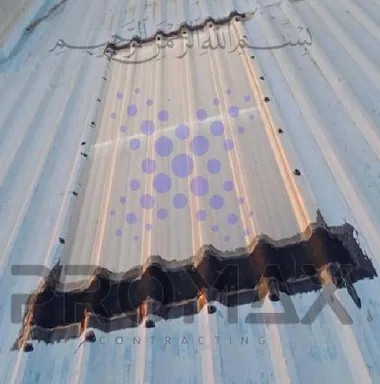
At site level, the first question is not budget. It is whether the existing roof can still hold a restoration system. If the panels have only surface corrosion, isolated fastener failure, minor laps opening up, and manageable leakage points, coating may be the more efficient route. If sheets are perforated, badly deformed, loose on the purlins, or thinned out across large areas, replacement is usually the safer decision.
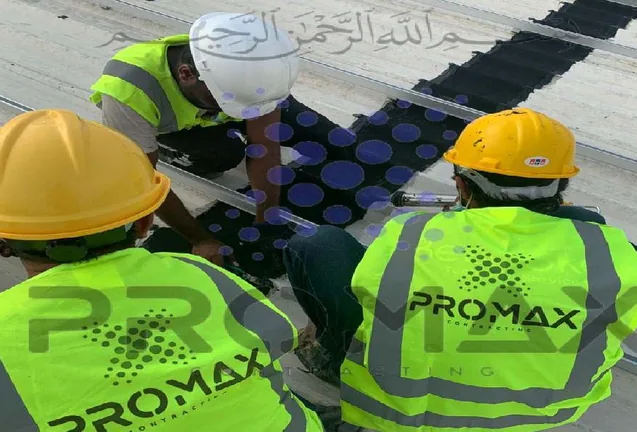
This is why inspection matters. A proper assessment checks panel profile, metal gauge, extent of rust, fixing integrity, water ponding, overlap condition, flashing details, skylight interfaces, gutters, and the condition of the supporting members below. On many industrial roofs, the visible leak is only one part of the problem. Failed screws, rust around washers, capillary action at side laps, and blocked drainage often combine into a much larger failure pattern.
When coating is the stronger option
A metal roof coating system makes sense when the roof sheets remain structurally serviceable. In that condition, restoration can seal vulnerable points, treat corrosion, reduce water ingress, and improve thermal performance without removing the full roof covering. For occupied facilities, that matters. Less disruption often means lower operational impact.
Coating is especially effective on roofs with widespread aging but limited metal loss. Typical cases include oxidized surfaces, old screw lines, minor pinhole risk, deteriorated sealants, and recurring leakage around penetrations or laps. In these situations, the work scope usually includes surface preparation, rust treatment, screw treatment or replacement, joint sealing, reinforcement on critical details, and application of a compatible waterproof coating or membrane system.
The advantage is not just lower upfront cost. It is also speed. Large industrial roofs can often be restored in phases, allowing the facility to keep running while critical areas are treated first. For warehouses, factories, and logistics buildings, phased execution is often a deciding factor.
But coating has limits. If applicators cover over active structural failure, trapped moisture, unstable panels, or severe corrosion, the system will not perform as intended. A coating is not a substitute for sound substrate. It is a restoration measure, not a cosmetic cover-up.
Where sheet replacement becomes necessary
Sheet replacement is the right decision when the metal roof has lost too much integrity for restoration to hold. This usually shows up as perforated sheets, widespread section loss, loose or enlarged fixing holes, recurring movement damage, or panel distortion caused by age, heat cycling, or previous poor installation. In coastal or high-corrosion zones, this deterioration can advance quickly.
Replacement is also the better choice when the roof has design-related issues that surface treatment will not solve. Examples include badly installed panel layouts, incorrect slope behavior, chronic ponding, undersized gutters, repeated flashing failure, and purlin deterioration beneath the roof skin. If the problem is system failure rather than surface wear, the repair scope needs to match that reality.
For some facilities, targeted replacement is enough. Not every roof requires full stripping. If deterioration is concentrated in valleys, perimeter zones, gutter lines, or one weather-exposed elevation, partial sheet replacement combined with waterproofing treatment on the balance area may give the best return. This hybrid approach is common on larger roofs where budgets and downtime must be controlled without ignoring technical risk.
Cost is important, but failure cost matters more
Many buyers start with the price difference between coating and replacement, which is reasonable. Coating usually carries a lower initial cost than changing the full sheet system. However, the real comparison is lifecycle cost under actual site conditions.
A correctly specified restoration system can add meaningful service life at a fraction of replacement cost. That makes it commercially attractive where the roof substrate is still viable. But if the roof is already near failure, coating can become false economy. You spend less today, then pay again for emergency leak response, internal damage, temporary protection, and eventual replacement.
Replacement has a higher upfront cost, but it may reduce repeated maintenance calls and lower the risk of production interruption. For buildings with sensitive inventory, electrical equipment, or strict uptime requirements, that risk reduction may justify the investment.
This is where a technical contractor should be direct. The cheapest proposal is not always the lowest-cost decision. A roof over a live operation must be evaluated against downtime exposure, not just material rates.
Service life, warranties, and realistic expectations
One of the most common issues in metal roof coating versus sheet replacement is unrealistic expectation. Owners are sometimes told that a coating will make an old roof perform like a new one. That is not a technical position. A restoration system can extend the life of a roof and improve waterproofing performance, but the result still depends on the condition of the substrate below.
Likewise, a new sheet installation is not automatically superior if detailing, fasteners, penetrations, and drainage are poorly handled. New material does not fix poor workmanship. Long-term performance comes from the full system - sheets, fasteners, sealants, overlaps, flashings, penetrations, gutter interfaces, and maintenance access.
Warranties should be reviewed carefully. What preparation was included? Were corroded fasteners replaced? Were joints reinforced? Was adhesion testing done? Are gutters and penetrations part of the scope or excluded? A shorter but technically honest warranty can be more valuable than a longer one built around vague scope language.
The Gulf and similar climates make the decision harder
In hot, high-UV, and high-humidity environments, metal roofs age under constant stress. Thermal expansion and contraction work on every fixing line. Dust loading affects drainage. Coastal exposure accelerates corrosion. Condensation and trapped moisture can worsen deterioration from below while the outer sheet still looks acceptable from a distance.
That is why site-specific diagnosis matters more than standard pricing tables. Two roofs with the same leak complaint may need completely different scopes. One may be a strong candidate for waterproof coating with localized metal repairs. The other may require sheet replacement, purlin checks, gutter correction, and penetration detailing before any waterproofing system is applied.
For industrial assets, the right contractor should inspect beyond the obvious leak point. The condition of screws, side laps, ridge details, end laps, insulation wetness, and support members all affect whether restoration is still viable.
How to decide without overcommitting
A practical decision starts with dividing the roof into conditions rather than treating it as one uniform surface. Sound zones, borderline zones, and failed zones should be identified separately. Once that is done, the owner can compare full coating, partial replacement plus coating, or full replacement on actual technical merit.
This approach also helps procurement teams avoid two common errors. The first is over-specifying full replacement where restoration would have delivered years of additional service. The second is approving a coating system on a roof that has already crossed into structural deterioration.
Promax Contracting typically approaches these cases through inspection, condition mapping, substrate review, and execution planning because the roof decision is tied to the entire building envelope. Gutters, skylights, penetrations, access systems, and drainage details often need to be addressed at the same time if the goal is durable performance rather than short-term patching.
When the roof still has sufficient metal thickness, stable fixings, and limited corrosion spread, coating can be the smart operational choice. When panel failure is advanced, replacement protects the building better and reduces repeat intervention. Between those two ends, many projects land in the middle and benefit from a mixed scope.
The best next step is not choosing a product from a brochure. It is getting a roof inspection that identifies what can be saved, what must be changed, and what will keep causing leaks if ignored. A good roofing decision protects more than the sheet above your head. It protects the operation underneath it.
Talk to Promax
Need this on your roof? Call +971 56 727 4205 or request a free inspection. Promax provides EPDM metal-roof, concrete and industrial waterproofing across Dubai and the UAE with up to a 15-year warranty.