Rust usually shows up long before a metal panel fails. It starts around fasteners, cut edges, lap joints, gutters, purlins, support frames, tank bases, and roof penetrations, then spreads under coatings until the repair cost is much larger than expected. That is why metal surface rust treatment is not a cosmetic item in industrial and commercial buildings. It is a maintenance decision that affects waterproofing performance, structural life, safety exposure, and future replacement budgets.
For facility managers and project teams, the real issue is not whether rust is visible. The real issue is how deep it has gone, what caused it, and whether the treatment system matches the service conditions. A quick paint-over may improve appearance for a short period, but it will not stop active corrosion if the surface preparation, repair detailing, and coating build-up are wrong.
What metal surface rust treatment actually involves
A proper metal surface rust treatment is a sequence, not a single product. The work normally begins with inspection and condition grading. Surface rust on exposed steel is one case. Heavy scaling, section loss, failed fasteners, perforated sheets, and corrosion at overlaps are different cases entirely.
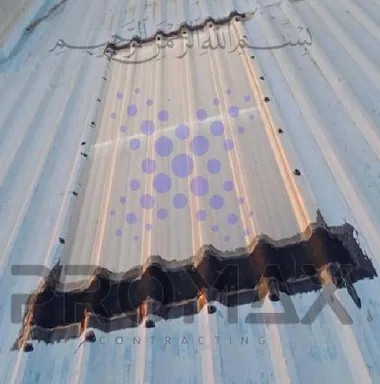
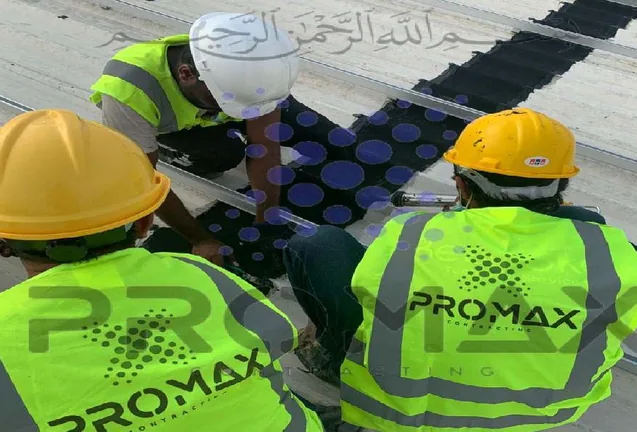
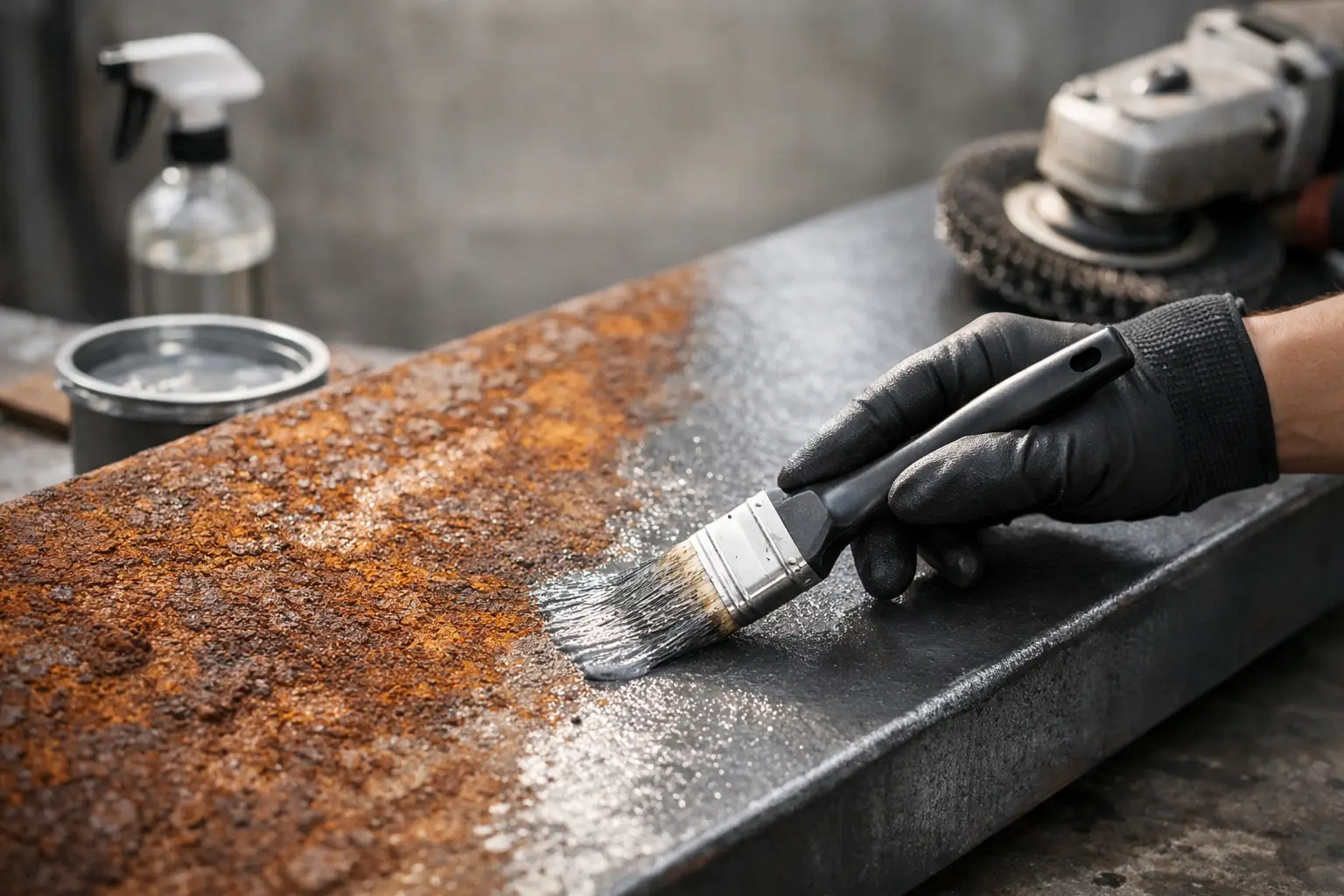
Once the condition is clear, the treatment scope usually includes contaminant removal, mechanical cleaning or abrasive preparation, localized repair or replacement, rust conversion or priming where appropriate, and a protective coating system selected for the environment. On roofs and external steel, the treatment may also need to include waterproofing details at joints, penetrations, gutters, or screw lines because moisture entry is often part of the corrosion cycle.
This is where many maintenance programs lose value. They treat rust as an isolated paint issue when the source is actually trapped moisture, standing water, galvanic action, failed sealant, roof leakage, or poor drainage. If the source stays active, corrosion returns.
Why rust develops faster on working facilities
Industrial and commercial buildings create harsh exposure conditions for metal. Heat cycling expands and contracts sheet metal. Condensation forms below roofing and inside poorly ventilated spaces. Dust and salts collect on horizontal surfaces and around fixings. Water sits in gutters, behind flashings, and at low-slope roof areas. Chemical fumes or washdown environments can further accelerate coating breakdown.
In coastal and Gulf-type climates, airborne salts increase the rate of corrosion significantly. Even a good coating system can fail early if surface preparation is poor or if edges, screw heads, and cut sections are left untreated. That is why a site inspection matters. Two roofs with similar visible rust may need very different repair methods once the exposure and substrate condition are checked.
Early-stage rust versus advanced corrosion
Light surface oxidation can often be treated successfully if the base metal remains sound. This is the stage where cleaning, spot preparation, rust-inhibitive primer, and a compatible topcoat system can still deliver good service life.
Advanced corrosion is different. If sheets are thinning, purlins are weakened, fasteners have failed, or perforation has started, coating alone is not a repair. Those areas may require plate replacement, purlin replacement, new fixings, welded repair, fabricated sections, or complete panel change-out before any protective system is applied. The trade-off is simple: lower upfront treatment cost versus higher risk of repeat failure.
Inspection first, then treatment scope
The best results usually come from a structured inspection rather than a rushed repainting package. A field team should identify where corrosion is active, how widespread it is, and whether water ingress is contributing to the problem.
On a typical facility, the inspection should review roof sheets, gutters, valleys, skylight curbs, pipe penetrations, ridge details, wall cladding laps, steel supports, handrails, access ladders, and any area where dissimilar metals meet. Fasteners deserve special attention because rust often begins at screw heads and washers, then spreads below the coating film.
Moisture mapping and leakage review are also useful. If rust is concentrated around penetrations or drainage points, the repair scope needs to combine corrosion treatment with waterproofing corrections. Treating only the metal surface while ignoring the leak path is rarely cost-effective.
Surface preparation is where the job succeeds or fails
Most metal coating failures are preparation failures. If chalking, loose rust, oil, dust, salts, and delaminated paint remain on the substrate, the next layer will not bond the way it should.
The right preparation method depends on the asset, access, and operating environment. Mechanical cleaning may be suitable for localized treatment on active facilities where dust control and shutdown limitations matter. More severe corrosion may need abrasive blasting or equivalent preparation standards to remove scale and create a sound anchor profile. In some operating plants, preparation has to be phased carefully to manage contamination, production sensitivity, and safety constraints.
Edges, corners, welds, screw heads, and lap joints need extra attention because these are the first places coatings fail. A contractor who treats flat visible areas well but neglects details will leave behind the exact points where corrosion restarts.
Choosing the right coating build-up
There is no universal coating system for every metal surface. The correct build-up depends on whether the substrate is galvanized steel, black steel, previously coated sheet, structural steel, or a repaired assembly with mixed materials.
In many cases, the system starts with a rust-inhibitive primer or a compatible treatment layer after preparation. This is followed by an intermediate build coat if required and a topcoat designed for UV resistance, chemical resistance, or weathering performance. Roof applications may also require elastomeric or waterproof coating layers where thermal movement and minor surface irregularities are factors.
What matters is compatibility. Primer, intermediate coat, topcoat, and any sealant or waterproofing layer must work together. Mismatched products can lead to peeling, cracking, or premature film failure, especially under heat exposure.
When rust treatment should include metal repairs
Some assets need more than cleaning and coating. If corrosion has already compromised the section, treatment should be combined with repair fabrication and replacement work.
This commonly applies to corroded gutters, edge flashings, roof curbs, purlins, base plates, equipment supports, and sheet laps with metal loss. In those cases, the durable route is to remove failed portions, fabricate matching components, install new sections, then apply the protective system across the repaired area. That approach costs more than spot painting, but it reduces call-backs and avoids repeating temporary fixes every season.
A practical contractor will say this clearly during inspection. Not every rusted surface needs replacement, but every weakened surface needs an honest assessment.
Common mistakes in metal surface rust treatment
One of the most common mistakes is coating over damp surfaces or active contamination. Another is selecting low-build decorative paint for an industrial exposure environment. A third is skipping treatment at joints, screws, and penetrations because they take more labor.
There is also a planning mistake that shows up often on occupied facilities: the work is priced as painting, but the site condition actually requires waterproofing correction, fastener replacement, and metal repair. That mismatch creates delays, variation claims, and weak results.
The better approach is to define the scope in layers. First handle defective metal and moisture entry points. Then complete rust treatment. Then finish with a protective coating system sized to the actual exposure.
What facility teams should expect from a proper contractor
A serious rust treatment package should include inspection findings, identified risk zones, surface preparation method, repair recommendations, coating specification, and execution sequencing. On larger sites, phased work planning is important so operations can continue with minimal disruption.
This is also where after-sales support matters. Corrosion is not always solved in one visit, especially on aging assets with multiple failure mechanisms. A responsive contractor should be able to return for touch-up, inspect repaired zones, and coordinate related scopes such as gutter correction, roof waterproofing, fastener treatment, or purlin replacement if the site demands it.
Promax Contracting approaches these projects the way industrial maintenance work should be handled: inspect the condition, define the source of failure, repair what is unsound, and apply a system that matches the building exposure rather than a one-size-fits-all paint package.
When to schedule treatment
The best time to plan metal surface rust treatment is before the rainy season, before visible perforation, and before corrosion reaches structural members. Once rust starts causing leakage, panel failure, or unsafe access conditions, the repair scope expands quickly.
If your facility already has staining at screw lines, blistered coating, rust around roof penetrations, corroded gutters, or scaling on exposed steel, waiting usually does not reduce cost. It increases the amount of surface preparation, replacement metal, and downtime coordination required.
A well-executed treatment does more than improve appearance. It protects service life, controls leakage risk, and keeps the next maintenance cycle predictable. For industrial and commercial assets, that is usually the difference between planned repair and emergency replacement.
Talk to Promax
Need this on your roof? Call +971 56 727 4205 or request a free inspection. Promax provides EPDM metal-roof, concrete and industrial waterproofing across Dubai and the UAE with up to a 15-year warranty.