A leaking penetration rarely stays a small problem for long. On industrial roofs and service decks, one failed seal around a pipe can lead to insulation damage, corrosion at the deck, stained ceilings, equipment risk, and repeated patchwork that never fully solves the issue. That is why pipe penetration sealing systems matter. They are not just accessories around MEP openings. They are a critical part of the building envelope, especially on warehouses, factories, utility buildings, and other sites where water ingress quickly turns into downtime and repair cost.
In practice, most penetration leaks are not caused by the pipe alone. The failure usually sits at the joint between different materials that move at different rates under heat, vibration, weather, and service activity. Metal expands. Concrete shifts. Membranes age. Old mastics dry out and crack. When the opening has been modified several times by different trades, the risk increases even more. A proper sealing system has to address that movement, the substrate condition, and the exposure level, not just cover the visible gap.
What pipe penetration sealing systems are designed to handle
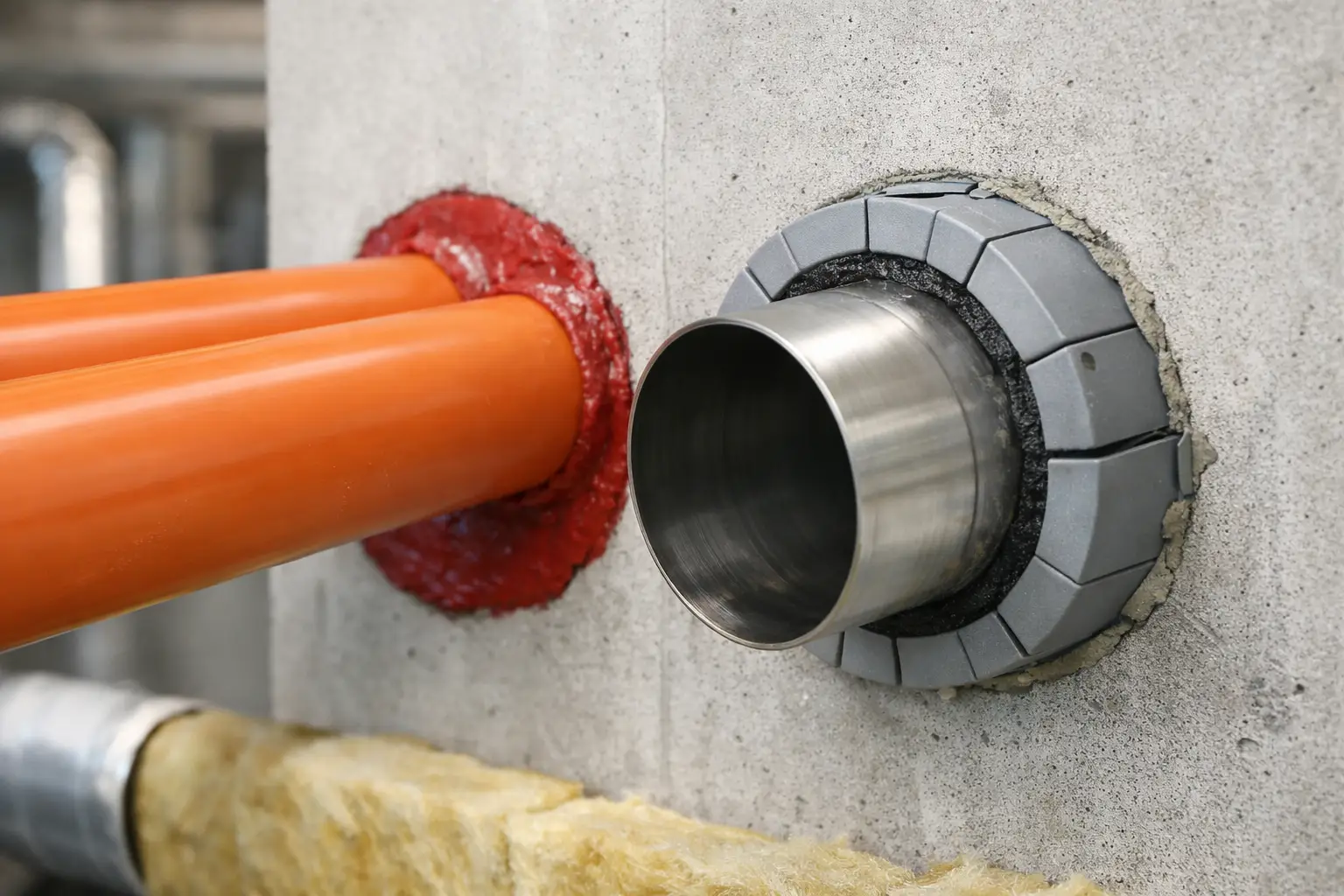
A pipe penetration is any point where a service line passes through a roof, wall, slab, curb, tank top, or equipment enclosure. The sealing system around that opening must prevent water entry, air leakage, dust infiltration, and in some cases chemical exposure or thermal transfer. On industrial and commercial buildings, that can include rainwater pipes, vent stacks, conduit clusters, chilled water lines, process pipes, and retrofit service routes added after the original construction.
The challenge is that each penetration behaves differently. A single vertical vent through a membrane roof is straightforward compared with a grouped service opening on a metal roof with existing corrosion and heat movement. A pipe that stays static is easier to seal than one exposed to vibration or regular maintenance access. If the substrate is already compromised, even the best flashing detail will fail early unless the base surface is repaired first.
That is why field conditions drive the solution. Good contractors do not treat every opening the same. They inspect the membrane or roof sheet condition, measure movement, check for rust or cracking, and match the sealing method to the actual service environment.
Why many penetration repairs fail early
Most failed repairs come from choosing a quick patch instead of a system. Generic sealant around the pipe edge may stop water for a short period, but it does not create a durable assembly. Once UV exposure, standing water, expansion, or maintenance traffic hits that area, the sealant separates and the leak returns.
Another common issue is poor compatibility between materials. Not every sealant bonds properly to aged metal, bitumen, concrete, PVC, or EPDM surfaces. If the wrong chemistry is used, adhesion drops fast. Surface preparation is another weak point. Dust, oxidation, oil, loose coating, and trapped moisture can all prevent long-term bonding.
Installation detailing also matters. If the flashing height is too low, if clamps are not secured evenly, or if the membrane is not terminated correctly, the system becomes dependent on sealant alone. That is a weak detail on any roof exposed to heat and weather. In high-temperature regions, expansion stress is severe enough that poor detailing gets exposed quickly.
Choosing the right pipe penetration sealing systems
The right solution depends on substrate type, pipe material, movement, exposure, and access. There is no single system that fits every roof or wall condition. On industrial buildings, the most reliable approach is usually a combination of mechanical fixing, compatible membrane detailing, and weather-resistant sealing rather than one material used by itself.
EPDM-based boot and flashing systems
For many roof penetrations, EPDM-based pipe boots and custom flashing details provide strong long-term performance. They handle movement better than rigid patch materials and maintain flexibility under heat and UV exposure. When installed over a properly prepared substrate and tied into the surrounding waterproofing layer, they create a more stable seal than repeated caulking repairs.
This option works well on roof penetrations where differential movement is expected. It is especially useful on commercial and industrial sites where durability matters more than a low first-cost repair. The key is proper sizing, correct termination, and integration with the full roof waterproofing detail.
Metal flashing with sealant and clamp detailing
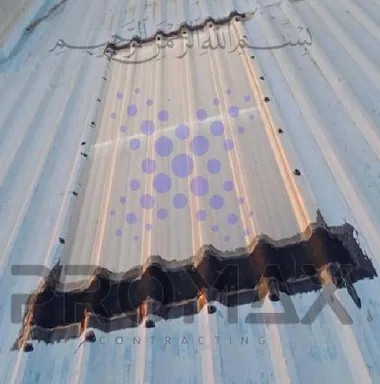
On metal roofs and service structures, fabricated metal flashing remains a strong option, particularly where the penetration geometry is irregular or the opening needs a raised weathering detail. The fabrication quality matters here. A good flashing detail should shed water, allow secure fixing, and reduce dependence on exposed sealant beads.
This method is often preferred when the surrounding roof sheet profile, slope, or maintenance traffic makes prefabricated boots less practical. It can also be combined with membrane treatment and rust repair for older metal roofing systems.
Multi-service and retrofit penetration seals
Retrofit projects often involve grouped conduits, cables, or pipes that were added long after the original envelope was completed. These are usually the most difficult leaks to solve because the opening shape is inconsistent and access is limited. In those cases, custom-built curb details, split boots, and fabricated cover systems are often more reliable than trying to seal each line individually.
The trade-off is that custom work takes more site assessment and better fabrication support. It is not the fastest patch, but it is usually the better asset decision when the area has a history of recurring leaks.
Installation quality matters more than product claims
Product brochures can sound impressive, but field execution is what decides service life. Even high-grade pipe penetration sealing systems will underperform if the surrounding area is wet, corroded, or mechanically unsound. Before installation, the contractor should inspect the opening, remove failed materials, prepare the surface, and repair adjacent damage where needed.
On metal roofs, that may include rust treatment, sheet reinforcement, fastener replacement, or local profile correction. On concrete roofs, cracks and voids around the sleeve may need treatment first. On membrane roofs, the condition of the existing waterproofing layer has to be checked before tying in a new flashing. If the base system is already at end of life, a local penetration repair may not hold for long.
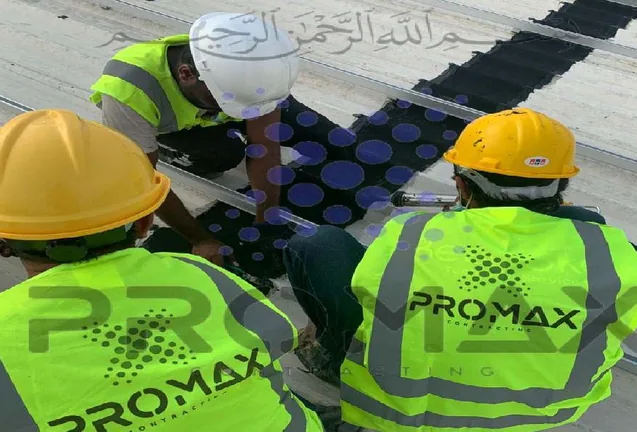
This is where experience shows. A contractor that handles roof waterproofing, metal treatment, fabrication, and maintenance under one scope is usually in a better position to deliver a stable detail. Promax Contracting approaches these problems as envelope failures, not just sealant defects, which is the right way to reduce repeat call-backs.
Where owners should pay extra attention
Not all penetrations carry the same risk. The highest concern areas are usually old service penetrations, roof zones near gutters or ponding water, hot process lines, clustered MEP openings, and any location with visible movement or corrosion. These details should be part of routine inspection, especially before seasonal rain or after rooftop service modifications.
If there are signs like staining, ceiling drips, rust trails, blistering coating, mold smell, or repeated interior patching below the same area, the problem is already beyond cosmetic. Water may be traveling under the roof build-up or through wall cavities before it becomes visible indoors. In those cases, the sealing system should be reviewed as part of a larger waterproofing inspection.
A good specification is built around service life
For facility managers and project teams, the cheapest penetration repair is often the most expensive one over a two- or three-year period. Repeat access, tenant disruption, product damage, insulation replacement, and corrosion remediation can quickly exceed the cost of doing the detail properly the first time.
A better specification asks practical questions. What movement is expected? What is the substrate condition? Is UV, standing water, or chemical exposure a factor? Can the system be inspected and maintained later? Will the repair integrate with planned roof rehabilitation work? Those answers shape whether a simple boot detail is enough or whether the project needs fabricated flashing, substrate restoration, and membrane reinstatement as one package.
The right pipe penetration sealing systems do not just stop a leak this month. They protect the roof assembly, reduce recurring maintenance, and support longer service life across the building envelope. When the detail is engineered to match actual site conditions, the repair stops being temporary and starts performing like part of the structure. If your roof has active penetrations, old modifications, or repeated leakage history, the smartest next step is not another patch. It is a proper site inspection and a sealing detail built for the way the building actually moves.
Talk to Promax
Need this on your roof? Call +971 56 727 4205 or request a free inspection. Promax provides EPDM metal-roof, concrete and industrial waterproofing across Dubai and the UAE with up to a 15-year warranty.