A leaking metal roof is not always a panel problem. In many warehouse and factory buildings, the real failure sits below the sheet line - corroded, bent, or overloaded secondary steel. That is why purlin replacement for metal roof systems should never be treated as a cosmetic repair. If the purlins have lost section strength, fastener holding power drops, roof lines deform, drainage changes, and recurring leaks become inevitable.
For industrial and commercial facilities, this issue usually appears after years of water ingress, condensation, heat cycling, and rust spread around fastener lines, laps, skylight openings, and penetrations. By the time stains show inside, the purlin damage may already be advanced. A proper response starts with inspection, structural assessment, and a repair scope that addresses both the roof covering and the steel support below it.
Why purlin failure under a metal roof becomes a bigger problem fast
Purlins distribute roof loads to the main structural frame. When they weaken, the problem does not stay isolated to one member. Roof sheets begin to flex beyond design limits, screw holes enlarge, sealant lines fail, and low spots start collecting water. In industrial buildings, this can quickly affect insulation performance, inventory protection, machine areas, and electrical systems.
The Gulf environment makes this worse. High heat, humidity, airborne salts in some areas, and long service periods can accelerate coating breakdown and corrosion. Once rust forms under trapped moisture, the damage often spreads from the connection points outward. Facilities that have had repeated patch repairs on roof leaks commonly discover that the panel is only part of the issue.
This is where many owners lose time and money. They replace screws, add sealant, or install patch plates while the support members continue deteriorating. The roof may stop leaking for a short period, but the movement remains. If the purlin line is no longer stable, the roof system will keep failing.
When purlin replacement for metal roof work is actually necessary
Not every corroded purlin needs full replacement. In some buildings, localized reinforcement can be enough if the damage is limited, section loss is minor, and the load path remains sound. In others, replacement is the only responsible option.
The decision depends on the extent of corrosion, distortion, deflection, failed connections, and whether the roof sheet can still be securely fixed to the member. If fasteners are no longer gripping because the steel flange has thinned out, that is a serious warning sign. If purlins are visibly sagging or have deformed around support points, load capacity may already be compromised.
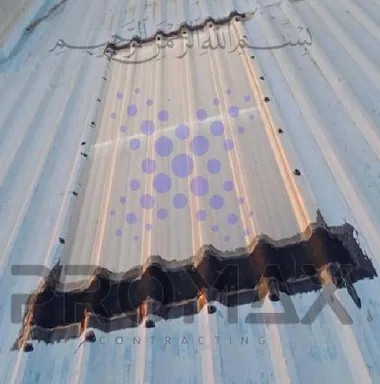
Water history matters too. Long-term leakage around gutters, eaves, ridge lines, skylights, or pipe penetrations often causes concealed steel deterioration. Condensation in poorly ventilated buildings can do the same from the underside. A visual review from below is useful, but it is rarely enough on its own. Roof opening, thickness checking, and connection review are often needed to define the actual repair scope.
Common indicators seen during site inspection
Facility teams usually call for roof repairs because of leaks, but during inspection the warning signs are broader. The roof line may appear uneven. Panels may show oil canning or movement under wind load. Fasteners may be loose, backed out, or repeatedly replaced. Rust trails at screw points, stained insulation, and corrosion at cleats and brackets all point to a support issue below the sheeting.
In severe cases, the purlin flange is perforated or fractured at the connection zone. At that point, simple waterproofing treatment will not solve the underlying risk.
The right way to approach replacement
Purlin replacement in an operating warehouse or industrial facility needs planning before any roof sheet is removed. This is structural work, not just a roofing activity. Loading conditions, access, sequencing, temporary weather protection, and safe removal procedures all need to be controlled.
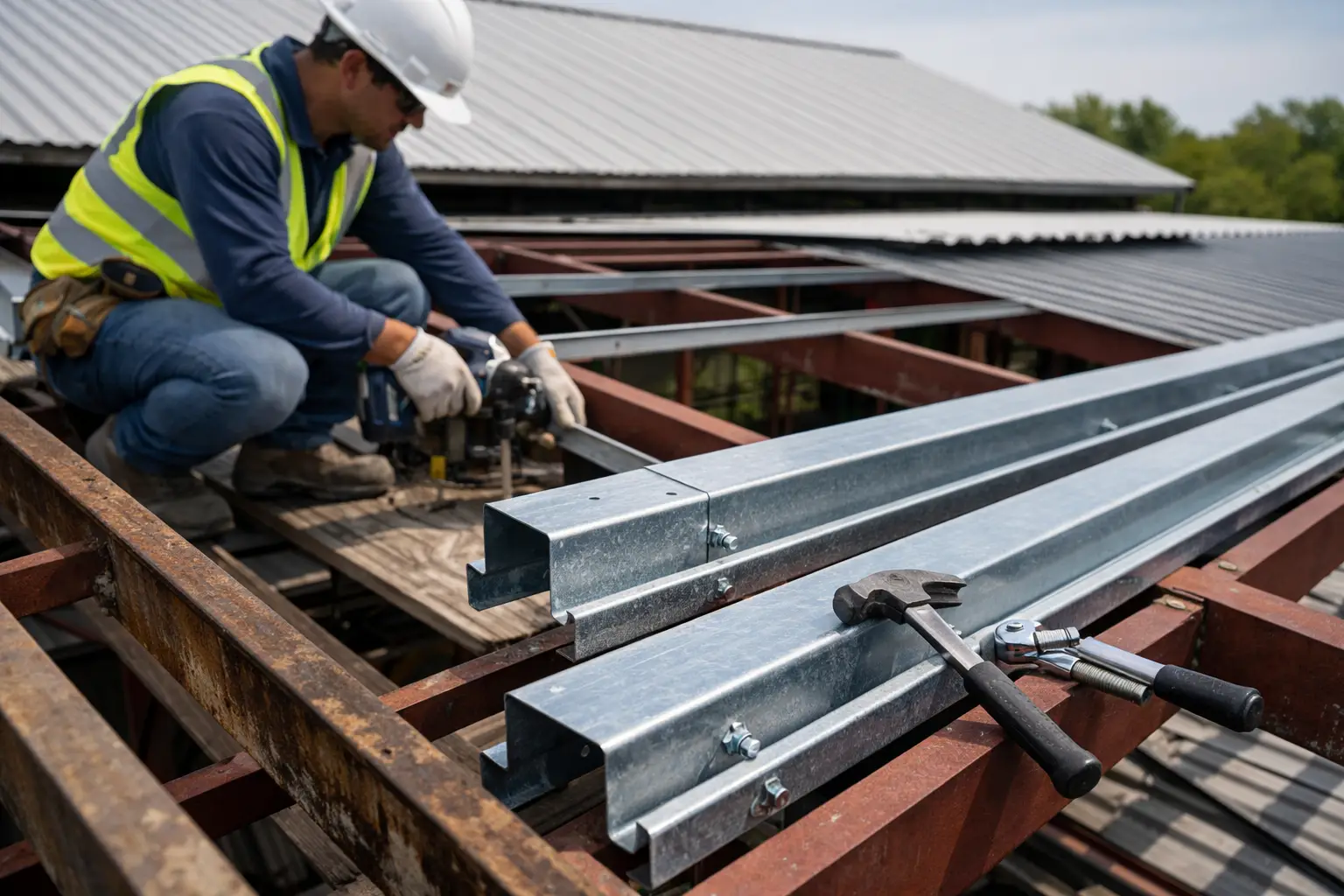
A contractor should first inspect the roof externally and internally, identify the damaged zones, verify dimensions, review the support layout, and assess whether the affected area is isolated or widespread. Fabrication details matter. Replacement members have to match the structural and fixing requirements of the roof system, not just roughly fit into place.
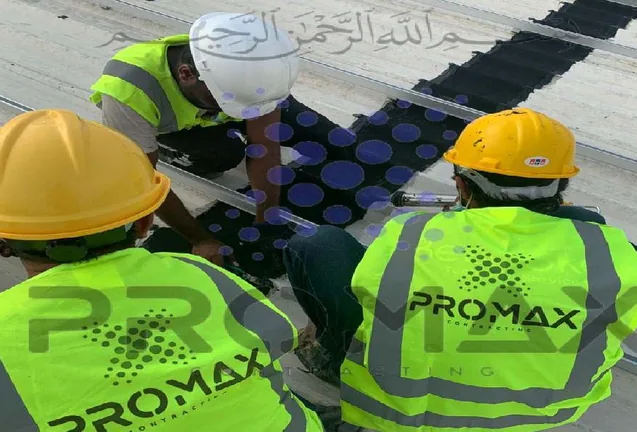
Once the scope is defined, work usually proceeds in controlled sections. Roof sheets and accessories are removed only where required. Damaged purlins are cut out or isolated, replacement members are installed, connections are restored, and the roof covering is refixed with proper treatment at fasteners, laps, and penetrations. If corrosion has affected adjacent components such as sag rods, cleats, brackets, or side rails, those items should be addressed in the same mobilization.
Why partial replacement often makes sense
On large roofs, total removal is rarely necessary unless the building has widespread failure. In many cases, a zoned replacement strategy is more practical. It limits disruption, controls cost, and allows the most critical areas to be stabilized first.
That said, partial replacement only works when the inspection is honest. If one bay has visible damage but the adjacent bays show the same moisture history and coating loss, expanding the repair area may be the smarter decision. Short-term savings can disappear quickly if crews have to return repeatedly to neighboring zones.
Coordination with waterproofing and roof rehabilitation
Purlin replacement should be tied to the full roof condition, not handled in isolation. Once sheets are removed, it becomes the right time to correct recurring leak points, replace failed fasteners, treat rusted metal surfaces, improve flashing details, and upgrade waterproofing where needed.
This matters in industrial buildings because roof failures are usually combined failures. Corrosion at purlins may be linked to gutter overflow, blocked drainage, deteriorated skylight seals, poor end laps, or old screw lines that have been leaking for years. If those issues are left in place, even a well-executed steel replacement will be exposed to the same cycle again.
A stronger repair scope often includes metal roof waterproofing, screw treatment, lap sealing, penetration sealing, gutter repair, and localized insulation replacement. That integrated approach extends roof life and reduces the chance of another shutdown for related failures.
Cost, downtime, and the trade-offs facility teams should weigh
Owners usually ask the same question first: repair or replace? The answer depends on spread, urgency, and business risk.
Localized purlin replacement is usually more cost-effective than full roof replacement when the primary structure remains sound and damage is confined to specific bays. It preserves serviceable roof areas and shortens program duration. For warehouses and factories that cannot stop operations, this is often the preferred route.
However, there are limits. If corrosion is widespread across the support system, or if repeated leaks have degraded multiple building components, piecemeal work may become more expensive over time. Constant emergency patching, stock damage, and interrupted operations carry real cost. A detailed inspection helps determine whether selective intervention is still economical or whether a broader rehabilitation plan is justified.
Downtime planning is equally important. Work may need to be phased around storage zones, production lines, sensitive equipment, or weather windows. Experienced contractors build the sequence around access, safety, and business continuity rather than treating every roof the same way.
What to look for in a contractor
Purlin replacement is not a basic handyman repair. The contractor should be able to inspect the roof system properly, define the steel scope, fabricate or source suitable replacement members, and coordinate reinstatement of the roof covering without leaving weak points behind.
Look for field execution capability, not just sales language. The team should understand metal roofing details, structural connections, corrosion treatment, waterproofing interfaces, and safe access requirements. They should also be able to document the damaged areas clearly so facility managers and procurement teams can make decisions based on actual site conditions.
For large industrial assets, after-sales response also matters. Roof repair scopes sometimes uncover adjacent defects once work begins. Fast technical response helps keep the project moving and prevents exposed areas from turning into emergency issues.
Promax Contracting approaches these projects as a combined structural and roof rehabilitation exercise, with inspection, fabrication support, waterproofing coordination, and execution planning aligned to active commercial and industrial sites.
Purlin replacement for metal roof assets is about asset protection
When purlins start failing, the roof is already telling you that the building envelope is under stress. Waiting for visible sagging, widespread leakage, or falling fasteners usually means the repair will be larger and more disruptive than it needed to be.
The better time to act is when warning signs first appear - recurring leaks in the same zone, rust lines under sheet laps, unstable fasteners, or visible deformation in the roof plane. A proper site inspection can separate minor roof maintenance from structural support failure and put the right scope in place before operations, stock, and safety are affected.
If your facility depends on dry, stable roof coverage, purlin replacement is not just another maintenance line item. It is a direct step toward preserving the structure above your operation and avoiding the much higher cost of delay.
Talk to Promax
Need this on your roof? Call +971 56 727 4205 or request a free inspection. Promax provides EPDM metal-roof, concrete and industrial waterproofing across Dubai and the UAE with up to a 15-year warranty.