A leaking roof rarely fails in just one place. On large warehouses, factories, and utility buildings, water entry usually comes from a chain of defects - open laps, corroded fasteners, failed sealant, ponding areas, damaged gutters, loose flashing, and movement around penetrations. That is why a proper roof inspection before waterproofing is not an extra step. It is the step that determines whether the waterproofing system will perform or fail early.
For commercial and industrial buildings, waterproofing without inspection often turns into surface treatment over hidden defects. The roof may look covered, but the underlying problems remain active. Moisture stays trapped, rust continues under the coating, drainage still backs up, and leak paths reopen during the next rain or washdown cycle. A contractor that starts with inspection is not slowing the job down. They are reducing callbacks, shutdown risk, and repeat spending.
Why roof inspection before waterproofing comes first
Waterproofing systems are only as reliable as the substrate beneath them. If the roof deck is unstable, if metal sheets have corrosion at overlaps, or if concrete has active cracks and saturated sections, no membrane or coating will compensate for that for long. The first objective is not product selection. It is condition verification.
On industrial roofs, that verification has to go beyond a visual walkover. A useful inspection checks how water is moving across the roof, where it is being trapped, how existing joints are behaving under thermal expansion, and whether previous repair layers are still bonded. It also looks at operational exposure. Roofs above production lines, storage zones, cold rooms, and electrical areas carry different risk levels, so defect priority changes accordingly.
This is where experienced field teams make a difference. A roof with ten visible leak marks may only have two actual entry points, or it may have twenty. Without tracing the real source, waterproofing becomes guesswork.
What a professional roof inspection before waterproofing should cover
A serious inspection is diagnostic, not cosmetic. It starts with roof type identification - metal sheet, concrete slab, sandwich panel, tile-covered service zones, or mixed-surface construction. Each one fails differently and requires a different preparation standard.
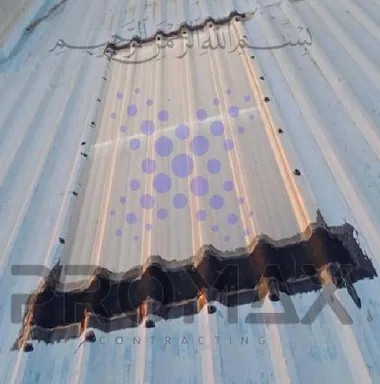
On metal roofs, inspection typically focuses on fastener condition, washer failure, rust development, sheet overlap integrity, skylight junctions, ridge caps, gutter lines, and purlin support areas. On older buildings, the problem is often not only leakage but loss of section due to corrosion. If the sheet is too thin or perforated, applying waterproofing alone is not a repair strategy.
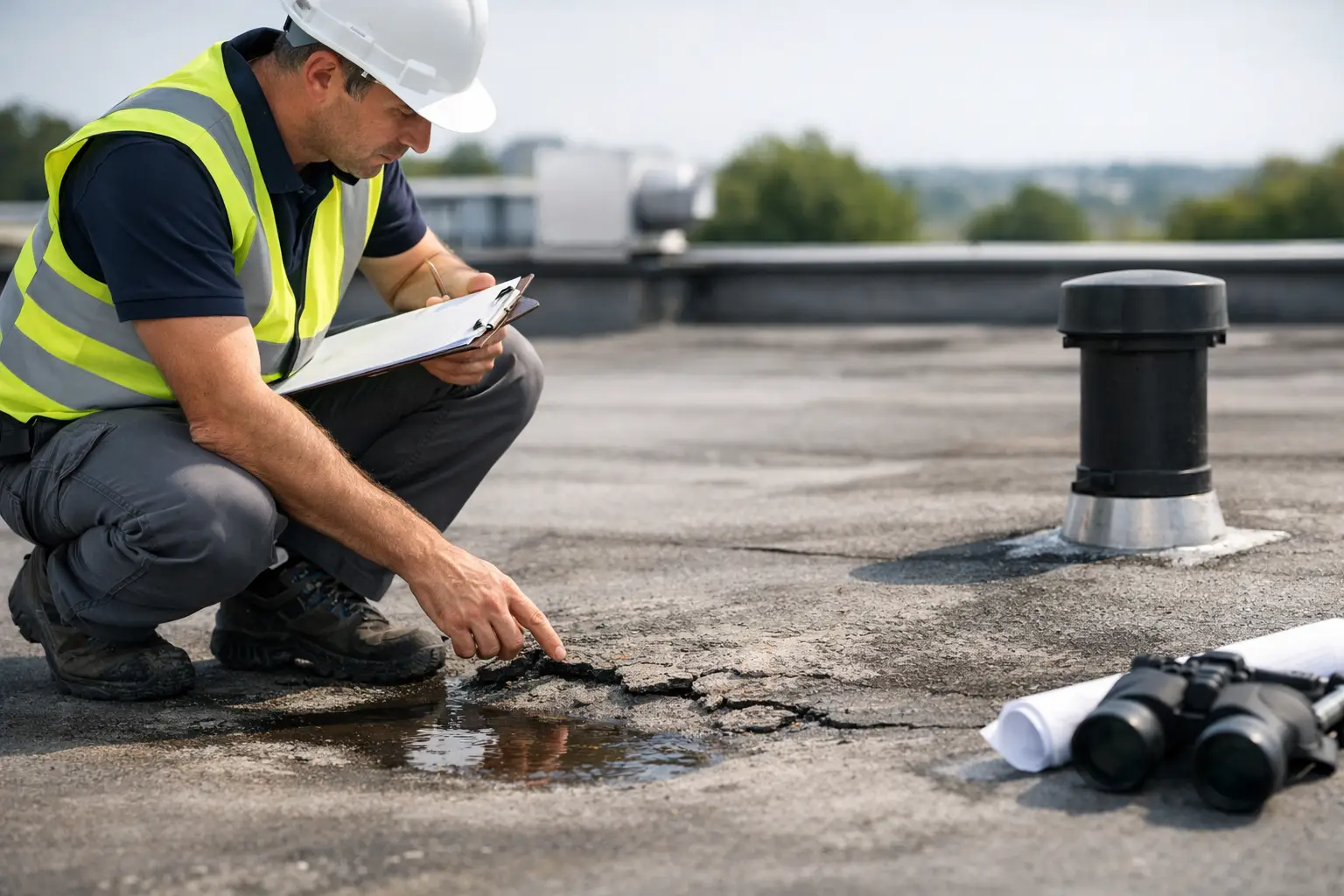
On concrete roofs, the inspection should check crack pattern, surface dusting, prior coating adhesion, parapet upstands, pipe penetrations, expansion joints, and moisture retention. Ponding is a major issue. If water sits on the roof for long periods, the waterproofing specification may need to change, and in some cases slope correction or drain modification becomes part of the scope.
Drainage deserves special attention. Many roof leaks are drainage failures presenting as membrane failures. Blocked outlets, undersized gutters, poor fall, disconnected downpipes, and overflow at edge conditions all create water pressure where the roof system was never meant to hold standing water. Treating the field area while ignoring drainage is one of the most common reasons waterproofing jobs underperform.
Hidden defects that inspection exposes
The most expensive roof problems are usually the ones covered by earlier repairs. A coating applied over wet insulation, a membrane terminated over weak substrate, or repeated sealant applications around moving penetrations can hide ongoing deterioration for years. During inspection, these areas need careful review because they directly affect adhesion and system compatibility.
Corrosion is one of the biggest examples. Surface rust can sometimes be cleaned and treated as part of the waterproofing preparation. Deep rust, section loss, and failed fixing lines are different. They point to repair or replacement requirements before any membrane installation. The same applies to concrete delamination. If the roof surface is unsound, waterproofing may bond to loose material instead of the slab itself.
Movement is another issue inspection helps define. Roofs expand under heat, contract at night, and shift around curbs, ducts, skylights, and service penetrations. If those movement points are not identified early, a continuous coating application may split under stress. In those cases, reinforcement details, flexible banding, joint treatment, or EPDM-based solutions may be more suitable than a simple brush-applied coating.
Inspection changes the waterproofing scope
A proper survey does more than list defects. It shapes the method of repair. Two roofs of the same size can need completely different waterproofing systems depending on substrate condition, access limitations, traffic exposure, and leak history.
One facility may only need localized sheet replacement, screw treatment, joint sealing, and membrane application at high-risk areas. Another may require full-surface preparation, rust treatment, gutter replacement, penetration detailing, and a complete waterproofing layer across the roof field. Without inspection, both jobs might be quoted the same way, and one of them will fail.
This matters for budgeting as well. Building owners often want a direct price for waterproofing, but the real cost sits in the preparation and defect correction. Inspection helps separate what is structural, what is surface-level, and what is maintenance-related. That leads to a more accurate scope and fewer variation disputes once work starts.
The cost of skipping inspection
Skipping inspection can save a day at the beginning and cost months later. Once waterproofing is applied over unresolved defects, leak tracing becomes harder, not easier. Water may travel under the new layer, enter from an untreated edge, or escape at a different internal location. The result is confusion, reactive patching, and loss of confidence in the repair.
There is also an operational cost. In warehouses and production sites, roof leaks do not stay on the roof. They affect stock, racking, machinery, electrical systems, finished goods, and safe access. If a waterproofing job has to be reopened because the roof was not properly inspected, the disruption is often worse than doing the assessment correctly in the first place.
From a procurement standpoint, inspection also protects the buyer. It creates a technical basis for comparing contractor recommendations. Without that basis, decisions get reduced to product names and low pricing, even when the roof condition clearly requires repairs, fabrication work, or drainage correction before membrane installation.
What decision-makers should expect from the inspection process
For industrial and commercial clients, the inspection process should be practical and documented. That means marked defect areas, photographs, substrate observations, drainage review, and a clear repair logic. The report does not need to be overloaded with theory, but it should explain why certain areas need treatment, replacement, reinforcement, or exclusion.
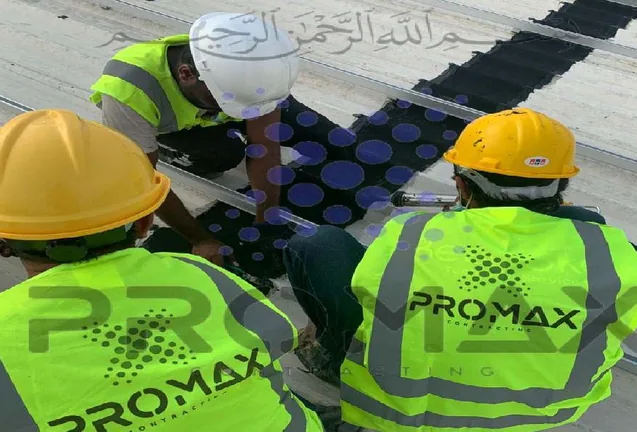
It should also identify access and safety requirements. Some roofs can be inspected quickly. Others need lifeline access, fragile skylight precautions, or phased review around active operations. A contractor that understands roof rehabilitation will account for these conditions early instead of discovering them after mobilization.
Good inspection also includes honest limits. Not every roof is a coating candidate. Not every leak can be solved with one material. Sometimes the right answer is partial replacement combined with waterproofing. Sometimes the issue is mostly gutter failure, not roof field failure. Reliable contractors state that clearly because long-term performance depends on matching the repair to the actual defect.
Why technical execution starts before installation
The best waterproofing outcomes are won before the first roll, sheet, or coating is installed. They start with identifying failure points, checking substrate readiness, and building a scope that reflects real site conditions. On large roofs, especially in hot climates and exposed industrial zones, that discipline matters more than marketing claims about any single product.
At Promax Contracting, this is why inspection sits at the front of the work sequence. Roof rehabilitation, metal roof treatment, gutter correction, penetration sealing, and membrane application all depend on knowing what the roof is doing now - not what it looked like in drawings or what a surface stain suggests from inside the building.
If your roof is showing leaks, corrosion, ponding, or repeated patch failures, the smartest move is not to ask what waterproofing product to apply. It is to ask what the roof is telling you before waterproofing begins.
Talk to Promax
Need this on your roof? Call +971 56 727 4205 or request a free inspection. Promax provides EPDM metal-roof, concrete and industrial waterproofing across Dubai and the UAE with up to a 15-year warranty.