A drip above a pallet rack or production line is rarely a small maintenance issue. In large facilities, water can travel beneath roof sheets, insulation, or old membrane layers before appearing inside the building. Effective roof leakage repair Dubai work starts by tracing the actual water path, not simply applying sealant where the ceiling shows a stain.
For warehouses, factories, storage facilities, schools, commercial buildings, and institutional properties, a roof leak can interrupt operations, damage stored materials, accelerate corrosion, and create electrical and safety exposure. The correct repair depends on roof construction, the condition of existing materials, drainage performance, and the details around penetrations, gutters, skylights, and joints.
Why industrial roofs leak in Dubai
Dubai roofs operate under conditions that expose weak details quickly. High surface temperatures cause metal sheets, flashings, and fasteners to expand and contract. UV exposure degrades aged coatings and sealants. Wind-driven rain can force water through minor openings that may not leak during a light shower. When drainage is restricted, standing water adds pressure at seams and low points.
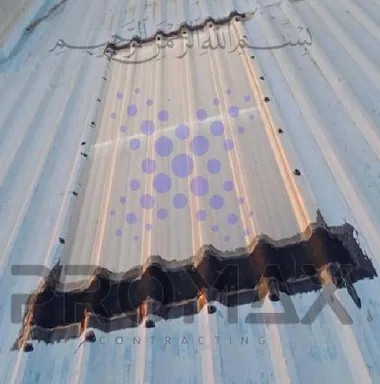
On metal roofs, common failure points include deteriorated screw washers, loose fasteners, lapped sheet joints, ridge flashing, roof-to-wall junctions, and corrosion around cut edges. On concrete roofs, cracks, failed expansion joints, parapet terminations, and deteriorated waterproofing layers are frequent sources of ingress. A leak near a pipe or cable penetration may be caused by a failed flashing detail rather than the penetration itself.
Age is only one factor. A relatively new roof may leak after poorly coordinated HVAC work, unsealed service penetrations, damaged panels, or changes to drainage routes. That is why a proper diagnosis should consider the entire roof envelope rather than treating each visible wet area as an isolated defect.
Roof Leakage Repair Dubai: inspection before repair
The first site visit should establish where water enters, how it travels, and which components need repair or replacement. This is particularly important on large roofs, where the internal drip point may be several meters away from the source.
A practical inspection typically reviews roof sheet laps, fasteners, flashings, gutters, downpipes, skylight perimeters, penetrations, parapets, expansion joints, and previous repair areas. The team should also assess corrosion, loose sheets, ponding water, blocked outlets, failed sealant, and membrane adhesion. Interior checks are equally useful because water marks, rusted purlins, wet insulation, and ceiling damage can indicate the direction of water movement.
The inspection should lead to a defined scope. A contractor should be able to explain whether the problem is localized and suitable for detail repair, whether a section needs membrane coverage, or whether widespread deterioration calls for roof rehabilitation. Applying a generic coating over an unprepared roof may hide the issue temporarily, but it will not correct failed joints, rusted metal, or drainage defects.
Selecting the right repair system
There is no single material that suits every leaking roof. The best solution depends on the roof substrate, geometry, existing condition, expected movement, exposure, and required service life.
Metal roof waterproofing
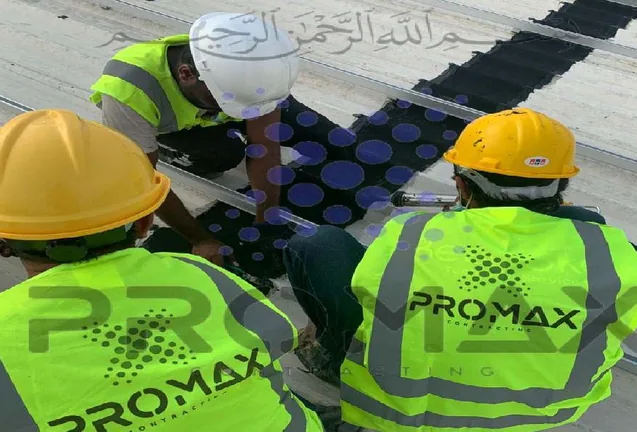
For metal sheds, warehouses, and factory roofs, repair often begins with surface preparation and fastener treatment. Loose or corroded screws may need replacement. Rusted areas need mechanical cleaning and appropriate rust treatment before they are coated or covered. Sheet laps, ridge caps, valleys, and transitions require compatible sealing and reinforcement.
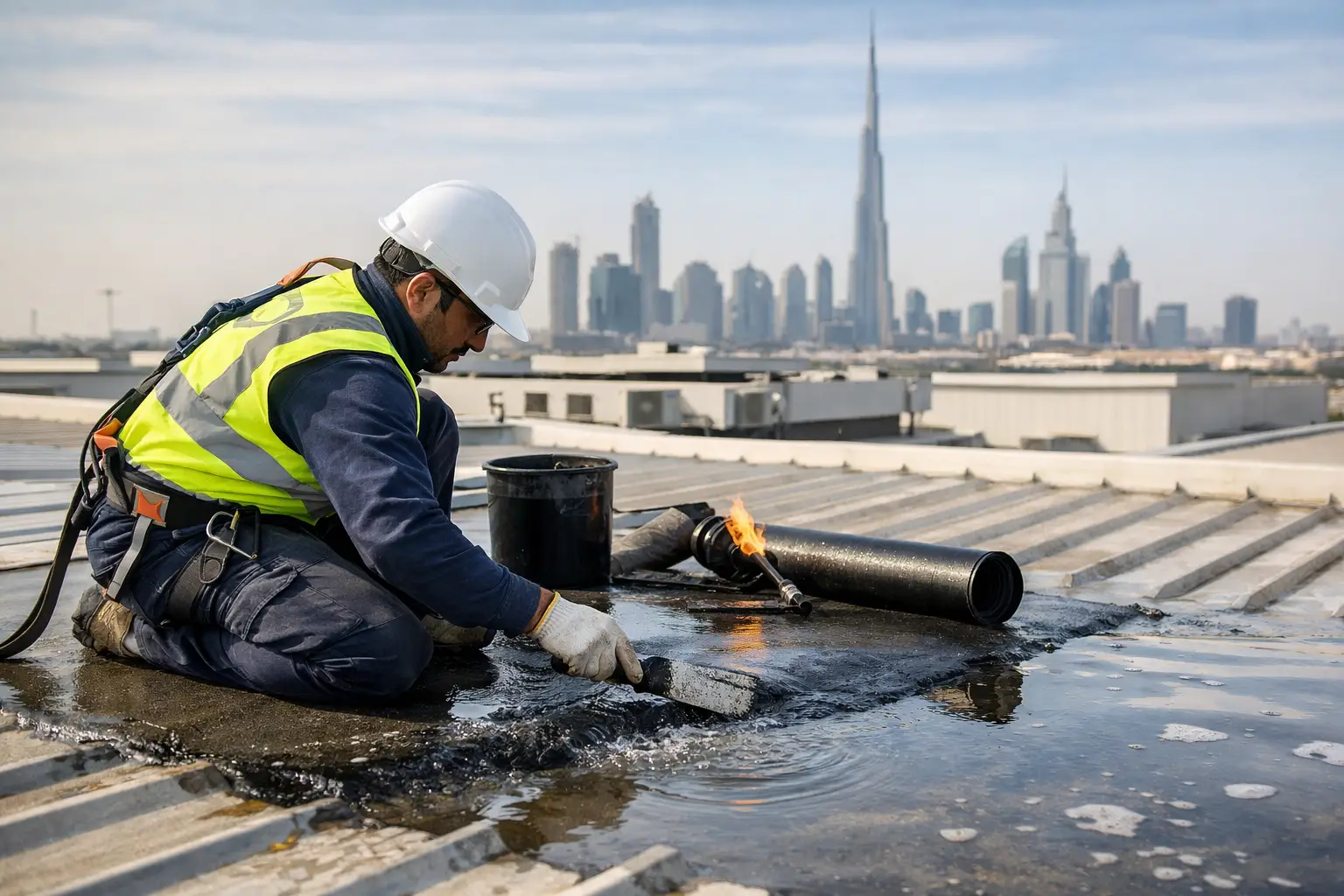
Where leakage is recurring across broad roof areas, an EPDM-based waterproofing system can provide continuous coverage over the roof surface and critical details. The membrane must be installed over properly prepared substrates, with careful treatment at edges, gutters, penetrations, and changes in level. Material selection should account for heat exposure and roof movement, not only the lowest initial price.
Concrete roof treatment
Concrete roofs need a different approach. Hairline cracks can become active leakage paths when the roof moves or when water ponds after rain. Failed joints, porous concrete, damaged screed, and deteriorated existing membranes must be assessed before a new waterproofing layer is installed.
The repair scope may involve crack treatment, joint sealing, substrate repairs, local membrane patches, or a complete waterproofing application. If the roof has inadequate falls toward drain outlets, waterproofing alone may not solve the long-term problem. Drainage correction can be the more important part of the repair.
Details that deserve special attention
Many roof failures begin at the smallest details. Skylight frames, pipe penetrations, roof vents, cable routes, wall flashings, gutters, and outlet connections all interrupt the main roof surface. Each needs a durable transition between materials that may expand at different rates.
A sound repair system includes these details as part of the scope. Leaving old sealant around a penetration while installing a new membrane on the surrounding roof creates a weak point exactly where movement and water concentration are highest.
Drainage, gutters, and ponding water
A roof can have good membrane material and still fail if rainwater cannot leave it quickly. Blocked gutters, undersized downpipes, corroded gutter sections, poor falls, and debris at outlets allow water to sit against joints and flashings for extended periods.
Gutter replacement is often required when corrosion has weakened the channel, joints have separated, or repeated patching has failed. Fabricated gutters and flashings should match the roof layout and provide adequate discharge capacity. The connection between the roof edge, gutter, outlet, and downpipe should be inspected as one drainage system.
Ponding water requires a measured response. Small temporary pools may not always indicate a critical defect, but persistent ponding near seams, drains, or low areas increases the chance of leakage and premature material deterioration. The repair plan may need local leveling, drain cleaning, additional outlets, or redesigned gutter sections depending on the cause.
Avoid repairs that only move the problem
Emergency sealing has a place when active water ingress threatens stock, equipment, or business continuity. It can stop immediate damage while a permanent repair is planned. It should not be presented as a full solution when the roof has widespread corrosion, failed fasteners, damaged membrane areas, or drainage failure.
Three common shortcuts create repeat callouts: sealing over dirt or loose rust, coating only the visible leak point, and ignoring details around penetrations and gutters. Another mistake is mixing incompatible repair materials without checking adhesion and movement capability. These methods may hold briefly, then split under heat, vibration, or water pressure.
A cost-effective scope is not necessarily the smallest scope. It is the scope that addresses the failure mechanism with the least disruption and avoids repeated repair expenditure. For an occupied warehouse, phased work may be preferable to a complete shutdown. For a roof near the end of its serviceable condition, localized patches may be less economical than planned rehabilitation.
What facility managers should expect from a repair contractor
Roof leakage work should be controlled as an operational project, not handled as an undefined maintenance task. Before work starts, the contractor should confirm access requirements, safety controls, material staging, weather considerations, work sequencing, and protection for internal operations.
The technical scope should identify the roof areas and details to be treated, substrate preparation requirements, repair materials, replacement items, and testing or inspection steps. Photo documentation before, during, and after the work helps maintenance teams track the condition of the asset and plan future budgets.
For large facilities, after-sales response matters as much as installation. A roof system should be checked after major rain events, especially where the work included complex drainage routes, expansion joints, or newly sealed penetrations. Promax Contracting approaches roof repairs with site inspection, targeted system selection, fabrication support where required, and execution focused on keeping facilities protected and operational.
Plan repairs before the next rain event
Roof leakage is easier and less expensive to control before water reaches stored goods, electrical systems, ceilings, or structural members. If there are recurring stains, corroded sheets, loose flashings, blocked gutters, or evidence of ponding, schedule an inspection while the roof can still be repaired in a controlled manner.
The right repair is not the one that applies the most sealant. It is the one that identifies the water path, restores the failed roof details, manages drainage, and gives the building a durable line of defense when weather conditions change.
Talk to Promax
Need this on your roof? Call +971 56 727 4205 or request a free inspection. Promax provides EPDM metal-roof, concrete and industrial waterproofing across Dubai and the UAE with up to a 15-year warranty.