A roof leak over an active warehouse is rarely just a roofing issue. Water can reach stored inventory, electrical routes, insulation, wall cladding, and structural steel long before the visible stain becomes serious enough to trigger action. The roof retrofit versus replacement decision should therefore start with a technical condition assessment, not a price comparison based only on square footage.
For commercial and industrial facilities, a well-designed retrofit can extend roof life, improve weather resistance, and reduce disruption. But applying a new waterproofing system over a roof with concealed corrosion, saturated insulation, failed fixings, or structural movement only postpones a larger failure. The correct scope depends on what is happening below the roof surface as much as what can be seen from above.
Roof Retrofit Versus Replacement: The Core Difference
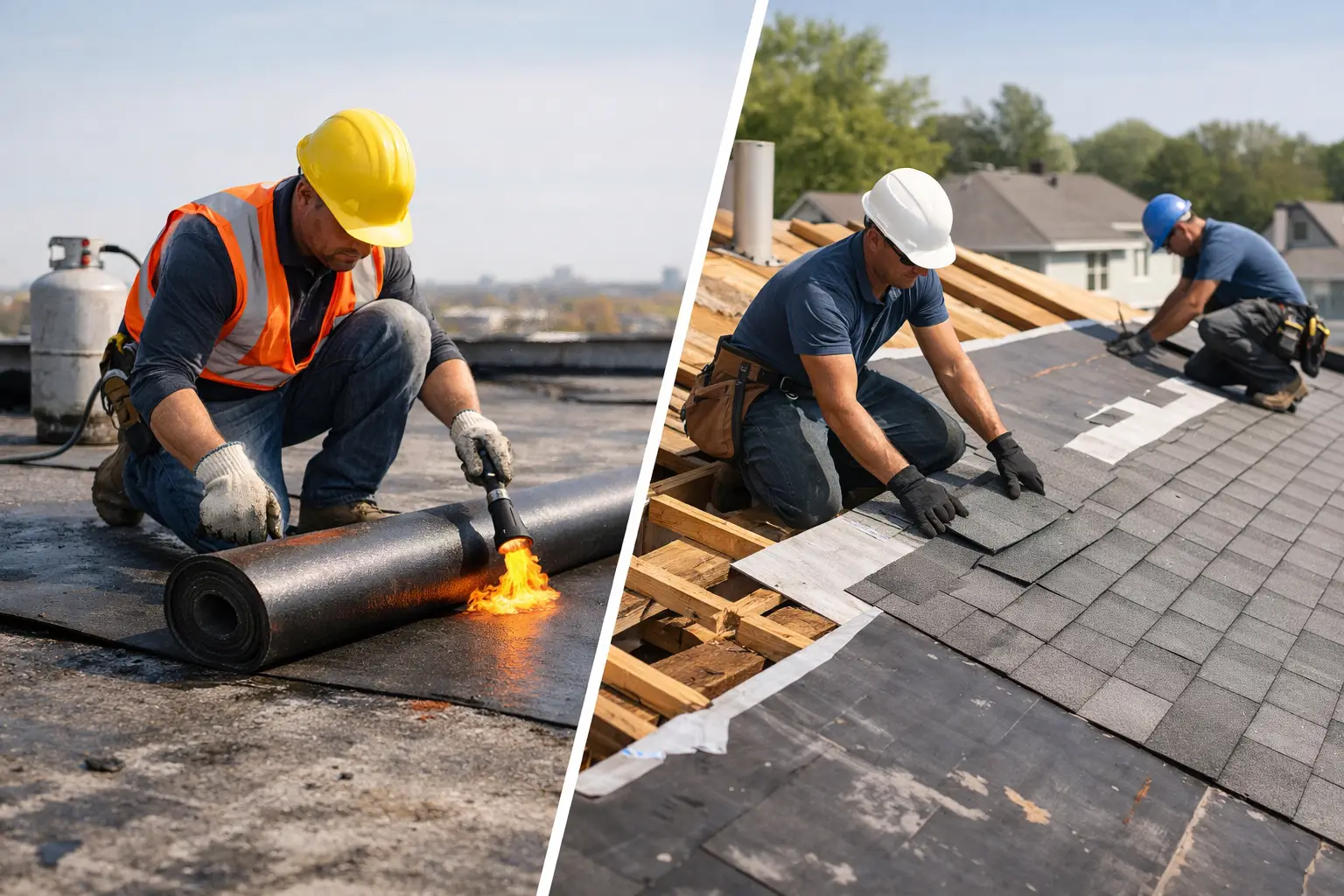
A roof retrofit rehabilitates an existing roof assembly while retaining all or part of the original structure and covering. It may involve localized sheet replacement, rust treatment, fastener treatment, gutter renewal, waterproofing membrane installation, sealing around penetrations, and repairs to skylights or flashings. The objective is to restore performance without removing sound components.
A roof replacement removes a failed roofing system and installs a new one. Depending on the facility, this can include replacement of metal sheets, insulation, vapor-control layers, gutters, flashings, and damaged secondary steel members. It is a larger intervention, but it gives the project team direct access to hidden defects that cannot be reliably corrected from the surface.
Neither option is automatically cheaper over the service life of the building. Retrofit usually has a lower immediate cost and can be completed in phases. Replacement requires more capital, material handling, and operational planning, yet may be the more cost-effective answer when failures are widespread or the roof structure has reached the end of its useful life.
When a Roof Retrofit Is the Right Scope
Retrofit is a strong option when the roof deck and supporting members remain stable, leakage is isolated or manageable, and the existing roof can serve as a reliable substrate for a compatible waterproofing system. It is especially practical for large facilities where keeping operations active is a priority.
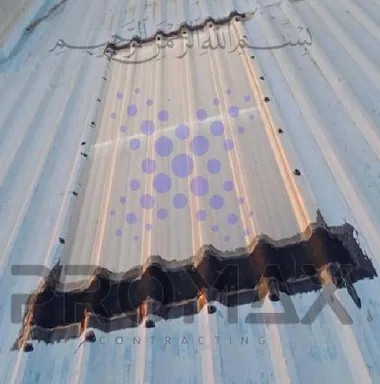
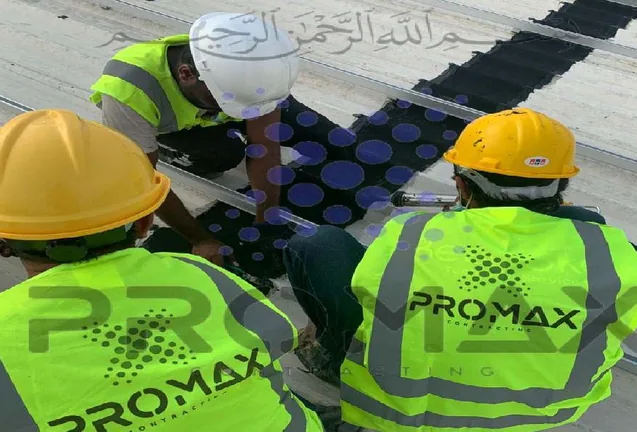
A metal roof with early-stage corrosion around screws and laps, for example, may not need full sheet removal. The work can focus on cleaning and treating corroded areas, replacing failed fasteners, sealing overlaps and penetrations, correcting local sheet damage, and applying an appropriate membrane-based waterproofing system. EPDM-based systems can be effective where proper surface preparation, detailing, drainage, and termination methods are included in the scope.
Retrofit also makes sense when the main problem is detailing rather than total roof failure. Common examples include recurring leaks at pipe penetrations, deteriorated skylight perimeters, loose flashing, failed gutter joints, and water entry at roof-to-wall interfaces. These areas experience movement and concentrated water flow. Treating them as isolated patches without resolving the surrounding waterproofing detail is one reason leaks return.
A practical retrofit scope should include inspection of the following conditions before work begins:
- Roof sheet thickness and corrosion level, especially at laps, eaves, and fastener lines.
- Signs of trapped moisture, insulation deterioration, or internal condensation.
- Purlin condition, deflection, and the integrity of connections beneath the roof sheets.
- Drainage capacity, gutter slope, downpipe condition, and locations where water ponds.
- Flashings, curb details, skylights, vents, and every roof penetration.
The purpose is not to add unnecessary work. It is to confirm that the new waterproofing layer will be installed over a stable, dry, and properly prepared substrate. A membrane can only perform as well as the roof beneath it.
Signs That Replacement Is the Better Investment
Replacement becomes necessary when the roof has systemic failure rather than isolated defects. Large areas of advanced corrosion, repeated leaks across multiple zones, severely deteriorated sheets, widespread fastener pull-out, and ongoing internal condensation are clear warnings. If repairs are being made every rainy season in different locations, the facility may be spending maintenance money without restoring the roof's basic reliability.
Structural findings carry even more weight. Corroded or damaged purlins, unstable supports, excessive roof movement, or areas weakened by previous modifications require engineering review before any overlay system is considered. Covering a structural problem is not rehabilitation. It can make future inspection harder and increase risk during high wind, heavy rainfall, or maintenance access.
Replacement is also the better route when water has compromised insulation or concealed roof layers over a broad area. Moisture trapped inside the assembly can reduce thermal performance, support corrosion, and create persistent leakage paths that surface coatings cannot reach. Removing failed materials allows the team to inspect the assembly, correct drainage details, and rebuild the roof using compatible components.
For facilities in the UAE, heat exposure and thermal movement add another layer to the decision. Metal roof systems expand and contract daily. If sheets, fasteners, flashings, and penetrations are already stressed, a low-cost patching approach may fail quickly. A replacement scope may provide the opportunity to redesign weak details and improve long-term waterproofing performance.
Cost Should Be Measured Beyond the Initial Quote
The lowest proposal is not necessarily the lowest cost solution. Facility managers should compare retrofit and replacement against expected service life, maintenance frequency, operational disruption, and the consequence of another failure.
A retrofit can preserve budget for assets that are still performing structurally. It can also reduce demolition waste and shorten the time spent working above active operations. However, its value depends on disciplined preparation. If the contractor skips moisture checks, corrosion treatment, fastener replacement, drainage correction, or substrate repairs, the apparent savings can disappear after the first major weather event.
Replacement has higher upfront cost, but it can eliminate recurring repair cycles and provide a known roof build-up with new materials. The project may also improve access for future maintenance, address undersized gutters, and correct details that were poorly executed in the original construction. The trade-off is greater planning: work zones, temporary protection, material removal, safety controls, and coordination with facility operations all need attention.
Ask for a scope that separates necessary corrective work from optional upgrades. This makes the decision clearer. A contractor should be able to explain which defects can be repaired, which components need replacement, and what risk remains if the building owner selects a limited retrofit.
How to Make the Decision With Confidence
Start with a site inspection that includes both the roof surface and the interior below it. Interior water marks, rust on purlins, daylight through sheet laps, odors from wet insulation, and leakage around services often reveal conditions that are not visible from the roof alone. Photographs, measurements, and a marked roof plan help establish whether the failure is localized or widespread.
Next, identify the root cause. Rainwater may be entering through open laps, but the underlying reason could be thermal movement, loose fasteners, blocked drainage, incompatible past repairs, or deterioration around penetrations. A reliable recommendation addresses the cause, not only the point where water appeared inside.
Then consider operations. A logistics facility with continuous loading may need phased work and rapid weatherproofing of each completed area. A vacant building may be better suited to a complete replacement carried out in a shorter, more intensive program. Safety access, lifting requirements, and the location of sensitive equipment should be reviewed before finalizing the method.
Finally, require clear execution details. The proposal should define surface preparation, corrosion treatment, replacement materials, membrane overlap and termination methods, drainage repairs, testing, safety measures, warranty coverage, and after-sales response. Promax Contracting approaches roof rehabilitation as a coordinated package because leak control, metal repair, gutter performance, and penetration sealing cannot be treated as unrelated tasks.
A roof does not need to look new to perform reliably, but it does need a sound structure, controlled drainage, and waterproofing details that match the building's actual condition. A careful inspection can show whether targeted rehabilitation will protect the asset or whether replacement is the responsible point to reset the roof's service life.
Talk to Promax
Need this on your roof? Call +971 56 727 4205 or request a free inspection. Promax provides EPDM metal-roof, concrete and industrial waterproofing across Dubai and the UAE with up to a 15-year warranty.