A roof leak over active storage, production equipment, or electrical services is not a minor maintenance issue. In the Gulf, it can develop from a small failed screw seal or blocked gutter into damaged stock, corrosion, unsafe access, and unplanned operational downtime. Effective roof waterproofing UAE work starts by identifying how water enters the building, not by applying a coating over the visible stain.
For warehouses, factories, sheds, and large commercial facilities, the roof must withstand intense UV exposure, extreme surface temperatures, wind-driven rain, condensation, movement at joints, and long-term corrosion. The correct solution depends on the roof construction, its current condition, drainage layout, and the remaining service life expected from the asset.
Why roof waterproofing fails in UAE facilities
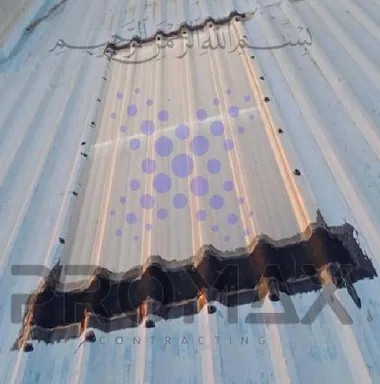
Waterproofing systems usually fail at details before they fail across the main roof area. A membrane may still be sound while water enters through an untreated fastener, an open lap joint, a cracked flashing, or a penetration added after the original roof installation. Water can then travel beneath sheets or insulation and appear inside the building several meters away from the actual defect.
Heat is a major factor. Metal roof sheets expand during the day and contract at night. This repeated movement places stress on screws, sealants, overlaps, ridge connections, skylight interfaces, and gutter joints. On concrete roofs, thermal cycles can enlarge existing cracks and weaken poorly prepared coatings. When heavy rainfall arrives, these weak points are exposed quickly.
Drainage also changes the performance of any waterproofing system. Ponding water at low points, undersized outlets, damaged gutters, and debris buildup keep moisture against the roof for longer than intended. Even a high-quality membrane can be compromised if water is repeatedly held at joints and terminations.
Roof waterproofing UAE requires a site diagnosis
A reliable scope begins with a physical inspection. The contractor should assess the roof deck, sheet profile or concrete surface, existing membrane condition, slope, drainage paths, rust levels, fastener condition, flashing details, and every roof penetration. Internal leak marks are useful, but they are only one part of the investigation.
For metal roofs, the inspection should include screw washers, sheet laps, ridge caps, valleys, gutter connections, skylights, exhaust bases, pipe penetrations, and areas around previous patch repairs. Rust must be evaluated carefully. Surface oxidation may be treatable, while severe corrosion around fixings, purlins, or sheet edges can require replacement work before a membrane system is installed.
For concrete roofs, the focus shifts to cracks, hollow or loose areas, parapet walls, expansion joints, drain outlets, upstands, and old coating adhesion. A coating applied over contaminated, damp, or unsound concrete will not deliver a durable result. Surface preparation is part of the waterproofing system, not an optional extra.
A practical inspection also considers site operations. Can the roof remain accessible during works? Are there live services, solar installations, skylights, HVAC units, or production areas that require protection? Can materials be lifted safely without interrupting loading bays or daily operations? These decisions affect program, cost, and installation method.
Selecting the right system for the roof
There is no single waterproofing material that suits every building. The right choice should follow the roof type and the actual failure mechanism.
EPDM membrane systems for large roof areas
EPDM is widely used where a flexible, durable membrane is needed across large areas or complex details. Its elasticity makes it suitable for roofs exposed to thermal movement, particularly metal roof structures. When installed with correct surface preparation, edge treatment, overlap sealing, and detailing around penetrations, an EPDM-based system provides continuous protection rather than a series of isolated patches.
The trade-off is that membrane installation demands controlled execution. Incorrect adhesion, inadequate lap treatment, trapped moisture, or poorly finished terminations can shorten the system's service life. The membrane is only as reliable as the detailing at edges, gutters, curbs, and roof openings.
Coatings for suitable concrete and metal surfaces
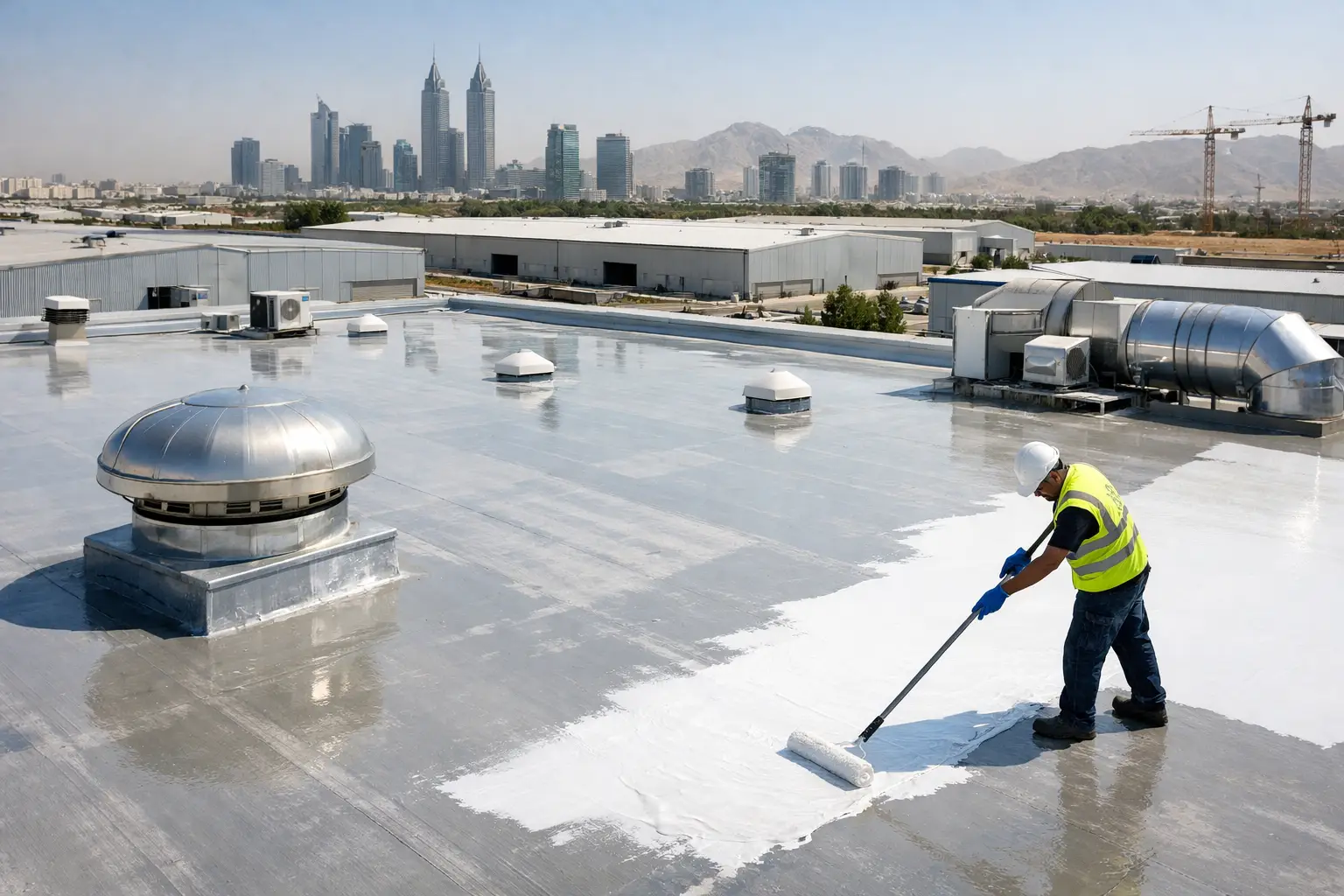
Liquid-applied coatings can be effective for concrete roofs or selected metal roof applications where the substrate is stable and properly prepared. They can form a continuous protective layer and are useful around irregular shapes where sheet membranes are difficult to install.
However, coatings should not be used to hide structural deterioration or active corrosion. They need the right dry-film thickness, compatible primers where required, and a clean, sound substrate. On heavily moving metal roofs, a coating-only approach may not be the best long-term answer unless the system is designed specifically for that movement.
Targeted repairs versus full rehabilitation
A localized repair is sensible when the roof is generally in good condition and the defect is isolated, such as a failed pipe flashing, split joint, damaged gutter connection, or limited screw-related leak. It is faster and less disruptive, but it should not be presented as a complete roof solution when failures are widespread.
Full rehabilitation is usually more cost-effective when leaks are recurring across multiple zones, rust is developing at numerous fixings, previous patches are failing, or the roof has reached the end of its practical waterproofing life. A complete system can reduce repeated callouts, protect internal assets, and provide a clearer maintenance plan. The initial cost is higher, but repeated emergency repairs often cost more over time.
Critical details that cannot be skipped
Large roof areas receive attention, but the details determine whether rainwater stays outside. Pipe penetrations must be sealed with compatible materials and mechanically secure terminations. Skylight waterproofing requires careful treatment at frames, curbs, and transitions, because movement and aging sealant frequently create gaps.
Gutters need equal attention. Leaking or corroded gutters can cause water to back up beneath roof sheets, stain facades, and overload localized roof areas during rainfall. Depending on the condition, the correct work may involve joint treatment, relining, slope correction, outlet repair, or full gutter replacement.
Fasteners are another common failure point on metal roofs. Loose screws, degraded washers, and enlarged holes allow water into the roof assembly. Proper screw treatment may include replacement, sealing, and local sheet repair. If corrosion has weakened the supporting members, remedial fabrication or purlin replacement should be assessed before waterproofing proceeds.
Installation quality protects the investment
The best material cannot compensate for poor preparation. Roof surfaces must be cleaned, dried where the system requires it, and repaired before application. Loose old material, dust, oil contamination, unstable rust, and failed sealant must be removed. Moisture trapped below a new system can lead to blistering, loss of adhesion, and repeat leaks.
Workmanship also matters at transitions. Membranes must be properly dressed into gutters, raised at parapets and upstands, sealed at overlaps, and terminated securely around equipment bases. Where roof access is frequent, the system should be protected from mechanical damage and supported by safe access planning. Uncontrolled foot traffic is a common cause of premature damage on otherwise sound roofs.
A competent contractor should provide a clear scope identifying preparation, repair items, membrane or coating specification, detail treatment, drainage work, and handover requirements. This gives facility teams a basis for comparing proposals beyond the lowest initial price.
Plan maintenance before the next rain event
Waterproofing is not a fit-and-forget asset. Scheduled inspections help identify blocked drainage, damaged flashings, loose screws, accidental punctures, and early corrosion before they become interior leaks. For industrial and commercial properties, inspections are especially valuable before the rainy season and after major weather events.
Keep roof modifications under control. New pipes, cable routes, equipment supports, and access installations should be coordinated with the waterproofing system. An unsealed penetration made during a later maintenance task can undermine a roof rehabilitation project that was otherwise correctly executed.
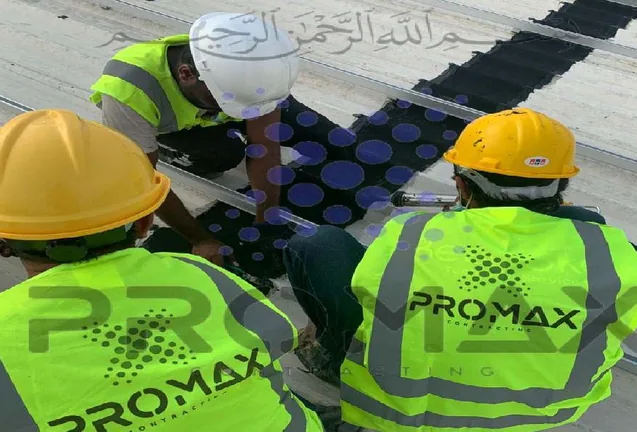
Promax Contracting approaches roof protection as a combined inspection, repair, fabrication, and installation task. That approach is useful when the visible leak is connected to more than one problem, such as corroded sheets, failed gutters, damaged skylights, or weakened roof details.
The most useful next step is a condition-based roof inspection before water reaches critical operations. A clear diagnosis makes it possible to repair the actual failure point, select a system suited to the roof, and schedule work before an urgent leak dictates the decision.
Talk to Promax
Need this on your roof? Call +971 56 727 4205 or request a free inspection. Promax provides EPDM metal-roof, concrete and industrial waterproofing across Dubai and the UAE with up to a 15-year warranty.