A leaking skylight rarely stays a skylight problem for long. In industrial and commercial buildings, water entering around a skylight can spread into insulation, corrode roof sheets, stain interior finishes, damage stock, and interrupt operations below. By the time the leak becomes visible inside, the failure at roof level is often already advanced.
That is why skylight waterproofing repair has to be treated as a roof system issue, not a patching task. The skylight, curb, fasteners, laps, drainage path, adjacent sheets, and sealant condition all work together. If one part fails, the leak point you see is not always the point of actual water entry.
What usually causes skylight leaks
On warehouses, factories, sheds, and large-span buildings, skylight leaks usually come from movement, aging materials, or bad detailing. Roofs expand under heat, contract at night, and move again under wind and service loads. Skylight perimeters take that stress every day.
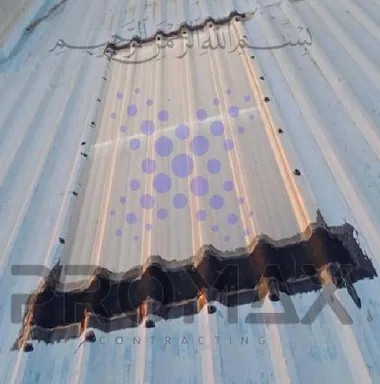
The most common failure is not the skylight panel itself. It is the waterproofing detail around it. Sealants harden and crack. Mechanical fasteners loosen. Flashings pull away. Older mastics lose adhesion. On metal roofs, corrosion around screw points and side laps can open up a path for water to track under the roof profile and discharge at the skylight opening.
Drainage is another major factor. If water ponds around the skylight curb, even a small weakness becomes a leak source. Debris buildup, poor slope, blocked gutters, and uneven roof sheets all increase hydrostatic pressure around the detail. In these cases, applying more sealant is usually a short-lived fix.
Acrylic and polycarbonate skylight units also age differently than the roof around them. UV exposure makes them brittle over time. Fixings can stress the panel. Gaskets compress and fail. If the skylight has been repaired multiple times with incompatible materials, the whole assembly may become unreliable.
Why patch repairs often fail
Many skylight leaks get the same treatment first - surface cleaning and a bead of generic sealant around the visible gap. It may stop water briefly, especially in dry conditions. It usually fails after the next heavy rain, washdown cycle, or summer heat movement.
The reason is simple. A leak at a skylight perimeter is rarely caused by one open line that can be closed with sealant alone. Water can migrate through overlaps, under flashings, along screw penetrations, or between the skylight frame and curb. If the substrate is wet, corroded, unstable, or contaminated, adhesion is compromised from day one.
A durable repair starts with diagnosis. The roof profile, curb height, flashing geometry, membrane termination, fastener condition, and drainage pattern all have to be checked together. On industrial roofs, this is field work, not guesswork.
A proper skylight waterproofing repair process
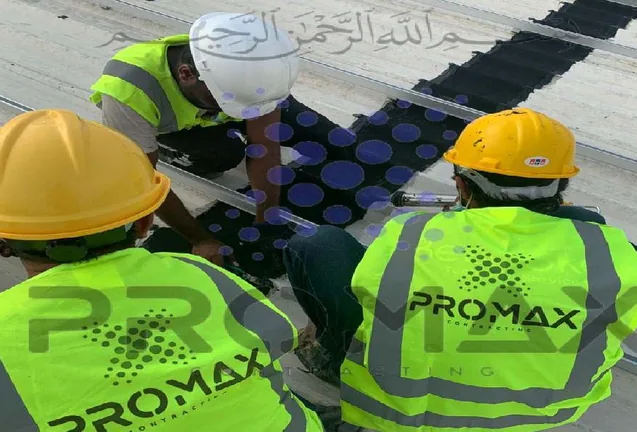
Effective skylight waterproofing repair starts with inspection at close range. The contractor should assess not just the visible leakage but the surrounding roof area, including laps, fixings, insulation condition where accessible, and any signs of rust, ponding, or movement. Water entry can originate several feet away from where it appears inside.
The next step depends on the roof type and failure condition. On metal roofs, repair may involve treating corrosion, replacing failed fasteners, reworking side laps, and installing a compatible waterproofing system around the skylight detail. On concrete roof decks with curbed skylights, the repair may require membrane reinstatement, crack treatment, and new flashing terminations.
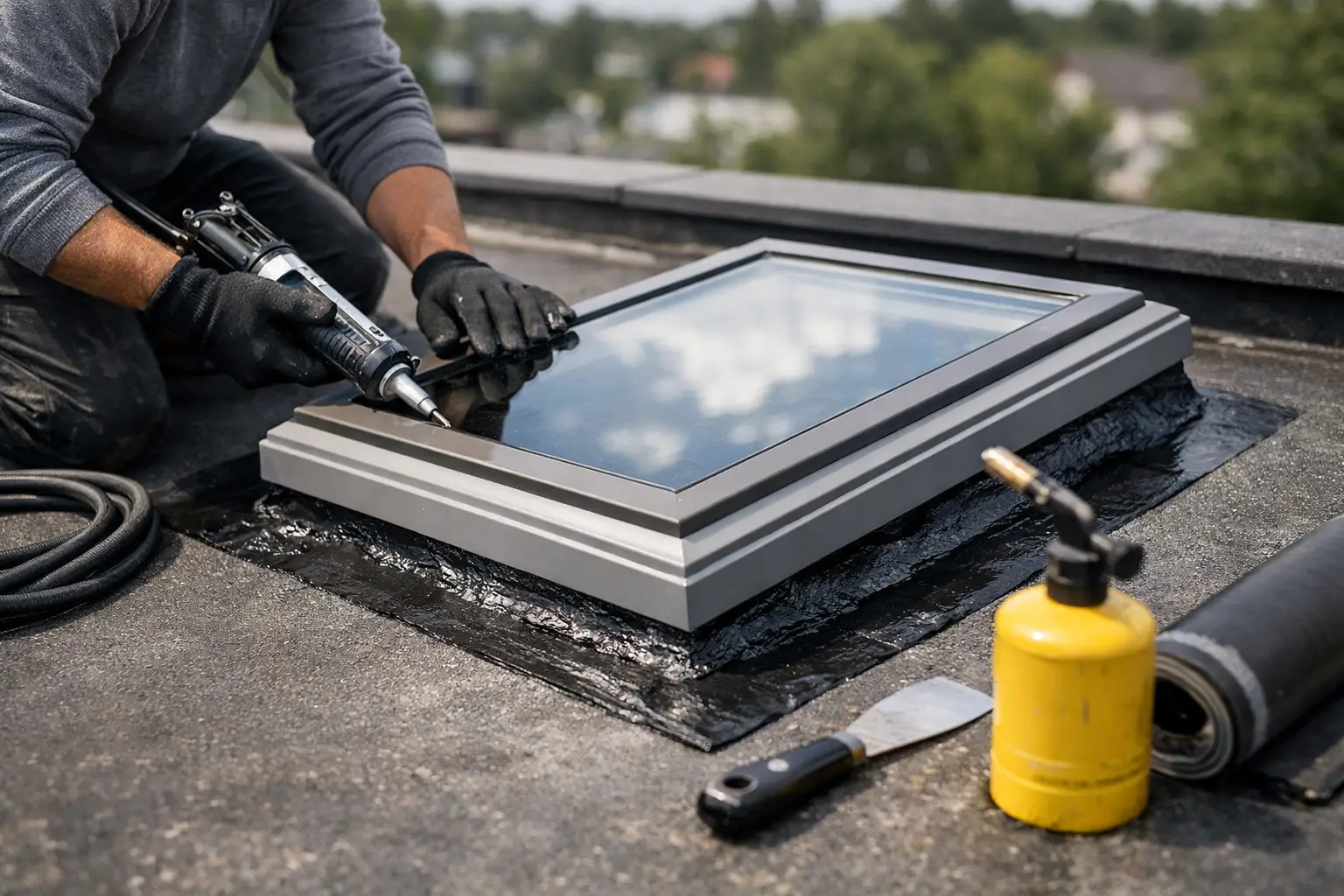
Where the perimeter detail has failed, the unstable material should be removed rather than buried. Old cracked sealant, loose mastics, rust flakes, and deteriorated gasket material all need to come out. The substrate then has to be cleaned, prepared, and made sound before a new system is installed.
For many commercial applications, EPDM-based waterproofing is a strong option because it handles movement better than brittle patch materials. When correctly detailed, it provides consistent coverage across joints, corners, and curb transitions. But material selection still depends on exposure, roof profile, compatibility, and access conditions. There is no universal repair system that suits every skylight.
When repair is enough and when replacement makes more sense
Not every leaking skylight should be replaced. If the skylight unit is structurally sound and the issue is limited to failed sealant, flashing, fasteners, or perimeter waterproofing, repair is usually the more efficient route. It reduces disruption and avoids unnecessary roof opening works.
Replacement becomes more practical when the panel is cracked, badly yellowed, impact-damaged, or no longer compatible with the roof condition around it. The same applies when the curb is undersized, warped, corroded, or repeatedly repaired without stable results. If the assembly has reached the end of service life, rebuilding the detail can save more money than repeated interventions.
This is where experienced site assessment matters. A contractor should be able to separate a repairable perimeter failure from a skylight unit that is no longer fit for service. The right recommendation is not always the cheapest first step, but it should be the one with the best life-cycle value.
Key details that determine repair performance
The quality of a skylight waterproofing repair is decided by details, not just materials. Curb height matters because low upstands are more vulnerable to wind-driven rain and ponding. Membrane terminations matter because water will exploit weak edges before it penetrates the field area. Corner treatment matters because corners move and split first.
Fastener treatment is another critical point on industrial roofs. If corroded or loose screws remain in place around the skylight, the perimeter may still leak even after the flashing is redone. Similarly, if adjacent gutter lines or downpipes are blocked, water concentration around the repair zone can overload an otherwise sound detail.
Thermal movement also has to be respected. Skylights on long metal roofs are exposed to constant expansion and contraction. Rigid filler materials can crack under that movement. Flexible systems with proper adhesion and mechanical stability generally perform better over time.
Access and safety should not be ignored either. Many skylights sit on fragile roof sections or near unsafe walking zones. A repair team needs proper access planning, edge protection where required, and a method that does not create new damage while reaching the leak point.
What facility teams should expect from a contractor
For commercial and industrial clients, the repair scope should be clear before work starts. That means inspection findings, leak source analysis, proposed treatment area, substrate preparation method, waterproofing system, and any related repairs such as fastener replacement, rust treatment, or gutter correction.
A contractor handling skylight repairs on active facilities should also plan around operations. Some leaks can be repaired externally with minimal disruption. Others may require coordination for internal protection, access restrictions, or work during off-peak hours. Speed matters, but uncontrolled work creates avoidable risk.
After-sales response matters just as much. Skylight leaks often show up during specific rain conditions, and clients need a team that can respond quickly if related areas need adjustment. That is one reason many facility managers prefer a contractor with inspection, fabrication, waterproofing, and maintenance capability under one roof, such as Promax Contracting.
Preventing repeat skylight failures
The best repair is the one that also addresses why the failure happened. If the root cause is water ponding, drainage has to be corrected. If the issue is roof sheet deterioration, the surrounding area may need treatment beyond the skylight itself. If thermal movement is stressing the detail, the repair system has to absorb that movement rather than fight it.
Routine inspection is a practical safeguard, especially on aging industrial buildings. Skylight perimeters should be checked along with gutters, roof laps, penetrations, and fasteners before the rainy season and after major weather events. Early signs such as sealant shrinkage, rust staining, dirt trails, and loose fixings are easier and cheaper to address before leakage spreads.
A skylight does not need attention because it is a skylight. It needs attention because it is one of the most exposed roof details on the building. Treat it like a critical waterproofing point, and the repair will protect more than daylight - it will protect the roof system, the interior, and the operation underneath.
Talk to Promax
Need this on your roof? Call +971 56 727 4205 or request a free inspection. Promax provides EPDM metal-roof, concrete and industrial waterproofing across Dubai and the UAE with up to a 15-year warranty.