A skylight leak rarely stays a skylight problem. In industrial and commercial buildings, failed seals around rooflights can stain insulation, damage stock, interrupt operations, and create slip hazards below. That is why skylight waterproofing solutions need to be treated as a roof system issue, not a quick sealant job around visible gaps.
Most recurring skylight leaks start at the junction between different materials. You have acrylic or polycarbonate units, metal curb frames, roof sheets or concrete upstands, exposed fasteners, thermal movement, ponding water, and UV exposure all working against the original seal. If the repair method does not account for that movement and exposure, the leak comes back.
Why skylight leaks keep returning
The common failure on commercial roofs is not just cracked sealant. It is a combination of aging components and poor repair history. A skylight might have been patched several times with general-purpose mastics that dry out, lose adhesion, or separate from dusty or oxidized surfaces. In many facilities, water entry is also misdiagnosed. The visible drip line inside the building may be meters away from the actual failure point on the roof.
This is especially true on metal roofs and large warehouse spans. Water can travel along sheet laps, purlins, insulation facings, and screw lines before it appears under the skylight zone. A proper inspection has to distinguish between a failed skylight perimeter, failed roof fasteners, corroded flashing, drainage issues, or cracks in the surrounding substrate.
Heat adds another layer of stress. In harsh climates, skylight assemblies expand and contract more than many surrounding roof elements. That constant movement breaks weak bonding lines. If the repair system is too rigid, it may look complete on day one and still split after a few thermal cycles.
What effective skylight waterproofing solutions actually include
Reliable skylight waterproofing solutions are built around preparation, compatible materials, and system detailing. The best results usually come from treating the skylight perimeter, adjoining roof surface, fastener points, and drainage path as one continuous waterproofing zone.
The first step is surface preparation. Old sealants, loose coating, oxidation, dust, and failed tapes must be removed. If this is skipped, even premium materials will struggle to bond. On metal curbs or roof sheets, rust treatment may be needed before any membrane or liquid system is applied. On concrete upstands, cracks and surface defects often need repair before waterproofing starts.
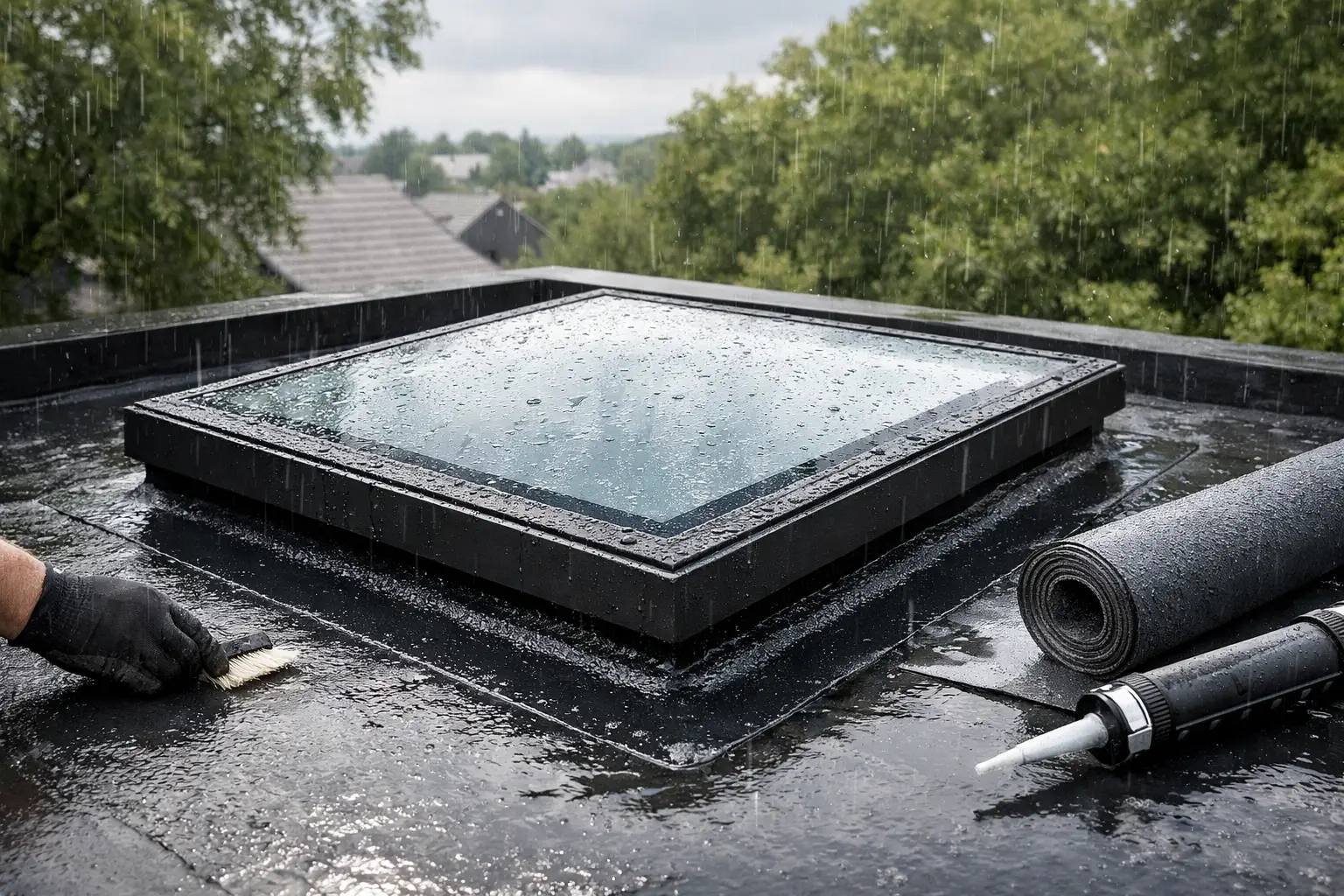
The second step is selecting the right system for the roof type and skylight condition. EPDM-based detailing is widely used because it can handle movement well and provides durable waterproofing around irregular transitions. Reinforced liquid-applied membranes can also perform well when the substrate profile is complex and the detailing area is difficult to wrap with sheet material. The right choice depends on geometry, exposure, and whether the repair is localized or part of a wider roof rehabilitation scope.
The third step is edge termination and fastening treatment. Many failed skylight repairs occur because the main field area was coated, but the edges, screws, joints, and overlaps were not properly reinforced. Water will always find the weak point. A durable system needs proper terminations, sealed fasteners where required, and reinforcement at movement-prone corners and joints.
Matching the system to the roof
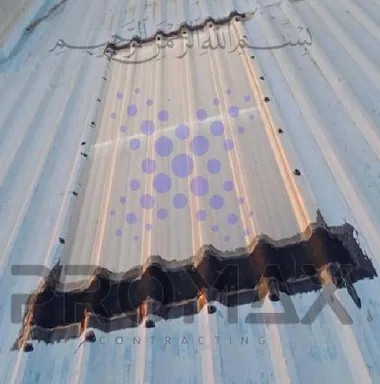
Not every skylight leak calls for the same repair method. On metal roofs, the skylight is often integrated with profiled sheets, side laps, and screw-fixed components. In that case, the waterproofing scope may need to extend beyond the visible skylight frame and include adjacent sheet joints, saddle flashings, and screw treatment. If corrosion is present, the repair also has to restore the substrate before waterproofing can be relied on.
On concrete roofs, the issue is often at the upstand junction, old bituminous detailing, or cracking around the curb. These conditions may require crack repair, surface leveling, primer application, and reinforced membrane transitions from horizontal to vertical surfaces. If water ponds near the skylight, no perimeter repair will perform properly for long without correcting slope or drainage.
On older facilities, skylight material itself may be near the end of service life. If the acrylic dome is brittle, crazed, or mechanically loose, perimeter waterproofing alone may not be the right investment. Replacement of the panel or curb assembly can be more cost-effective than repeated patching. Good technical advice should say that clearly instead of forcing a repair where replacement is the more responsible option.
Common skylight waterproofing mistakes
The fastest way to waste maintenance budget is to treat skylight leakage as a simple caulking task. Surface-applied sealant over dirt, chalking, wet substrate, or old failed compound is not a long-term repair. It may stop visible leakage briefly, but it rarely survives roof movement and weather exposure.
Another common mistake is repairing only the point where water is seen inside. Roof leaks do not behave that neatly. Water migrates. Without inspection of sheet laps, fasteners, drainage paths, insulation wetting, and curb transitions, the true source can be missed.
A third issue is mixing incompatible materials. Some coatings and sealants do not bond well to aged plastics, factory-coated metals, or existing waterproofing compounds. Others may react poorly under constant UV and heat. This is where contractor experience matters. Product selection has to follow substrate condition, not just availability.
Inspection matters more than the patch
Before specifying skylight waterproofing solutions, a site team should inspect the full assembly and the surrounding roof field. That includes checking curb height, flashing condition, panel movement, cracks, open laps, sealant failure, blocked drains, screw condition, and signs of corrosion or structural deflection.
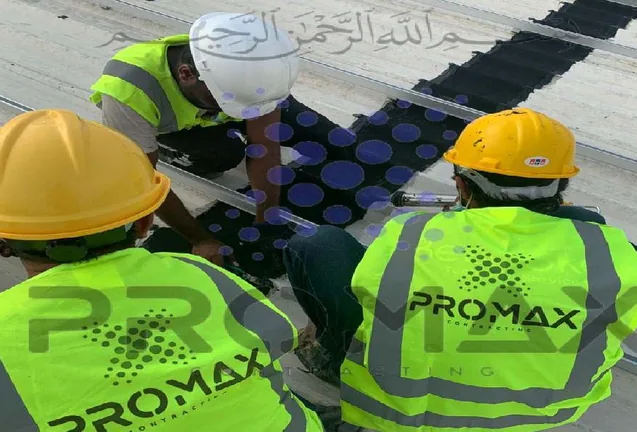
For warehouses and factories, the inspection should also account for operational constraints. Access systems, safe working methods, production timing, and internal protection may all affect how the repair is staged. A technically correct solution that disrupts operations for too long is not always the best commercial answer. In many cases, phased work and targeted repairs can reduce downtime while still delivering a durable result.
This is where a contractor with inspection, fabrication, and installation capability adds value. If custom flashings, curb modifications, or metal closures are needed, the repair can be executed as a complete package instead of a fragmented process between multiple vendors.
When localized repair is enough and when it is not
There are cases where a localized skylight waterproofing repair is the right move. If the skylight unit is sound, the curb is stable, and the leak is limited to failed perimeter detailing, a targeted membrane or reinforced liquid repair can extend service life effectively.
But if the surrounding roof has widespread fastener failure, corrosion, insulation wetting, or multiple leak points, isolating the skylight may only solve part of the problem. The same applies when there are repeated leak complaints after previous patching. At that stage, the better approach is often a broader roof rehabilitation strategy that includes skylight detailing as one element of the full system.
For facility managers, this is mostly a cost-control decision. Small repairs are cheaper upfront, but repeat callouts, damaged stock, and production disruption quickly change that math. The right contractor should explain the trade-off clearly: immediate containment, medium-term rehabilitation, or full replacement depending on condition and risk.
What a durable repair should deliver
A durable skylight waterproofing system should do more than stop active dripping. It should maintain adhesion under UV exposure, tolerate movement between different materials, protect vulnerable joints and fasteners, and integrate cleanly with the surrounding roof assembly. It should also be maintainable. If future inspection or panel replacement is needed, the system should allow sensible access and repair planning.
In high-exposure environments such as logistics facilities, workshops, and industrial sheds, after-sales response matters as much as installation quality. Waterproofing is not just a material choice. It is execution quality, inspection discipline, and how quickly defects are addressed if conditions change.
Promax Contracting approaches skylight leakage the same way industrial clients expect any critical building issue to be handled - inspect the real source, specify the right system, prepare the substrate properly, and complete the work with durable detailing rather than cosmetic patching.
If your skylight leak has already been sealed once and returned, that is usually the signal to stop chasing the symptom and repair the assembly the right way. A well-executed waterproofing system around the skylight does more than keep water out. It protects operations, extends roof life, and removes one more recurring maintenance issue from the site.
Talk to Promax
Need this on your roof? Call +971 56 727 4205 or request a free inspection. Promax provides EPDM metal-roof, concrete and industrial waterproofing across Dubai and the UAE with up to a 15-year warranty.