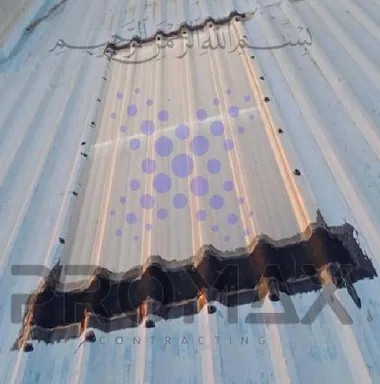
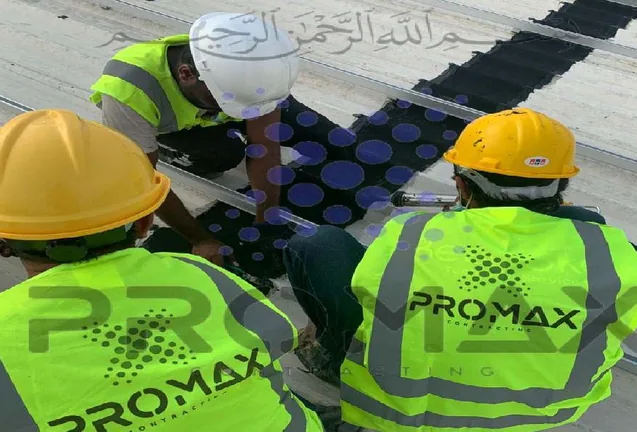
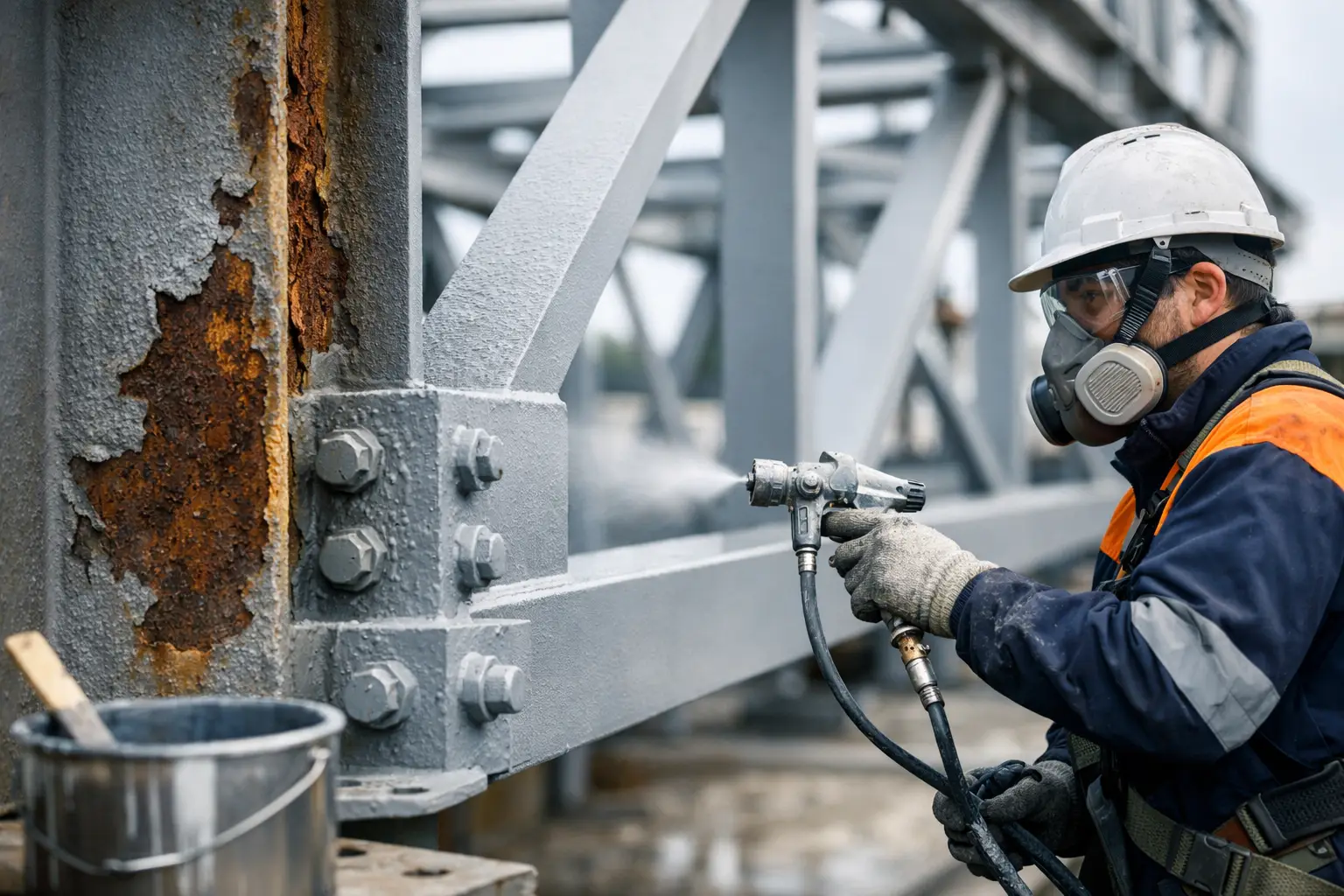
A steel frame rarely fails all at once. More often, the warning signs start small - blistered paint at roof beams, rust bleeding near bolted joints, staining below gutters, or pitted base plates in damp service areas. This steel structure corrosion protection guide is written for facility teams that cannot afford to treat those signs as cosmetic. In industrial and commercial buildings, corrosion is a maintenance issue, a safety issue, and eventually a cost issue.
For warehouses, factories, sheds, and utility structures, corrosion usually develops where water sits, coating systems break down, or dissimilar materials create local attack. Heat, humidity, dust, roof leakage, chemical exposure, and poor drainage accelerate the problem. Once corrosion gets behind a coating or inside a connection, repair becomes more disruptive and more expensive.
What causes steel corrosion in real facilities
On paper, corrosion control sounds simple: keep steel clean, dry, and coated. On an operating site, conditions are rarely that controlled. Roof details trap water. Pipe penetrations leak. Gutters overflow onto columns. Fasteners lose protection before primary members do. Condensation forms inside enclosed spaces that appear dry from the outside.
In coastal and high-humidity regions, airborne salts add another layer of risk. In processing plants and service yards, chemicals and washdown practices can shorten coating life fast. Even inland buildings face corrosion when maintenance has been deferred and moisture ingress has been allowed to continue around laps, flashing, skylights, and drainage points.
That is why corrosion protection should not be treated as a paint-only decision. The real question is what is driving moisture and contamination to remain on the steel in the first place.
Steel structure corrosion protection guide: start with inspection, not product selection
A common mistake is choosing a coating system before understanding the failure pattern. If rust is appearing at isolated points, the issue may be localized damage, failed sealant, or poor surface preparation from an earlier repair. If deterioration is widespread, the structure may have reached the end of a coating cycle or may be exposed to conditions the original system was never designed to handle.
A proper inspection should document member condition, corrosion grade, coating adhesion, thickness loss, failed joints, and water entry paths. This matters because the repair scope changes depending on what is found. Surface rust on accessible purlins is one type of job. Section loss at connection plates, corroded roof fasteners, and ongoing leakage above occupied operations is another.
In practice, the best inspection combines visual assessment with practical site logic. Where does water collect after rain or washdown? Which elevations receive the harshest exposure? Are base plates in contact with wet concrete? Are gutters, roof laps, and penetrations feeding moisture back into the frame? These questions often explain more than the rust itself.
Surface preparation decides whether the system lasts
If there is one part of a corrosion protection job that gets underestimated, it is surface preparation. Facility teams often focus on the topcoat because it is visible. The long-term result depends much more on what was removed, cleaned, and stabilized before coating starts.
Loose rust, failed paint, salts, oil, and surface contamination all interfere with adhesion. In severe cases, abrasive blasting is the right route because it gives the primer a clean, profiled surface to grip. In less aggressive environments or in restricted areas, mechanical preparation may be acceptable, but only if the remaining surface is sound and the coating manufacturer allows it.
There is always a trade-off here. Full blasting generally delivers better performance, but it may increase shutdown planning, containment requirements, and project cost. Spot preparation is faster and cheaper, but it only works when deterioration is truly localized. Applying a premium coating over poorly prepared steel is still a short-life repair.
Choosing the right protection system
Not every steel structure needs the same corrosion control system. Exposure conditions, expected service life, access limitations, and maintenance strategy all affect the recommendation.
For many industrial and commercial structures, a multi-layer coating system remains the most practical option. That usually means a primer for adhesion and corrosion resistance, an intermediate build coat for barrier performance, and a topcoat selected for UV durability and environmental exposure. Epoxy systems are widely used because they perform well in aggressive service conditions, but they may chalk under sunlight unless protected with an appropriate finish coat. Polyurethane topcoats offer better UV stability in exposed locations.
In highly corrosive environments, galvanizing or metallizing may be considered for new steel or major refurbishment. These systems can provide excellent long-term performance, but they are not always practical for in-place repairs on occupied sites. Access, component size, fabrication sequencing, and shutdown windows all matter.
Localized repairs sometimes need a different approach from the main structure. Fasteners, brackets, handrails, roof supports, and secondary framing often corrode first and may need replacement rather than repeated coating. If steel has already lost section thickness, coating alone will not restore capacity. That is where engineered repair, reinforcement, or member replacement becomes necessary.
Design and maintenance details that prevent repeat corrosion
The best corrosion protection program includes corrective work beyond the steel surface itself. If the building keeps feeding water onto the frame, the coating system will keep failing.
Drainage is a major example. Overflowing gutters, undersized downpipes, and blocked outlets can direct water onto fascia supports, edge beams, and wall steel. Roof leakage around penetrations, skylights, end laps, and screw lines can create persistent wetting below the deck. Condensation from uninsulated surfaces can have a similar effect in service corridors and enclosed process spaces.
This is why effective projects often combine rust treatment with roof waterproofing, gutter rehabilitation, fastener treatment, sealant replacement, and selective fabrication work. On large facilities, corrosion is rarely isolated from the rest of the envelope condition. A contractor that can inspect the roof, drainage, waterproofing details, and steel package together will usually produce a more durable scope.
Steel structure corrosion protection guide for repair planning
When corrosion is active, the right response depends on severity. Early-stage deterioration can often be contained through cleaning, surface preparation, spot priming, and full-system recoating. Moderate corrosion may require plate repair, bolt replacement, purlin replacement, or localized steel fabrication before protection is reinstated. Advanced deterioration needs structural review, especially where load-bearing members, welded joints, or support seats are affected.
Timing also matters. Waiting for a full shutdown is not always the lowest-cost option. A phased repair approach can address urgent leak sources and unstable corrosion zones first, then move to broader coating rehabilitation in planned sections. This is often the better path for warehouses and production sites that cannot stop operations for extended periods.
Specification should be practical, not generic. The repair scope should define preparation standards, coating type and thickness, dry film requirements, access method, environmental controls, and inspection hold points. Otherwise, pricing may look competitive while execution quality varies widely.
Why inspection and aftercare matter as much as the initial job
A corrosion protection system is not a one-time decision. It is part of an asset preservation cycle. Even a well-executed system needs periodic inspection, especially at roof interfaces, joints, penetrations, and splash zones.
What usually causes early failure is not that the coating was inherently wrong. More often, a roof leak reappeared, drainage was not maintained, mechanical damage exposed bare steel, or later service work cut into the protected area. Small defects then spread under the coating film.
Routine follow-up allows facility teams to intervene while repairs are still manageable. That may mean treating isolated chips, resealing a leaking detail, cleaning gutters, or replacing a small corroded bracket before neighboring members are affected. In harsh environments like coastal industrial zones in the UAE, that discipline makes a measurable difference in service life.
Promax Contracting approaches these projects the way they should be handled on live facilities - with site inspection, practical diagnosis, repair scope alignment, and field execution that considers roofing, waterproofing, drainage, fabrication, and steel protection together.
The smartest corrosion work is not the system with the most impressive data sheet. It is the one that matches the actual exposure, fixes the moisture source, and can be maintained without waiting for the next emergency.
Talk to Promax
Need this on your roof? Call +971 56 727 4205 or request a free inspection. Promax provides EPDM metal-roof, concrete and industrial waterproofing across Dubai and the UAE with up to a 15-year warranty.