By midday, the problem is usually obvious without any instruments. The warehouse floor feels hotter than the outdoor air, staff productivity drops, forklifts run in heavier conditions, and packaged goods near the top racks absorb heat all day. That is where warehouse roof heat reduction solutions stop being a comfort upgrade and become an operational requirement.
In large industrial buildings, roof temperature directly affects internal working conditions, HVAC load, condensation behavior, and the service life of the building envelope. The right fix depends on the roof type, current condition, insulation level, and whether heat is entering mainly through radiation, air leakage, or failed waterproofing layers. A coating alone may help one facility and underperform in another. Good results come from inspection first, then system selection.
Why warehouse roofs hold and transfer so much heat
Most warehouses gain heat through the roof faster than through any other building element. Large exposed roof areas absorb solar radiation for hours, especially on metal sheet roofing and aged concrete surfaces with dark or deteriorated finishes. Once the roof skin heats up, that energy transfers downward by conduction and radiates into the occupied space below.
In practical terms, the roof acts like a hot plate above the operation. If insulation is missing, compressed, wet, or poorly installed, heat moves inside even faster. If there are gaps at laps, penetrations, skylights, flashing joints, or ridge details, hot external air also enters the building envelope. In many warehouses, heat gain is not one isolated defect. It is a combination of surface temperature, weak insulation, uncontrolled air leakage, and aging waterproofing.
That is why heat reduction should not be treated as a single-product purchase. It is a roof performance issue, and performance has to be checked as a whole.
The most effective warehouse roof heat reduction solutions
The best warehouse roof heat reduction solutions usually combine reflective treatment, insulation improvement, and defect correction. Which option makes sense depends on whether the roof is structurally sound and worth restoring, or already close to replacement condition.
Reflective roof coatings for metal and concrete roofs
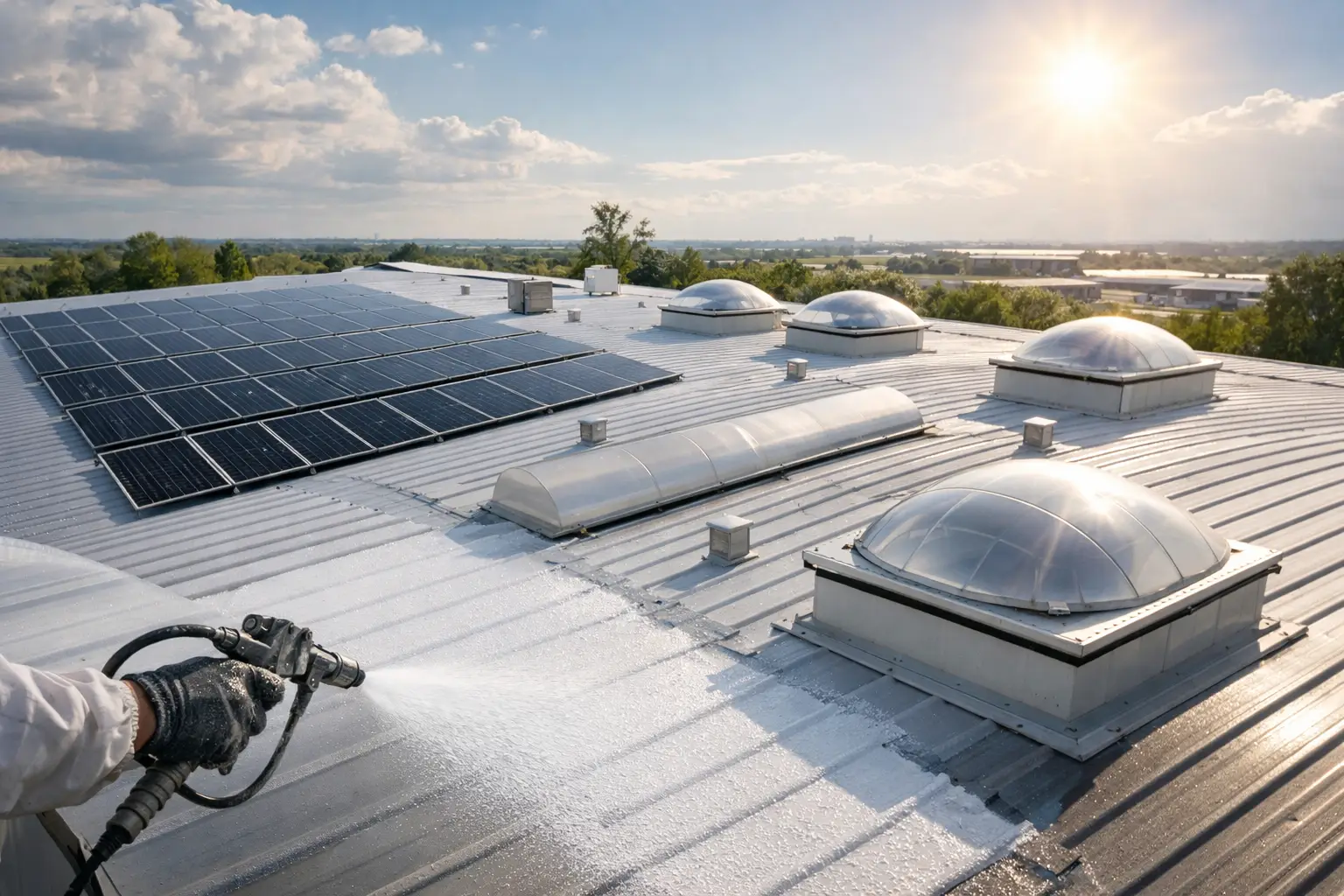
For many operational buildings, reflective roof coatings are the fastest retrofit measure with the least disruption. These coatings reduce solar absorption by reflecting more sunlight and lowering the roof surface temperature. On metal roofs, this can also reduce thermal movement stress at sheet laps, screws, and flashing lines. On concrete roofs, reflective systems help limit heat buildup in the slab mass.
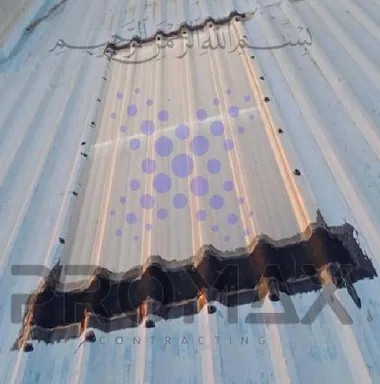
But coating performance depends heavily on preparation. If the roof has corrosion, loose fasteners, open joints, ponding areas, or failed sealants, applying a white coating over those defects only improves appearance. It does not solve heat entry or water ingress. Proper substrate cleaning, rust treatment, screw treatment, joint sealing, and localized repair are what make the coating system function over time.
On industrial sites, this matters because maintenance teams are not looking for a six-month visual fix. They need a system that survives exposure, movement, and service traffic.
Insulation upgrades where heat transfer is severe
If the warehouse still runs hot after surface treatment, the issue is often insufficient insulation. Reflectivity reduces how much heat the roof absorbs, but insulation controls how much of that heat reaches the interior. The two work differently. One manages solar load at the top surface. The other slows transmission through the assembly.
In retrofit projects, insulation can be upgraded above the roof deck, below it, or as part of a new waterproofing build-up. The right method depends on access, structural loading, fire requirements, and whether operations can continue during installation. In active warehouses, a staged approach is often necessary to avoid interrupting stock movement or equipment access.
There is also a trade-off. Insulation work is more capital-intensive than coating, but it usually delivers stronger long-term thermal control. For facilities with continuous occupancy, temperature-sensitive goods, or high daytime cooling demand, insulation upgrades often justify the added cost better than surface treatment alone.
Roof waterproofing and heat control should be handled together
A wet roof system performs worse thermally. Once insulation or substrate layers take on moisture, thermal resistance drops and heat transfer increases. That is one reason heat complaints and leak complaints often show up together.
In these cases, waterproofing is part of the heat-reduction scope, not a separate maintenance item. EPDM-based waterproofing systems, liquid-applied membranes, seam treatment, flashing repairs, and penetration sealing all help restore the roof envelope so the thermal strategy can actually work. If the roof still allows moisture entry at skylights, upstands, gutters, or pipe penetrations, thermal performance will continue to decline.
For older industrial roofs, this is often the point where a contractor needs to assess whether partial rehabilitation is enough or whether the roof needs broader restoration. A technically sound inspection will save more money than choosing the cheapest product category on day one.
Problem areas that are often missed
When warehouse managers think about roof heat, they usually picture the main field area of the roof. In practice, perimeter and detail zones are often where performance is lost.
Skylights are a common example. They add daylight, but poorly sealed or aged units can become major heat points, especially if the surrounding flashing and waterproofing have failed. Gutters also matter. Blocked or undersized drainage creates standing water, which degrades coatings, stresses joints, and shortens roof life. Once the roof deteriorates, heat and moisture problems accelerate together.
Fasteners and laps on metal roofing are another weak area. If screw caps are damaged, washers are failing, or sheets have started lifting under thermal movement, hot air and water can enter repeatedly. The same applies to roof penetrations for mechanical, electrical, and fire systems. These details rarely fail all at once, but small breaches across a large roof add up to major performance loss.
How to choose the right solution for your facility
A warehouse used for dry storage does not need the same roof strategy as a pharmaceutical distribution center or a manufacturing plant with process heat. The right specification starts with operational use.
If the main concern is reducing daytime indoor temperature in a warehouse with a sound roof, a reflective restoration system may be the most practical answer. If the building has persistent heat load, aging waterproofing, and signs of moisture damage, a combined rehabilitation approach will usually perform better. If the roof structure, purlins, or metal sheets are already compromised by corrosion, thermal upgrades alone will not be enough. Structural and envelope repairs have to come first.
Budget also matters, but so does timing. A lower-cost coating project may help immediately and buy time for a phased capital plan. A full re-roof or insulated overlay may be the better life-cycle decision if repeated patching is already consuming maintenance budget every year.
This is where an experienced field contractor adds real value. The job is not to recommend the most expensive system. The job is to identify which layers still have service life, which defects are causing the biggest heat gain, and what intervention level matches the building's operating reality.
What a proper roof assessment should include
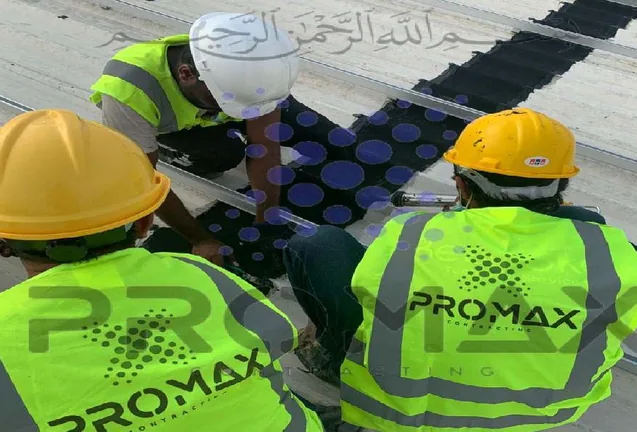
Before selecting materials, the roof should be inspected for surface temperature behavior, moisture-related damage, visible leakage paths, insulation condition, corrosion, drainage performance, and sheet or slab movement. Infrared assessment can help in some cases, but even basic field checks done by a technically competent team will reveal many of the issues that affect heat gain.
The inspection should also review penetrations, gutters, skylight details, edge conditions, flashing terminations, and previous repair quality. Many warehouse roofs have been patched by multiple vendors over the years, and incompatible materials often create new failure points.
For industrial facilities in high solar exposure environments such as Dubai and across the UAE, the inspection should also consider UV aging, thermal expansion stress, and the condition of existing protective finishes. These factors strongly influence whether restoration is viable and how long the selected system is likely to last.
Promax Contracting typically approaches these projects as building-envelope rehabilitation rather than just product installation, which is the right mindset for facilities trying to control heat, moisture, and long-term maintenance exposure at the same time.
What good results actually look like
A successful heat-reduction project does more than lower roof temperature on paper. It should improve internal working conditions, reduce temperature swings under the roof deck, support lower cooling demand where HVAC is used, and extend roof service life by reducing thermal stress and moisture exposure.
It should also be maintainable. That means safe access, repairable details, compatible materials, and a clear scope for future upkeep. Warehouse roofs do not stay in good condition by accident. Even the best system needs periodic inspection, cleaning, and detail repair before small defects become major failures.
If your warehouse is getting hotter every season, the answer is rarely just to add another layer and hope for the best. Start with the roof condition, treat heat and waterproofing as one problem, and choose a system that fits how the building is actually used.
Talk to Promax
Need this on your roof? Call +971 56 727 4205 or request a free inspection. Promax provides EPDM metal-roof, concrete and industrial waterproofing across Dubai and the UAE with up to a 15-year warranty.