A warehouse leak is rarely just a roof problem. It becomes an inventory problem, a safety problem, a downtime problem, and eventually a budgeting problem. By the time water reaches stock racks, lighting points, insulation, or electrical runs, the repair is already larger than the visible stain.
That is why selecting the right warehouse roof waterproofing contractor matters more than choosing the lowest quote. Large-span roofs fail for specific reasons - failed lap joints, screw loosening, gutter overflow, pipe penetration gaps, cracked concrete surfaces, membrane fatigue, corrosion around fasteners, and poor drainage design. If the contractor cannot identify the actual failure point, the work turns into patching instead of correction.
What a warehouse roof waterproofing contractor should actually do
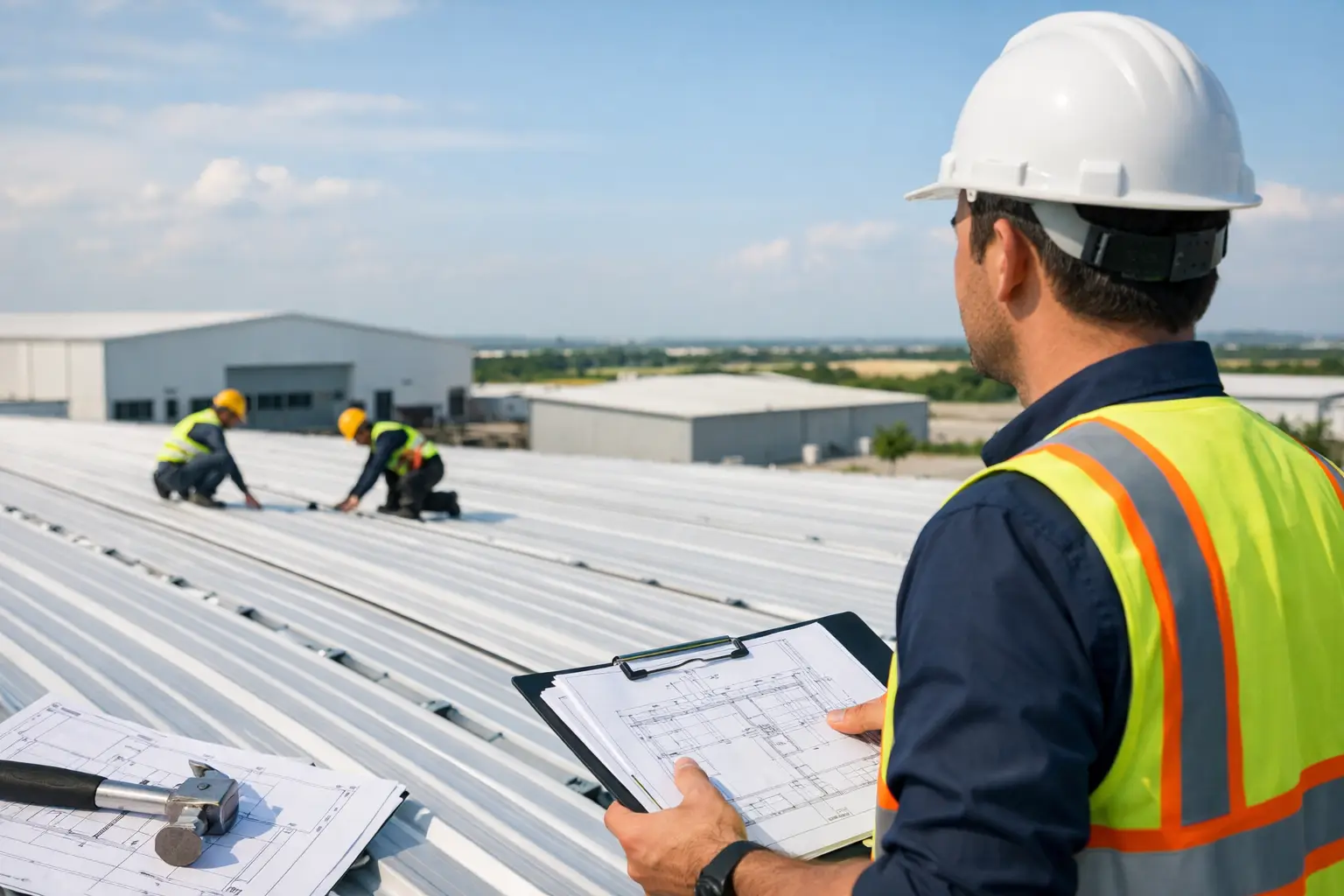
A qualified warehouse roof waterproofing contractor does more than apply a coating and issue a completion report. The job starts with inspection, testing, and diagnosis. On industrial and logistics buildings, roof leakage often has multiple entry points. Water may enter at one location and travel along sheets, purlins, insulation layers, or slab cracks before appearing somewhere else.
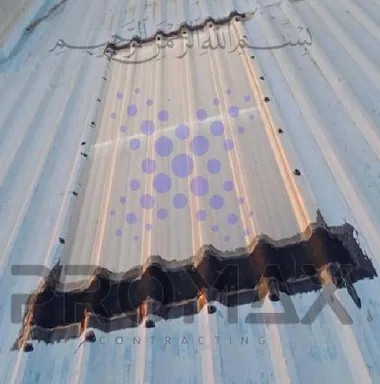
That is why the first site visit should focus on roof profile, substrate condition, previous repair history, drainage flow, roof penetrations, movement joints, skylights, parapet details, and corrosion spread. In metal roof buildings, screw treatment, washer condition, overlap sealing, ridge detailing, and gutter connection points are critical. In concrete roofs, the contractor should assess cracks, ponding, membrane delamination, upturn termination, and weak construction joints.
A capable contractor will then recommend a system based on the roof condition rather than pushing a single product for every building. In some warehouses, localized repair is enough. In others, partial rehabilitation only delays a full-system failure.
Why warehouse roofs fail earlier than expected
Warehouses are exposed to a punishing mix of heat, movement, dust, and water concentration. In the Gulf region, metal expansion and contraction alone can open weaknesses around laps and penetrations. Add aging sealants, blocked drainage lines, rusted gutters, and poorly executed earlier repairs, and leaks become repetitive.
Another common issue is mismatch between roof design and operational use. Warehouses frequently receive added cable routes, signage supports, exhaust units, solar components, and service penetrations after original construction. Each new fixing point creates a waterproofing risk if detailing is not done correctly.
Then there is maintenance neglect. Small defects in screws, flashing edges, or downpipe outlets may look minor from the ground, but they accelerate quickly under heat and storm exposure. A contractor who understands warehouse environments should be looking not only at active leaks, but also at the chain of defects that will create the next leak.
The systems that usually make sense
There is no single best waterproofing system for every warehouse roof. It depends on substrate, condition, access, usage, and budget. Still, some systems consistently perform better when applied correctly.
For metal roofs, EPDM-based waterproofing systems are often a strong option because they handle movement well and can be detailed around laps, fasteners, and penetrations with good long-term flexibility. But EPDM is not a shortcut. Surface preparation, rust treatment, joint sealing, and sheet condition all determine performance.
For concrete roofs, membrane systems and liquid-applied solutions can both work, depending on crack behavior, water exposure, and traffic level. Where there is severe ponding or failed older treatment, surface correction may be needed before waterproofing starts. Applying a new layer over an unstable substrate is a common reason repairs fail early.
Gutters, skylights, parapets, and pipe penetrations also need their own detailing approach. Many leaks blamed on the main roof field are actually coming from edge conditions and service entries. A serious contractor treats these as part of the system, not as small extras.
What to check before you appoint a contractor
If you are comparing bids, the right questions are technical and operational. Ask how the contractor will inspect the roof, how they identify root cause, and whether they can handle related works such as gutter replacement, metal surface restoration, screw treatment, skylight waterproofing, and fabrication of custom flashings. On large facilities, single-scope contractors often create coordination gaps that leave leak points unresolved.
You should also review how they plan access and execution. Warehouses do not always allow full shutdowns, and some operations cannot tolerate contamination, noise at specific hours, or unrestricted roof traffic. The contractor must be able to phase the work without compromising safety or waterproofing integrity.
Another point is after-sales response. Roofing and waterproofing are not just installation services. If a contractor disappears after handover, the client carries the risk. Warehouses need teams that can return quickly for inspection, touch-up, drainage checks, and urgent interventions after heavy rain.
Red flags that usually lead to repeat leakage
The most obvious red flag is a quote issued without a proper roof inspection. Another is a proposal that mentions only generic waterproofing material but says nothing about preparation, joint treatment, penetration detailing, or drainage correction. If the scope does not describe how failure points will be addressed, the contractor is likely pricing a surface treatment, not a proper repair.
Be cautious with contractors who treat metal roof corrosion as a cosmetic issue. Rust around screws, overlaps, and gutters is not just appearance damage. It affects fastening strength, water tightness, and long-term membrane adhesion.
It is also worth watching for unrealistic completion promises. Fast turnaround matters, but rushed application on unprepared surfaces creates expensive callbacks. Good contractors move quickly where possible, but they do not skip cleaning, treatment, curing, fastening checks, or detail reinforcement.
Why engineering support and fabrication matter
Warehouses are rarely standard buildings once they have been in service for a few years. There are often altered drains, damaged flashings, nonstandard penetrations, patched roof zones, and edge details that require custom solutions. This is where engineering support and fabrication capability become valuable.
A contractor with in-house or closely managed fabrication can produce flashings, gutters, covers, support frames, and detail components that actually match the roof condition. That reduces dependence on improvised site fixes. On large industrial roofs, improvised details are one of the main reasons waterproofing breaks down at the edges first.
Engineering review also helps when the leakage is linked to movement, thermal stress, ponding, or structural deflection rather than only material failure. If the contractor only sees the symptom and not the building behavior, repairs tend to be short-lived.
The cost question: cheap repair vs durable repair
Every facility team has to balance capital cost against urgency. The problem is that cheap waterproofing usually looks efficient only at the approval stage. Once leakage returns, the real cost includes repeat mobilization, damaged stock, interrupted operations, ceiling replacement, electrical risk, and internal labor spent managing complaints.
A better way to compare proposals is by service life, scope completeness, and risk reduction. A higher-priced system may still be the lower-cost decision if it includes substrate treatment, edge detailing, drainage correction, and a contractor who can respond quickly when needed.
This is especially true for active warehouse facilities where roof access is difficult and shutdown windows are limited. Rework is more expensive than doing the job correctly the first time.
What good execution looks like on site
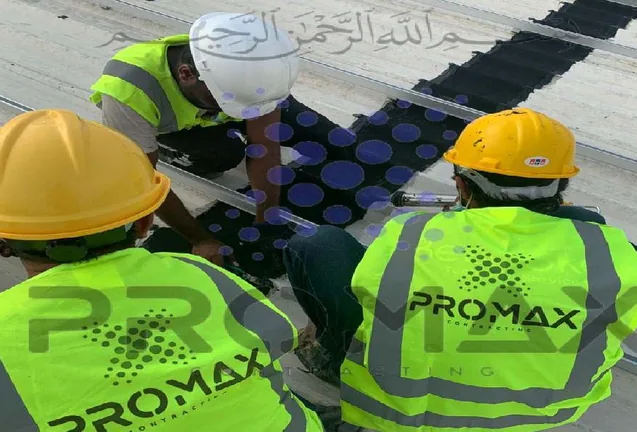
Good execution is visible. The roof is inspected systematically. Defects are documented. Damaged sheets, cracks, and corroded zones are treated before waterproofing starts. Fasteners are checked. Penetrations are sealed properly. Gutters are repaired or replaced where needed. Drainage routes are cleared and tested.
Just as important, the contractor keeps the client informed about what was found and what changed from the initial assumption. Hidden defects are common on warehouse roofs. A professional team does not ignore them to stay within a paper scope. It raises them early and gives a workable recommendation.
That is the standard industrial clients should expect. At https://www.promaxdxb.com, that approach is built around inspection, technical execution, fabrication support, and after-sales response because warehouse waterproofing is not a commodity service. It is a building protection job tied directly to operations.
Choosing the right fit for your facility
The right contractor is not always the biggest and not always the cheapest. It is the one that can inspect properly, specify the correct system, execute safely on an active facility, and stay accountable after completion. For warehouses, that combination matters more than marketing claims or material names.
If your roof is already leaking, waiting rarely improves the outcome. Water ingress spreads quietly through insulation, fasteners, steel supports, wall junctions, and stored goods. A prompt inspection from a contractor who understands warehouse roof behavior can prevent a manageable defect from becoming a major rehabilitation project.
A good waterproofing job should reduce risk, stabilize maintenance costs, and give your operations team one less recurring issue to chase after every rain.
Talk to Promax
Need this on your roof? Call +971 56 727 4205 or request a free inspection. Promax provides EPDM metal-roof, concrete and industrial waterproofing across Dubai and the UAE with up to a 15-year warranty.