A warehouse roof can appear serviceable from ground level while water is already moving through failed screws, open laps, deteriorated sealant, or blocked gutters. By the time a stain reaches the ceiling, insulation, stock areas, electrical routes, and steel members may have been exposed for weeks. Warehouse waterproofing Sharjah is not a cosmetic maintenance item. It is a controlled repair process that protects operations, equipment, and the building asset against recurring water ingress.
Sharjah warehouses face a difficult combination of heat, UV exposure, wind-driven rain, dust accumulation, and long roof spans. A quick patch may stop a visible drip temporarily, but it rarely addresses the route water takes beneath roof sheets or around penetrations. Effective work starts with finding the actual failure point, then selecting a system that fits the roof condition, drainage layout, and remaining service life of the structure.
Why Warehouse Roof Leaks Become Operational Problems
A small roof leak rarely stays small in a working warehouse. Water follows purlins, insulation layers, cable trays, wall junctions, and internal cladding before it appears inside. This makes the visible wet area an unreliable indicator of where the roof has failed.
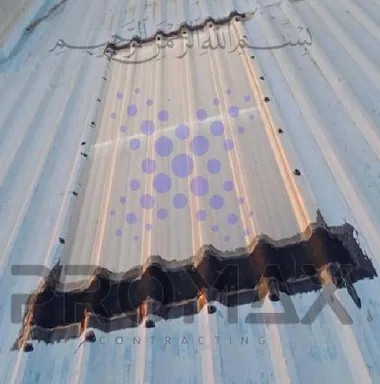
On metal roofs, repeated expansion and contraction can loosen fasteners and widen screw holes. Sheet overlaps can lose their seal, particularly where old tape or mastic has hardened under UV exposure. Corrosion around fasteners, gutters, ridge caps, and roof edges can also create pinholes that are difficult to identify without a close inspection.
Concrete roofs present different risks. Cracks, failed movement joints, damaged protective coatings, and poorly detailed upstands allow water to enter the slab system. If the roof holds standing water after rainfall, the waterproofing layer is under continuous stress. The appropriate repair depends on whether the issue is localized, widespread, or linked to drainage failure.
The cost is not limited to repair labor. Water ingress can interrupt storage operations, damage packaging and inventory, create slip hazards, affect electrical safety, and accelerate corrosion in roof components. For facility managers, the priority is to stop the leak source while minimizing disruption to warehouse activity.
Warehouse Waterproofing Sharjah Starts With Inspection
No membrane, coating, or sealant should be specified solely from a photo or a report of "roof leakage." A proper site inspection checks the complete roof envelope and records the conditions that influence the repair scope.
For a metal warehouse roof, inspection should cover sheet laps, screw lines, ridge and eave details, flashings, gutters, downpipes, skylight perimeters, pipe penetrations, ventilation bases, and areas where previous repairs have been applied. The team should also look underneath the roof where accessible. Rust streaks, wet insulation, corroded purlins, and staining often reveal the extent of concealed water travel.
For concrete roofs, the inspection needs to identify cracks, ponding areas, failed joints, membrane blisters, parapet junctions, drain outlets, and service penetrations. Moisture trapped below an old waterproofing layer may require a different treatment than a surface-level defect.
A useful inspection produces more than a quotation. It should separate urgent leakage points from defects that can be planned under preventive maintenance. It should also identify whether the roof needs localized sealing, partial rehabilitation, or a continuous waterproofing system across the affected area.
Selecting the Right Waterproofing System
The right system depends on roof type, substrate condition, movement, drainage, access requirements, and budget. There is no single product that suits every warehouse. The best option is the one that addresses the identified failure mechanism and can be installed correctly over the existing conditions.
Metal Roof Rehabilitation
Metal roofs often need a combined approach. Loose or damaged fasteners may require replacement and screw treatment. Open laps and flashing joints need cleaning, preparation, and compatible sealing. Areas with corrosion may need rust treatment before waterproofing work begins. If sheets are severely deteriorated, localized metal replacement or fabrication work may be more reliable than covering weak material with a surface coating.
EPDM-based waterproofing systems are commonly considered where flexibility and weather resistance are required. When designed around roof details, penetrations, and termination points, they can provide continuous protection over leak-prone sections. The detailing matters as much as the membrane itself. A well-applied field area will still fail if water can enter around an unsealed pipe base, skylight edge, or roof termination.
Concrete Roof Treatment
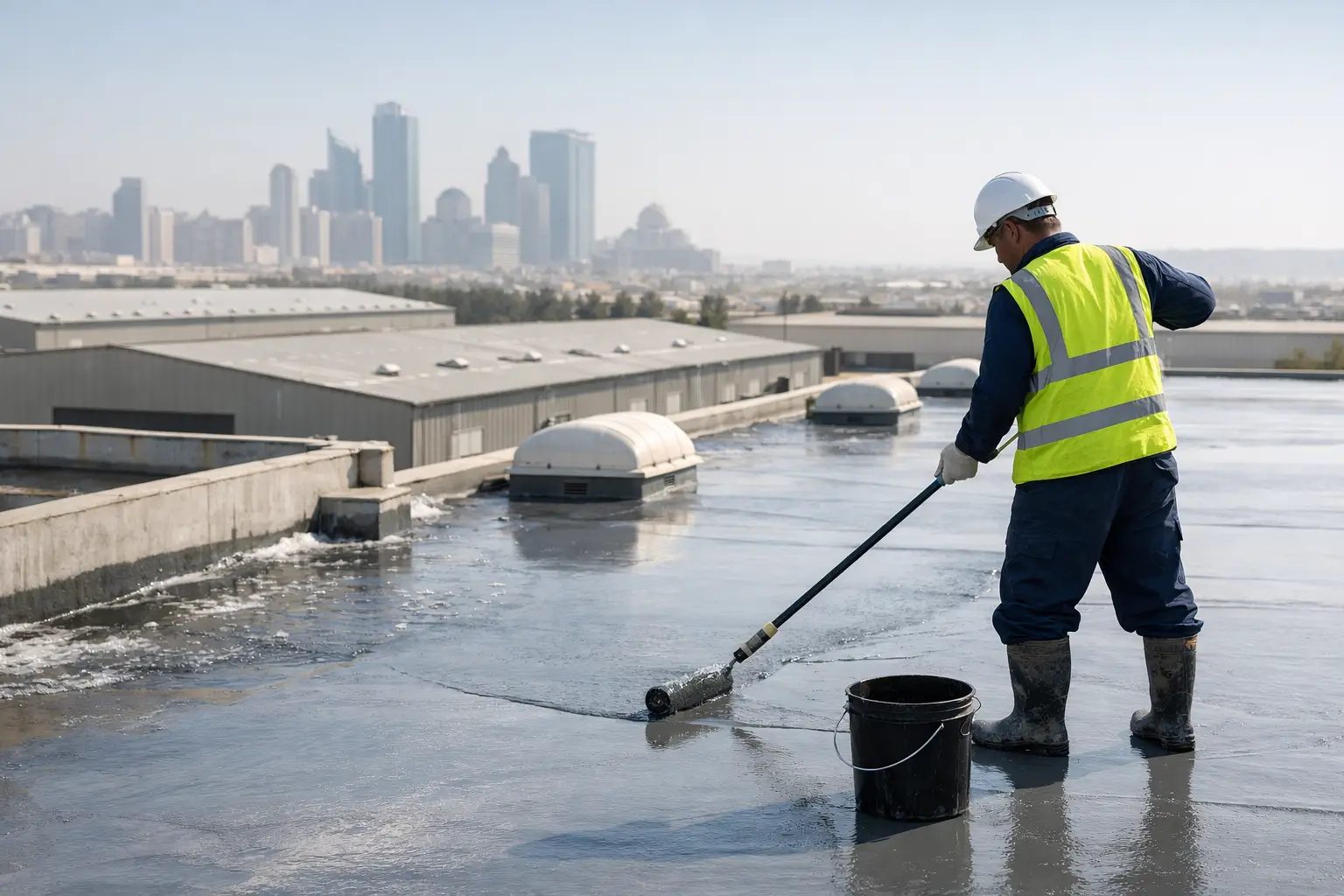
Concrete roof waterproofing may involve crack repair, substrate preparation, joint treatment, and application of a compatible membrane or coating system. The roof must be evaluated for moisture, surface soundness, and drainage before work starts. Applying a new layer over loose coatings, contaminated surfaces, or active ponding areas can lead to early failure.
Drainage should be part of the scope, not an afterthought. Cleaning outlets may solve a short-term blockage, but incorrect falls, undersized drainage points, or damaged gutters may continue to hold water on the roof. Where necessary, gutter replacement, downpipe repairs, and fabricated drainage components should be coordinated with the waterproofing work.
Skylights, Flashings, and Penetrations
Warehouse leaks frequently occur at transitions rather than the main roof surface. Skylights expand differently from metal sheets. Pipe penetrations are affected by movement and maintenance activity. Flashings at walls, parapets, and roof changes concentrate water and wind pressure.
These areas need purpose-made detailing, compatible sealants, proper overlap, and secure mechanical fixing where required. Covering a penetration with excess sealant is not a durable repair method. The surrounding material must be cleaned, stabilized, and waterproofed in a way that maintains flexibility without creating a water trap.
Preparation Determines Service Life
Most premature waterproofing failures are linked to poor preparation, not necessarily poor materials. Dust, oxidation, loose paint, moisture, old failed sealant, and surface contaminants prevent proper adhesion. Industrial roof work must account for site conditions before the system is installed.
Preparation may include pressure cleaning, mechanical cleaning of rusted steel, removal of loose coatings, replacement of damaged screws, sealing of joints, and repair of corroded sections. The roof must then be dry and ready for application according to the selected system requirements. Work should also be sequenced around weather conditions and warehouse operations.
This is where a contractor with fabrication and repair capability has an advantage. If an inspection reveals failed gutters, damaged flashing profiles, or corroded roof accessories, these items can be repaired or replaced as part of a coordinated scope rather than left as unresolved causes of leakage.
Plan Work Around Warehouse Operations
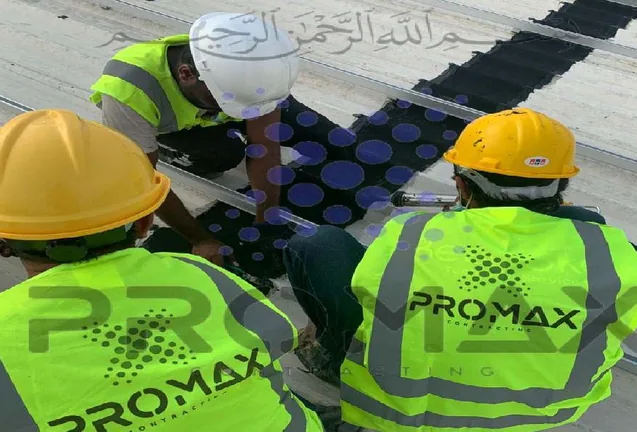
Waterproofing is often carried out on active facilities, so access, safety, and scheduling affect the project outcome. Roof teams need safe access systems, controlled work zones, and clear coordination with the facility representative. Materials, equipment, and roof traffic should be managed so that daily operations remain protected.
For urgent leaks, temporary containment may be necessary while the permanent repair is prepared. A contractor should distinguish between emergency sealing and final waterproofing. Temporary measures are useful for protecting stock during rainfall, but they should not be presented as a replacement for system-based rehabilitation.
Large roofs may be completed in phases. This can help spread budgets and reduce interference with loading, storage, or production schedules. However, phased work should follow a logical water-management plan. Treating disconnected areas without resolving an upstream gutter problem or failed transition can leave the building exposed.
What to Expect From a Professional Scope
A dependable waterproofing proposal identifies the roof areas to be treated, preparation requirements, repair items, system components, and exclusions. It should state how penetrations, gutters, skylights, and edge details will be handled. If the roof has corrosion or structural deterioration, those findings should be recorded separately rather than hidden inside a general waterproofing description.
After completion, the site should be checked for coverage continuity, sealed details, drainage clearance, and workmanship quality. Maintenance planning is equally valuable. Periodic inspection after heavy weather, cleaning of gutters, and early treatment of damaged sealant can prevent a manageable defect from becoming a major roof rehabilitation project.
Promax Contracting approaches warehouse protection as an end-to-end field task: inspect the failure, prepare the roof correctly, repair associated components, install the suitable waterproofing system, and remain available for after-sales response. That approach is especially valuable when leaks, corrosion, and drainage issues overlap.
A warehouse roof does not need to fail dramatically to justify action. If there are recurring drips, rust around fasteners, stained internal cladding, ponding water, or aging sealant at roof details, arrange an inspection before the next rainfall turns a contained repair into an operational disruption.
Talk to Promax
Need this on your roof? Call +971 56 727 4205 or request a free inspection. Promax provides EPDM metal-roof, concrete and industrial waterproofing across Dubai and the UAE with up to a 15-year warranty.