When a warehouse roof starts leaking over stock, or water tracks through pipe penetrations into an active facility, the problem is not cosmetic. It becomes an operations issue, a safety issue, and very quickly a cost issue. That is why choosing the right waterproofing company abudhabi matters far more than comparing quotes line by line. In Abu Dhabi, waterproofing work has to perform under heat, dust, ponding water, UV exposure, and aging roof structures that often carry years of patch repairs.
For commercial and industrial property teams, the real question is not who can apply a coating fastest. It is who can inspect correctly, identify the source of failure, recommend the right system for the substrate, and execute the work without creating a second round of defects six months later.
What a waterproofing company in Abu Dhabi should actually solve
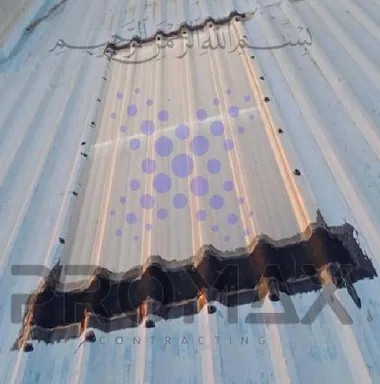
A competent contractor is not just selling membrane coverage. They are solving building envelope failure across roofs, gutters, skylights, joints, parapets, drain outlets, wall interfaces, and service penetrations. In industrial sites, leaks rarely come from one clean, isolated point. Water often enters at fasteners, laps, cracked flashings, corroded sheets, blocked drainage lines, or damaged terminations, then travels and appears somewhere else inside the building.
That is why site inspection quality matters. A proper assessment should look at roof slope, drainage behavior, existing membrane condition, metal sheet corrosion, joint movement, screw failure, insulation exposure, concrete cracks, and previous repair history. If the contractor starts with a generic recommendation before checking these conditions, that is usually a warning sign.
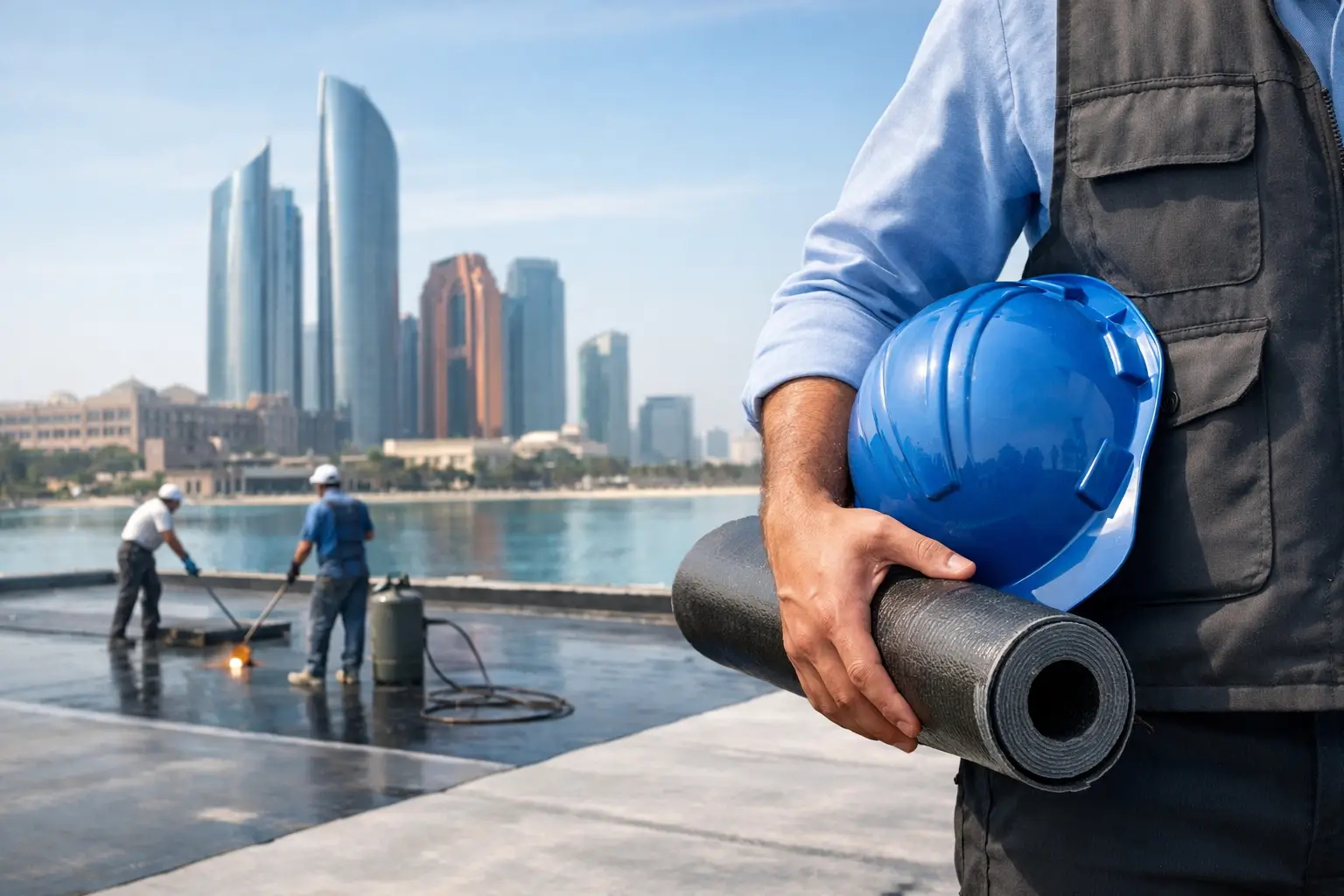
For large facilities, waterproofing also needs to account for access, safety setup, production continuity, and sequencing. A warehouse, factory, cold storage building, or logistics unit cannot always stop operations for a full roof intervention. The contractor should be able to phase works, isolate active zones, and plan around operational windows.
How to evaluate a waterproofing company Abu Dhabi facility teams can trust
The first thing to check is technical range. Many contractors can handle small residential leak repairs, but industrial and commercial waterproofing is a different category. Large-span roofs, metal roof assemblies, concrete decks, expansion joints, gutters, and penetrations all require different treatment details. If a company only offers one product for every problem, the scope is too narrow.
A stronger contractor will usually offer inspection, repair design, substrate preparation, fabrication support where required, installation, and after-sales response. That matters because waterproofing failures often start before the membrane itself is installed. Rusted purlins, damaged sheet overlaps, failed screws, cracked upstands, loose flashing, and poor drainage geometry all need correction. Applying a new layer over unstable conditions only hides the issue for a short period.
The second factor is diagnosis. Good contractors do not oversimplify leaks. They identify whether the root cause is surface failure, movement, corrosion, thermal stress, detailing gaps, or drainage backup. In Abu Dhabi conditions, heat cycling can be especially punishing. Materials expand and contract aggressively, and weak detailing at edges and penetrations starts to open up over time.
The third factor is system suitability. EPDM and membrane-based systems can be highly effective, but not every roof or detail should be treated the same way. Concrete roofs, metal roofs, box gutters, skylight junctions, and service penetrations each behave differently. The right contractor should explain why a specific system is being recommended, how the substrate will be prepared, and what limitations exist.
Why industrial roofs fail earlier than expected
On paper, many roofs should last longer than they do. In practice, early failure usually comes from a combination of deferred maintenance and poor detailing. A roof may survive general weather exposure, but one neglected gutter line, one badly sealed penetration, or one section of corroded flashing can begin a chain of failures.
In industrial buildings, there is also a tendency to patch repeatedly instead of rehabilitating the affected assembly. That can work for urgent containment, but it should not be mistaken for long-term waterproofing. Layering sealants over active corrosion, loose fixings, or split membrane joints creates a false sense of security. Once water gets below the surface, damage spreads into insulation, fasteners, support members, and interior finishes.
Drainage is another common weak point. Even a good membrane system will struggle if the roof holds standing water because of blocked outlets, poor slope, or undersized gutters. Waterproofing and drainage have to be treated as one system. If they are separated in the contractor's scope, owners often pay for repairs without fixing the reason the failure keeps coming back.
The difference between patching and proper waterproofing
Not every leak requires a full replacement, and not every roof can justify one. That is where experience matters. A reliable contractor should be able to distinguish between localized repair, sectional rehabilitation, and complete waterproofing renewal.
Localized repair makes sense when the failure is confined, the surrounding substrate is sound, and drainage performance is acceptable. Sectional rehabilitation is often the better route when one roof zone has aged differently from another, especially around gutters, skylights, or service clusters. Full-system waterproofing is usually justified when defects are widespread, the roof has a long patch history, or the substrate needs coordinated treatment before new protection is applied.
The trade-off is straightforward. Small repairs reduce immediate cost and downtime, but they may not resolve system-wide weakness. Full rehabilitation costs more upfront, but in many industrial facilities it reduces repeat callouts, stock damage risk, and maintenance disruption. The right choice depends on roof condition, building use, budget cycle, and the cost of failure if another leak occurs.
What good execution looks like on site
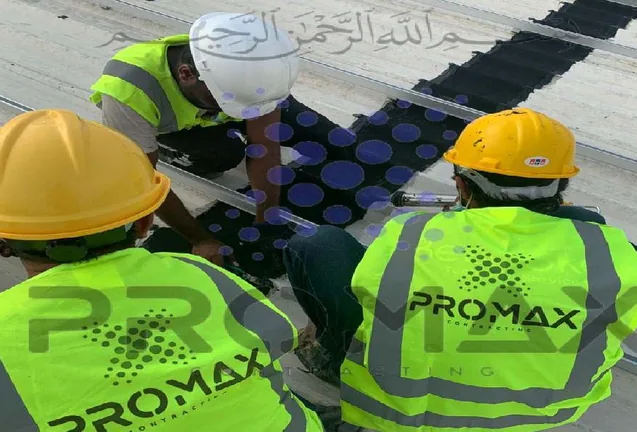
Execution quality shows up in the details long before the final handover. Surface preparation should be thorough, not rushed. Corroded metal needs treatment or replacement where necessary. Damaged fasteners and loose laps need correction. Concrete cracks and weak joints need proper treatment before membrane application. Drain outlets and edge terminations need to be rebuilt or reinforced if they are part of the failure pattern.
Good waterproofing teams also document what they find. Facility managers should expect marked defect areas, substrate condition notes, and a clear explanation of what is included in the repair scope. That level of clarity helps procurement teams compare proposals properly. It also reduces disputes later when hidden conditions appear during the work.
Responsiveness after installation matters as much as the installation itself. A contractor working on active industrial buildings should have the capacity to return quickly if a specific area needs inspection after rain or operational changes. Fast after-sales response is not an extra benefit in this sector. It is part of the service requirement.
Why one-vendor capability matters
For many facilities, waterproofing issues are tied to adjacent defects. A leaking roof may also involve gutter replacement, skylight sealing, screw treatment, rust removal, purlin replacement, metal fabrication, or protective coating works. Managing separate vendors for each element often slows the response and creates scope gaps.
That is why many commercial clients prefer a contractor that can inspect, fabricate, repair, install, and maintain under one scope. It shortens diagnosis time and reduces the common problem of one vendor blaming another. Promax Contracting operates in that model, which is especially valuable on industrial projects where roof waterproofing, metal restoration, drainage correction, and access-related work often overlap.
Questions worth asking before you award the job
Ask how the contractor identifies root cause, not just leak location. Ask what preparation is required before the waterproofing layer is installed. Ask whether drainage correction, flashing repair, fastener treatment, and penetration sealing are included or excluded. Ask how the system will perform under Abu Dhabi heat and roof movement. Ask who will supervise the work and what after-sales support looks like.
The answers should be direct. If the proposal is vague on substrate condition, detailing, exclusions, or response time, expect problems later. Waterproofing is one of those scopes where ambiguity turns into change orders, repeat failures, or both.
A building does not care how good a quotation looks. It responds to inspection quality, system selection, and execution discipline. If you are reviewing contractors for an industrial or commercial site, choose the team that treats waterproofing as a building performance problem, not a product sale. That decision usually saves more than the initial price difference ever will.
Talk to Promax
Need this on your roof? Call +971 56 727 4205 or request a free inspection. Promax provides EPDM metal-roof, concrete and industrial waterproofing across Dubai and the UAE with up to a 15-year warranty.