A roof leak in a warehouse is rarely just a roof leak. It turns into damaged stock, production delays, corroded steel, stained ceilings, unsafe walkways, and repeated shutdowns for patchwork repairs. That is why choosing the right waterproofing contractors in UAE is not a basic purchasing decision. For commercial and industrial assets, it is a risk-control decision tied directly to uptime, maintenance cost, and service life.
In the UAE, waterproofing work has to perform under conditions that are harder than many owners expect. High roof temperatures, UV exposure, sand movement, thermal expansion, old fastener failures, poor drainage, cracked upstands, and unsealed penetrations all work against the building envelope. A contractor that only applies a coating without diagnosing the source of failure usually leaves the real problem in place.
Why waterproofing fails on UAE commercial buildings
A large share of waterproofing failures starts with misdiagnosis. The visible water entry point inside the building may be several meters away from the actual breach on the roof. Water travels through laps, insulation joints, metal fastener lines, service penetrations, gutter joints, and parapet cracks before it shows itself indoors. If the inspection is weak, the repair scope is weak.
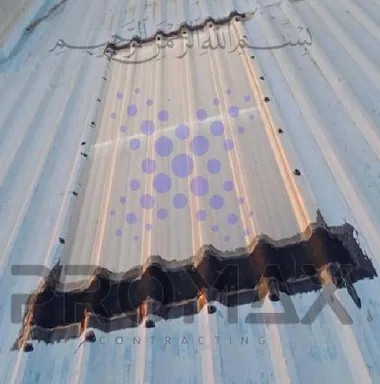
Heat is another major factor. On exposed roofs, daily expansion and contraction place stress on laps, sealants, fixing points, flashing details, and old membranes. A system that looks acceptable during a quick visual review may already be brittle, detached, punctured, or poorly bonded in critical zones. On industrial sheds and warehouses, this is often made worse by movement around skylights, rusted sheets, aging gutters, and corroded purlin supports.
Drainage is also commonly underestimated. Standing water around outlets, sagging gutters, blocked downpipes, and poor roof slope accelerate membrane deterioration and increase the chance of leakage during peak rain events. In many facilities, waterproofing and drainage should be addressed together rather than treated as separate packages.
What good waterproofing contractors in UAE do differently
The difference is not just material selection. It is the sequence of inspection, diagnosis, detailing, execution, and after-sales response.
Strong waterproofing contractors in UAE start with a proper site survey. That includes tracing water ingress paths, checking membrane condition, inspecting roof sheet joints, reviewing fastener lines, testing vulnerable details such as pipe penetrations and skylight perimeters, and documenting corrosion or structural wear that may affect the waterproofing system. On older buildings, they also assess whether local repairs are enough or whether a larger rehabilitation approach is more cost-effective.
They then match the system to the substrate and use condition. This sounds obvious, but it is where many failures begin. A concrete roof, a metal roof, a podium slab, a wet area, and a buried foundation do not need the same system or the same detailing. Even within roofing, a standing seam metal roof requires a different treatment approach than a screw-fixed profiled sheet roof with aged lap joints and exposed fasteners.
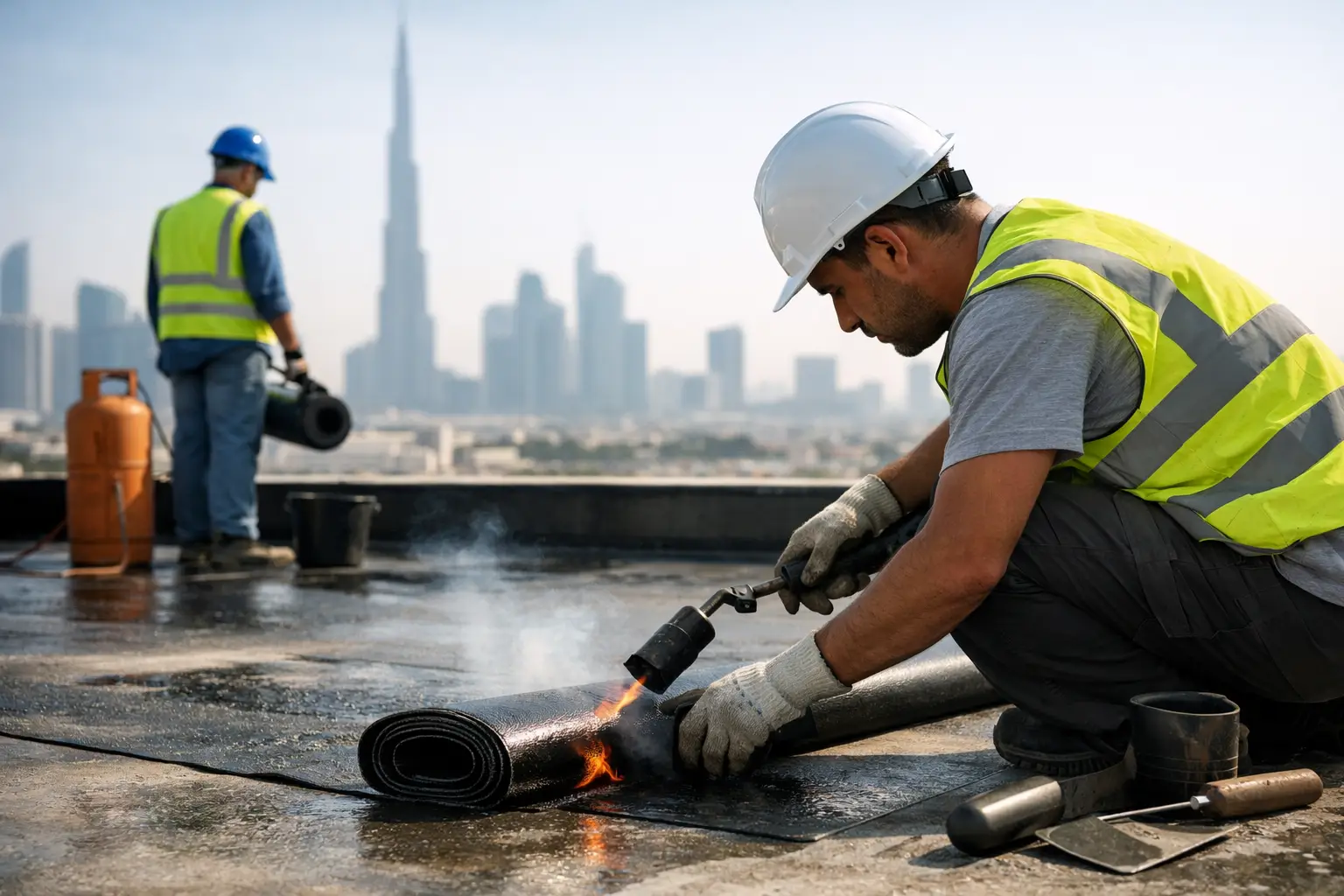
Execution quality matters as much as product quality. Surface preparation, rust treatment, crack repair, fastener treatment, joint reinforcement, membrane termination, and edge sealing determine whether the system holds. A premium material applied over dust, corrosion, loose fixings, or wet substrate will not perform as intended.
System selection depends on the failure pattern
There is no single best waterproofing method for every building. The right answer depends on roof type, substrate condition, access, downtime limits, expected movement, and budget.
For metal roofing, liquid systems can work well in some conditions, especially when combined with fastener sealing, joint treatment, and reinforcement at critical areas. But where movement is high, laps are deteriorated, and long-term durability is the priority, sheet-based systems such as EPDM may offer stronger performance. EPDM is especially valuable where flexibility, UV resistance, and movement accommodation are important.
For concrete roofs, the discussion usually involves cracks, substrate moisture, previous membrane condition, ponding risk, and detail complexity. If the slab has multiple failure points, coatings alone may not be enough. The contractor should be able to explain whether crack injection, screed correction, membrane replacement, or localized detail rebuilding is required before the waterproofing layer goes down.
For gutters, skylights, and penetrations, detail treatment is often more important than field-area coverage. Many roofs leak not because the full roof surface has failed, but because edge details and interruptions were never properly sealed or have broken down over time.
What to ask before awarding the job
If you manage a warehouse, factory, school, hospital, retail block, or labor accommodation asset, the right questions can save months of repeat complaints.
Start with inspection depth. Ask how the contractor will identify the leak path and verify root causes. A serious contractor should speak clearly about substrate condition, movement points, drainage, flashing details, and interface zones between different materials.
Then ask about the full scope, not just the membrane. Will they handle rust treatment, damaged sheet replacement, purlin repair, gutter replacement, sealant renewal, pipe penetration detailing, and access provisions if needed? On industrial sites, waterproofing often fails because related defects were left outside the package.
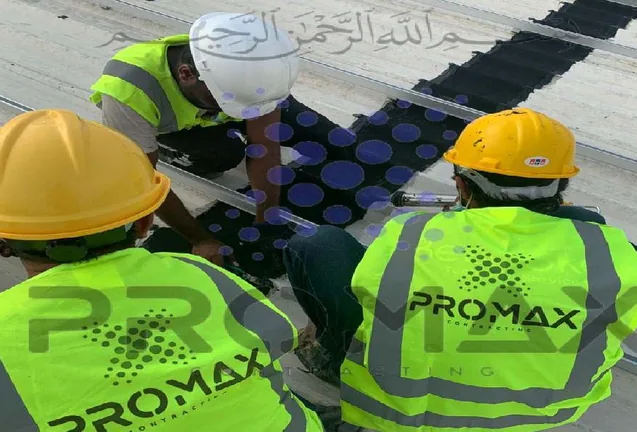
You should also ask who is actually executing the work. Some companies sell the job and subcontract everything without technical supervision. For operational buildings, you need trained site teams, clear method statements, material control, and practical sequencing that avoids disrupting operations more than necessary.
Finally, ask about response after handover. Waterproofing is not just an install-and-disappear service. If a defect appears after the first heavy rain, response time matters. A contractor with inspection support and after-sales capability is usually a safer choice than one focused only on low bid pricing.
Cost matters, but bad waterproofing costs more
Price pressure is real, especially across large roof areas. Still, the lowest quote is often based on reduced preparation, thin application, incomplete detailing, or omission of repair items that are essential to system performance.
This is where owners and procurement teams need to separate initial cost from failure cost. A cheaper patch may look attractive on paper, but if it leads to stock loss, production interruption, damaged ceilings, mold complaints, corrosion spread, or another mobilization within one season, it is no longer the low-cost option.
A more durable scope can include higher upfront work such as sheet replacement, substrate repair, EPDM membrane installation, gutter reconstruction, or penetration detailing. That does not mean the most expensive proposal is automatically the best. It means the scope should match the actual defect pattern and the business risk attached to failure.
Why industrial and warehouse roofs need specialist handling
Industrial facilities place a different demand on waterproofing compared with small residential jobs. Roof spans are larger, access is more complex, penetrations are more frequent, and shutdown risk is higher. Add heat load, HVAC supports, service brackets, skylights, old patch repairs, and corrosion, and the project becomes part waterproofing, part roof rehabilitation.
This is where specialist contractors stand apart from general maintenance vendors. They understand roof geometry, sheet behavior, fabrication needs, drainage correction, and the reality of working around active operations. They also know when a leak issue is actually a combination of waterproofing failure, metal deterioration, and structural accessory damage.
For clients managing these risks across multiple assets, one contractor with inspection capability, repair knowledge, membrane experience, fabrication support, and maintenance follow-through is often more effective than splitting responsibility across separate vendors.
A practical benchmark for contractor selection
When comparing waterproofing contractors in UAE, look beyond the brochure language. The practical benchmark is simple. Can they inspect correctly, explain failure modes clearly, recommend a system that fits the substrate, execute details properly, and return quickly if the building needs support after rain?
That standard matters more than sales language or product claims. Waterproofing success is built on detail control - roof edges, overlaps, penetrations, gutters, joints, fixings, and transitions. If those areas are weak, the rest of the system is exposed.
At Promax Contracting, this is the part of the job that drives the work - site inspection first, problem diagnosis second, system selection third, and execution with the supporting repairs needed to make the waterproofing hold. For industrial and commercial buildings in the UAE, that approach usually saves more than another round of temporary fixes ever will.
If your building is already showing stains, active drips, rust spread, membrane lifting, or repeated leakage around details, the best time to inspect it is before the next weather event forces the decision for you.
Talk to Promax
Need this on your roof? Call +971 56 727 4205 or request a free inspection. Promax provides EPDM metal-roof, concrete and industrial waterproofing across Dubai and the UAE with up to a 15-year warranty.