A roof leak in a warehouse rarely stays a roof leak for long. It becomes damaged stock, slippery floors, rusted steel, stained ceilings, insulation failure, and complaints from operations because work is now happening around buckets and temporary patching. That is why property teams looking for waterproofing experts in abudhabi are usually not browsing casually. They are trying to stop a maintenance issue from becoming an operational loss.
In Abu Dhabi, waterproofing is not a cosmetic service. It is a technical building protection requirement. Roofs, gutters, skylight junctions, pipe penetrations, expansion joints, concrete decks, parapet walls, and metal sheet laps are all exposed to heat cycling, standing water, sand, UV stress, and aging movement. On industrial and commercial buildings, these weak points tend to show up together. A contractor that only applies a coating without diagnosing the source of failure is not solving the real problem.
What waterproofing experts in abudhabi actually do
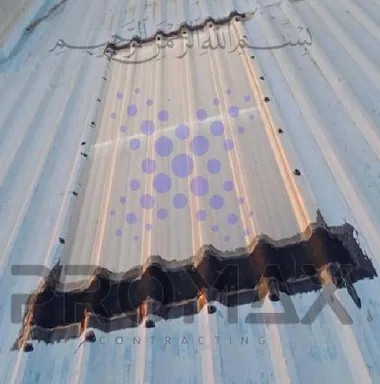
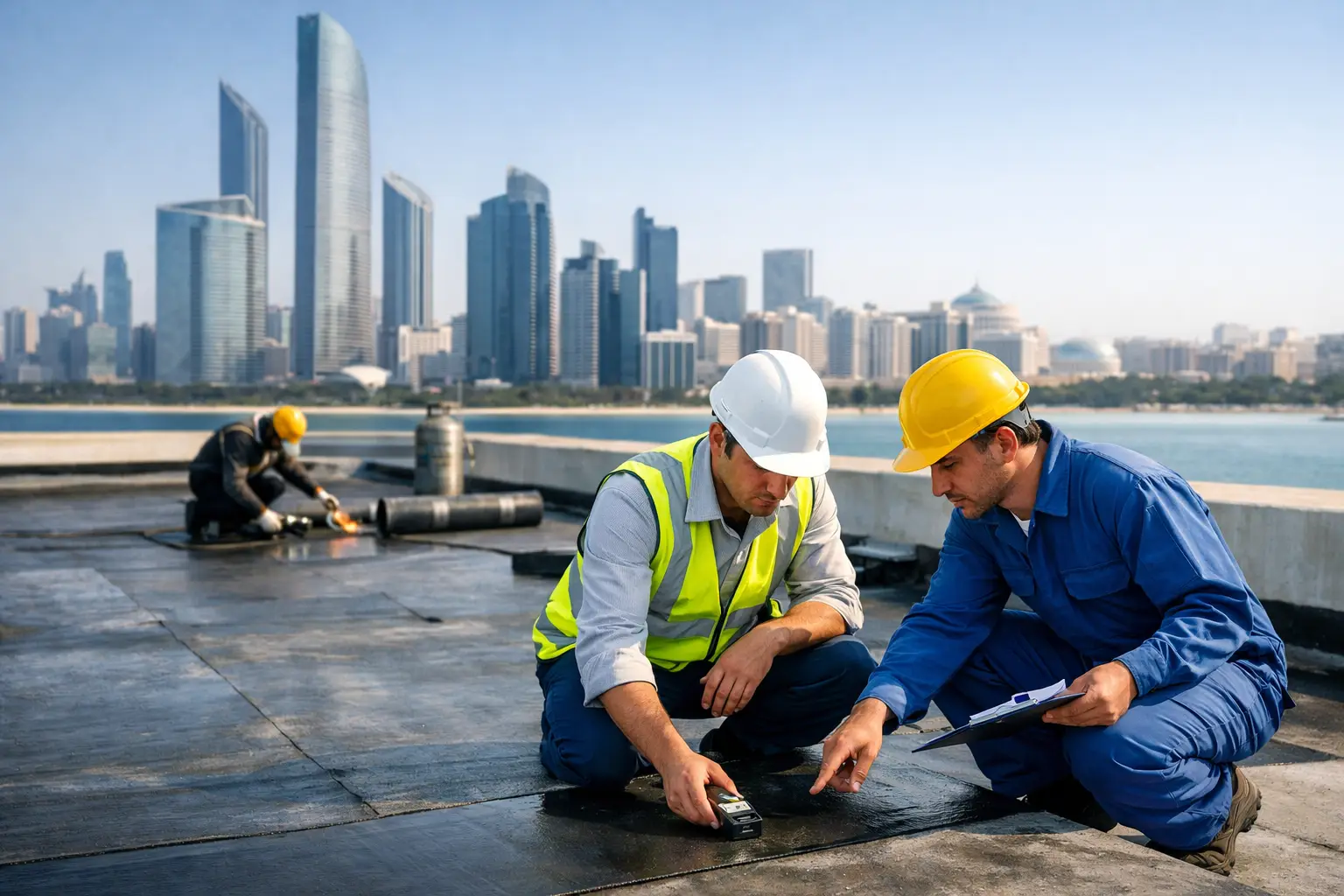
The difference between a general repair crew and experienced waterproofing specialists starts at inspection. An expert team does not just look for the wet spot inside the building. They trace the water path across the full roof system, drainage arrangement, sheet overlaps, flashing terminations, curb details, fastener lines, sealant failure zones, and substrate condition. On metal roofs, they also check corrosion, screw loosening, purlin integrity, and movement at panel joints. On concrete roofs, they look for cracks, blistering, slope issues, membrane detachment, and ponding areas.
That matters because water ingress is often misread. The visible leak can be several feet away from the actual failure point. A stained ceiling under a pipe penetration may really be caused by failed lap joints near an upstand. Water around a skylight may be a drainage issue rather than a glazing issue. If the diagnosis is wrong, the repair budget gets spent twice.
A proper waterproofing contractor also understands system compatibility. Not every substrate should receive the same treatment. EPDM systems, liquid membranes, bituminous repairs, sealants, mechanical fastening methods, and protective topcoats all have different use cases. The right recommendation depends on roof type, traffic level, exposure, expected service life, access constraints, and whether the facility can tolerate shutdown during application.
Why commercial buildings need a different standard
Residential waterproofing and industrial waterproofing are not the same job. A villa terrace leak is a concern. A leak above a production line, storage unit, electrical room, or logistics area is a business risk. The contractor has to work with that reality.
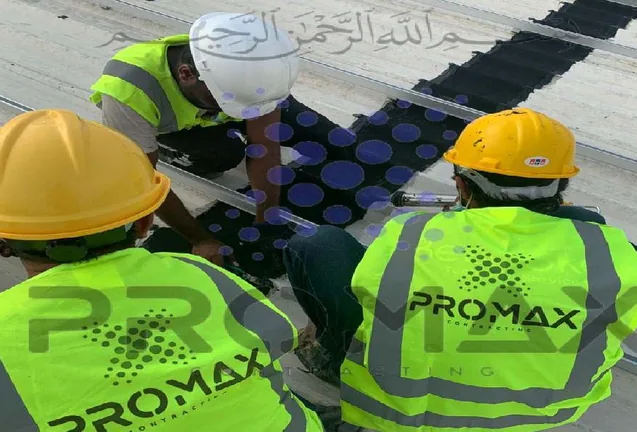
Commercial and industrial facilities need waterproofing work that is planned around operations. That means safe access, area isolation where required, material staging, weather timing, and repair sequencing that limits disruption. It also means the contractor needs enough field experience to handle live conditions on aging buildings where corrosion, previous patchwork, failed drainage, and structural wear are already present.
In many Abu Dhabi facilities, the waterproofing issue is tied to larger roof rehabilitation needs. A membrane alone will not solve an area where rust has spread around fasteners, gutters are undersized, slope is poor, or metal sheets have lost integrity. This is where decision-makers need a contractor that can inspect, fabricate, replace damaged components, and complete waterproofing under one scope. That reduces coordination gaps and avoids the common problem where one vendor blames another for the final failure.
How to evaluate waterproofing experts in abudhabi
The first thing to check is whether the contractor talks in systems, not only products. A serious waterproofing company should be able to explain how it will inspect the area, identify the failure mechanism, prepare the surface, specify the repair build-up, and protect adjoining details such as gutters, flashings, penetrations, and expansion points.
The second is execution capability. Some companies sell waterproofing but outsource critical parts of the work. That can create inconsistency in surface preparation, detailing, and after-sales response. For commercial clients, the safer option is a contractor with direct site teams, supervision, and the ability to manage associated repair scopes such as metal replacement, rust treatment, drainage correction, and sealant renewal.
The third is responsiveness after installation. Waterproofing performance is proven in service, not in a proposal. If a contractor disappears after handover, the client carries the risk. Fast inspection response, follow-up attendance, and practical maintenance support matter just as much as the original installation.
Common failure points experts should address
Most recurring roof leaks in industrial properties come from a short list of details, but each one needs a different approach. Metal roof laps often fail because of aging sealant, panel movement, and fastener deterioration. Concrete roofs typically fail around cracks, upstands, and membrane terminations. Gutters fail when corrosion, blockage, incorrect slope, or undersized capacity lead to overflow and backflow into the structure. Skylights and roof penetrations become leakage points when the surrounding flashing details are weak or incompatible with movement.
There is also the issue of temporary patching. Many sites have layers of prior repairs from different contractors using different materials. That mixed build-up can trap water, reduce adhesion, and hide corrosion underneath. Experienced teams know when local repair is still viable and when section replacement or full rehabilitation is the more cost-effective decision.
This is one of the biggest trade-offs in waterproofing. The cheapest repair is not always the lowest cost option. If a building has repeated leakage in multiple zones, extensive corrosion, or drainage design faults, another surface patch may only delay a larger failure. On the other hand, not every roof needs full replacement. A good contractor should be able to separate areas that need localized treatment from areas that need broader intervention.
What good waterproofing looks like in practice
A reliable waterproofing job starts with preparation. Surfaces have to be cleaned, dried, and made sound enough to receive the system. Corroded metal needs treatment or replacement. Loose fasteners, failed screws, open laps, and damaged substrates need correction before any membrane or coating is applied. Skipping this stage is one of the main reasons waterproofing systems fail early.
Detailing comes next. Large open roof areas are often easier to treat than corners, penetrations, parapets, transitions, and terminations. These junctions are where experienced applicators make the difference. An EPDM-based system, for example, performs well when the substrate is suitable and the details are executed correctly, but it still depends on disciplined installation.
The final part is verification. Commercial clients should expect clear reporting on defect locations, repair scope, materials used, and any remaining areas that need monitoring. If the roof condition suggests future risks beyond the immediate repair, that should be stated directly. Honest technical advice builds trust faster than broad promises.
Why one-stop capability matters
For warehouse, factory, and facility managers, the waterproofing scope often touches several building systems at once. A leaking roof may also require gutter replacement, purlin repair, rust treatment, skylight waterproofing, pipe penetration sealing, and protective coating work. Splitting that across multiple vendors can slow the job and create handover disputes.
That is why many clients prefer a contractor with inspection, engineering support, fabrication, installation, and maintenance capability in-house. Promax Contracting operates in that model because complex roof and envelope failures rarely stay within one trade line. When a contractor can diagnose the leak, repair the failing metal, improve drainage, install the waterproofing system, and return quickly for after-sales support, the client gets a cleaner result and better accountability.
Choosing for service life, not just immediate repair
Every building owner wants a fast fix, especially when operations are already affected. But the right waterproofing decision balances urgency with service life. A targeted emergency repair may be the correct first move if water ingress needs to stop immediately. After that, the contractor should still assess whether the wider roof system is stable or whether the site is heading toward repeated failures.
This is where experienced advice has real value. Waterproofing experts should help clients prioritize. Which defects are active leaks, which are latent risks, and which can be handled during scheduled maintenance? Which areas justify a premium system because of asset sensitivity below, and which areas can be treated more economically? Those recommendations should reflect actual building conditions, not a generic sales pitch.
For facility teams in Abu Dhabi, the practical standard is simple. Choose a contractor that can inspect correctly, explain the failure clearly, execute the repair professionally, and stay responsive after the job is complete. Waterproofing is not just about keeping water out. It is about protecting production, inventory, equipment, and the service life of the building itself.
If your site already shows repeated leaks, corrosion at roof lines, gutter overflow, or recurring patch repairs, the smart move is to get the roof assessed before the next weather event turns a manageable defect into a bigger shutdown problem.
Talk to Promax
Need this on your roof? Call +971 56 727 4205 or request a free inspection. Promax provides EPDM metal-roof, concrete and industrial waterproofing across Dubai and the UAE with up to a 15-year warranty.