A roof leak in a warehouse rarely stays a roof problem for long. It reaches stock, electrical runs, insulation, steel members, and daily operations. That is why choosing the right waterproofing specialist Abu Dhabi property teams can rely on is less about getting a quick patch done and more about controlling risk across the building envelope.
In large commercial and industrial buildings, water ingress usually has more than one cause. A failed lap joint may be the visible issue, but blocked drainage, corroded fasteners, aging sheets, cracked sealant around penetrations, and poor detailing at gutters often sit behind the complaint. If the contractor only treats the wet spot, the leak returns. If the contractor investigates the full system, the repair has a much better chance of lasting.
What a waterproofing specialist Abu Dhabi teams actually need should deliver
For facility managers and project engineers, the term specialist should mean more than a company that applies membrane. It should mean field diagnosis, system selection, detail treatment, and execution that fits the building condition. On industrial sheds, warehouses, factories, and service buildings, waterproofing is tied to drainage behavior, structural movement, heat exposure, and corrosion.
A capable specialist starts with inspection, not quotation. That includes identifying where water enters, how it travels, and what existing materials are doing under thermal stress. In Abu Dhabi, roofs face hard sun, dust accumulation, sudden rain events, and standing water in poorly drained areas. Any recommendation that ignores these site realities is likely to fail early.
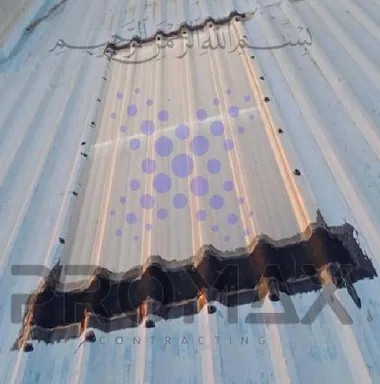
The stronger contractors also understand that waterproofing on large roofs is rarely isolated work. If a metal roof has rusted laps, loose fixings, damaged gutters, or failed skylight edges, membrane work alone may not solve the problem. Repair scope may need to include sheet treatment, screw replacement, sealant correction, gutter rehabilitation, fabrication of flashing, or sealing around penetrations. That integrated approach is where real value appears.
Inspection first, then system selection
The biggest mistake in waterproofing procurement is choosing a material before understanding the roof condition. Two buildings can show the same leak mark inside and require completely different solutions outside. One may need localized treatment around pipe penetrations and curb flashings. Another may need full-area membrane coverage because the substrate is compromised across the roof.
A proper inspection looks at roof type, substrate condition, slope, drainage pattern, movement joints, penetration details, previous repair history, and the age of the building. On metal roofs, the specialist should check overlaps, fastener conditions, oxidation, skylight interfaces, valley gutters, and unsupported weak areas. On concrete roofs, the focus often shifts to cracks, ponding, parapet joints, upturn details, and membrane termination points.
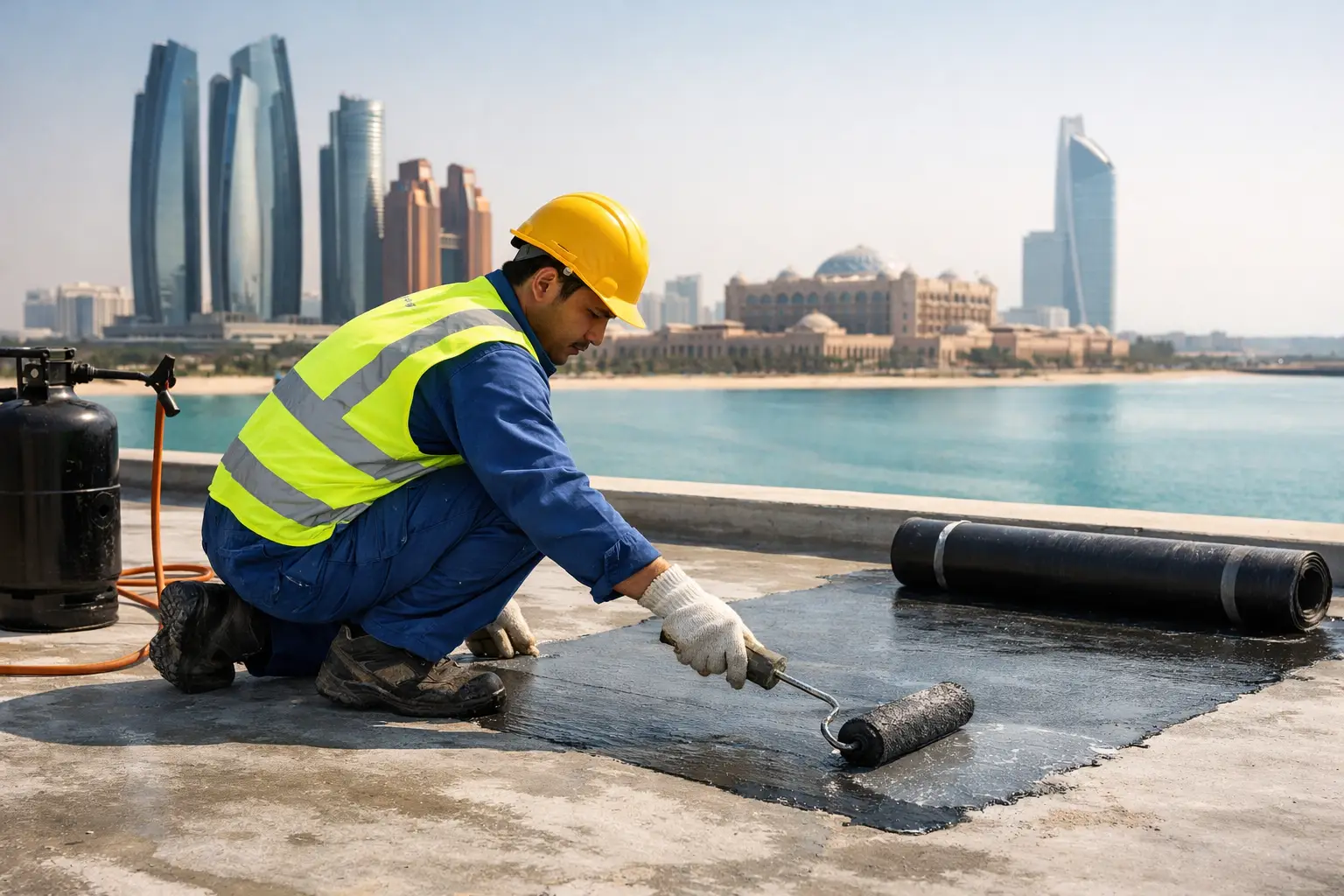
This stage matters because every waterproofing system has limits. Liquid-applied treatments can work well in certain detail-heavy areas, but they depend heavily on surface preparation and thickness control. Sheet membranes can offer strong continuity, but detailing quality at corners, curbs, drains, and edges determines performance. EPDM-based systems are often selected where long-term flexibility, weather resistance, and consistent coverage are priorities, especially on roofs exposed to high heat and movement. The right answer depends on the roof, not on what is easiest to sell.
Why detail failures cause major leaks
Many expensive leaks start at small transition points. Pipe penetrations, wall abutments, AC stands, skylight perimeters, rainwater outlets, and gutter joints are common failure zones because they combine movement, water concentration, and workmanship sensitivity.
This is where experienced execution matters. A contractor can install a broad membrane field correctly and still leave the building exposed if edge terminations or penetrations are weak. In practice, these details demand patience, proper surface treatment, compatible accessories, and workers who understand how water behaves on actual roofs rather than in product brochures.
The difference between a patch job and a durable repair
For operations teams, speed matters. When active leakage threatens equipment or stock, nobody wants a contractor who takes days to mobilize. But speed without diagnosis creates repeat callouts, and repeat callouts are where repair budgets get wasted.
A durable repair usually has three parts. First, the source must be identified accurately, which is not always the same point where water appears indoors. Second, the surrounding weaknesses must be treated, including drainage obstruction, corrosion, failed sealants, loose flashings, and weak joints. Third, the work has to be completed with proper preparation, correct material use, and post-installation checks.
That is also why low bids can become expensive. Some quotations cover only surface coating over a problem area without addressing wet insulation, damaged substrate, rust spread, or drainage failure. The price looks attractive at first, but the building remains exposed. Facility teams then pay again for access, disruption, and repeat maintenance.
What commercial clients should ask before awarding work
If you are reviewing contractors, the useful questions are practical. Ask how inspection is carried out, what failure points they expect on your roof type, whether they fabricate flashings and related components when needed, how they handle drainage defects, and what after-sales response looks like if leakage persists.
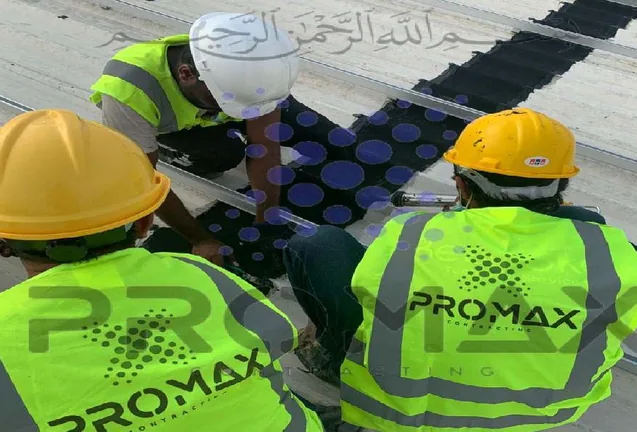
Also ask who will execute the work on site. Waterproofing quality depends heavily on supervision, surface preparation, and detail installation. A strong proposal should explain the condition, the repair logic, the system being applied, and the areas being included or excluded. Vague scope is usually a warning sign.
Why Abu Dhabi conditions change the waterproofing equation
Abu Dhabi buildings deal with intense UV exposure, heat cycling, wind-blown dust, and occasional heavy rainfall concentrated over short periods. These conditions place pressure on joints, coatings, sealants, and drainage paths. Dust can choke outlets and create ponding. Heat expansion can open weak laps and stress terminations. Once water sits on the roof, small failures become larger ones.
That means the waterproofing specialist Abu Dhabi owners hire should be comfortable working on roofs that are already under environmental stress, not just new clean surfaces. Existing industrial and commercial assets often need rehabilitation, not textbook installation. The contractor should understand how to restore serviceability while keeping operations moving.
This is especially important for facilities with large spans and active occupancy. Warehouses, manufacturing units, storage buildings, and institutional sites cannot afford prolonged shutdowns or repeated leak investigations during the rainy season. The repair strategy must be realistic about access, safety, phasing, and response time.
Execution quality is the real product
Materials matter, but execution decides the outcome. Poor cleaning, weak adhesion, rushed joint treatment, or missed details at gutters and penetrations can reduce the life of an otherwise solid system. On older roofs, preparation is even more critical because contaminants, corrosion, loose elements, and previous repairs interfere with performance.
The better specialists build their value around process. They inspect first, define the repair area properly, prepare the substrate, resolve failed details, install the chosen system with supervision, and stay available for after-sales follow-up. That process is far more useful to a commercial client than generic claims about quality.
Promax Contracting operates in this problem-solving space, where roof leaks are tied to drainage, fabrication, corrosion treatment, penetration sealing, and full-system waterproofing rather than a single product application. For buyers managing industrial or commercial assets, that breadth matters because roof failures rarely arrive one issue at a time.
Choosing for lifecycle cost, not invoice total
The cheapest waterproofing option is often the one that keeps the budget line low this month and raises maintenance costs for the next two years. Commercial decision-makers usually get better results by comparing lifecycle impact instead. Will the system reduce emergency callouts? Will it extend roof service life? Will it protect stock, equipment, and interiors from repeat water ingress? Will the contractor respond quickly if a detail needs adjustment after the first rain?
Those are the questions that separate a short-term fix from a responsible maintenance decision. A waterproofing specialist should reduce uncertainty, not add another layer of it.
When the next leak appears, treat it as a building-envelope warning, not just a ceiling stain. The right contractor will read the whole roof, fix what is failing, and leave you with fewer surprises when the weather turns.
Talk to Promax
Need this on your roof? Call +971 56 727 4205 or request a free inspection. Promax provides EPDM metal-roof, concrete and industrial waterproofing across Dubai and the UAE with up to a 15-year warranty.