A metal roof does not usually fail all at once. It starts with small warning signs - backed-out screws, rust around laps, failed sealant, ponding near gutters, heat stress, and recurring leaks during heavy rain. If you are asking what is metal roof restoration, the practical answer is this: it is a repair and renewal process that brings an aging metal roof back into serviceable condition without stripping and replacing the entire system.
For commercial and industrial properties, that distinction matters. Full replacement is disruptive, expensive, and often unnecessary when the roof structure is still sound. Restoration focuses on stopping water ingress, treating corrosion, securing weak points, and installing a protective system that extends service life.
What is metal roof restoration in practical terms?
Metal roof restoration is a targeted rehabilitation scope for existing metal roofing systems. It typically includes inspection, leak tracing, rust treatment, fastener correction, joint and penetration sealing, localized sheet replacement where needed, and the application of waterproofing or protective coatings across the roof area.
The goal is not cosmetic improvement alone. A proper restoration is designed to recover weather resistance, improve durability, and reduce the risk of operational damage inside the building. On warehouses, factories, sheds, and storage facilities, that means protecting stock, equipment, electrical systems, and production areas from repeated water entry.
A restoration project can be light or heavy depending on roof condition. Some roofs only need screw treatment, seam reinforcement, and a new protective membrane. Others need purlin replacement, gutter correction, skylight sealing, sheet repairs, and rust remediation before any coating work can begin. That is why site inspection comes first.
When restoration makes sense and when it does not
Restoration is usually the right option when the roof is deteriorated but still structurally recoverable. If the metal sheets have isolated corrosion, leaking laps, failed fasteners, aging sealants, and worn surface protection, rehabilitation can add years of service life at a lower cost than replacement.
It may not be the right option if the roof has widespread structural failure, severe panel deformation, major substrate damage, or long-term neglect that has compromised the supporting system. In those cases, restoration can become temporary patchwork rather than a durable solution.
This is where many property owners lose money. They apply coating over an unstable roof and assume the problem is solved. It is not. A membrane or coating can only perform if the base condition is properly prepared and all active failure points are addressed first.
The main problems metal roof restoration is meant to fix
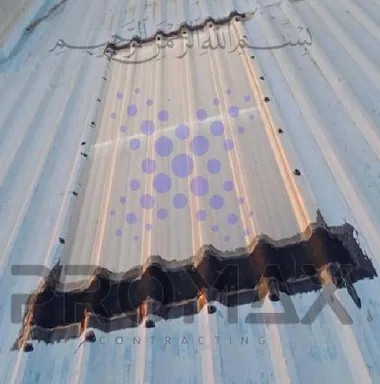
Most aging metal roofs fail at details, not just across open sheet areas. Water usually enters through end laps, side laps, loose fasteners, roof penetrations, flashing terminations, skylight edges, and gutter interfaces. Corrosion makes those details worse by thinning the metal and reducing the hold of screws and washers.
Heat movement is another major issue. Metal expands and contracts constantly, especially on large roof spans. Over time, that movement stresses joints, breaks sealant lines, and loosens fixing points. A good restoration scope accounts for movement instead of simply covering over it.
Drainage also matters. If gutters are undersized, blocked, poorly sloped, or rusted through, water can back up onto the roof and accelerate leakage at seams and penetrations. In many cases, roof restoration and gutter rehabilitation need to be handled together to prevent repeat failures.
How a metal roof restoration project is typically carried out
The process starts with a technical inspection. This should include visible condition mapping, leak source identification, corrosion assessment, fastener checks, drainage review, and evaluation of roof penetrations, skylights, joints, and flashing details. On industrial sites, interior signs such as staining, wet insulation, and leakage patterns often help trace the actual entry point.
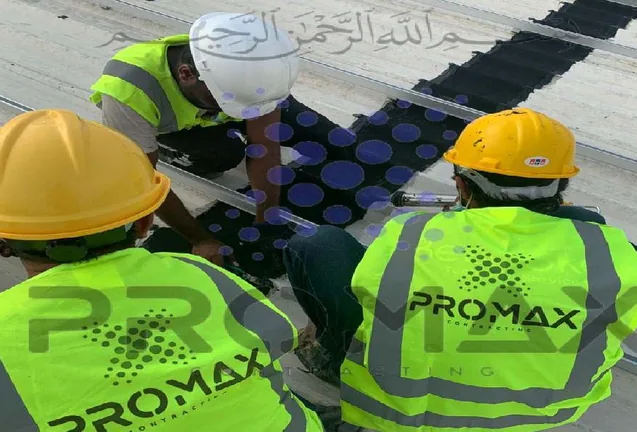
After inspection, the contractor defines the repair scope. This can include replacing damaged sheets, tightening or replacing fasteners, treating rusted areas, sealing laps, repairing gutters, and rebuilding weak flashing details. If purlins or support members show deterioration, those issues must be addressed before waterproofing is installed.
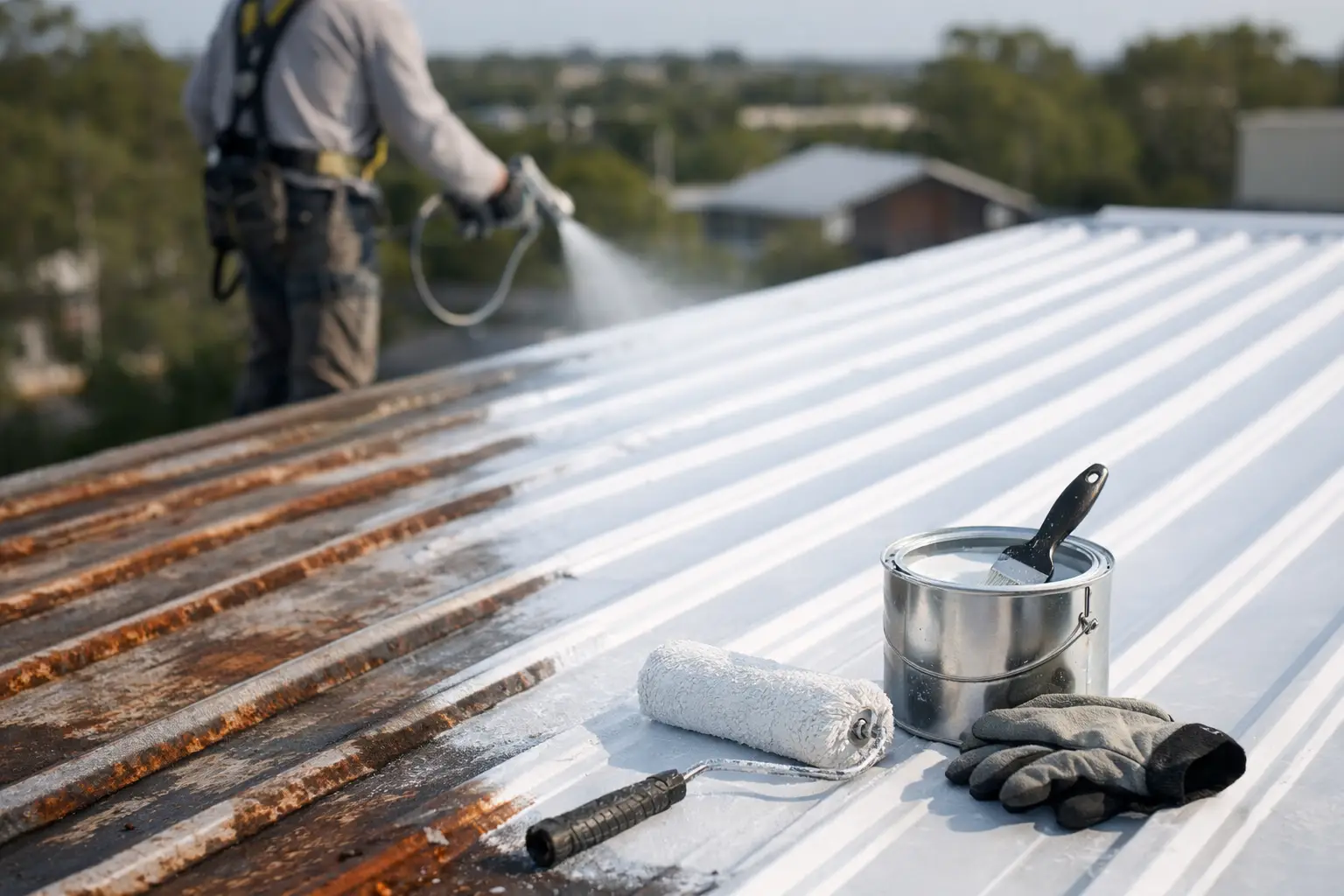
Surface preparation is one of the most important stages. Dirt, chalking, rust scale, failed sealant, and loose coating must be removed so the new system can bond correctly. Shortcuts here lead to early coating failure, blistering, and loss of adhesion.
Once the roof is sound and prepared, the restoration system is installed. Depending on project needs, this may involve primers, seam reinforcement, EPDM-based waterproofing treatment, liquid-applied systems, and protective topcoats. The exact method depends on roof profile, level of corrosion, movement at joints, exposure conditions, and required service life.
What materials are used in metal roof restoration?
There is no single material that fits every roof. The right system depends on the failure mode.
For active leaks at joints and penetrations, elastomeric sealants and reinforced waterproofing details are common. For corrosion, rust treatment and compatible primers are required before top protection is applied. For broader weatherproofing, membrane-based or liquid-applied systems are often used to create a continuous barrier over vulnerable areas.
In demanding environments, EPDM-compatible restoration methods are often preferred because they handle movement, weather exposure, and waterproofing performance better than simple paint-type applications. But even a strong membrane system will underperform if installed over wet, unstable, or corroded metal without proper repairs.
That is the key distinction between restoration and surface coating. A coating alone changes the surface. Restoration corrects the roof system.
Benefits of restoring a metal roof
The biggest advantage is life extension without the cost and downtime of full replacement. For occupied facilities, that matters as much as budget. A well-planned restoration can be phased, carried out with less disruption, and aligned with operational schedules.
It also reduces recurring maintenance. Instead of responding to every rain event with spot patching, you address the root causes across the roof area. That improves forecasting, protects internal assets, and lowers the chance of emergency callouts.
There can also be thermal and asset-preservation benefits, especially where reflective or protective systems reduce surface stress on exposed roofs. The value depends on building use, roof condition, and local climate. In hot regions such as Dubai and the wider UAE, heat exposure and UV breakdown are not secondary issues. They are part of the core failure pattern, so restoration systems need to be selected accordingly.
What property owners should check before approving the work
Not all restoration proposals are equal. Some are detailed engineering-led scopes. Others are little more than coating applications with limited preparation.
A serious contractor should identify the actual leak paths, explain substrate condition, define what is being repaired versus what is being overlaid, and clarify how penetrations, gutters, fasteners, laps, and corroded zones will be treated. Fabrication support also matters where flashings, gutter sections, cappings, or replacement metal components are needed to complete the job properly.
Ask about after-sales response as well. Roof restoration is not just about installation day. Commercial facilities need follow-up support if weather events expose hidden issues or if additional detailing is required after testing and inspection.
Common mistakes that shorten the life of a restored roof
The most common mistake is skipping repairs and applying coating over defects. The second is poor preparation. The third is using a generic system on a roof that has movement, corrosion, and drainage problems that require specialized treatment.
Another mistake is underestimating detail work. Large roof areas are easy to measure, but failures usually happen at penetrations, terminations, skylight perimeters, parapet junctions, and drainage transitions. If those details are not rebuilt correctly, the restored roof may still leak even when the field area looks finished.
This is why experienced execution matters. A contractor with inspection capability, repair crews, waterproofing knowledge, and fabrication support can usually deliver a more durable result than a team focused only on coating application.
If your facility has recurring leaks, rust spread, loose fasteners, or failed gutter lines, waiting rarely improves the outcome. Metal roof restoration is most effective when the roof is still recoverable and the work is based on real diagnosis, not guesswork. The right scope buys time, protects operations, and turns a problem roof back into a working asset.
Talk to Promax
Need this on your roof? Call +971 56 727 4205 or request a free inspection. Promax provides EPDM metal-roof, concrete and industrial waterproofing across Dubai and the UAE with up to a 15-year warranty.