A waste chute is not a simple vertical tube. In a high-rise residential tower, hotel, hospital, or staff accommodation building, it is a continuously used service system that affects hygiene, fire safety, odor control, housekeeping efficiency, and resident experience. Choosing a garbage chute manufacturer in the UAE should therefore start with fabrication quality and installation capability, not only the lowest quoted price.
The UAE climate adds pressure to every material and connection. Heat, humidity, coastal air, cleaning chemicals, and heavy daily use can expose weak welds, poorly sealed joints, thin-gauge metal, and inadequate support brackets quickly. A correctly specified chute system gives facilities teams a controlled waste route that is easier to clean, inspect, and maintain over its service life.
What a Garbage Chute System Must Handle
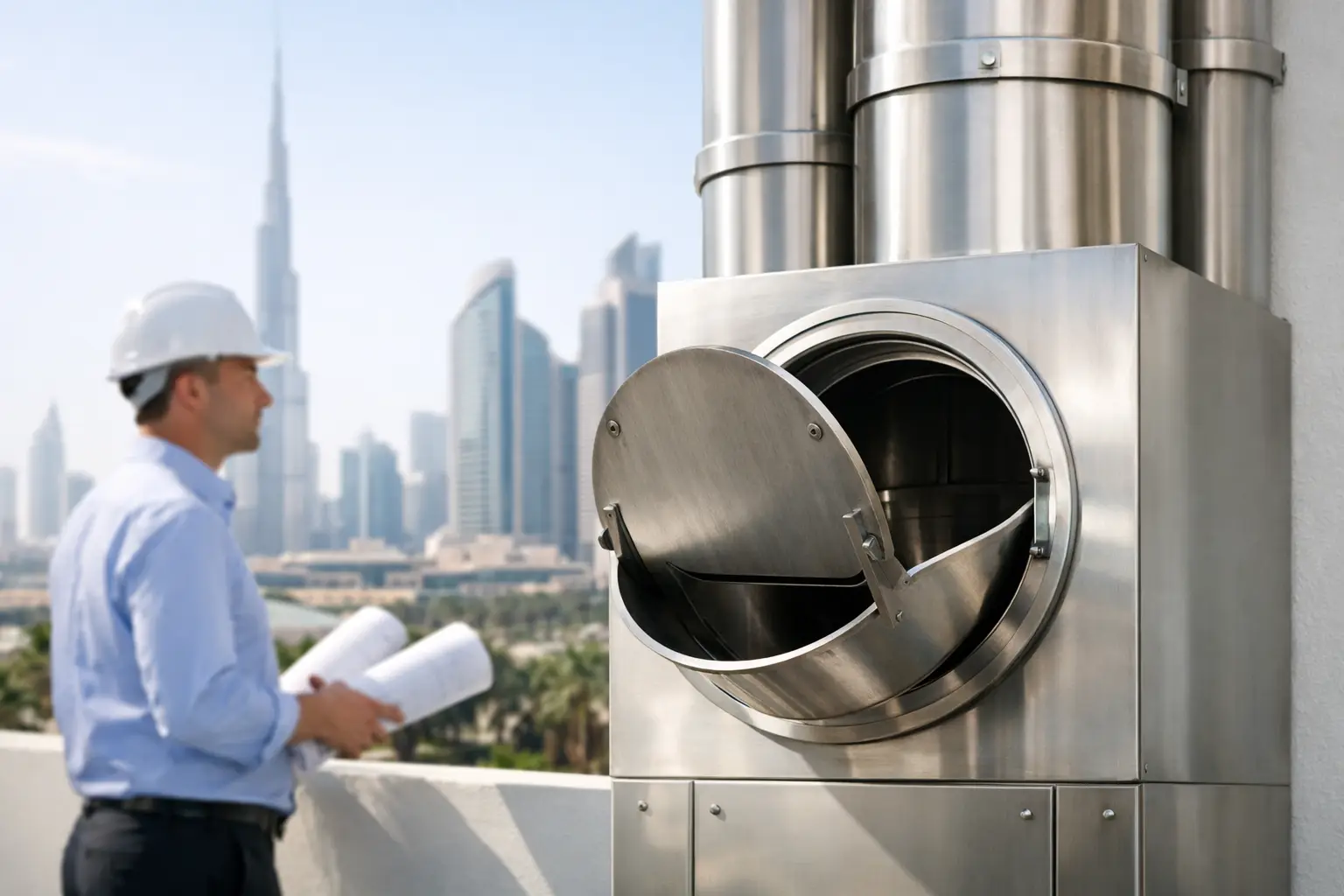
A garbage chute system carries bagged refuse from each floor to a collection point, but its real job is to contain the side effects of waste movement. Odor, noise, liquid leakage, pests, smoke migration, and corrosion must all be considered before fabrication begins. The chute, intake doors, discharge arrangement, ventilation provisions, washdown points, and supports must work as one coordinated installation.
This is why a generic metal duct approach is rarely suitable. Chute sections need accurately formed circular bodies, consistent internal joints, properly positioned floor inlets, and connections that do not create ledges where waste can catch. A small misalignment at one joint can become a repeat blockage point after the building is occupied.
For property managers, the operational question is straightforward: can the housekeeping team use and clean the system without regular complaints, stoppages, or unsafe access? For consultants and contractors, the question is broader: does the system match shaft dimensions, discharge-room arrangement, building services coordination, and the relevant authority requirements for the project?
Why Material Selection Changes the Service Life
Stainless steel is commonly specified for garbage and linen chutes because it provides a cleanable surface and better resistance to moisture than unprotected steel. For demanding environments, Stainless Steel 316 Grade is a strong option. Its improved resistance to corrosion is particularly relevant for coastal projects, buildings with frequent washdown, and locations where waste moisture may remain in contact with the chute surface.
A 316-grade chute costs more than a galvanized or GI alternative. That difference should be evaluated against the operating environment, expected cleaning regime, building type, and required design life. A galvanized chute may be considered where budgets are tight and exposure is controlled, but it needs careful protection at cut edges, joints, and areas exposed to persistent moisture. Selecting material only by initial rate can move the cost to future repairs, odor issues, or early replacement.
Thickness matters as well. A manufacturer should state the material grade, sheet thickness, finish, and fabrication method clearly. Vague descriptions such as “stainless steel chute” do not confirm whether the system is suitable for the actual duty. The specification should also address flange details, welding quality, access doors, support steel, and any protective treatment for non-stainless components.
Smooth Internal Construction Is Not a Minor Detail
The inside of a chute must be as smooth and continuous as practical. Waste bags drag along the inner wall at speed, especially when several floors use the system during the same period. Protruding fasteners, rough welds, uneven joints, or distorted sections can snag bags and create a buildup of waste.
A quality fabrication process uses accurately rolled sections and controlled joining methods to reduce internal obstructions. The contractor should inspect every section before lifting and installation, because correcting a fabrication defect after the chute is enclosed inside a service shaft is more difficult and costly.
Installation Must Be Coordinated With the Building
Even a well-fabricated chute can fail operationally when installation is rushed. The shaft must have adequate clear dimensions, suitable access for lifting, and a discharge layout that allows waste bins or collection equipment to be positioned safely. Intake doors must align with finished floor levels and surrounding wall finishes. Incorrect door height can make daily use awkward, while poor frame fixing can lead to movement, gaps, and damaged finishes.
Support design is another critical point. The chute is a vertical assembly with its own weight, dynamic loading, and thermal movement. Supports must transfer these loads safely to the building structure without allowing unwanted vibration or movement between sections. A contractor should verify the support locations before installation rather than relying only on a drawing prepared before site conditions changed.
The discharge point deserves the same attention as the upper floors. Waste must leave the chute without striking sharp edges, rebounding, or blocking the outlet. The collection-room layout should allow cleaning, bin movement, and maintenance access. If compaction or automated waste handling equipment is planned, the chute discharge must be coordinated with that equipment from the outset.
Doors, Fire Performance, and Odor Control
Intake doors are the part occupants see and use. They should close properly, resist repeated impact, and suit the wall opening and surrounding finish. Self-closing operation is particularly important because an open door can allow odor and noise into occupied corridors. The selected door type and fire-performance requirements should be checked against project specifications and applicable local authority approvals.
Odor control depends on more than a deodorizer placed at the base. It starts with tightly connected chute sections, functional intake doors, correct ventilation strategy, and regular cleaning. A poorly sealed joint may allow odors to enter the shaft or adjacent spaces, while inadequate ventilation can make the system unpleasant even when the chute itself is clean.
Where a washdown arrangement is included, it should be practical to operate and maintain. Water supply points, drainage, access panels, and cleaning procedures need to be planned as part of the system. Sending water through a chute without confirming drainage and collection arrangements can create another maintenance problem at the bottom of the shaft.
Questions to Ask a Garbage Chute Manufacturer UAE
Before issuing a purchase order, facility teams and project engineers should ask for a clear system scope. A dependable garbage chute manufacturer UAE project teams can work with will inspect the shaft, confirm measurements, and identify coordination issues before starting fabrication. This is more valuable than a quotation built only from a basic floor count.
Ask how the manufacturer will verify the chute diameter, inlet positions, floor-to-floor heights, support method, and discharge arrangement. Confirm whether the quoted scope includes supply, fabrication, delivery, installation, testing, access components, and handover documentation. If any item is excluded, it should be visible early, not discovered during installation.
It is also worth asking who will respond if a door adjustment, alignment issue, or blockage concern arises after handover. Chute systems require professional after-sales support because small operational issues can become building-wide complaints when ignored. Promax Contracting approaches chute work as a complete fabrication and installation scope, with site verification and maintenance requirements considered before the system is closed into the building.
Testing Before Handover Protects the Facility Team
The handover stage should not be limited to visual inspection. The installation team should check that intake doors open and close correctly, sections are securely supported, internal paths are free from visible obstructions, and the discharge arrangement performs as intended. Cleaning and access procedures should be explained to the building representative.
A practical handover review should cover at least these items:
- Material grade, thickness, and fabrication details match the approved submittal.
- Floor inlets, frames, and door operation are aligned and securely fixed.
- Supports, joints, and access panels are accessible for future inspection.
- The discharge point allows safe waste collection without repeated blockage.
- Cleaning, ventilation, and maintenance responsibilities are understood by the facility team.
For existing buildings, inspection is equally valuable. Recurrent odor, noisy waste drops, sticking doors, corrosion staining, or frequent blockages are signs that the chute may need repair, component replacement, or a more complete rehabilitation plan. Waiting until a system fails completely can disrupt residents and force emergency work in a restricted service area.
A chute should make waste handling quieter, cleaner, and more controlled, not create another maintenance burden. The right manufacturer will treat the shaft, material, supports, doors, discharge, and long-term service access as one system - because that is how the building will experience it every day.
Talk to Promax
Speak to Promax for expert help in Dubai & the UAE. Call +971 56 727 4205 or request a free consultation for metal-roof waterproofing, garbage & linen chute systems and LEXA KNX home automation.