A rusted purlin is not simply a roof maintenance issue. It can compromise cladding support, create sagging at roof sheets, worsen water ingress, and expose workers and stored assets to unnecessary risk. This guide to purlin replacement is written for facility teams that need to identify the real scope of deterioration, plan the work safely, and restore roof support without creating a larger operational problem.
Purlin replacement is specialist structural repair work. The correct approach depends on the roof span, steel section, corrosion depth, connection condition, imposed loads, roof profile, and the ability to keep the facility operational during the repair. Replacing steel without confirming these factors can shift loads into already weakened members or damage the roof covering that the purlin is meant to support.
Guide to Purlin Replacement: Know What Has Failed
Purlins are secondary steel members that run across the main rafters or portal frames. Their role is to support metal roof sheets, insulation systems, skylights, and related roof components. They are not the same as primary rafters, trusses, or columns. This distinction matters because a purlin repair may appear local, while the cause of the failure may involve drainage, leaking fasteners, defective flashing, trapped moisture, or corrosion at the connection to the main frame.
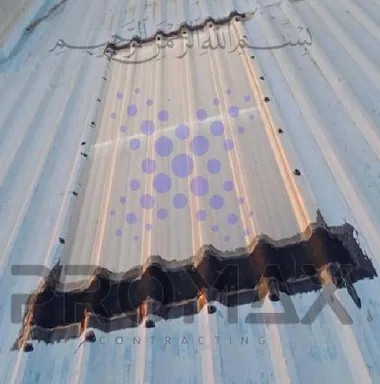
The first sign of trouble is often visible rust on the underside of the roof. However, surface discoloration alone does not establish whether replacement is necessary. A proper inspection should identify loss of steel thickness, perforation, deformation, failed bolts, loose cleats, cracked welds, and deflection in the roof sheets above the affected member.
Particular attention is needed at overlaps, roof valleys, gutter interfaces, skylight openings, and areas around pipe penetrations. These are common locations for long-term moisture exposure. In warehouses and industrial buildings, condensation and chemical-laden air can also corrode the internal face of purlins even when the outer roof sheet appears serviceable.
Do Not Assume Every Corroded Purlin Needs Full Replacement
Full-length replacement is often the right solution where corrosion is widespread, the section has lost structural capacity, or the connections are compromised. But it is not the only option. If damage is genuinely localized and an engineer confirms the remaining member is sound, a designed splice or strengthening detail may reduce disruption and preserve unaffected steel.
The trade-off is straightforward. A local repair can be faster and less invasive, but only when it restores the required capacity and does not leave active corrosion spreading behind the repair. Installing a patch over deeply corroded steel may conceal the problem rather than solve it. Decisions should be based on measured conditions, not visual assumptions.
Start With a Condition Survey and Repair Plan
A replacement project should begin with an accessible roof survey from both above and below. The survey should record purlin sizes, spacing, span direction, roof sheet profile, frame arrangement, connection details, damage locations, and any areas where roof sheets have already sagged or loosened.
Where corrosion is suspected, the team should assess the actual condition of the steel rather than relying on photographs alone. This may involve cleaning selected areas, checking section thickness, examining bolt holes and cleats, and confirming whether corrosion has spread into rafters, bracing, or eave members. If the roof has leaked for an extended period, insulation, fasteners, and sheet laps should also be checked.
The repair plan must define which purlins will be replaced, how loads will be supported during removal, the sequence of roof sheet lifting, and how the roof will be made weather-tight at the end of each shift. It should also address access equipment, fall protection, material lifting routes, exclusion zones below the work area, and coordination with facility operations.
For active warehouses, plants, and storage buildings, work sequencing is often as important as the steel itself. Replacing purlins one bay at a time can limit roof exposure and reduce disruption. The right sequence depends on the roof design and the available safe access, so it should be set before materials arrive on site.
Engineering Review Is Not Optional
Purlin dimensions cannot be copied from a neighboring roof or selected solely because they appear similar to the existing member. The replacement section must be compatible with roof loads, wind uplift, spacing, span, bracing requirements, and the primary frame connection. Any revised section, splice, bolt pattern, or cleat detail should be reviewed by a qualified structural professional.
This is especially important when the original purlin has deformed. Deflection may indicate overload, inadequate support, altered roof loading, or failure elsewhere in the structural system. Installing a new purlin of the same size without identifying the reason for the deformation can repeat the failure.
Safe Execution During Purlin Replacement
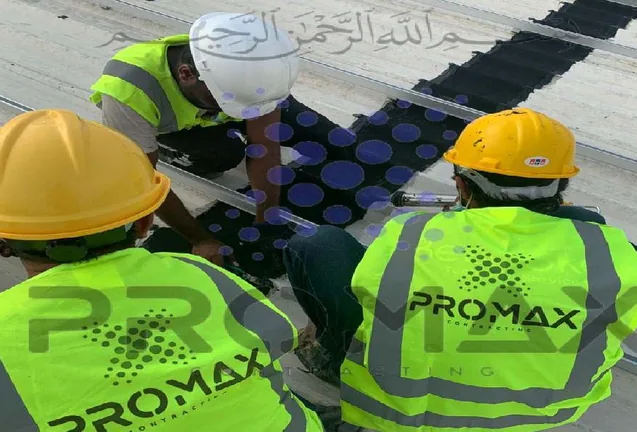
The main risk during purlin work is removing a member that is supporting roof sheets or transferring loads unexpectedly into adjacent steel. Roof cladding must not be treated as a working platform unless it has been verified and protected for that purpose. Workers need controlled access, suitable fall-arrest systems, and a clearly defined method for handling sheets and steel at height.
Before a damaged purlin is removed, the contractor should install temporary support or bracing where required by the repair design. Roof sheets and insulation must be released in a controlled manner to avoid tearing laps, bending panels, or damaging skylight interfaces. If the roof is opened, the exposed area should be kept as small as practical and protected against changing weather.
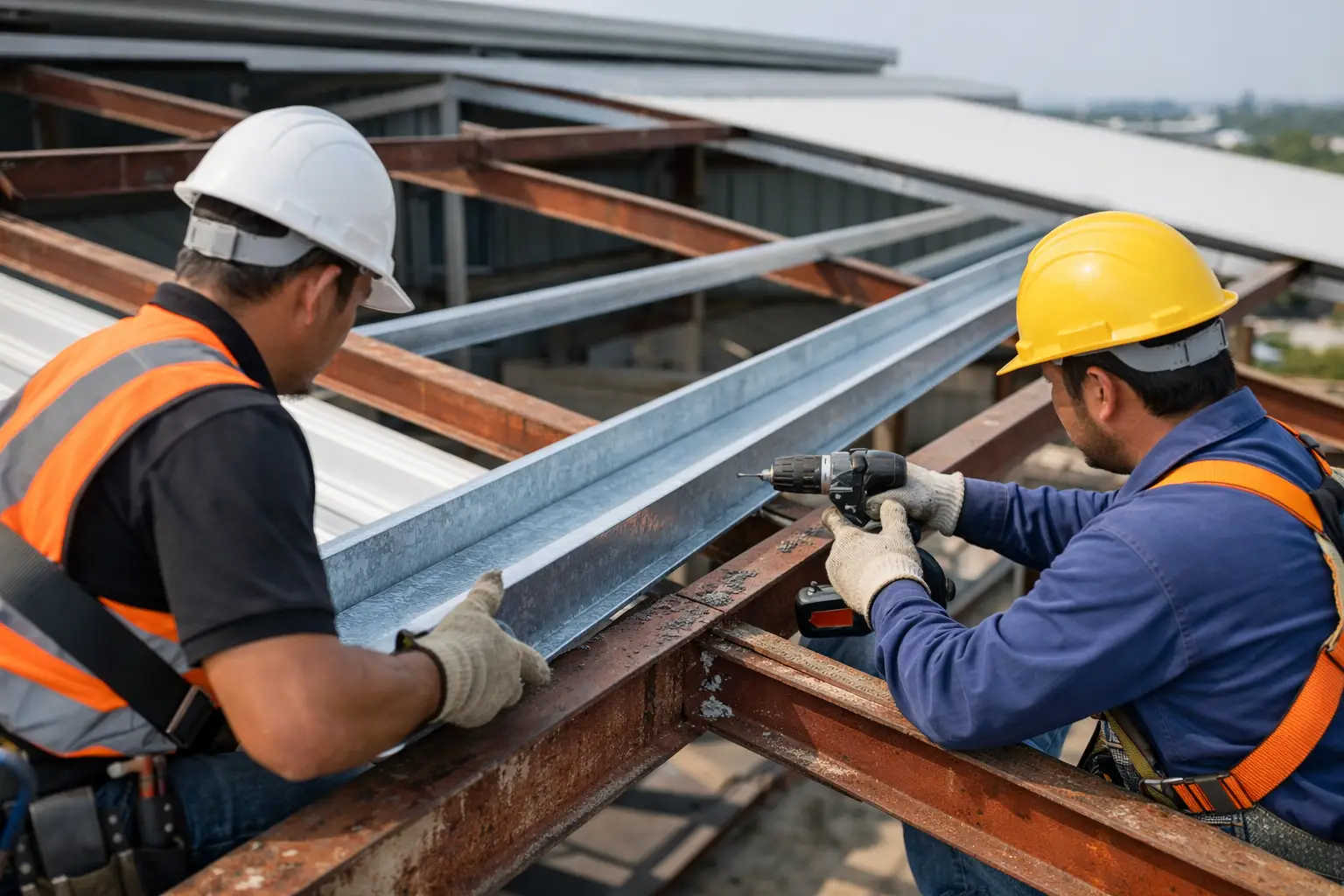
The new purlin should be installed to the approved line and level, with correct connections at each end. Bolts, cleats, brackets, and fixing points require the same attention as the member itself. A sound steel section connected through weakened or corroded fittings is not a complete repair.
Field welding may be appropriate in some designs, but it introduces additional controls. The work area must be assessed for fire risk, nearby insulation, coatings, and combustible materials. Welding also requires inspection of the finished connection and proper treatment of disturbed protective coatings. Where bolted connections are specified, they should not be substituted with site welding for convenience.
Protect the New Steel From the Same Failure
Replacing a purlin without stopping the moisture source creates avoidable repeat work. Once roof sheets are lifted, it is the right time to inspect fasteners, sheet overlaps, flashing, gutters, and penetrations around the affected bay. Loose screws, failed sealing washers, standing water, and damaged laps should be corrected before the roof is closed.
Surface preparation and corrosion protection must match the exposure conditions. Depending on the design and location, this may include mechanical cleaning, rust treatment, compatible primer, protective coating, or galvanized replacement steel. The selected system should also consider contact between different metals, as incompatible materials can accelerate corrosion in wet environments.
Roof reinstatement needs close attention. Reused sheets should be checked for distortion and enlarged fastener holes. New or replacement fasteners must suit the sheet profile and supporting steel, with properly seated sealing washers. Any disturbed laps, flashings, or penetration seals should be reinstated as part of the same work scope, not left for a separate visit.
Quality Checks Before Handover
A professional handover is more than removing access equipment and clearing debris. The completed work should be inspected for purlin alignment, connection security, roof sheet support, fastener condition, protective coating coverage, and water-tight reinstatement. The contractor should also confirm that no loose steel, sharp edges, unused openings, or exposed insulation remain.
For larger projects, maintain a record of replaced locations, steel sections, connection details, coating system, and photographs before and after repair. This gives maintenance teams a clear reference for future roof inspections and helps identify recurring corrosion patterns.
Promax Contracting approaches purlin replacement as part of a wider roof rehabilitation scope, combining site inspection, fabrication support, structural repair coordination, and roof sealing reinstatement. This reduces the risk of treating visible corrosion while missing the leak path or roof detail that caused it.
A purlin that has started to corrode will not improve under another season of leaks, heat, and condensation. Early inspection gives facility managers more options, while planned replacement protects the roof, the building operation, and the steel structure supporting both.
Talk to Promax
Speak to Promax for expert help in Dubai & the UAE. Call +971 56 727 4205 or request a free consultation for metal-roof waterproofing, industrial roofing and concrete & structural waterproofing.