

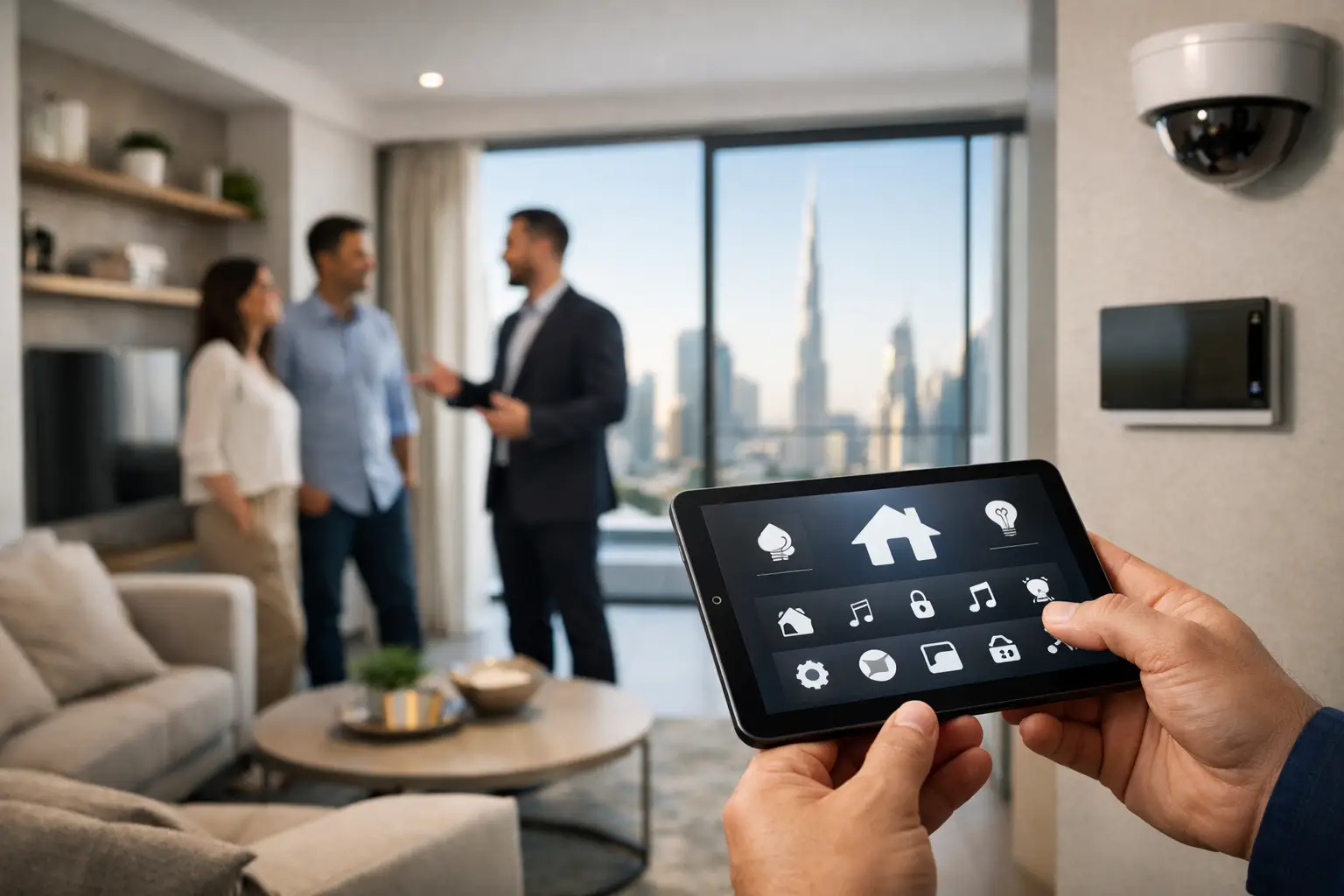
A smart home system becomes valuable when it works reliably at 7:00 a.m., during a power interruption, and after the project team has left the site. Choosing a home automation company in Dubai is therefore not just a decision about switches, screens, or app control. It is a decision about system design, installation discipline, commissioning, documentation, and the availability of technical support when the property is occupied.
For villas, hotels, and commercial properties, KNX-based automation can control lighting, curtains, HVAC zones, scene panels, occupancy response, and selected building functions from one coordinated platform. The result should be practical: lower unnecessary energy use, clear control for users, and equipment that responds as intended without creating another maintenance burden.
Why the Right Home Automation Company in Dubai Matters
Automation projects often look straightforward at the fit-out stage. Devices are selected, cables are pulled, panels are installed, and switches are mounted. The difficult work happens behind the visible finishes. A poorly planned system can leave a property with confusing controls, overloaded circuits, missing labels, unreliable communication, or functions that cannot be adjusted without calling the original installer.
A capable contractor begins with how the building will actually be used. A villa owner may need simple scene control for arrival, dining, entertainment, and night operation. A hotel may need guest-room logic, corridor lighting control, occupancy response, and clear access for facilities staff. A commercial project may require time schedules, zone-based lighting, and control permissions that suit multiple users.
These are different operating conditions. One generic automation package is rarely the right answer. The system must match the property type, its electrical design, the intended level of control, and the people responsible for maintaining it.
KNX is widely specified because it is a wired building automation standard with a strong track record in structured projects. It supports devices from compatible manufacturers and allows a properly designed installation to be expanded or adjusted over time. That flexibility is useful, but only when the system integrator establishes a clear design basis from the start.
Start With Site Survey and System Scope
Before selecting scenario panels, dimming actuators, thermostats, or motion sensors, the contractor should inspect the project and review the available drawings. This is where practical site knowledge matters. Panel locations, cable routes, ceiling access, electrical load schedules, lighting groups, HVAC interfaces, and network requirements all affect the final design.
A site survey should identify what is already installed, what can be retained, and where modifications are needed. On refurbishment work, this is particularly important. Concealed services, limited access, and changes made by previous contractors can affect both cost and installation time.
The scope should define more than a list of products. It should state which lighting circuits will be switched or dimmed, which rooms need scene control, how HVAC zones will operate, what motion sensors are expected to do, and which functions are controlled locally versus through a central interface. If the client expects mobile access, remote support, or integration with other approved systems, that requirement should be addressed before procurement.
A reliable home automation company in Dubai will explain the trade-offs directly. Full dimming control can improve user comfort and reduce waste, but it requires compatible lighting loads, correctly selected drivers, and detailed commissioning. Motion-based control can help in corridors, bathrooms, stores, and support areas, but it may not suit every room. Automated curtains add convenience and heat-management benefits, yet motor selection, track coordination, and safe local override must be planned early.
Review the KNX Design, Not Just the Product Catalog
Product names alone do not prove that a system is properly engineered. LEXA KNX switches, sockets, scenario panels, switching actuators, dimming actuators, thermostats, and sensors can form an effective installation, but the quality of the design determines how they perform together.
Lighting Control Must Match Real Occupancy
Lighting control should reflect room use, natural daylight, and the preference for simple operation. In a villa, a single panel may offer scenes such as Welcome, Evening, Dining, and All Off. In hospitality projects, common areas may need scheduled operation combined with sensor input and manual staff control.
Every lighting plan also needs a fallback position. Users should still be able to operate essential lights easily if a screen, app, or external network is unavailable. This is one reason physical KNX switches and well-labeled panels remain important. Good automation reduces steps for the user. It should not force the user to search for a phone to turn on a light.
HVAC Control Needs Clear Zone Logic
Thermostat placement and zoning have a direct effect on comfort and energy performance. A thermostat installed near direct sunlight, kitchen heat, or an air supply grille may give inaccurate readings. Likewise, combining rooms with different occupancy patterns into one zone can create complaints that no software setting will fully solve.
The contractor should confirm the HVAC control method, available interface points, and operating limits with the mechanical team. For hotels and larger properties, the logic may also need to account for room status, occupancy, and facilities access. The objective is controlled operation, not unnecessary complexity.
Panels and Devices Need Future Access
Automation panels contain the devices that make the system work. They need adequate space, organized wiring, circuit identification, heat consideration, and safe access for future inspection. Crowded panels may save space at installation, but they increase risk during maintenance and make later expansion difficult.
Ask how the contractor will label cables, actuators, breakers, and communication lines. Clear labeling is basic workmanship, yet it is often the difference between a quick service call and hours of fault tracing. The same applies to device addressing and software records. A building owner should not be dependent on undocumented programming.
Commissioning Is Where the System Proves Itself
Installation is not the end of an automation project. Commissioning is the point at which every programmed function is tested against the approved operating sequence. Each switch, scene, sensor, thermostat, actuator channel, and interface should be checked on site.
This process should include practical testing, not only device communication checks. Does the entrance scene operate the correct lighting groups? Does a motion sensor hold lights on for an appropriate time? Does manual control behave correctly after an automated command? Do HVAC setpoints respond in the expected zones? If a lighting circuit is dimmed, does it perform correctly throughout its operating range?
For hotel automation UAE projects, commissioning should also confirm how staff access, guest controls, room modes, and common-area schedules interact. Small programming gaps can become repeated operational complaints across multiple rooms. It is more cost-effective to resolve them before handover than after the property is occupied.
A proper handover should include updated drawings where applicable, panel schedules, device details, programming backups, control descriptions, and basic user guidance. Facility teams need enough information to isolate a simple issue, understand normal system behavior, and request support with accurate details.
Choose Support That Continues After Handover
The lowest initial quotation is not always the lowest operating cost. A contractor may supply devices at an attractive price while limiting design input, omitting detailed commissioning, or providing little support after completion. That approach can create expensive changes later, especially when finishes are complete and access is restricted.
Look for a contractor that can handle survey, design coordination, supply, installation, programming, testing, and after-sales response under one accountable scope. Promax Contracting supports KNX automation projects with a practical focus on site execution, system coordination, and maintainable installations.
Before appointment, ask who will program the system, how changes will be managed, what documents will be handed over, and how service requests are handled after occupancy. Also confirm whether replacement devices can be sourced and whether the design allows reasonable future additions. These questions expose whether the proposal is built for long-term operation or only for project completion.
A well-executed KNX system should become part of the building's normal routine, not a feature that needs constant attention. Select the team that treats cabling, controls, testing, and support with the same seriousness as the visible finish. That is how automation remains useful long after the handover date.
Talk to Promax
Speak to Promax for expert help in Dubai & the UAE. Call +971 56 727 4205 or request a free consultation for metal-roof waterproofing, garbage & linen chute systems and LEXA KNX home automation.