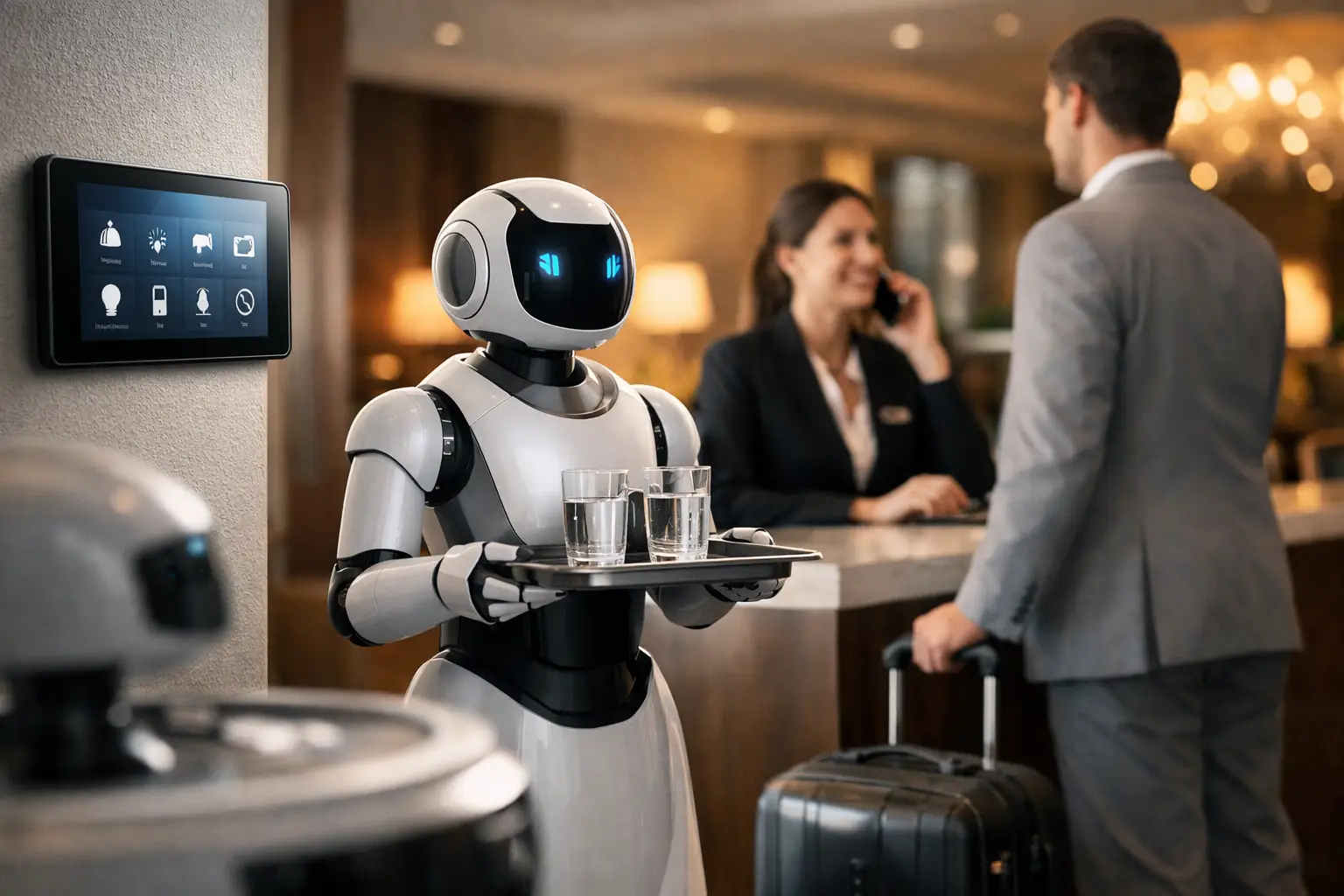
A guest may only notice a hotel automation UAE system when it fails: a room that remains too cold, lights that do not respond, curtains that stop midway, or an occupied suite that appears vacant to housekeeping. For hotel operators, those small failures become service complaints, wasted energy, delayed maintenance, and pressure on front-office and engineering teams.
A properly specified automation system is not a collection of smart switches. It is an operating system for guest rooms and common areas that gives the property controlled, visible, and maintainable behavior. In a high-temperature environment with round-the-clock occupancy, the right controls strategy can reduce unnecessary cooling demand while giving guests simple, reliable control of their rooms.
What Hotel Automation UAE Projects Must Deliver
Hotel automation should support the way a property is actually operated. This includes guest rooms, corridors, lobbies, meeting spaces, restaurants, back-of-house areas, and outdoor zones. Each area has different occupancy patterns, lighting needs, cooling loads, and service priorities. Applying one control method everywhere usually creates either a poor guest experience or a system that is difficult for the engineering team to maintain.
For guest rooms, the essential task is to coordinate lighting, air conditioning, curtains or blinds, occupancy status, and selected service functions. A guest should be able to enter the room, use a clear scenario panel, and adjust the immediate environment without needing instructions. At the same time, the building team should be able to place unoccupied rooms into an energy-saving mode, identify faults, and prevent equipment from operating unnecessarily.
KNX-based automation is well suited to this work because it is a recognized open building-control standard rather than a closed, single-device setup. It allows lighting controls, motion sensors, thermostats, dimming actuators, switching actuators, scenario panels, and supervisory interfaces to work as one planned system. The value is not in adding more devices. It comes from selecting the correct devices, programming the logic properly, and documenting the installation for future maintenance.
Start With Operations, Not Devices
A hotel project should begin with a site survey and an operational review. The first questions are practical: How are rooms currently controlled? Which guest complaints are recurring? What equipment is consuming energy while rooms are vacant? Are there frequent issues with switches, thermostats, or room status communication? Is the property undergoing renovation while remaining operational?
This review determines whether the project needs full guest-room automation, lighting control in selected public areas, centralized monitoring, or a phased upgrade. A new-build hotel has greater freedom in cabling, panel design, and device selection. An operating hotel may need a retrofit plan that protects guest privacy, limits room downtime, and works around existing electrical infrastructure.
There is no single package that fits every hotel. A limited-service property may benefit most from room occupancy logic and common-area lighting schedules. A luxury hotel may require more detailed scene control, curtain integration, bedside operation, and tailored welcome settings. Conference facilities often need flexible preset scenes for presentations, cleaning, events, and after-hours operation.
Guest Room Controls Need Clear Logic
The best guest-room interface is simple because the complexity sits behind the panel. Guests should not be asked to manage multiple apps or navigate confusing control screens. A well-planned KNX scenario panel can provide practical functions such as Welcome, Relax, Sleep, All Off, and Do Not Disturb, depending on the hotel’s operating model.
On arrival, a room can bring selected lights to a comfortable level, set the thermostat to the approved occupied temperature range, and open or close curtains based on the selected scene. At bedtime, one command can turn off nonessential lighting, retain required pathway lighting, and adjust the room for sleeping conditions. When the guest leaves, the system can delay the vacancy response long enough to avoid nuisance shutdowns, then reduce lighting and cooling operation.
The control logic needs sensible limits. Guests must retain comfort control within a defined temperature range, but the property should not allow extreme setpoints that create avoidable load on the air-conditioning system. Likewise, motion detection is useful in entry areas and bathrooms, but it should not be the only method for determining whether a guest room is occupied. A sleeping or working guest may be still for an extended period. Door contact status, card-holder signals where applicable, booking status, and configured time delays can provide a more dependable occupancy strategy.
Hotel Automation UAE Requires Practical Integration
A hotel is made up of systems that are often installed by separate contractors. Automation only performs well when the interfaces are defined early and tested under actual operating conditions. Lighting control, room thermostats, curtain motors, door contacts, dry contacts, central monitoring, and selected guest-service indicators must have clear responsibilities between suppliers.
The integration plan should identify what the automation system controls directly and what it monitors through an approved interface. For example, the automation system may switch lighting circuits through KNX actuators, receive occupancy information from a room device, and send a demand signal to the room climate-control system. This avoids unclear overlap between the electrical contractor, HVAC contractor, low-current contractor, and hotel technology team.
For existing properties, compatibility assessment is critical. Reusing parts of an old installation can reduce cost and shorten work periods, but only if the existing cabling, panels, equipment condition, and communication interfaces are suitable. Trying to force incompatible components together can create recurring faults that cost more than a properly planned replacement.
Energy Control Without Reducing Guest Comfort
Cooling is one of the largest controllable operating costs in Gulf hotels. Empty rooms that remain at full cooling demand, public spaces with lights operating beyond required hours, and poorly coordinated control settings all create unnecessary consumption. Automation addresses these problems through occupancy-based settings, schedules, central overrides, and status monitoring.
However, aggressive energy settings can damage the guest experience. A room that becomes hot before check-in, or lighting that switches off while a guest is reading, creates a service failure. The correct approach is to use operating ranges, delays, and pre-arrival preparation. Rooms can return to a comfortable condition before expected arrival while still operating at reduced demand during longer vacancy periods.
Public areas require the same balance. Corridors may use timed lighting levels or sensor-based adjustment while maintaining safety and visual quality. Meeting rooms can use scene controls that match occupancy and event requirements. Back-of-house areas can be scheduled around real staff activity rather than fixed assumptions. The system should support the hotel’s service standard, not interfere with it.
Installation Quality Determines Long-Term Performance
Control devices are only as reliable as the installation behind them. Panel labeling, cable identification, termination quality, protection of low-voltage wiring, proper load calculations, and accessible maintenance routes matter as much as the visible panel in the room. Hotels should require detailed drawings, point schedules, panel schedules, device addresses, and final programming records.
Commissioning should also be treated as a controlled handover process, not a quick check that lights turn on and off. Each room type needs testing against its approved operating sequence. Common areas need testing during occupied and unoccupied periods. Engineering staff should understand how to adjust approved settings, identify faults, and isolate issues without affecting other rooms.
Before final acceptance, the project team should verify at least these operational items:
- Every scenario panel function matches the approved room sequence.
- Lighting loads, dimming levels, and switched circuits respond correctly.
- Thermostat logic respects occupancy status and permitted temperature limits.
- Motion sensors, door contacts, and status signals operate without nuisance behavior.
- Central monitoring identifies device faults and key room conditions accurately.
- Drawings, programming backups, labels, and maintenance instructions are handed over.
Choosing a Hotel Automation Partner
The right contractor should be able to inspect the site, review the electrical and control requirements, prepare a clear scope, supply suitable KNX components, install and program the system, and provide after-sales support. Hotel teams do not need vague promises about smart technology. They need a system that remains serviceable after the project team has left.
Promax Contracting supports KNX automation for hotels, villas, commercial facilities, and private projects with scenario panels, switches and sockets, dimming actuators, switching actuators, thermostats, motion sensors, and smart lighting controls. The focus should always remain on field execution: correct equipment selection, coordinated installation, tested programming, and responsive support when the property is operational.
A hotel automation project earns its value quietly. Guests experience a comfortable, intuitive room, while engineering teams gain better control of energy use, room status, and maintenance response. That is the standard worth specifying: technology that performs reliably through full occupancy, late check-ins, high cooling demand, and daily hotel operations.
Talk to Promax
Speak to Promax for expert help in Dubai & the UAE. Call +971 56 727 4205 or request a free consultation for metal-roof waterproofing, garbage & linen chute systems and LEXA KNX home automation.