

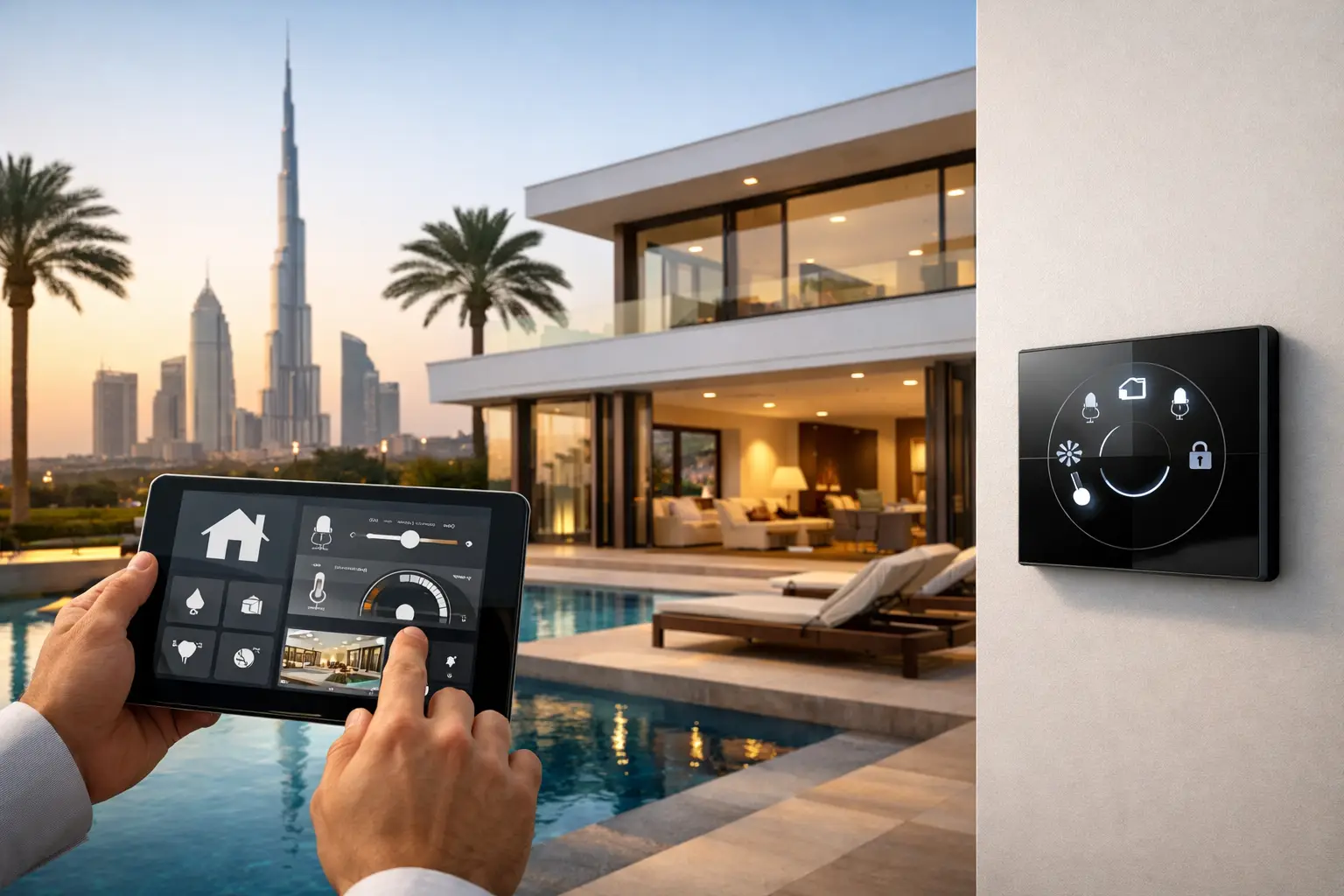
A property can have premium switches, elegant interiors, and advanced equipment yet still operate like a collection of disconnected rooms. KNX home automation Dubai projects solve that operational gap by bringing lighting, climate control, sensors, scenario panels, and switching functions into one engineered control system. For villas, hotels, offices, and private developments, the value is not the novelty of automation. It is dependable control, reduced wasted energy, and a building that responds correctly to the way people actually use it.
KNX is particularly suitable for projects that require a long service life and clear technical control. It is a wired, decentralized automation standard. Instead of relying on one consumer-grade hub to manage every function, devices communicate over a dedicated building bus. That structure gives project teams more flexibility during design, more stability after handover, and a practical route for future expansion.
Why KNX Home Automation Dubai Requires Early Planning
The best time to plan automation is before electrical containment, cabling, and ceiling coordination are finalized. Retrofitting is possible, but it can limit device placement, increase access work, and force compromises in how zones are controlled. A proper KNX design starts with the building's operational requirements, not with a list of smart devices.
For a villa, the discussion may focus on room-by-room lighting scenes, curtain control, temperature settings, entrance monitoring, and an all-off command when residents leave. For a hotel, the priorities are different: guest room scenes, housekeeping status, corridor lighting, controlled energy use in unoccupied rooms, and standardized operation across many spaces. Commercial properties may need timed lighting schedules, occupancy-based control, meeting room scenarios, and central monitoring for management teams.
The engineering questions should be direct. Which lights need dimming? Which loads need simple on-off control? Where should motion sensors operate automatically, and where would automatic switching inconvenience users? Which rooms require local override? What should happen during power restoration? These decisions determine the panel configuration, actuator capacity, control logic, and required cable routes.
A good specification also allows spare capacity. Buildings change. A room may be divided, a tenant may request new control zones, or a future owner may add blinds and additional sensors. Leaving practical space in distribution panels and providing appropriate KNX bus infrastructure is more cost-effective than redesigning the system later.
The Core Components of a KNX System
A KNX installation is made up of devices with defined functions. The system is not limited to touchscreens or mobile apps. Its working components are usually located in electrical panels, wall positions, ceilings, and equipment interfaces.
Scenario Panels, Switches, and Sockets
KNX scenario panels allow users to activate a prepared building condition with one command. A "Welcome" scene can turn on selected entrance and living-area lights. A "Movie" scene can lower lighting levels and close curtains. A "Good Night" command can switch off nonessential circuits, set climate preferences, and confirm that selected areas are secure.
The key is to avoid creating scenes that sound impressive but are rarely used. Each scenario should match a real operating routine. KNX switches and sockets can also be selected to suit the interior finish while maintaining consistent control logic behind the wall.
Dimming and Switching Actuators
A KNX dimming actuator controls compatible lighting loads at variable levels. This is useful where brightness needs to change by time of day, occupancy, or selected scene. A KNX switching actuator handles circuits that require straightforward on-off operation, such as selected lighting groups, exhaust fans, pumps, or controlled equipment supplies where appropriate.
Correct load assessment matters. Not every LED fitting responds the same way to dimming, and poor compatibility can lead to flickering, noise, limited dimming range, or early driver failure. The lighting schedule, driver type, load calculations, and control method should be checked before devices are selected and installed.
Thermostats and Motion Sensors
A KNX thermostat UAE installation can provide room-level temperature control that is more structured than independent wall controllers. It can coordinate fan coil units, setpoints, occupancy modes, and scheduled temperature changes. In large villas and hospitality projects, this helps avoid the common problem of cooling systems running unnecessarily in empty rooms.
KNX motion sensors support more than automatic lights. They can trigger corridor lighting at a safe level, place a room into occupied mode, report movement for monitoring, or start a timed sequence. Sensor location must be planned carefully. A sensor that cannot see the actual walking path, or that is exposed to direct air movement and heat sources, may create unreliable operation.
What a Practical KNX Design Looks Like
A reliable system should feel simple to the user even when the control programming is detailed. Most occupants do not want to navigate multiple screens to switch on a light. They need familiar local controls, with automation working in the background and central functions available when needed.
For this reason, a well-executed design normally combines local switches with automated logic. Occupancy control may operate in corridors, service rooms, and low-traffic areas, while bedrooms and formal spaces retain direct user control. Timers can manage exterior lighting, but manual override should remain available for maintenance and events. Climate control can follow occupancy schedules, but occupants should be able to adjust the setpoint within a defined range.
This balance prevents over-automation. A system that changes settings unexpectedly will frustrate residents, guests, and staff. A system that supports real routines becomes part of normal building operation.
Typical Applications by Property Type
In villas, KNX automation is often centered on comfort, privacy, and energy discipline. Lighting scenes, curtain control, climate zoning, and departure commands are common requirements. A carefully planned system can also give the owner clear control over commonly missed loads without requiring extensive interaction with an app.
For hotels, repeatability is essential. Guest rooms need intuitive controls that do not require explanation. Public areas require scheduled and sensor-supported lighting behavior. Maintenance teams need access to clear fault information and devices that can be serviced without turning every adjustment into a specialist visit.
In offices and commercial properties, automation should support the operating schedule rather than complicate it. Meeting rooms, reception areas, corridors, executive spaces, and common areas may all need different logic. Centralized control can help facility teams verify that selected areas are not being unnecessarily cooled or illuminated after working hours.
Installation Quality Determines Long-Term Performance
KNX equipment is only as dependable as the design, installation, testing, and handover behind it. Panel labeling, cable routing, device addressing, separation of power and control wiring, and proper documentation are not minor details. They determine how quickly faults can be traced and how safely the system can be modified later.
Before commissioning, every circuit and field device should be inspected against the approved control schedule. The commissioning team should test each switch, dimming channel, motion sensor, thermostat function, scenario command, and timed event. They should also test failure conditions, including what happens after a power interruption and whether critical settings return as intended.
Documentation should include panel schedules, device lists, control narratives, group addresses, and operating instructions. This is especially valuable when a property changes ownership, a new facility manager takes over, or additional phases are added years after the original project.
Promax Contracting supplies KNX automation solutions, including LEXA KNX scenario panels, switches, sockets, dimming actuators, switching actuators, motion sensors, and smart lighting controls for villas, hotels, commercial, and private projects. The right scope starts with reviewing the electrical design and the building's actual use, then selecting equipment and programming logic that can be installed, tested, and maintained properly.
Questions to Resolve Before Selecting a KNX Integrator
Price matters, but the lowest equipment quote does not always represent the lowest project cost. An incomplete scope may exclude programming revisions, testing, documentation, training, or after-sales support. Those omissions often appear later as variations, delays, or a system that works only partially at handover.
Ask whether the integrator will provide a detailed point schedule showing each controlled load, sensor, switch, and scene. Confirm who is responsible for coordination with electrical contractors, HVAC teams, lighting suppliers, and interior contractors. Establish whether programming changes are included during commissioning and what support is available after occupation.
It is also worth confirming brand compatibility and future service availability. KNX is an open standard, but not every device combination is equally practical for every project. Selecting proven components and keeping a clear record of the installed devices protects the owner's investment.
The most useful automation system is not the one with the longest feature list. It is the one that turns on the right lights, controls the right zones, gives users a clear override, and remains serviceable long after project handover.
Talk to Promax
Speak to Promax for expert help in Dubai & the UAE. Call +971 56 727 4205 or request a free consultation for metal-roof waterproofing, industrial roofing and LEXA KNX home automation.