

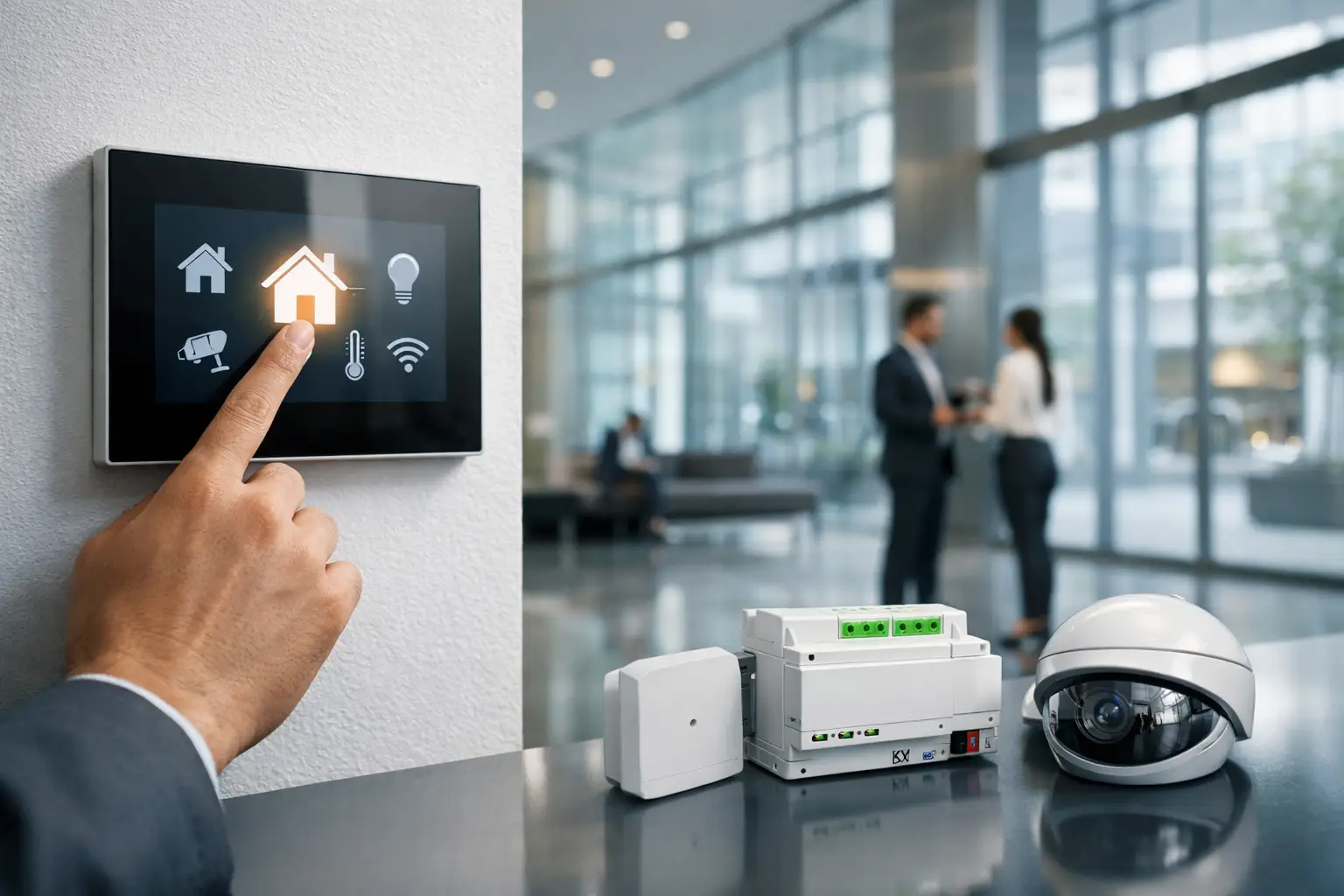
A smart building system fails the moment occupants cannot trust it. A guest room light that does not respond, a corridor that stays fully lit all night, or a villa scene panel that behaves differently after a power interruption creates complaints and unnecessary operating cost. LEXA KNX is designed for projects where control must be dependable, organized, and ready to expand as a property changes.
For villas, hotels, offices, and commercial facilities, automation is not only about adding a premium feature. It is a practical way to manage lighting loads, climate settings, occupancy response, and predefined scenarios from one coordinated control system. The result depends on proper design, panel assembly, programming, commissioning, and service support after handover.
What LEXA KNX Brings to a Building Project
LEXA KNX is part of a wired building automation approach based on the KNX standard. Instead of treating each switch, sensor, dimmer, and thermostat as an isolated device, KNX connects them through a common communication structure. A wall switch can send a command to multiple lighting groups. A motion sensor can trigger a hallway lighting sequence. A thermostat can control the required climate equipment according to schedules, occupancy, or selected room modes.
This architecture matters because commercial and hospitality projects rarely stay static. A villa may add outdoor lighting zones, curtain control, or guest areas after initial occupancy. A hotel may need to revise public-area schedules, create energy-saving modes for vacant rooms, or adjust scene behavior for events. With correctly planned KNX wiring and panel capacity, these changes can be handled through engineering and programming instead of repeated patchwork installations.
LEXA KNX product selections commonly include scenario panels, switches and sockets, dimming actuators, switching actuators, motion sensors, thermostats, and smart lighting controls. Each component has a defined job, but system performance depends on how those components are selected and coordinated.
The Difference Between Smart Features and a Working System
Many automation specifications look complete on paper but leave critical execution questions unanswered. Which loads need dimming? Which circuits require simple on-off switching? What happens when network connectivity is unavailable? Can staff override a programmed schedule? Is there sufficient space in the control panel for future additions? These questions should be resolved before installation, not when the project is ready for handover.
A KNX system is wired at the building level, which gives it a major advantage over standalone consumer devices. Core controls can continue operating without dependence on a residential Wi-Fi signal or a mobile application. That does not mean every project needs maximum automation. A smaller villa may need reliable lighting scenes, thermostat control, and selected motion sensors. A hotel or commercial property may require centralized scheduling, occupancy logic, reception-level monitoring, and multi-zone control. The right scope depends on how the building is used and maintained.
The practical objective is not to automate every circuit. It is to automate the circuits that improve comfort, reduce wasted energy, simplify operation, or support consistent building management.
Scenario Panels for Fast, Repeatable Control
A scenario panel replaces a sequence of individual actions with one command. In a villa, an “Away” scenario can switch off selected lights, adjust climate settings, and activate perimeter lighting logic. A “Welcome” scenario can prepare entrance and living areas at the required brightness. In hotel public spaces, a panel can establish day, evening, cleaning, or event lighting modes without asking staff to operate multiple switches.
Good scenario design is specific. Labels should match the way users actually speak and work. A panel filled with vague icons or complicated modes often leads to manual overrides and support calls. Clear button functions, logical room grouping, and documented programming are more valuable than adding unnecessary scenes.
Dimming and Switching Actuators Must Match the Load
Dimming actuators provide controlled adjustment for compatible lighting circuits. They are useful where light level matters, including reception areas, lounges, meeting rooms, feature walls, bedrooms, and villa living spaces. The selected actuator must be compatible with the lamp type, driver, control method, and circuit load. Mismatched dimming equipment can cause flickering, limited dimming range, noise, or premature component failure.
Switching actuators are used for loads that require reliable on-off control. These may include standard lighting circuits, selected exhaust systems, decorative features, or other approved electrical loads. Panel wiring, circuit identification, protective devices, and labeling must be completed to a professional standard. A well-programmed automation system cannot compensate for poor electrical execution inside the cabinet.
Motion Sensors Need Proper Placement
A KNX motion sensor can reduce unnecessary lighting use in corridors, stairwells, washrooms, storage areas, and back-of-house zones. It can also improve convenience in villas where passage lighting should respond automatically at night. However, sensors should not be selected or positioned only by room size.
Detection angle, mounting height, walking direction, daylight levels, occupancy duration, and the function of the space all affect results. A sensor aimed incorrectly may miss someone sitting at a desk. A timer that is too short may turn lights off during normal use. In a hotel, guest-facing areas need more careful tuning than a low-traffic service corridor. Field testing after installation is necessary, not optional.
Planning LEXA KNX Before Site Work Starts
The most cost-effective time to make automation decisions is during design coordination. Once conduits are closed, ceilings are completed, and decorative finishes are installed, changes become slower and more expensive. The automation contractor should work from coordinated electrical drawings, load schedules, reflected ceiling plans, and room function requirements.
A disciplined planning process begins with a site review and a room-by-room control schedule. This identifies what each area needs to do, who will operate it, and what should happen automatically. The next step is actuator and panel design, including allowance for spare capacity. Cable routing, device locations, switch heights, and sensor coverage are then confirmed before installation.
Programming should follow an approved functional description, not assumptions made at the last minute. Every circuit, group address, panel component, and scenario function should be documented. This is particularly important for facilities teams. When a future technician needs to adjust a timed schedule or replace a device, organized documentation prevents avoidable downtime.
Commissioning Is Where Reliability Is Proven
Installation is only one stage of a KNX project. Commissioning confirms that the installed system performs according to the approved control sequence. Each switch, sensor, thermostat, actuator channel, lighting circuit, and scenario should be tested in the actual building environment.
For lighting controls, testing should include normal operation, dimming response, manual override, sensor activation, time delays, and behavior after electrical power restoration. For climate control, the installer must verify thermostat response, setpoint limits, mode selection, and communication with the controlled equipment. A panel should also be checked for clear labels, secure terminations, and accessible maintenance space.
This process often identifies issues outside the automation equipment itself, such as incorrect circuit identification, incompatible lighting drivers, unbalanced sensor coverage, or control points that do not reflect operational needs. Correcting these items before handover protects the client from recurring service calls.
Choosing a KNX System Integrator
The devices are only part of the investment. A KNX system integrator should be able to inspect the site, understand the electrical design, prepare control logic, build and label panels, program devices, commission the installation, and provide after-sales support. For larger facilities, the contractor should also coordinate with consultants, MEP teams, interior contractors, and the client’s operations staff.
Price should be evaluated against scope clarity. A lower quotation may exclude programming revisions, panel fabrication, documentation, testing, training, or post-handover attendance. These exclusions can create a larger cost later, especially when a property is occupied and changes must be completed without disrupting residents, guests, or business operations.
Promax Contracting supports LEXA KNX automation projects with a site-led approach that focuses on device selection, control panel execution, programming coordination, testing, and responsive support for villa, hotel, and commercial requirements.
Build for the Way the Property Will Be Operated
The best automation system is not the one with the longest product list. It is the one that makes daily operation easier for occupants and maintenance teams while leaving room for practical growth. Start with the loads and rooms that create the most value, define clear scenarios, require documented commissioning, and keep the system maintainable from day one.
Talk to Promax
Speak to Promax for expert help in Dubai & the UAE. Call +971 56 727 4205 or request a free consultation for metal-roof waterproofing, garbage & linen chute systems and LEXA KNX home automation.